
Tesla Model 3 Engine Size: Everything We Need to Know

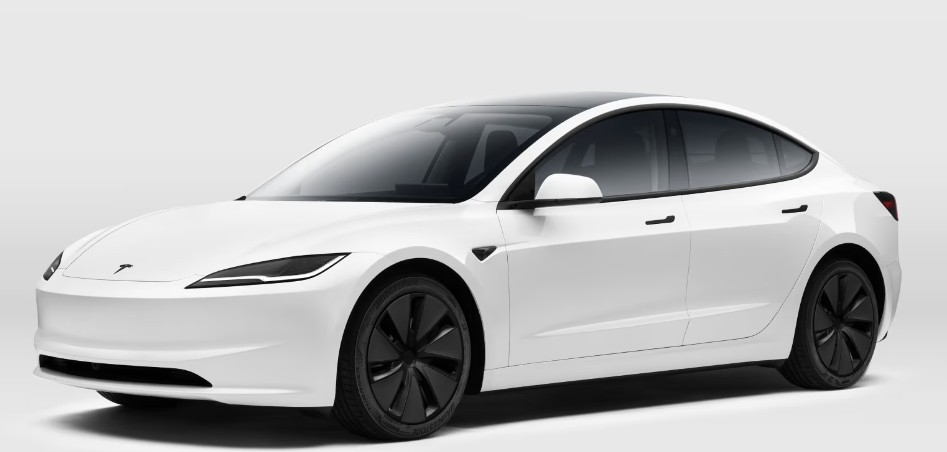
The phrase “Tesla Model 3 engine size” sounds simple, yet it opens the door to one of the biggest shifts in automotive history. For more than a century, we measured cars by engine displacement — 1.0-liter, 2.0-liter, 5.0-liter V8 monsters growling down the highway like thunder rolling across mountains. Then came the electric revolution led by Tesla, and suddenly the rules changed.
The Tesla Model 3 does not have a traditional engine size because it does not use a combustion engine at all. Instead, it relies on electric motors and battery packs. That single fact changes everything: performance, efficiency, maintenance, driving feel, and even how we compare cars.
Yet millions of people still search for “Tesla Model 3 engine size” every month. Why? Because we naturally want a frame of reference. We want to understand what this futuristic machine compares to in the gasoline world.
So let’s dive deep into what “engine size” really means for the Tesla Model 3, how electric motors replace combustion engines, and why this compact electric sedan feels far more powerful than many petrol-powered rivals.
Content in this publication
- Why the Tesla Model 3 Has No Traditional Engine
- What People Really Mean by “Tesla Model 3 Engine Size”
- Understanding Electric Motor Size in the Tesla Model 3
- How Electric Motors Differ From Gasoline Engines
- Tesla Model 3 Performance Compared to Engine Sizes
- Tesla Model 3 Motor Specifications
- Battery Size Matters More Than Engine Size
- How Fast Is the Tesla Model 3?
- Why the Tesla Model 3 Feels So Quick
- Tesla Model 3 Horsepower Explained
- The Role of Torque in Electric Cars
- Tesla Model 3 vs Traditional 2.0-Liter Cars
- Why EVs Don’t Need Large Engines
- Tesla Model 3 Powertrain Options
- How the Tesla Model 3 Compares to V6 and V8 Cars
- Does the Tesla Model 3 Have Transmission Gears?
- Tesla Model 3 Efficiency Compared to Engine Cars
- Can We Translate EV Power Into Engine Size?
- Why Engine Size Matters Less Today
- The Future of Engine Size in Electric Cars
- Should We Still Care About Engine Size?
- Common Misconceptions About Tesla Model 3 Engine Size
- What Makes the Tesla Model 3 So Popular?
- Final Thoughts on Tesla Model 3 Engine Size
- FAQs
Why the Tesla Model 3 Has No Traditional Engine
A traditional car engine burns fuel inside cylinders. That process creates explosions that spin a crankshaft and eventually power the wheels.
The Tesla Model 3 skips this mechanical drama entirely.
Instead, it uses:
- Electric motors
- High-voltage battery packs
- Power electronics
- Regenerative braking systems
Think of a gasoline engine like a band playing live music in a crowded stadium. It’s loud, complex, energetic, and filled with moving parts. An electric motor, meanwhile, is like streaming a flawless digital track through high-end headphones — smoother, cleaner, quieter, and incredibly precise.
Because there’s no internal combustion engine, there’s technically no “engine displacement” or “engine size.”
What People Really Mean by “Tesla Model 3 Engine Size”
When drivers search this phrase, they’re usually asking one of these questions:
How Powerful Is the Tesla Model 3?
People want to compare it with gasoline cars.
What Petrol Engine Is It Equivalent To?
Many buyers wonder whether the Model 3 feels like a 2.0-liter turbo car or perhaps even a V6.
How Big Is the Electric Motor?
Electric motors are measured differently than engines. Instead of liters, we focus on:
- Kilowatts (kW)
- Horsepower (hp)
- Torque
- Battery capacity
Understanding Electric Motor Size in the Tesla Model 3
Unlike gasoline engines, electric motors are compact. Shockingly compact.
A Tesla motor can fit inside spaces that would make traditional engine bays look almost empty. Despite this small size, it produces astonishing performance.
Tesla Model 3 Standard Rear-Wheel Drive Motor
The base Model 3 typically produces around:
- 208–283 horsepower depending on model year
- Instant torque delivery
- Single-motor rear-wheel-drive setup
In combustion-engine terms, it performs similarly to many:
- 2.0-liter turbocharged sedans
- Entry-level sports sedans
- Mid-size performance cars
Yet it achieves this with far fewer moving parts.
How Electric Motors Differ From Gasoline Engines
Internal Combustion Engines Need RPM
Petrol engines build power gradually. You push the accelerator, revs rise, gears shift, and acceleration builds like a wave.
Electric motors are different.
Torque arrives instantly.
The moment we press the accelerator in the Tesla Model 3, the power hits immediately like flipping a light switch in a dark room.
That’s why even the base Model 3 feels dramatically quicker than many cars with larger gasoline engines.
Tesla Model 3 Performance Compared to Engine Sizes
Here’s where things get interesting.
Although the Model 3 lacks a traditional engine, we can estimate what combustion engines it competes against.
Tesla Model 3 RWD Equivalent
Comparable to:
- 2.0-liter turbocharged sports sedans
- BMW 330i
- Audi A4 45 TFSI
Tesla Model 3 Long Range Equivalent
Comparable to:
- 3.0-liter turbocharged luxury sedans
- BMW M340i
- Mercedes-AMG C43
Tesla Model 3 Performance Equivalent
Comparable to:
- High-performance V8 sports sedans
- BMW M3
- Alfa Romeo Giulia Quadrifoglio
- Mercedes-AMG C63
That’s the wild part. A quiet electric sedan with no engine displacement can outrun traditional muscle machines with massive engines.
Tesla Model 3 Motor Specifications
Single Motor Models
The entry-level Tesla Model 3 uses:
- One electric motor
- Rear-wheel drive
- Simpler drivetrain
- Lower weight
- Excellent efficiency
Dual Motor Models
The Long Range and Performance trims use:
- Two electric motors
- All-wheel drive
- Improved traction
- Faster acceleration
- Greater power delivery
It’s almost like having two engines working together seamlessly — one for the front wheels and one for the rear.
Battery Size Matters More Than Engine Size
With EVs, battery capacity becomes the new benchmark.
Instead of asking:
“How big is the engine?”
We ask:
“How large is the battery?”
Tesla Model 3 Battery Capacities
Depending on trim and production year, battery sizes generally range between:
- Around 57.5 kWh
- Up to approximately 82 kWh usable capacity
This battery determines:
- Driving range
- Power output
- Charging speed
- Performance consistency
In electric vehicles, the battery is the heart of the machine.
How Fast Is the Tesla Model 3?
Traditional engine size often predicts speed. Bigger engines usually mean faster acceleration.
The Tesla Model 3 rewrites that rulebook.
You may be interested in reading Tesla Model 3 Emergency Door Release: Everything We Need to Know
Approximate 0–60 mph Times
Model 3 RWD
- Around 5.8–6.1 seconds
Model 3 Long Range
- Around 4.2–4.4 seconds
Model 3 Performance
- Around 3.1 seconds
That last figure places the Model 3 Performance among serious sports cars.
And it does this without roaring exhaust pipes or giant displacement figures.
Why the Tesla Model 3 Feels So Quick
Electric motors deliver maximum torque instantly.
In a petrol car:
- Power builds gradually
- Transmission shifts interrupt acceleration
- Turbo lag may appear
In the Tesla Model 3:
- There’s no gear shifting sensation
- Torque arrives immediately
- Acceleration feels continuous and smooth
Driving it can feel like being pulled forward by an invisible magnetic force.
Tesla Model 3 Horsepower Explained
Horsepower remains an important comparison tool.
Estimated Horsepower by Variant
| Model | Approximate Horsepower |
|---|---|
| Model 3 RWD | 208–283 hp |
| Model 3 Long Range | 346–394 hp |
| Model 3 Performance | 450+ hp |
These figures vary slightly by market and software updates.
The surprising part? Even the lower-powered Model 3 trims feel stronger than expected because electric torque changes the driving experience dramatically.
The Role of Torque in Electric Cars
Torque matters more than many drivers realize.
Gasoline cars often need high RPM to access peak torque. Electric vehicles produce torque instantly.
Why Instant Torque Matters
Benefits include:
- Faster acceleration
- Better overtaking
- Smoother city driving
- Reduced delay when accelerating
Imagine a sprinter exploding off the starting blocks versus someone slowly building momentum. That’s the difference between EV torque and many traditional engines.
Tesla Model 3 vs Traditional 2.0-Liter Cars
This is one of the most useful comparisons for shoppers.
Acceleration
The Tesla Model 3 often beats:
- BMW 330i
- Audi A4
- Mercedes C300
Efficiency
The Model 3 consumes electricity instead of fuel, dramatically reducing operating costs.
Maintenance
Without:
- Oil changes
- Spark plugs
- Timing belts
- Fuel injectors
Maintenance becomes far simpler.
Noise
The silence changes the entire driving atmosphere. Instead of mechanical vibration, we hear tire noise and wind.
For some drivers, it feels futuristic. For others, almost eerie.
Why EVs Don’t Need Large Engines
Combustion engines waste massive amounts of energy.
A typical petrol engine:
- Loses heat through exhaust systems
- Requires complex cooling
- Uses transmissions with many moving parts
Electric motors are much more efficient.
Many EV drivetrains achieve:
- Over 85–90% energy efficiency
Traditional engines often struggle to exceed:
- 30–40% efficiency
This explains why a compact electric motor can outperform a much larger gasoline engine.
Tesla Model 3 Powertrain Options
Rear-Wheel Drive
The base setup prioritizes:
- Efficiency
- Lower cost
- Simplicity
Dual Motor AWD
This setup adds:
- Extra traction
- Improved acceleration
- Better stability in poor weather
Performance Variant
The Performance model sharpens everything:
- Faster acceleration
- Enhanced cooling
- Sportier suspension
- Larger brakes
It transforms the Model 3 into a true performance sedan.
How the Tesla Model 3 Compares to V6 and V8 Cars
This comparison surprises many enthusiasts.
Against V6 Sedans
The Model 3 Long Range often accelerates faster than:
- Infiniti Q50 Red Sport
- Lexus IS350
- Acura TLX Type S
Against V8 Muscle Cars
The Model 3 Performance can rival:
- Dodge Charger Scat Pack
- Mustang GT
- Camaro SS
Yet it does so silently.
It’s like watching a lightning storm without hearing thunder.
Does the Tesla Model 3 Have Transmission Gears?
Not in the traditional sense.
Most gasoline vehicles use:
- 6-speed automatics
- 8-speed automatics
- Manual gearboxes
The Tesla Model 3 generally uses:
- A single-speed transmission
That simplicity creates:
- Smooth acceleration
- Fewer moving parts
- Reduced maintenance
No shifting interruptions. Just continuous power delivery.
Tesla Model 3 Efficiency Compared to Engine Cars
Efficiency is where EVs truly shine.
Energy Consumption
The Model 3 is among the most efficient EVs available.
You may be interested in readingTesla Model 3 Emergency Door Release: Everything We Need to KnowYou may be interested in reading
Tesla Model 3 Glass Roof Replacement Cost UKIt converts energy into movement remarkably well compared to gasoline cars.
Lower Running Costs
Benefits include:
- Cheaper charging than fuel
- Lower servicing costs
- Reduced mechanical wear
For daily commuting, the savings can feel substantial over several years.
Can We Translate EV Power Into Engine Size?
Not perfectly.
But we can estimate.
Approximate Combustion Equivalents
| Tesla Model 3 Variant | Rough Petrol Equivalent |
|---|---|
| RWD | 2.0L Turbo |
| Long Range | 3.0L Turbo |
| Performance | High-output V8 |
These are performance comparisons rather than exact engineering matches.
Electric vehicles simply operate differently.
Why Engine Size Matters Less Today
For decades, bigger engines symbolized:
- Prestige
- Speed
- Power
But electric cars changed the conversation.
Now we care more about:
- Range
- Charging speed
- Battery efficiency
- Software
- Driver assistance technology
The automotive world is shifting from mechanical identity to digital identity.
That transition feels almost like moving from film cameras to smartphones. The old technology still has charm, but the new technology changes expectations forever.
The Future of Engine Size in Electric Cars
As EV adoption grows, traditional engine displacement will become less important.
Future buyers may ask:
- How fast does it charge?
- What’s the battery chemistry?
- How efficient is the motor?
- How advanced is the software?
The Tesla Model 3 sits right at the center of this transformation.
It represents a bridge between the old automotive world and the new electric era.
Should We Still Care About Engine Size?
In some ways, yes.
Engine size still matters in:
- Towing-heavy vehicles
- Traditional sports cars
- Enthusiast communities
But for everyday transportation, electric drivetrains are proving that massive engines are no longer necessary for impressive performance.
The Tesla Model 3 demonstrates this beautifully.
It delivers:
- Strong acceleration
- Low operating costs
- Quiet operation
- Advanced technology
- Excellent efficiency
All without a conventional engine.
Common Misconceptions About Tesla Model 3 Engine Size
“Electric Cars Are Slow”
Completely outdated.
Even entry-level EVs often outperform many petrol cars off the line.
“Bigger Engines Mean Better Performance”
Not necessarily anymore.
Electric torque changes everything.
“EVs Feel Less Exciting”
Some drivers miss exhaust noise. Others love the instant acceleration and smoothness.
Driving excitement is evolving rather than disappearing.
What Makes the Tesla Model 3 So Popular?
The Model 3 succeeded because it blends:
- Technology
- Performance
- Efficiency
- Everyday usability
It feels approachable.
Unlike some futuristic EVs that seem alien, the Model 3 feels familiar enough for traditional car buyers while still delivering a glimpse into tomorrow.
That balance is powerful.
Final Thoughts on Tesla Model 3 Engine Size
The Tesla Model 3 does not have a traditional engine size because it uses electric motors instead of an internal combustion engine. Yet that absence tells a much bigger story about where the automotive world is heading.
Instead of liters and cylinders, we now focus on:
- Electric motor output
- Battery capacity
- Instant torque
- Efficiency
- Software integration
And despite lacking a traditional engine, the Model 3 delivers performance comparable to powerful turbocharged and even V8-powered sedans.
In many ways, asking about the Tesla Model 3 engine size is like asking about the film roll inside a smartphone camera. The question makes sense historically, but the technology has fundamentally changed.
The future of driving is already here — and it hums instead of roars.
FAQs
Does the Tesla Model 3 have an engine?
No. The Tesla Model 3 uses electric motors instead of a gasoline engine.
What engine size is equivalent to the Tesla Model 3?
The base Model 3 roughly compares to a 2.0-liter turbocharged sedan, while the Performance version rivals powerful V8 sports sedans.
How much horsepower does the Tesla Model 3 have?
Depending on the trim, horsepower ranges from roughly 208 hp to over 450 hp.
Why is the Tesla Model 3 so fast without a big engine?
Electric motors provide instant torque, allowing rapid acceleration without waiting for RPM to build.
What matters more in an EV than engine size?
Battery capacity, motor efficiency, charging speed, and software are more important than traditional engine displacement.
You may be interested in readingTesla Model 3 Emergency Door Release: Everything We Need to KnowYou may be interested in reading
Tesla Model 3 Glass Roof Replacement Cost UKYou may be interested in reading
Tesla Model 3 Max Charging Speed: Everything We Need to KnowIf you want to know other articles similar to Tesla Model 3 Engine Size: Everything We Need to Know you can visit the category Service and Parts.
BMW 2 Series Turbo Replacement Cost UK: Complete Price Guide
BMW 2 Series Service Reset: Complete Step-by-Step Guide
BMW 2 Series Windscreen Replacement Cost UK: Complete Price Guide
BMW 2 Series Key Battery Replacement: Complete DIY Guide
BMW 2 Series Towing Capacity: Complete UK Guide
BMW 2 Series Engine Size: Complete Petrol, Diesel and M Guide
Leave a Reply
More content of your interest