

BMW 3 Series Generations: The Complete Evolution Guide

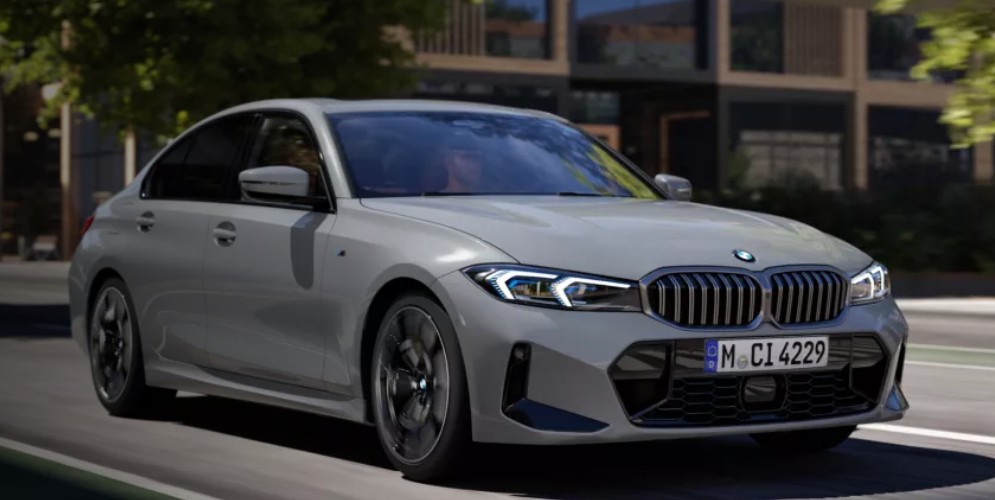
The BMW 3 Series is one of the most influential vehicles ever created. For nearly five decades, it has served as the benchmark for luxury compact sedans, blending performance, comfort, innovation, and everyday practicality into a single package. While countless rivals have entered the market hoping to challenge it, the BMW 3 Series continues to define what a sports sedan should be.
The story of the BMW 3 Series is more than a timeline of new models. It is a journey through automotive history. Each generation reflects changing technologies, evolving consumer expectations, and BMW's commitment to delivering an engaging driving experience. From the lightweight E21 of the 1970s to today's high-tech G20, every generation has contributed something unique to the legacy.
In this comprehensive guide, we will explore every BMW 3 Series generation, examine the major changes introduced over the years, and discover why this iconic model remains one of the most respected cars in the world.
Content in this publication
- The Origins of the BMW 3 Series
- BMW 3 Series Generations at a Glance
- The E21 Generation (1975–1983): The Beginning of a Legend
- The E30 Generation (1982–1994): The Icon is Born
- The E36 Generation (1990–2000): Entering the Modern Age
- The E46 Generation (1997–2006): The Perfect Balance
- The E90 Generation (2005–2013): Technology Takes a Leap Forward
- The F30 Generation (2011–2019): Efficiency Meets Luxury
- The G20 Generation (2018–Present): The Modern Benchmark
- How BMW 3 Series Design Has Evolved
- The Evolution of BMW 3 Series Engines
- Safety Improvements Through the Generations
- The Importance of the M3 in the 3 Series Story
- Which BMW 3 Series Generation Is Best?
- Future Classic BMW 3 Series Generations
- Why the BMW 3 Series Remains an Automotive Icon
- Conclusion
- Frequently Asked Questions
The Origins of the BMW 3 Series
Before the 3 Series existed, BMW had already established a reputation for producing sporty and driver-focused vehicles. The company needed a successor to the successful BMW 2002, a compact sports sedan that helped define BMW's identity.
In 1975, the answer arrived in the form of the E21, the first official BMW 3 Series. Few people could have predicted that this new model would become the foundation of BMW's global success.
What began as a compact two-door sedan eventually evolved into an entire family of vehicles that would shape the luxury automotive segment for generations.
BMW 3 Series Generations at a Glance
The BMW 3 Series has undergone seven major generational changes.
| Generation | Chassis Code | Production Years |
|---|---|---|
| First Generation | E21 | 1975–1983 |
| Second Generation | E30 | 1982–1994 |
| Third Generation | E36 | 1990–2000 |
| Fourth Generation | E46 | 1997–2006 |
| Fifth Generation | E90/E91/E92/E93 | 2005–2013 |
| Sixth Generation | F30/F31/F34 | 2011–2019 |
| Seventh Generation | G20/G21 | 2018–Present |
Each generation introduced new technologies, improved performance, and expanded the appeal of the 3 Series to a wider audience.
The E21 Generation (1975–1983): The Beginning of a Legend
The E21 marked the official birth of the BMW 3 Series. Replacing the BMW 2002, it introduced many design elements that would become BMW trademarks.
The car featured a driver-focused cockpit, rear-wheel drive, sporty handling, and compact dimensions. Its dashboard angled slightly toward the driver, emphasizing BMW's philosophy that the driver should always be at the center of the experience.
Key Characteristics of the E21
- Two-door body style
- Rear-wheel drive platform
- Lightweight construction
- Inline-four and inline-six engines
- Sport-oriented driving dynamics
The E21 was simple by modern standards, but that simplicity is exactly what makes it appealing today. Every input feels direct, and every drive feels connected.
For many enthusiasts, the E21 represents the foundation upon which the BMW 3 Series legacy was built.
The E30 Generation (1982–1994): The Icon is Born
Few BMW models are as beloved as the E30.
While the E21 established the 3 Series, the E30 elevated it to legendary status. Its timeless styling, exceptional handling, and expanded range of body styles made it one of BMW's most successful vehicles.
The E30 introduced significant versatility to the lineup.
New Body Styles and Variants
BMW expanded the range to include:
- Two-door coupe
- Four-door sedan
- Convertible
- Touring wagon
- All-wheel-drive versions
This diversification helped transform the 3 Series into a global success.
The Arrival of the E30 M3
The E30 generation also gave us the first BMW M3.
Originally developed for motorsport homologation, the E30 M3 became one of the most celebrated performance cars ever produced. Its aggressive styling, race-bred engineering, and exceptional handling created a blueprint that future M3 models would follow.
Today, the E30 M3 remains one of the most collectible BMWs in existence.
Why the E30 Remains So Popular
The E30 offers a rare combination of classic charm and usability. It is old enough to feel special but modern enough to drive comfortably.
Its enduring popularity proves that great design never goes out of style.
The E36 Generation (1990–2000): Entering the Modern Age
The E36 represented a significant shift in BMW's design philosophy.
Compared to the boxy appearance of the E30, the E36 introduced smoother lines, improved aerodynamics, and a more sophisticated overall look.
The car felt more modern in every respect.
Major Improvements Introduced
BMW focused on:
- Better crash safety
- Improved ride comfort
- Enhanced suspension design
- Increased interior space
- Greater refinement
The E36 successfully broadened the appeal of the 3 Series beyond hardcore enthusiasts.
The Evolution of the M3
The E36 M3 took a different approach than its predecessor.
Rather than focusing solely on racing performance, BMW created a car that balanced speed with everyday usability. It was more refined, more comfortable, and more accessible to a broader audience.
The result was a performance car that excelled both on the road and on the track.
The E46 Generation (1997–2006): The Perfect Balance
Many enthusiasts consider the E46 to be the greatest BMW 3 Series ever built.
Why? Because it achieved something incredibly difficult: it perfectly balanced analog driving engagement with modern comfort.
The E46 remains a benchmark even decades after its introduction.
Timeless Exterior Design
The E46 featured:
You may be interested in reading BMW 3 Series Sport vs M Sport: The Complete Comparison Guide
- Elegant proportions
- Clean body lines
- Balanced styling
- Strong road presence
Unlike some vehicles that quickly reveal their age, the E46 continues to look attractive and contemporary.
Enhanced Driving Dynamics
BMW refined the chassis to deliver:
- Precise steering
- Excellent balance
- Predictable handling
- Superior ride quality
The result was a car that felt equally comfortable on winding roads and long highway journeys.
The Legendary E46 M3
Powered by the renowned S54 inline-six engine, the E46 M3 became one of the most respected performance cars of all time.
Its naturally aspirated engine, razor-sharp handling, and engaging driving experience continue to attract enthusiasts around the world.
The E90 Generation (2005–2013): Technology Takes a Leap Forward
The E90 generation marked the beginning of a more technology-focused era.
BMW understood that luxury buyers increasingly demanded advanced features alongside performance.
The E90 responded with substantial technological improvements.
A More Sophisticated Driving Experience
New innovations included:
- Advanced infotainment systems
- Improved safety features
- Enhanced fuel efficiency
- Better cabin refinement
The car felt noticeably more premium than previous generations.
Expanding the Family
BMW split the lineup into multiple body styles:
- E90 Sedan
- E91 Touring
- E92 Coupe
- E93 Convertible
This strategy allowed buyers to choose a model tailored to their lifestyle.
The Unique E90 M3
One feature makes the E90 M3 particularly special.
It was the only M3 generation powered by a naturally aspirated V8 engine.
Its high-revving V8 delivered a soundtrack and driving experience unlike any other M3 before or since.
The F30 Generation (2011–2019): Efficiency Meets Luxury
By the time the F30 arrived, automotive priorities were changing.
Fuel economy, emissions regulations, and digital connectivity had become major considerations.
BMW adapted accordingly.
Key Developments in the F30
The new generation introduced:
- Turbocharged engines throughout the range
- Improved fuel efficiency
- Enhanced interior technology
- Greater passenger space
The F30 offered a more mature and globally appealing package.
A Shift in Character
Some enthusiasts argued that the F30 emphasized comfort over driving excitement.
Others appreciated its:
- Better practicality
- Superior technology
- Everyday usability
Regardless of opinion, the F30 helped BMW remain competitive in an increasingly crowded market.
The G20 Generation (2018–Present): The Modern Benchmark
The current G20 generation represents the most advanced BMW 3 Series ever produced.
It combines decades of engineering knowledge with cutting-edge technology to create a remarkably complete vehicle.
Bold New Styling
The G20 features:
- Sharper body lines
- Larger kidney grilles
- Improved aerodynamics
- Premium materials
Its appearance is modern, aggressive, and unmistakably BMW.
A Digital Revolution
Technology plays a central role in the G20 experience.
Modern features include:
- Fully digital instrument displays
- Voice-controlled systems
- Wireless smartphone integration
- Advanced driver assistance technologies
- Over-the-air software updates
The cabin feels more like a luxury technology hub than a traditional automobile.
Preserving the BMW Driving Experience
Despite the technological advancements, BMW has worked hard to maintain the qualities that made the 3 Series famous.
The G20 continues to deliver:
- Excellent balance
- Precise steering
- Strong acceleration
- Engaging handling
It proves that modern technology and driving enjoyment can coexist.
How BMW 3 Series Design Has Evolved
One of the most fascinating aspects of the BMW 3 Series is observing how its design has changed over time.
You may be interested in readingBMW 3 Series Sport vs M Sport: The Complete Comparison GuideYou may be interested in reading
BMW 3 Series Years to Buy: The Best Models for Reliability, Value, and Driving PleasureThe Early Years
The E21 and E30 generations emphasized:
- Straight lines
- Compact dimensions
- Minimalist styling
The Transitional Era
The E36 and E46 introduced:
- Smoother surfaces
- Better aerodynamics
- Greater sophistication
The Modern Period
The E90, F30, and G20 generations embraced:
- Larger dimensions
- Aggressive styling
- Advanced lighting technology
- Premium design details
Although the appearance has evolved dramatically, the essential BMW identity remains intact.
The Evolution of BMW 3 Series Engines
Engine technology has undergone tremendous changes throughout the life of the 3 Series.
Naturally Aspirated Excellence
Early generations relied primarily on naturally aspirated engines.
These powerplants offered:
- Linear power delivery
- High-revving character
- Mechanical simplicity
The Turbocharged Era
Modern generations increasingly utilize turbocharging.
Benefits include:
- Greater power output
- Improved fuel economy
- Reduced emissions
- Increased low-end torque
Today's four-cylinder turbocharged engines often outperform six-cylinder engines from previous decades.
Safety Improvements Through the Generations
Safety standards have improved dramatically since 1975.
Early generations provided basic occupant protection. Modern models feature sophisticated safety systems designed to prevent accidents altogether.
Key Safety Advancements
Over the years, BMW introduced:
- Multiple airbags
- Stability control systems
- Advanced braking technology
- Adaptive cruise control
- Lane-keeping assistance
- Collision warning systems
The progression highlights how automotive priorities have evolved.
The Importance of the M3 in the 3 Series Story
No discussion of BMW 3 Series generations would be complete without mentioning the M3.
The M3 serves as the performance flagship of each generation.
Highlights of Each M3 Era
- E30 M3: Motorsport icon
- E36 M3: Refined performance
- E46 M3: Enthusiast favorite
- E90 M3: V8-powered masterpiece
- F80 M3: Turbocharged revolution
- G80 M3: Technological powerhouse
Each version reflects BMW's performance philosophy during its era.
Which BMW 3 Series Generation Is Best?
The answer depends entirely on what we value most.
Best for Driving Purity
- E30
- E46
Best for Reliability and Value
- E46
- E90
Best for Daily Driving
- F30
- G20
Best for Technology
- G20
Best for Collectors
- E30 M3
- E46 M3
- E90 M3
Every generation has strengths that appeal to different types of buyers.
Future Classic BMW 3 Series Generations
As automotive technology becomes increasingly automated, enthusiasts are showing greater appreciation for older generations.
Many experts believe the following models will continue to increase in desirability:
- E30
- E30 M3
- E46 M3
- E90 M3
- Certain manual-transmission F30 models
These vehicles represent important milestones in BMW history.
Why the BMW 3 Series Remains an Automotive Icon
Few vehicles have maintained relevance for nearly fifty years.
The BMW 3 Series continues to succeed because it consistently delivers what drivers want:
- Performance
- Luxury
- Innovation
- Practicality
Like a master musician refining a timeless melody, BMW has continuously improved the formula without abandoning its essence.
Every generation introduces new ideas while respecting the principles that made the 3 Series successful in the first place.
Conclusion
The BMW 3 Series generations tell one of the most fascinating stories in automotive history. From the humble E21 to the sophisticated G20, the model has continually evolved to meet changing expectations while preserving its identity as a driver's car.
Some generations focused on simplicity and mechanical engagement. Others embraced luxury, technology, and efficiency. Together, they demonstrate BMW's ability to adapt without losing sight of its core values.
Whether we admire the classic appeal of the E30, the balanced perfection of the E46, or the cutting-edge innovation of the G20, one thing is certain: the BMW 3 Series remains the benchmark by which all luxury sports sedans are measured.
Frequently Asked Questions
1. What was the first BMW 3 Series generation?
The E21, introduced in 1975, was the first official BMW 3 Series generation.
2. Which BMW 3 Series generation is considered the best?
Many enthusiasts consider the E46 generation the best due to its balance of performance, reliability, comfort, and driving engagement.
3. Which BMW 3 Series generation is the most reliable?
Well-maintained E46 and E90 models are often regarded as some of the most reliable generations.
4. What is the current BMW 3 Series generation?
The G20 generation, introduced in 2018, is the current BMW 3 Series.
5. Which BMW 3 Series generation is the most collectible?
The E30 M3 is widely considered the most collectible BMW 3 Series variant ever produced.
You may be interested in readingBMW 3 Series Sport vs M Sport: The Complete Comparison GuideYou may be interested in reading
BMW 3 Series Years to Buy: The Best Models for Reliability, Value, and Driving PleasureYou may be interested in reading
Which BMW 3 Series Is the Best? The Ultimate Guide to Choosing the Right 3 SeriesIf you want to know other articles similar to BMW 3 Series Generations: The Complete Evolution Guide you can visit the category Models.
Honda Passport vs Toyota 4Runner: Which SUV Is Better?
Honda Passport vs Ford Bronco: Which SUV Is Better?
Honda Passport vs Ford Explorer: Which SUV Is Better?
Honda Passport or Pilot: Which SUV Is Better?
Honda Passport vs Jeep Grand Cherokee: Which SUV Is Better?
Honda Passport vs Nissan Pathfinder: Which SUV Is Better?
Leave a Reply
More content of your interest