

Ford Ranger Super Duty Problems: Reliability, Drawbacks, and Buyer Concerns

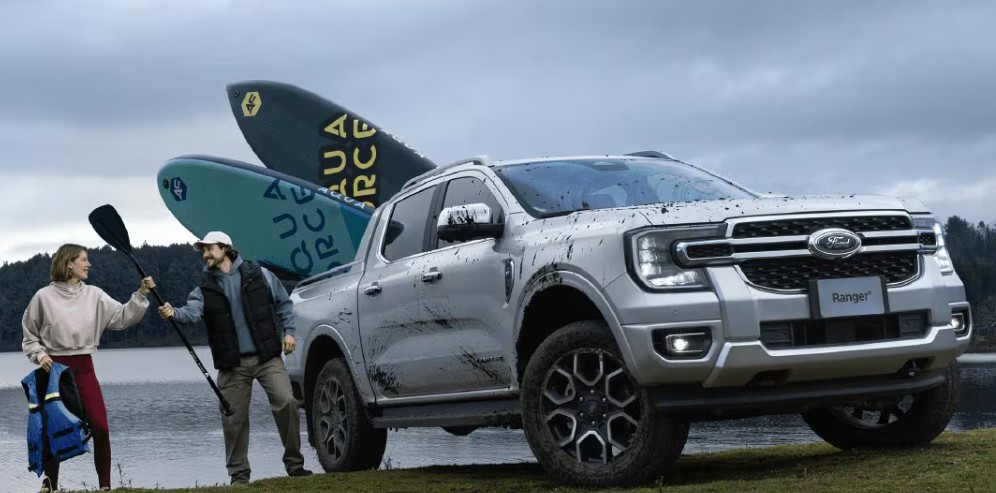
The Ford Ranger Super Duty looks like the regular Ranger after a season in the gym. It stands taller, carries more weight, wears tougher hardware, and promises to handle jobs that would leave an ordinary dual-cab ute sweating beside the road.
However, extra capability always brings extra complexity. Bigger tyres, a reinforced chassis, a heavy-duty suspension, upgraded axles, advanced towing electronics, and a highly stressed diesel powertrain all create new questions. What could go wrong? Will it remain dependable when towing close to its limit? Is it too stiff for daily driving? And are early buyers effectively testing a brand-new heavy-duty formula?
These questions matter because the Ranger Super Duty is still a relatively new model. It does not yet have the decade of owner reports, workshop data, and high-mileage evidence available for established workhorses such as the Toyota LandCruiser 70 Series.
That means we need to be honest. There is not yet a long, confirmed list of widespread Ford Ranger Super Duty problems. What we do have are documented limitations from early road tests, known concerns surrounding its mechanical package, and predictable wear risks created by its weight and intended workload.
Let us separate genuine weaknesses from internet speculation.
Content in this publication
- Are There Any Confirmed Ford Ranger Super Duty Problems?
- The Super Duty Is Heavy Before We Add Anything
- The 3.0-Litre V6 May Feel Underpowered When Fully Loaded
- Unladen Ride Quality Can Be Too Firm
- Fuel Economy Could Be a Major Ownership Concern
- The 10-Speed Automatic Transmission Faces a Tough Job
- Diesel Emissions Equipment May Dislike Short Trips
- Cooling-System Reliability Will Be Critical
- Electrical and Driver-Assistance Systems Add Complexity
- Large Tyres Will Cost More to Replace
- Brakes May Wear Quickly Under Maximum Loads
- Its Size Can Be a Daily Problem
- The Work-Grade Interior May Feel Too Basic
- Repair Costs Could Be Higher Than a Standard Ranger
- Early Adopters Face Unproven Long-Term Reliability
- How to Reduce Ford Ranger Super Duty Problems
- Is the Ford Ranger Super Duty Reliable?
- Who Should Avoid the Ranger Super Duty?
- Who Is the Ranger Super Duty Built For?
- Final Thoughts on Ford Ranger Super Duty Problems
- Frequently Asked Questions
Are There Any Confirmed Ford Ranger Super Duty Problems?
At this stage, there is no strong public evidence of a widespread mechanical defect unique to the Ranger Super Duty. The vehicle is too new for meaningful long-term reliability conclusions.
Early Australian tests have generally praised its off-road ability, load capacity, chassis control, and surprising refinement. However, reviewers have also identified several compromises:
- Slower acceleration because of the additional weight
- A noticeably firmer unladen ride
- Limited published fuel-consumption information
- Modest engine output relative to the vehicle’s mass
- Reduced agility and longer braking demands
- An electronic gear selector that can be awkward when towing
- Uncertainty about long-term durability under extreme loads
- Higher tyre, servicing, and running costs
- A basic cabin in work-focused versions
- More complicated payload and towing calculations than buyers may expect
One Australian road test specifically described the engine’s 154kW output as feeling underdone and highlighted the lack of official fuel-efficiency figures at launch. It also noted that the V6 diesel had not yet established a long reliability record in the extreme conditions for which the Super Duty was designed.
Therefore, the biggest current “problems” are not proven catastrophic failures. They are compromises, unanswered durability questions, and ownership risks that could become expensive when the vehicle is incorrectly configured or consistently overloaded.
The Super Duty Is Heavy Before We Add Anything
The first issue appears before we put tools in the tray or connect a caravan: the Ranger Super Duty is a heavy vehicle.
Its reinforced frame, upgraded suspension, larger axles, thicker driveshafts, steel protection, full-time four-wheel-drive hardware, 33-inch tyres, and larger fuel tank all increase kerb weight. Ford has engineered that mass for a purpose, but physics never takes a day off.
Independent testing has noted that the Super Duty’s weight affects acceleration, braking, and cornering. One review described it as surprisingly civilised but warned that the vehicle feels hefty even when empty and could become very slow while towing its maximum rated load.
How Extra Weight Changes the Driving Experience
A heavier vehicle needs more energy to accelerate and more braking force to stop. It also places greater demands on:
- Brake pads and rotors
- Wheel bearings
- Steering components
- Suspension bushes
- Tyres
- Transmission cooling
- Engine cooling
- Differential oil
- Driveshaft joints
The Super Duty was designed with reinforced parts, so this does not automatically make it unreliable. Still, owners who repeatedly tow, carry, and travel off-road should expect wear items to work harder than they would in an ordinary Ranger.
The Problem Becomes Bigger When Modified
Add a steel tray, service body, canopy, bull bar, winch, roof platform, spare wheels, auxiliary batteries, water tanks, and recovery equipment, and the truck becomes heavier again.
The Super Duty provides an impressive payload allowance, but every accessory consumes part of that allowance. The danger is not necessarily exceeding the Gross Vehicle Mass immediately. The greater risk is creating poor axle balance.
A large service body may overload the rear axle even when the total vehicle mass remains technically legal. Likewise, a heavy bull bar and winch may push too much weight over the front axle.
That is why a weighbridge certificate is more valuable than an accessory catalogue.
The 3.0-Litre V6 May Feel Underpowered When Fully Loaded
The Ranger Super Duty uses a 3.0-litre turbo-diesel V6 producing 154kW and 600Nm. Ford pairs it with a recalibrated 10-speed automatic transmission and an upgraded cooling system designed for sustained heavy-load operation.
On paper, 600Nm sounds muscular. In normal driving, it should feel capable. Yet the Super Duty can operate at a Gross Vehicle Mass of 4,500kg and tow as much as 4,500kg with an 8,000kg Gross Combined Mass limit.
That is a mountain of moving machinery.
Why Maximum Towing Capacity Does Not Mean Effortless Towing
A towing rating tells us what a vehicle is engineered and legally approved to pull under specified conditions. It does not promise fast acceleration, easy overtaking, low fuel consumption, or relaxed hill climbing.
At close to maximum combined mass, owners may experience:
- Slow acceleration from junctions
- Frequent transmission shifts
- Higher engine speeds on gradients
- Limited overtaking performance
- Greater turbocharger demand
- Stronger engine-braking requirements
- Increased cooling-system workload
- Considerably higher diesel consumption
Reviewers have already observed that the larger tyres and additional mass dull acceleration. A 4x4 Australia test also suggested that the taller tyres are likely to hurt fuel economy, while the gear selector’s manual buttons are not ideal when a driver wants to downshift for engine braking.
This does not mean the engine is defective. It means buyers should not expect American full-size pickup performance from a midsize truck carrying heavy-duty numbers.
Unladen Ride Quality Can Be Too Firm
Heavy-duty suspension must control heavy-duty loads. The trade-off is a stiffer ride when the tray is empty.
The Super Duty uses stronger suspension components and commercial LT-rated tyres with rigid sidewalls. On smooth roads, it may remain composed. On patched bitumen, corrugations, expansion joints, and broken urban streets, occupants may feel more vibration and vertical movement than they would in a Ranger Wildtrak or Sport.
Early testing found that the ride was not unbearable, but it was clearly less plush than a regular Ranger. Reviewers noted that the vehicle communicated nearly every bump when unladen and would likely ride better with some weight over the rear axle.
Who Will Notice the Firm Ride Most?
The compromise will be most obvious to buyers who:
- Use the truck mainly for commuting
- Rarely carry equipment
- Choose it for its tough appearance
- Frequently drive on rough urban roads
- Expect SUV-like comfort
- Carry children or passengers every day
A loaded service vehicle may settle into its suspension beautifully. An empty lifestyle truck may feel like a work boot worn to a wedding: tough, impressive, but not entirely comfortable.
Fuel Economy Could Be a Major Ownership Concern
Fuel consumption is one of the biggest unanswered questions surrounding the Ranger Super Duty.
A large frontal area, full-time four-wheel drive, chunky 33-inch tyres, increased ride height, reinforced mechanical components, substantial kerb weight, and a 130-litre fuel tank all point toward higher consumption than a standard Ranger.
Ford’s large fuel tank improves range, especially in remote areas, but it does not make the vehicle efficient. Ford confirms the 130-litre tank alongside the heavy-duty tyres and locking differentials, while early reviews noted that official fuel-use data was not initially available.
Why Real-World Consumption May Vary Dramatically
Fuel economy will depend heavily on:
- Tray or canopy shape
- Vehicle weight
- Trailer weight
- Headwinds
- Tyre pressure
- Terrain
- Speed
- Roof-mounted accessories
- Idle time
- Four-wheel-drive use
- Driving technique
A bare cab-chassis cruising at moderate speed may produce reasonable results. A fully equipped truck towing a tall caravan into a headwind will tell a very different story.
Owners should budget conservatively rather than relying on standard Ranger consumption figures. The Super Duty is designed to carry a workshop on its back, not sip diesel like a compact crossover.
The 10-Speed Automatic Transmission Faces a Tough Job
Ford’s 10-speed automatic gives the engine a broad range of ratios. That can help keep the V6 in its useful torque band, improve low-speed control, and reduce engine speed during relaxed cruising.
However, ten gears also mean frequent decision-making. With a heavy trailer, steep terrain, or rapidly changing throttle input, the transmission may shift more often than some drivers prefer.
Potential Transmission Complaints to Watch
Possible owner concerns may include:
- Gear hunting on rolling roads
- Abrupt low-speed shifts
- Delayed engagement
- Hesitation when changing direction
- Excessive heat during slow towing
- Frequent downshifts on hills
- Awkward manual control
- Software calibration complaints
These should currently be treated as watch points, not established Super Duty defects.
The transmission has been specifically calibrated for this model, and Ford has upgraded the cooling package. Nevertheless, a gearbox moving up to eight tonnes of combined mass deserves careful servicing.
How Owners Can Reduce Transmission Stress
We should avoid treating the maximum rating as the everyday target. Good practice includes:
- Selecting an appropriate towing mode.
- Reducing speed on long climbs.
- Allowing the transmission to cool after demanding work.
- Using lower gears before a descent, not halfway down it.
- Following the severe-duty servicing schedule where applicable.
- Checking for software updates during dealer visits.
- Investigating shuddering, harsh engagement, or warning messages early.
Heat is the quiet enemy of automatic transmissions. It does not arrive with cymbals and flashing lights. It works more like rust beneath paint—slowly, silently, and expensively.
Diesel Emissions Equipment May Dislike Short Trips
Modern diesel engines rely on emissions-control systems that may include a diesel particulate filter, exhaust-gas recirculation equipment, sensors, and associated software.
These systems work best when the vehicle regularly reaches normal operating temperature. A Super Duty used for long-distance towing, rural work, or highway travel may complete regeneration cycles naturally. One used for five-minute school runs may have a harder life.
Owners should watch for:
- A regeneration message
- Increased idle speed
- Cooling fans running after shutdown
- Higher temporary fuel consumption
- Reduced engine performance
- A DPF warning light
- Repeated unsuccessful regeneration
- Engine oil dilution concerns
- Limp-home mode
This is not a Super Duty-specific flaw. It is a potential mismatch between a modern diesel work vehicle and light-duty urban use.
The truck wants to pull equipment across the Outback. Asking it to spend its life crawling between coffee shops is like buying a chainsaw to trim a houseplant.
Cooling-System Reliability Will Be Critical
Ford says the Ranger Super Duty has a redesigned or improved cooling system intended to maintain performance under heavy loads. That is reassuring because cooling becomes critical when the truck is towing uphill, travelling slowly off-road, or operating in high ambient temperatures.
However, added cooling capacity also brings more components that require inspection.
Potential trouble areas include:
- Radiator blockage from mud or seeds
- Intercooler contamination
- Damaged hoses
- Coolant leaks
- Electric fan faults
- Thermostat problems
- Sensor failures
- Reduced airflow behind accessories
- Debris trapped between cooling cores
Mud Can Become More Than a Cosmetic Problem
The Super Duty is designed for mud, water, dust, and remote tracks. Ford even subjected development vehicles to extreme mud accumulation and durability testing.
Still, mud packed around radiators, suspension components, brakes, and underbody protection can retain heat and moisture. After off-road use, owners should clean the vehicle carefully rather than waiting for the next rainstorm.
A pressure washer can help, but aggressive spraying around electrical connectors, seals, cameras, and sensors may create a different set of problems. Cleaning should be thorough, not reckless.
Electrical and Driver-Assistance Systems Add Complexity
The Ranger Super Duty combines rugged mechanical hardware with modern electronics. Depending on specification, equipment can include a large touchscreen, 360-degree cameras, towing assistance, onboard load information, drive modes, locking-differential controls, parking sensors, and multiple driver-assistance functions.
Ford promotes SYNC 4 and the 360-degree camera as features that help make demanding jobs easier.
The technology is useful, especially when manoeuvring a large truck or navigating narrow tracks. Yet every camera, radar, sensor, connector, and software module introduces another possible failure point.
Possible Technology Complaints
Owners may eventually report issues such as:
- Frozen or restarting touchscreen
- Camera unavailable messages
- Parking-sensor errors
- Trailer-recognition problems
- False driver-assistance warnings
- Battery drain
- Intermittent key detection
- Connectivity failures
- Software update problems
- Calibration errors after accessory installation
Again, these are potential concerns, not confirmed widespread Super Duty failures.
Accessories Can Interfere With Sensors
A tray, rear bar, canopy, bull bar, spare-wheel carrier, or trailer wiring installation must be compatible with the vehicle’s driver-assistance technology.
Incorrect positioning may obstruct:
- Rear cameras
- Parking sensors
- Blind-spot monitoring
- Radar units
- Trailer-light connections
- Number-plate lighting
- Rear cross-traffic systems
Ford’s certified conversion network exists partly because heavy-duty buyers often modify cab-chassis vehicles. A professionally engineered conversion may cost more initially, but repairing badly integrated electronics can turn cheap installation into expensive archaeology.
Large Tyres Will Cost More to Replace
The factory 33-inch LT tyres improve ground clearance, traction, load capability, and durability. They also create several ownership compromises.
Compared with smaller passenger-oriented tyres, they may:
- Cost more
- Produce more road noise
- Increase steering weight
- Reduce acceleration
- Increase rolling resistance
- Be harder to source remotely
- Require more careful balancing
- Magnify suspension wear if damaged
- Deliver a firmer ride
The heavy-duty tyre construction was one reason reviewers noticed increased stiffness, while the larger diameter also contributed to reduced acceleration.
Tyre Pressure Becomes a Balancing Act
The correct pressure changes with load, speed, terrain, and tyre specifications.
Too much pressure when empty may create a harsh ride and reduce the contact patch on rough surfaces. Too little pressure while carrying or towing may generate excess heat and damage the sidewalls.
Owners should follow the load-specific guidance supplied by Ford and the tyre manufacturer. Guessing based on appearance is risky because strong LT tyre sidewalls may not look visibly underinflated.
Brakes May Wear Quickly Under Maximum Loads
The Super Duty is engineered for heavy carrying and towing, but braking components remain consumable items.
Frequent mountain driving, construction-site use, stop-start traffic, and trailer towing can accelerate wear. A poorly adjusted or malfunctioning trailer-brake system can force the vehicle to do more work than intended.
Possible symptoms include:
- Steering-wheel vibration while braking
- Brake-pedal pulsation
- Squealing
- Increased stopping distance
- A hot smell after descents
- Premature pad wear
- Cracked or heat-spotted rotors
- Trailer-brake warning messages
Payload and Towing Mathematics Can Catch Buyers Out
The Ranger Super Duty offers a 4,500kg Gross Vehicle Mass, up to 1,982kg of payload in selected configurations, and a maximum braked towing capacity of 4,500kg.
Those headlines are impressive, but they do not mean owners can load the vehicle to 4,500kg and simultaneously attach a 4,500kg trailer. The Gross Combined Mass limit still applies.
Trailer ball mass also counts against vehicle payload. So do passengers, fuel, accessories, tools, recovery equipment, and the tray itself.
Consider a simplified example:
- Vehicle and fitted tray: substantial base weight
- Five occupants: added payload
- Bull bar and winch: added front-axle load
- Canopy and tools: added rear-axle load
- Trailer ball mass: added vehicle load
- Full 130-litre fuel tank: added mass
By the time everything is counted, the legal margin may be narrower than the brochure suggests.
The solution is simple but often ignored: weigh the front axle, rear axle, total vehicle, trailer axles, and complete combination.
Its Size Can Be a Daily Problem
With a 1,710mm track width, up to 299mm of ground clearance, large tyres, and a tall front end, the Ranger Super Duty has serious road presence.
That is useful on remote tracks but less charming in a crowded car park.
Owners may struggle with:
- Underground parking clearance
- Narrow garages
- Tight city streets
- Drive-through lanes
- Small parking bays
- Low tree branches
- Car-wash width limits
- Reaching roof-mounted equipment
One road test also noted that the taller bonnet reduced forward visibility on difficult terrain, although the 360-degree camera and under-vehicle view helped compensate.
Cameras are helpful, but mud on a lens can turn expensive technology into a blurry postage stamp.
The Work-Grade Interior May Feel Too Basic
Early cab-chassis models were deliberately work focused. Some buyers will appreciate vinyl flooring, durable materials, and simple trim. Others may wonder why an expensive truck does not feel luxurious.
Reviewers have highlighted the contrast between the large touchscreen and relatively basic cloth-seat cabin.
Potential complaints include:
- Limited cabin luxury
- Firm seating over long distances
- Hard interior plastics
- Road noise from LT tyres
- Storage reduced by work equipment
- Difficult rear access in Super Cab versions
- A price that feels high after adding a tray
The later XLT and pickup variants may solve some of these concerns, but buyers still need to remember the Super Duty’s mission. It is a tool first and a lifestyle statement second.
Repair Costs Could Be Higher Than a Standard Ranger
The Super Duty may share familiar Ranger architecture, but many key components are unique or upgraded.
These include:
- Heavy-duty chassis parts
- Reinforced suspension
- Upgraded axles
- Thicker driveshafts
- Eight-stud hubs
- Larger tyres
- Model-specific body parts
- Additional underbody protection
- Revised cooling components
- Specialised towing hardware
If one of these parts is damaged, a standard Ranger replacement may not fit.
Remote operators should also consider parts availability. A regular Ranger component may be sitting on a regional dealer’s shelf, while a Super Duty-specific axle, hub, or body panel may require ordering.
Ford provides a five-year factory warranty, which offers valuable early ownership protection, but warranty coverage does not eliminate downtime.
For a commercial vehicle, the most expensive problem is sometimes not the repair invoice. It is the day the truck cannot earn money.
Early Adopters Face Unproven Long-Term Reliability
No laboratory can perfectly reproduce ten years of overloaded trailers, corrugated tracks, deep water, careless drivers, aftermarket wiring, and missed maintenance.
Ford says the Super Duty underwent severe durability testing, including continuous autonomous operation, heavy mud accumulation, water testing, and demanding proving-ground work.
That testing is meaningful. Still, real owners create combinations engineers cannot fully predict.
Questions That Only Time Can Answer
Long-term ownership data must reveal:
- How the V6 handles sustained maximum loads
- Whether the 10-speed transmission remains smooth at high mileage
- How quickly suspension bushes wear
- Whether electrical connectors tolerate repeated water exposure
- How cameras and sensors survive mining and agricultural work
- Whether underbody protection traps mud or debris
- How well the cooling system resists blockage
- Whether axle seals and bearings remain durable
- What resale values look like
- How quickly Super Duty-specific parts become available
Buyers who need proven simplicity may prefer to wait for several years of fleet data. Buyers who need the Super Duty’s unique capability now should protect themselves with careful servicing, professional fit-outs, and detailed operating records.
How to Reduce Ford Ranger Super Duty Problems
A capable truck still needs a capable owner. We can reduce risk by treating the Super Duty as a commercial machine rather than an indestructible toy.
Before Buying
- Choose the correct cab and tray configuration.
- Calculate real payload after accessories.
- Confirm axle limits, not only total GVM.
- Estimate towing mass when fully loaded.
- Check garage and parking dimensions.
- Price replacement tyres before signing.
- Compare insurance for commercial use.
- Ask about parts supply in your region.
- Confirm the servicing requirements for severe use.
- Arrange a test drive with realistic weight where possible.
After Taking Delivery
- Record cold tyre pressures.
- Inspect fluid levels regularly.
- Clean mud from cooling and underbody areas.
- Use a weighbridge after fitting accessories.
- Investigate warning lights immediately.
- Allow proper diesel regeneration.
- Service the transmission according to workload.
- Check trailer brakes before every major journey.
- Rotate tyres at sensible intervals.
- Keep software and control modules updated.
Do Not Confuse Capability With Invincibility
The Ranger Super Duty can carry and tow extraordinary loads for a midsize ute. That does not mean we should operate at the absolute ceiling every day.
A bridge may support its maximum rated weight, but we would not celebrate by parking that weight on it forever. Mechanical sympathy still matters.
Is the Ford Ranger Super Duty Reliable?
It is too early to give a definitive long-term verdict.
The engineering foundation looks serious. Ford has upgraded the chassis, suspension, axles, driveshafts, cooling system, tyres, fuel capacity, recovery hardware, and underbody protection. Early reviews report excellent off-road ability, strong body control, and impressive usability for such a heavy vehicle.
At the same time, the vehicle’s mass, modest power-to-weight ratio, modern diesel emissions equipment, complex electronics, 10-speed transmission, and demanding intended workload create areas worth monitoring.
We should therefore describe the Ranger Super Duty as promising but not yet proven over the long term.
That is more accurate than calling it unreliable—and more useful than pretending its badge makes it immune to wear.
Who Should Avoid the Ranger Super Duty?
The Super Duty may be the wrong choice for drivers who:
- Mostly commute without carrying a load
- Want a soft, SUV-like ride
- Need low fuel consumption
- Prefer simple mechanical systems
- Rarely tow more than 3,500kg
- Cannot access suitable servicing
- Do not want commercial-grade tyre costs
- Live with tight parking or garage restrictions
- Choose it mainly for appearance
- Are uncomfortable managing payload calculations
A normal Ranger may be cheaper, faster, more comfortable, and easier to live with.
Who Is the Ranger Super Duty Built For?
It makes more sense for:
- Farmers
- Mining contractors
- Emergency services
- Infrastructure crews
- Forestry operators
- Heavy caravan owners
- Remote-area travellers
- Mobile mechanics
- Commercial fleets
- Buyers planning substantial permanent fit-outs
For these users, the added capacity can replace an aftermarket GVM upgrade and provide the confidence of factory-engineered heavy-duty components covered by Ford’s warranty.
Final Thoughts on Ford Ranger Super Duty Problems
The Ford Ranger Super Duty is not simply a Ranger with larger tyres and a dramatic grille. It is a heavily re-engineered work vehicle built around payload, towing, remote travel, and durability.
Its current drawbacks are clear: it is heavy, slower than its size may suggest, firm when empty, potentially thirsty, expensive to equip, and more complex than traditional heavy-duty workhorses. Its long-term reliability under repeated maximum-load use also remains unproven.
However, we should not turn unanswered questions into fictional failures. There is currently no credible basis for claiming that every Ranger Super Duty suffers from engine, transmission, axle, or electrical defects.
The sensible verdict is balanced. This truck offers remarkable capability, but owners must understand weights, maintain it properly, and accept that heavy-duty performance creates heavy-duty running costs.
Buy it because you need its engineering, not merely because you like its stance. A Super Duty used within its purpose could become an excellent work partner. One purchased as an oversized commuter may feel like bringing a bulldozer to mow the lawn.
Frequently Asked Questions
1. What are the main Ford Ranger Super Duty problems?
The main documented drawbacks are its heavy kerb weight, slower acceleration, firm unladen ride, likely high fuel consumption, expensive tyres, and utilitarian cabin. Long-term mechanical reliability is still uncertain because the model is new.
2. Does the Ranger Super Duty have engine problems?
There is currently no strong evidence of a widespread engine defect unique to the Ranger Super Duty. Its 3.0-litre V6 produces 154kW and 600Nm, but some reviewers believe the power output feels modest when moving the truck’s substantial mass.
3. Is the Ranger Super Duty good for daily driving?
It can be driven daily, but it may feel unnecessarily firm, large, and expensive to operate when unladen. Drivers who rarely carry or tow heavy loads will probably find a regular Ranger more comfortable and economical.
4. Can the Ranger Super Duty tow 4,500kg safely?
It has a maximum rated braked towing capacity of 4,500kg, but owners must also consider Gross Combined Mass, axle limits, trailer ball mass, payload, accessories, passengers, and load distribution. Professional weighing and correct trailer brakes are strongly recommended.
5. Should we wait before buying a Ranger Super Duty?
Waiting may be sensible for buyers who prioritise proven long-term reliability. However, commercial users who need its payload and towing capability now may find it worthwhile, particularly with its factory-engineered upgrades and five-year warranty.
If you want to know other articles similar to Ford Ranger Super Duty Problems: Reliability, Drawbacks, and Buyer Concerns you can visit the category Common Problems.
Kia Sorento Issues: Common Problems, Reliability and What to Watch For

Honda Passport Not Starting: Causes, Symptoms, and How to Fix It
Honda Passport Keyless Remote Battery Low: What It Means and How to Fix It

Nissan Rogue Apple CarPlay Not Working: Causes and Fixes
Nissan Rogue No Key Detected: Causes, Fixes, and What to Do
Nissan Rogue Engine Problems: Common Issues, Symptoms, Years and Solutions
Leave a Reply
More content of your interest