

Ford Ka Tyre Pressure: Correct PSI, BAR, and Setup Guide

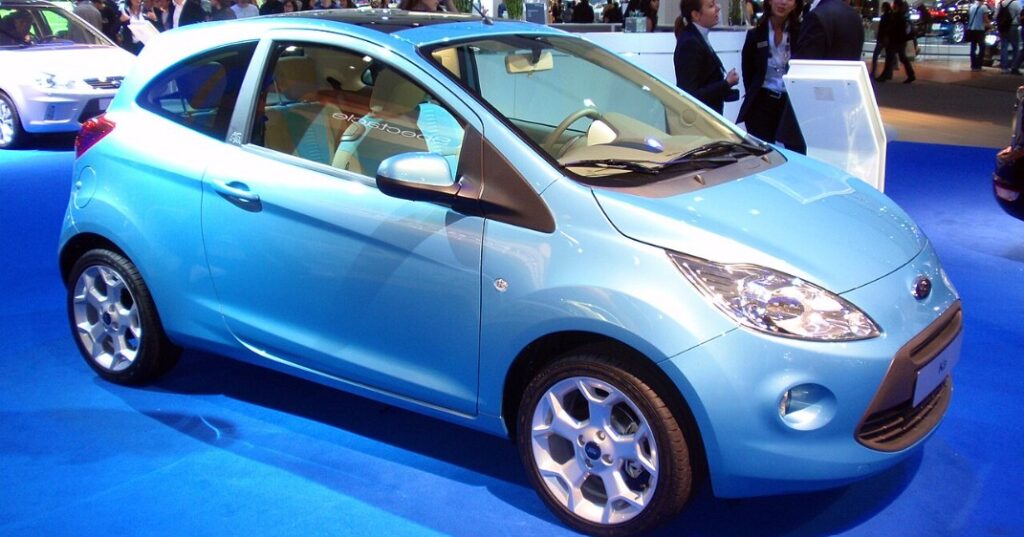
Getting the Ford Ka tyre pressure right may seem like a tiny maintenance job, yet it affects almost everything the car does. Steering response, braking stability, fuel consumption, ride comfort, and tyre life all depend on four relatively small patches of rubber touching the road.
That is why guessing the pressure—or blindly copying a figure from another Ford Ka—is risky.
The correct setting changes according to the Ka generation, tyre size, engine, passenger load, and market specification. Some models also require a higher pressure at the rear when carrying several passengers or a loaded boot. In other words, there is no single universal pressure that fits every Ford Ka ever built.
As a general reference, many Ford Ka versions operate somewhere around 1.8 to 2.5 bar, or approximately 26 to 36 PSI, during normal driving. Certain wheel-and-tyre combinations can require more. However, we should treat that range as orientation only, not as a replacement for the pressure label fitted to the car.
Ford states that the vehicle-specific pressure can normally be found on the driver’s door frame, inside the fuel-filler flap, or in the owner’s manual. Those sources should always take priority over generic online charts.
Let us unpack the details so we can inflate a Ford Ka correctly rather than playing a roadside guessing game.
Content in this publication
- What Is the Correct Ford Ka Tyre Pressure?
- Ford Ka Tyre Pressure by Tyre Size
- Ford Ka Second-Generation Tyre Pressure
- Where to Find the Ford Ka Tyre Pressure Label
- Should Ford Ka Tyres Be Checked Hot or Cold?
- How to Check Ford Ka Tyre Pressure
- How Often Should We Check Ford Ka Tyres?
- Why Ford Ka Tyre Pressure Changes
- Symptoms of Low Ford Ka Tyre Pressure
- Symptoms of Excessive Tyre Pressure
- Normal Load Versus Full-Load Pressure
- Ford Ka Spare-Wheel Pressure
- Is the Number on the Tyre Sidewall the Correct Pressure?
- Ford Ka Tyre Pressure Warning Light
- PSI-to-BAR Conversion for Ford Ka Owners
- Can Different Tyres Change the Required Pressure?
- Common Ford Ka Inflation Mistakes
- How Correct Pressure Improves the Ford Ka
- Final Ford Ka Tyre Pressure Checklist
- Conclusion
- Frequently Asked Questions
What Is the Correct Ford Ka Tyre Pressure?
The correct Ford Ka tyre pressure is the figure printed on the vehicle’s inflation label for the installed tyre size and intended load.
On some Ka models, the label is positioned inside the fuel-filler flap. Other versions may carry it on the edge of the driver’s door or the B-pillar. The owner’s handbook provides another reliable reference.
The label may display two sets of figures:
- Normal load, usually for the driver and a small number of passengers
- Full load, for additional occupants and luggage
- Front-wheel pressure
- Rear-wheel pressure
- Recommended values in bar, PSI, or both
Do not be surprised when the front and rear figures differ. The front axle carries the engine, transmission, and much of the car’s operating weight. As a result, the front tyres may require more air during everyday use.
When the rear seats and luggage compartment are heavily loaded, however, the recommended rear pressure may rise substantially.
Quick Ford Ka Pressure Reference
The following chart provides a practical overview rather than a universal specification:
| Driving situation | Typical reference range |
|---|---|
| Normal light load | 1.8–2.3 bar |
| Normal light load | 26–33 PSI |
| Heavier or full load | 2.5 bar or higher on some versions |
| Heavier or full load | 36 PSI or higher on some versions |
| Temporary spare | Often considerably higher |
| Final authority | Vehicle pressure label |
The figures above help us identify whether a reading looks broadly reasonable, but the door or fuel-flap label remains the final authority.
Ford Ka Tyre Pressure by Tyre Size
Early Ford Ka documentation lists different cold pressures according to wheel and tyre size. This immediately shows why recommending one fixed number for every Ka is inaccurate.
An official Ford handbook for an earlier Ka generation provides the following examples.
| Tyre size | Normal front | Normal rear | Full-load front | Full-load rear |
| 155/70 R13 | 2.2 bar | 1.8 bar | 2.5 bar | 2.5 bar |
| 165/65 R13 | 2.1 bar | 1.8 bar | 2.5 bar | 2.5 bar |
| 165/60 R14 | 2.2 bar | 1.8 bar | 2.5 bar | 2.5 bar |
| 195/45 R16 | 2.0 bar | 1.8 bar | 2.5 bar | 2.5 bar |
Converted approximately into PSI:
| Tyre size | Normal front | Normal rear | Full-load front | Full-load rear |
| 155/70 R13 | 32 PSI | 26 PSI | 36 PSI | 36 PSI |
| 165/65 R13 | 30 PSI | 26 PSI | 36 PSI | 36 PSI |
| 165/60 R14 | 32 PSI | 26 PSI | 36 PSI | 36 PSI |
| 195/45 R16 | 29 PSI | 26 PSI | 36 PSI | 36 PSI |
These figures come from a specific Ford Ka handbook and should not automatically be applied to later Ka or Ka+ models. Specifications can vary by production year, country, engine, wheel package, and homologation.
Ford Ka 155/70 R13 Tyre Pressure
For an early Ford Ka equipped with 155/70 R13 tyres, Ford documentation lists:
- Front, normal load: 2.2 bar or about 32 PSI
- Rear, normal load: 1.8 bar or about 26 PSI
- Front, full load: 2.5 bar or about 36 PSI
- Rear, full load: 2.5 bar or about 36 PSI
This setup reflects the light weight of the original Ka and its front-heavy mechanical layout.
Ford Ka 165/65 R13 Tyre Pressure
For certain early models using 165/65 R13 tyres, the handbook lists:
- Front, normal load: 2.1 bar or about 30 PSI
- Rear, normal load: 1.8 bar or about 26 PSI
- Front and rear, full load: 2.5 bar or about 36 PSI
Even though this tyre is wider than a 155-section tyre, that does not automatically mean it needs more pressure. Tyre construction, axle load, and vehicle calibration matter more than width alone.
Ford Ka 165/60 R14 Tyre Pressure
A Ford Ka fitted with 165/60 R14 tyres may use approximately:
- Front: 2.2 bar or 32 PSI under normal load
- Rear: 1.8 bar or 26 PSI under normal load
- Front and rear: 2.5 bar or 36 PSI when fully loaded
Again, verify this against the sticker on the exact vehicle.
Ford SportKa 195/45 R16 Tyre Pressure
The SportKa’s low-profile 195/45 R16 tyres may use:
- Front, normal load: 2.0 bar or about 29 PSI
- Rear, normal load: 1.8 bar or about 26 PSI
- Front and rear, full load: 2.5 bar or about 36 PSI
Low-profile tyres have less sidewall height, so poor inflation can feel especially obvious. Too little pressure may make the steering vague and leave the wheel more vulnerable to pothole damage. Too much may make the car skitter across rough surfaces like a shopping trolley with hard plastic wheels.
Ford Ka Second-Generation Tyre Pressure
The second-generation Ford Ka, introduced in Europe during the late 2000s, shares part of its platform heritage with the Fiat 500. Its tyre-pressure recommendations are not necessarily identical to those of the original Ka.
Depending on trim, this generation may use sizes such as:
- 165/65 R14
- 175/65 R14
- 195/45 R16
- Market-specific winter or optional tyre sizes
Because Ford offered multiple engines and equipment levels, we should check the pressure plate rather than transfer numbers from an older model.
The later Ka handbook also stresses that pressures should be measured with the tyres rested and cold. It notes that pressure naturally rises after driving and should not be reduced merely because a warm reading appears higher.
Ford Ka+ Tyre Pressure
The Ford Ka+ is a larger and structurally different vehicle from the earlier Ka. It may look like a natural continuation of the same city-car family, but its pressure specifications should be treated separately.
Ka+ models commonly use wheel sizes such as 14, 15, or 16 inches, depending on market and trim. Load ratings and recommended pressures may therefore differ.
For Ka+ models equipped with tyre-pressure monitoring, Ford instructs owners to inflate the tyres to the figure shown on the inflation label, located at the driver’s door edge or B-pillar, and then reset the monitoring system when required.
Where to Find the Ford Ka Tyre Pressure Label
The easiest way to answer “What pressure should my Ford Ka tyres be?” is to inspect the car itself.
Look in these places:
- Inside the driver’s door opening
- On the driver’s B-pillar
- On the edge of the driver’s door
- Inside the fuel-filler flap
- In the wheels-and-tyres section of the owner’s manual
An early Ford Ka handbook specifically places the pressure decal inside the fuel-filler flap.
The label usually includes tyre sizes in a format such as 165/65 R14 79T, followed by front and rear pressure recommendations.
Understanding the Pressure Sticker
A sticker may show symbols representing passengers and luggage.
A smaller passenger symbol generally indicates normal use. A row of several passengers plus luggage indicates the fully loaded setting.
For example, a label could show one pressure set for:
- One to three occupants
- Light or no luggage
It may then show a higher set for:
- Four or five occupants
- A full boot
- Sustained higher-speed travel, where specified
Always match the pressure to the way we are actually using the car.
Should Ford Ka Tyres Be Checked Hot or Cold?
Ford Ka tyre pressure should be checked when the tyres are cold.
A cold tyre generally means the car has been parked for several hours or has travelled only a short distance at low speed. Ford’s guidance recommends allowing the tyres to cool and notes that around three hours produces a more representative reading.
As the tyre rolls, its casing flexes and creates heat. The air inside expands, so the displayed pressure rises.
That increase is normal.
Do Not Release Air from Warm Tyres
Suppose the recommended pressure is 32 PSI, but a warm tyre reads 35 PSI after a motorway journey. Releasing air until it reaches 32 PSI could leave it underinflated once it cools.
Ford’s Ka handbook explicitly warns owners not to reduce a warm tyre’s pressure merely because it is above the prescribed cold figure. Instead, check it again when cold.
This is one of the most common pressure mistakes, and it is surprisingly easy to make.
How to Check Ford Ka Tyre Pressure
Checking the pressure takes only a few minutes.
What We Need
Prepare:
- A reliable digital or mechanical pressure gauge
- A compressor or foot pump
- The vehicle’s pressure label
- A cloth for dirty valve areas
- Replacement valve caps if any are missing
Step-by-Step Method
- Park the Ka on a safe, level surface.
- Apply the handbrake and switch off the engine.
- Allow the tyres to cool.
- Find the recommended front and rear figures.
- Remove the valve cap from the first tyre.
- Push the gauge firmly onto the valve.
- Read the pressure.
- Add air if the reading is low.
- Release a small amount if it is too high and the tyre is cold.
- Recheck the reading.
- Replace the valve cap.
- Repeat the process on all four tyres.
- Check the spare wheel where fitted.
- Reset the tyre-pressure monitoring system if the model requires it.
Ford advises checking the recommended figure first and then using a gauge or vehicle display to inspect the actual pressure.
How Often Should We Check Ford Ka Tyres?
A sensible routine is to check the tyres:
- Approximately every two weeks
- Before a long journey
- Before carrying a heavy load
- After a major temperature change
- When the steering feels unusually heavy or vague
- When one tyre appears visibly lower
- After hitting a severe pothole
- When the warning light appears
An early Ford Ka handbook recommends checking every tyre, including the spare, approximately every two weeks and before long journeys.
Monthly checks are better than neglect, but a fortnightly routine gives us more opportunity to spot slow punctures and leaking valves.
Why Ford Ka Tyre Pressure Changes
Tyres are not sealed time capsules. Air gradually escapes through the rubber, valve, and wheel interface.
Pressure can also change because of:
- Falling ambient temperature
- Rising ambient temperature
- Slow punctures
- Damaged valves
- Corroded wheel rims
- Recently fitted tyres settling on the bead
- Incorrect readings from an inaccurate gauge
- Natural pressure loss over time
Cold Weather and Ford Ka Pressure
When outdoor temperature drops, tyre pressure usually falls. A tyre inflated correctly during a warm afternoon may read several PSI lower on a freezing morning.
We should not compensate by permanently overinflating the tyres. Instead, measure them cold and restore the manufacturer’s specified figure.
Hot Weather and Pressure
Hot weather, sunlight, and prolonged driving raise tyre temperature and pressure. The number may look high after a journey, but this does not automatically mean the tyre was overinflated when cold.
Check again after the vehicle has rested.
Symptoms of Low Ford Ka Tyre Pressure
A Ford Ka with insufficient pressure may display several warning signs:
- Heavy or slow steering
- Increased fuel consumption
- A soft, unsettled ride
- Poor directional stability
- Excessive wear on both tread shoulders
- Increased tyre noise
- Longer braking distances
- A low-pressure warning light
- The vehicle pulling to one side
Ford’s handbook warns that insufficient inflation can increase fuel consumption, reduce tread life, and affect safe driving. It also explains that low pressure tends to wear the outer edges of the tread.
Why Underinflation Is Dangerous
An underinflated tyre flexes more than intended. That movement creates heat. At motorway speed, the tyre may behave like a repeatedly bent paper clip: each cycle adds stress until the structure can no longer tolerate it.
Ford warns that pressure that is too low can cause overheating and serious tyre damage.
Symptoms of Excessive Tyre Pressure
Too much air is not a clever shortcut to better fuel economy.
Overinflation can cause:
- A harsh, bouncy ride
- Reduced grip on rough roads
- Greater sensitivity to potholes
- Faster wear through the centre of the tread
- Nervous steering
- Less effective contact with uneven surfaces
The later Ka manual illustrates the usual wear pattern clearly: low pressure wears the edges, while excessive pressure wears the centre.
Correct pressure gives the tread a more even footprint, like pressing a flat stamp against paper rather than balancing it on its middle or edges.
Normal Load Versus Full-Load Pressure
This distinction matters more than many drivers realise.
Normal-load pressure is intended for typical everyday use, usually involving a limited number of passengers and modest luggage.
Full-load pressure accounts for the added weight of:
- Rear-seat passengers
- Suitcases
- Shopping
- Work equipment
- A heavily loaded boot
On several early Ka tyre sizes, the rear recommendation increases from 1.8 bar to 2.5 bar when fully loaded. That is a substantial jump from about 26 PSI to 36 PSI.
Should We Lower the Pressure After the Trip?
Yes, when the car returns to normal light-load use, adjust the tyres to the normal-load setting once they are cold—provided the label specifies a different normal figure.
Leaving the rear tyres at full-load pressure may produce a firmer and less settled ride when the car is empty.
Ford Ka Spare-Wheel Pressure
The spare should not be forgotten. It is no use discovering a flat spare while standing beside a punctured road tyre in the rain.
For an early Ka, Ford states that the spare pressure should be set to the highest value specified for the relevant vehicle and tyre-size combination. The handbook’s table also identifies certain spare-wheel versions with distinct inflation requirements.
Temporary space-saver tyres often need much more pressure than standard road tyres. Never assume that the road-wheel figure applies to the spare.
Check:
- The pressure printed on the spare-wheel label
- The owner’s manual
- The tyre sidewall for limits—not the normal operating recommendation
- Any speed restriction attached to the wheel
Is the Number on the Tyre Sidewall the Correct Pressure?
Usually, no.
The pressure moulded into the tyre sidewall commonly represents a maximum inflation or load-related limit established by the tyre manufacturer. It is not necessarily the recommended operating pressure for a Ford Ka.
The vehicle manufacturer’s label considers:
- Axle loads
- Suspension tuning
- Steering behaviour
- Braking calibration
- Ride comfort
- Tyre size
- Passenger and luggage capacity
Use the Ka’s pressure label, not the maximum sidewall number.
Ford Ka Tyre Pressure Warning Light
Some later Ford Ka and Ka+ versions use an indirect tyre-pressure monitoring system. Instead of measuring pressure directly inside each tyre, an indirect system may compare wheel rotation through the anti-lock braking sensors.
A tyre that loses pressure becomes slightly smaller in rolling circumference and may rotate differently. The system detects that change and triggers a warning. Ford explains this operating principle in its owner documentation.
What to Do When the Light Comes On
When the warning appears:
- Reduce speed smoothly.
- Avoid harsh cornering and braking.
- Stop somewhere safe.
- Inspect all four tyres.
- Check the pressure when practical.
- Inflate them to the label values.
- Look for nails, cuts, bulges, or obvious damage.
- Reset the monitoring system where required.
If one tyre repeatedly loses pressure, do not keep topping it up indefinitely. Have it inspected for a puncture, valve leak, or wheel-rim problem.
How to Reset the Ford Ka TPMS
The exact process depends on the model.
Some versions use:
- A dashboard menu
- A dedicated reset button
- A steering-wheel control
- A calibration sequence after inflation
For the Ka+/Figo platform, Ford states that owners should first set all tyres to the correct pressure and then perform the monitoring-system reset procedure.
Do not reset the system before correcting the tyres. Doing so can teach the vehicle that an incorrect pressure condition is normal.
PSI-to-BAR Conversion for Ford Ka Owners
Ford labels may display bar, PSI, or both.
Useful conversions include:
| BAR | Approximate PSI |
| 1.8 bar | 26 PSI |
| 1.9 bar | 28 PSI |
| 2.0 bar | 29 PSI |
| 2.1 bar | 30 PSI |
| 2.2 bar | 32 PSI |
| 2.3 bar | 33 PSI |
| 2.4 bar | 35 PSI |
| 2.5 bar | 36 PSI |
| 2.6 bar | 38 PSI |
| 3.0 bar | 44 PSI |
The conversion does not need to be mathematically perfect for an ordinary gauge, but we should follow the nearest value shown on the vehicle label.
Can Different Tyres Change the Required Pressure?
Potentially, yes.
Changing from the original tyre size to a different approved size can alter load capacity, sidewall characteristics, and the pressure required to support the vehicle correctly.
Never choose a new pressure merely because another tyre “looks similar.”
When fitting non-standard wheels or tyres, consult:
- Ford specifications
- A qualified tyre professional
- The tyre manufacturer’s technical data
- Local vehicle-modification rules
The same warning applies to reinforced or extra-load tyres. Their higher maximum rating does not automatically mean we should inflate them to a higher everyday pressure.
Common Ford Ka Inflation Mistakes
Using the Same Pressure on Every Ka
A first-generation Ka, second-generation Ka, SportKa, StreetKa, and Ka+ can use different tyres and load settings.
Checking Immediately After a Fast Drive
Warm tyres naturally show a higher figure.
Using the Tyre Sidewall Maximum
That figure is not the vehicle’s everyday recommendation.
Ignoring the Rear Pressure When Loaded
A boot full of luggage can dramatically change the rear-axle requirement.
Resetting the Warning System Too Soon
Correct the pressure first. Reset second.
Trusting a Petrol-Station Gauge Blindly
Public gauges can be damaged or poorly calibrated. A small personal gauge provides a useful comparison.
Forgetting the Valve Caps
Valve caps help protect the valve from dirt, water, and debris. Replace missing ones.
How Correct Pressure Improves the Ford Ka
With the tyres properly inflated, we may notice:
- Cleaner steering response
- More predictable braking
- Better stability
- Improved ride quality
- More even tread wear
- Lower rolling resistance
- Reduced risk of heat-related tyre damage
- Better resistance to wheel damage from potholes
Pressure cannot transform worn tyres into good ones, but it allows healthy tyres to perform as designed.
Final Ford Ka Tyre Pressure Checklist
Before driving, confirm:
- The tyre size matches the pressure label
- The tyres are cold
- Front pressure is correct
- Rear pressure matches the load
- No tyre has visible damage
- Valve caps are fitted
- The spare has been checked
- The TPMS has been reset when necessary
- Pressure is rechecked before a long journey
Conclusion
The correct Ford Ka tyre pressure is not one magical number shared by every model. It depends on the generation, tyre size, axle, vehicle load, and market specification.
For several early Ka versions, official handbook figures range from around 1.8 bar at the rear under normal load to 2.5 bar front and rear when fully loaded. Other models, especially the later Ka and Ka+, may use different settings.
The safest method is straightforward: find the pressure sticker, check the tyres cold, adjust the front and rear separately, account for passengers and luggage, and reset the monitoring system where necessary.
A pressure check takes only minutes, yet it can save fuel, extend tyre life, sharpen the car’s handling, and prevent a minor maintenance issue from turning into an expensive roadside problem.
Frequently Asked Questions
1. What PSI should Ford Ka tyres be?
Many Ford Ka versions use pressures in the region of 26 to 36 PSI, depending on tyre size and vehicle load. For example, some early models use about 30–32 PSI at the front and 26 PSI at the rear under normal load, rising to about 36 PSI when fully loaded. Always verify the exact figures on the vehicle’s pressure label.
2. Where is the Ford Ka tyre-pressure sticker?
It may be inside the fuel-filler flap, on the driver’s door edge, or on the driver’s door frame or B-pillar. Earlier Ford Ka documentation specifically identifies the inside of the fuel-filler flap as the label location.
3. Should all four Ford Ka tyres have the same pressure?
Not necessarily. Many versions require more pressure at the front than at the rear during normal driving. Under full load, the front and rear recommendations may become equal or the rear figure may increase.
4. Why does my Ford Ka tyre-pressure light stay on?
The tyres may still be incorrectly inflated, one tyre may have a slow leak, or the monitoring system may need recalibration. Set all tyres to the correct cold pressures, inspect them for damage, and follow the model-specific reset procedure.
5. How often should Ford Ka tyre pressure be checked?
Check it approximately every two weeks and before long journeys. It is also wise to inspect the pressures after sharp temperature changes, pothole impacts, tyre replacement, or whenever the car’s steering or ride feels unusual.
If you want to know other articles similar to Ford Ka Tyre Pressure: Correct PSI, BAR, and Setup Guide you can visit the category Service and Parts.
Nissan Rogue Oil Change Cost: Prices, Service Options, and What to Expect
Nissan Rogue Key Battery Replacement: Easy Step-by-Step Guide
Nissan Rogue Oil Change Interval: Complete Guide by Model Year
Nissan Rogue Brake Pads and Rotors Cost: Complete 2026 Guide

Kia Sorento Service Reset: How to Reset the Service Light
Kia Sorento Fuel Tank Capacity: Gallons, Litres and Model Differences
Leave a Reply
More content of your interest