
Toyota Estima Luggage Capacity: How Much Can It Really Carry?

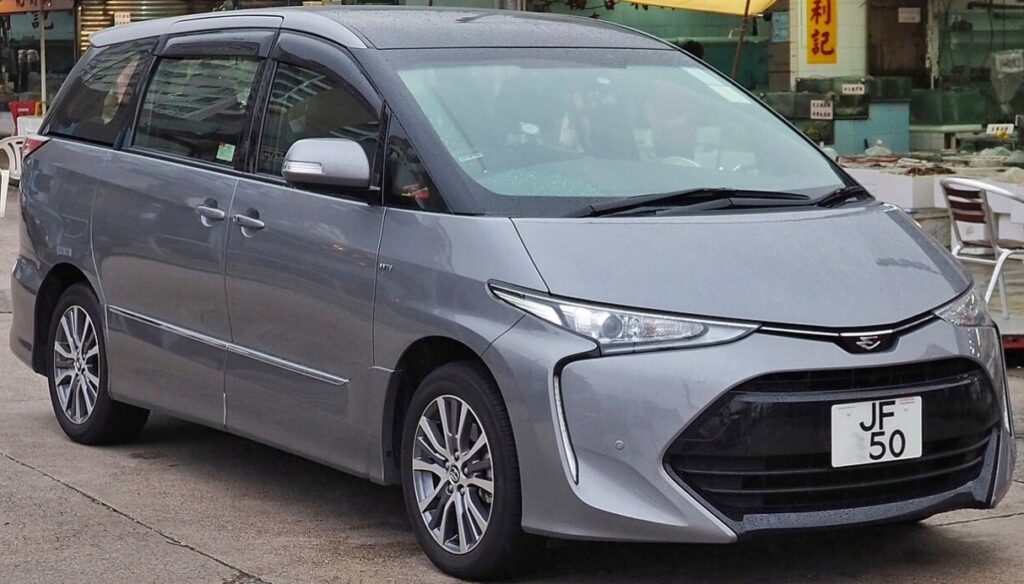
The Toyota Estima luggage capacity is one of the biggest reasons this Japanese MPV remains attractive long after production ended. It combines three-row seating with a genuinely flexible rear cargo area, and in many versions the third-row seats can disappear into the floor rather than simply folding forward. That small piece of engineering makes a surprisingly big difference when we are trying to load suitcases, pushchairs, shopping, camping gear, or the luggage of an entire family.
There is one complication, though: finding a single official Toyota Estima boot-capacity figure is harder than it should be. The Estima was primarily a Japanese-market vehicle, specifications varied between generations, and Toyota often focused on interior dimensions and seating flexibility rather than publishing one universal luggage-volume figure in litres.
So instead of pretending every Estima has exactly the same boot, we are going to look at the question the useful way. How much room is available with seven or eight people aboard? What happens when we fold the third row? Can an Estima take large suitcases? And which seating configuration is best if luggage matters more than passenger luxury?
Content in this publication
- Toyota Estima Luggage Capacity at a Glance
- Why Toyota Estima Boot-Space Figures Are So Confusing
- Toyota Estima Luggage Capacity With All Seats Up
- Toyota Estima Luggage Capacity With the Third Row Folded
- Can a Toyota Estima Fit Four Large Suitcases?
- Seven-Seat vs Eight-Seat Toyota Estima Luggage Space
- Toyota Estima Third-Row Storage Well
- Toyota Estima Luggage Capacity by Generation
- First-Generation Toyota Estima Luggage Capacity
- Second-Generation Toyota Estima Luggage Capacity
- Third-Generation Toyota Estima Luggage Capacity
- How Much Luggage Fits in a Toyota Estima Hybrid?
- Toyota Estima Luggage Space With Second Row Forward
- Toyota Estima Boot Opening and Loading Practicality
- Can a Toyota Estima Carry a Pushchair With All Seats Up?
- Is the Toyota Estima Good for Family Holidays?
- Toyota Estima for Eight Passengers and Luggage
- Toyota Estima vs SUV Luggage Capacity
- Toyota Estima vs Toyota Alphard for Luggage
- Toyota Estima vs Toyota Voxy for Luggage
- Does the Seven-Seat Estima Have More Luggage Space Than the Eight-Seater?
- How to Maximize Toyota Estima Luggage Capacity
- Should We Use a Roof Box on a Toyota Estima?
- What to Check Before Buying an Estima for Cargo Space
- Is the Toyota Estima Luggage Capacity Good Enough for Everyday Use?
- Toyota Estima Luggage Capacity: Our Verdict
- Frequently Asked Questions About Toyota Estima Luggage Capacity
Toyota Estima Luggage Capacity at a Glance
The easiest way to understand the Estima is to think of its luggage space as adjustable rather than fixed.
With every passenger seat occupied, cargo room is naturally limited by the upright third row. There is still usable space behind those seats, but we should not expect the vast square boot of a commercial van. Owners of post-2006 Estimas commonly report enough room for roughly two large suitcases behind the third row, although the exact result depends heavily on suitcase dimensions and seat position.
Fold the third-row seats into the floor, however, and the character of the vehicle changes. Toyota specifically designed the third-generation Estima so its third-row seating could be stored beneath the floor. On eight-seat versions, Toyota also allowed the second row to tip forward, creating a substantially larger and flatter load area.
That flexibility is the key to the Estima's appeal.
Approximate Cargo Configurations
| Seating configuration | Practical luggage ability |
|---|---|
| All 7–8 seats occupied | Moderate; suitable for several bags or around two large suitcases |
| One section of third row folded | Useful mix of passengers and luggage |
| Entire third row folded | Large family-sized cargo area |
| Third row folded + second row moved forward | Very large load floor |
| Rear seating maximized for cargo | Suitable for bulky household, camping, or travel equipment |
We should treat suitcase counts as practical estimates rather than factory guarantees because the shape of luggage matters just as much as its nominal size.
Why Toyota Estima Boot-Space Figures Are So Confusing
Search for the cargo capacity of a conventional SUV and we usually find a neat number such as 500 litres. Search for an imported Toyota Estima and suddenly things get murky.
There are several reasons.
First, the Estima existed across multiple generations and was sold in different forms, including seven-seat, eight-seat, petrol, hybrid and narrower Estima Emina and Lucida derivatives during the earlier era.
Second, specifications published in Japan do not always follow the same cargo-measurement conventions used by European manufacturers.
Third, third-party databases sometimes mix Estima, Previa and Tarago data or quote maximum capacities without explaining which seats are folded.
One technical database, for example, lists a 515-litre minimum luggage capacity and 2,925-litre maximum capacity for a second-generation 3.0-litre Estima specification. Those figures can be useful as a reference, but we would not automatically apply them to every Estima because equipment, seating arrangement and market specification differ.
Estima, Previa and Tarago: Are Their Boot Sizes the Same?
Not necessarily.
The names are related, but specifications are market-dependent. Toyota used Previa in several export markets and Tarago in Australia, while Estima was the Japanese-market identity.
That means we should check the exact chassis generation and seating layout instead of assuming that every luggage figure published for a Previa automatically applies to an Estima.
The distinction matters even more with early Estima Lucida and Emina versions, which were narrower and shorter than full-width versions. Toyota's own history of the Previa notes that the Japanese market included these more compact variants.
Toyota Estima Luggage Capacity With All Seats Up
This is usually the question families care about most.
Imagine seven people heading to an airport. Everybody fits comfortably enough, but does everybody's luggage?
With the third row upright, the Estima has a relatively shallow luggage compartment behind it. The floor is low, though, and the wide tailgate makes the space easier to use than its depth might suggest.
Real-world owner feedback for post-2006 models suggests that around two large suitcases can fit in the floor area with the third row in use.
That does not mean two suitcases are the absolute maximum. Softer bags, cabin cases and backpacks can often be stacked around them.
What Can We Realistically Carry With Seven People?
A sensible airport configuration might include:
- Two large checked-luggage suitcases.
- Several backpacks or soft overnight bags.
- Small cabin cases positioned vertically where space permits.
- Loose coats and smaller items around the luggage.
Trying to carry seven adults plus seven enormous hard-shell suitcases is another story. In that situation, the Estima may need a roof box, trailer, luggage delivery service, or fewer occupied seats.
The Estima is a clever MPV, not a magician.
Toyota Estima Luggage Capacity With the Third Row Folded
Here is where things become much more interesting.
Toyota designed the third-generation Estima's rear seats to fold down into the floor, rather than leaving a large seatback sitting on top of the cargo deck. Toyota itself described the resulting area as a large, flat cargo space, particularly on the eight-seat model.
This arrangement gives us a broad, relatively clean loading surface behind the second row.
A user-measured 2008 Estima provides a useful real-world reference. With the third row stored and enough room retained for second-row passengers, the reported cargo area measured approximately 100 cm high, 130 cm wide and 120 cm long. Moving the second row close to the front added roughly another 40 cm of usable length. These are owner measurements rather than standardized Toyota luggage-volume figures, so individual vehicles may differ.
Why the Underfloor Third Row Matters
Think about a conventional three-row SUV. We fold its rear seats and often get a raised floor, awkward hinges or a noticeable slope.
The Estima takes a more elegant approach. Once its third row disappears into the storage well, bulky objects have fewer obstacles to fight against.
That makes loading easier for things such as:
- Large suitcases
- Folding bicycles
- Camping boxes
- Pushchairs
- Sports equipment
- Flat-pack furniture
- Pet crates
- Moving boxes
It turns the rear of the Estima into something closer to a compact van without making us drive a vehicle that looks like one.
Can a Toyota Estima Fit Four Large Suitcases?
In most third-generation Estimas, four large suitcases should be achievable if the entire third row is folded away, provided the cases are conventionally sized and the second row is not pushed all the way back.
With all seven or eight seats occupied, four genuinely large rigid cases are much harder to accommodate.
Soft-sided luggage works better because it can squeeze into irregular gaps. Hard-shell cases behave like a game of Tetris where every piece stubbornly refuses to change shape.
Best Setup for Airport Runs
For an airport trip involving four or five passengers, we would usually choose:
- Keep the front seats occupied.
- Use the second row for passengers.
- Fold the third row completely into the floor.
- Place large cases flat or vertically depending on their dimensions.
- Use smaller bags to fill spaces around the larger luggage.
This configuration takes advantage of what the Estima does best: sacrificing unused passenger capacity for a huge jump in cargo room.
Seven-Seat vs Eight-Seat Toyota Estima Luggage Space
The distinction between seven- and eight-seat Estimas is worth understanding because their cabins behave differently.
Seven-Seat Estima
Seven-seat versions generally use a pair of individual second-row captain's chairs. These seats prioritize passenger comfort and provide an aisle between them.
They are excellent for families because someone can reach the third row without performing the gymnastics of climbing over a bench.
The trade-off? Individual captain's seats can be bulkier when we are trying to maximize every last centimetre of carrying space.
Eight-Seat Estima
Eight-seat versions use a second-row bench arrangement designed to accommodate an additional passenger.
Toyota stated that the second row in the eight-seat third-generation model could tip up while the third row folded into the floor, producing a large and flat cargo area.
Which Is Better for Luggage?
For normal family travel, the difference may be less important than we expect.
The seven-seat version is better when passenger access and comfort matter.
The eight-seat version may be more attractive when we want maximum seating flexibility and regularly alternate between people-carrying and cargo-carrying duties.
Toyota Estima Third-Row Storage Well
One of the Estima's secret weapons is actually beneath the luggage floor.
When the third-row seats are upright, the recess used to store those seats can provide additional depth for cargo. That means the nominal-looking luggage compartment can sometimes swallow more than its shallow appearance suggests.
The same owner measurements from a 2008 model described an additional compartment beneath the rear area associated with the folding-seat mechanism.
That depth is useful for bags that we do not want sliding around the cabin.
Using the Deep Rear Compartment Efficiently
Instead of stacking everything upward, we can load smaller or heavier pieces lower down. Grocery bags, backpacks, shoes and compact travel bags are good candidates.
Keeping weight low also makes luggage less likely to tumble forward when we brake.
Toyota Estima Luggage Capacity by Generation
The Estima went through three main generations, and luggage practicality changed along the way.
First-Generation Toyota Estima Luggage Capacity
The original Estima arrived with a futuristic shape that still looks distinctive decades later. Its packaging was unusually clever because Toyota placed the engine beneath the floor, helping create a relatively flat interior.
Toyota's historical material for the closely related first-generation Previa highlights accommodation for eight occupants and a split-folding third row for additional luggage room.
Estima Emina and Lucida Cargo Space
We should be careful with the Emina and Lucida.
These Japanese-market derivatives were deliberately narrower and shorter than the standard vehicle, so they naturally have slightly less interior width and overall cargo potential.
They can still be impressively practical, but a measurement from a full-size Estima should not automatically be applied to them.
Second-Generation Toyota Estima Luggage Capacity
The second-generation model moved toward a more conventional front-engine layout while retaining the smooth, streamlined MPV body.
This generation is particularly interesting because some specification databases report substantial luggage figures.
For one 3.0-litre model, figures of 515 litres minimum and 2,925 litres maximum are published.
Those numbers suggest just how much interior volume can become available once passenger seating is reconfigured.
How Useful Is 2,925 Litres in Practice?
Nearly 3,000 litres sounds enormous, but maximum-volume figures usually represent an optimized cargo configuration rather than normal seven-seat family use.
Think of it as the Estima wearing its removal-van hat.
The figure tells us more about the vehicle's ultimate flexibility than about how many bags we can place behind an occupied third row.
Third-Generation Toyota Estima Luggage Capacity
For buyers searching the used-import market today, the 2006-onward third generation is often the most relevant.
Toyota increased its wheelbase by 50 mm compared with its predecessor while introducing exceptionally flexible second- and third-row seating.
The third-row seats folding into the floor are especially valuable.
Why the Third Generation Is So Practical
The appeal comes from the combination of:
- A long passenger compartment.
- Sliding second-row seats.
- Fold-away third-row seating.
- Wide rear hatch.
- Low luggage floor.
- Seven- or eight-seat layouts.
- Relatively flat cargo space when rear seats are stored.
Toyota gave seven-seat models second-row seats with an 800 mm sliding range, emphasizing just how much cabin space could be redistributed between passenger legroom and carrying capacity.
That sliding range matters enormously when packing luggage.
Push the chairs rearward and passengers feel as though they are sitting in a lounge.
Move them forward and the boot grows.
How Much Luggage Fits in a Toyota Estima Hybrid?
Estima Hybrid models generally preserve the MPV's core strength: flexible seating and generous interior packaging.
However, hybrid components can influence underfloor packaging, so we should not assume an identical measurement between every petrol and hybrid derivative.
Published specifications for an early third-generation Estima Hybrid show the same basic 2,900 mm wheelbase and similar overall dimensions to conventional models, while offering six- or eight-seat configurations depending on specification.
Does the Hybrid Battery Ruin the Boot?
Not in the dramatic way people sometimes imagine.
The Estima Hybrid was engineered as a hybrid MPV rather than having batteries casually dropped into the luggage compartment afterward. We therefore still get a practical family vehicle rather than a tiny boot occupied by electrical hardware.
Nevertheless, when buying one, we would inspect the exact vehicle rather than rely on a petrol-model luggage measurement.
Toyota Estima Luggage Space With Second Row Forward
This is the configuration that surprises people.
Third row down. Second row slid forward. Huge rectangular floor behind.
One owner-measured third-generation Estima offered roughly 120 cm of cargo length while retaining usable second-row legroom, with around another 40 cm available when the second row was moved close to the front seats.
That means we can potentially approach about 1.6 metres of rear load length in that particular setup.
Again, this is a real-world measurement, not a standardized Toyota cargo specification, but it illustrates the flexibility very well.
Can We Sleep in the Back of an Estima?
For camping conversions, the Estima is popular for good reason.
With enough seats moved or folded, its long interior can accommodate a sleeping platform. Whether an adult can stretch out completely depends on height, platform design and how far forward the front seats are positioned.
The smooth interior shape and sliding doors also make the Estima far easier to live with at a campsite than many similarly sized SUVs.
Toyota Estima Boot Opening and Loading Practicality
Volume is only half the story.
A 600-litre boot with a narrow opening can be more frustrating than a 500-litre boot shaped like a clean rectangle.
The Estima's large top-hinged tailgate gives us broad access to the cargo compartment. Earlier Previa designs were also praised by Toyota for their large rear hatch and relatively low loading lip.
That philosophy carried through the Estima family.
Why a Low Floor Helps
A lower luggage floor means less lifting.
That is useful when loading:
- 20–30 kg suitcases
- Baby pushchairs
- Mobility equipment
- Heavy shopping
- Coolers
- Tool boxes
When we repeatedly load a family vehicle, a few centimetres of lift height can feel like a mile by the end of the day.
Can a Toyota Estima Carry a Pushchair With All Seats Up?
Usually, yes—but the pushchair matters.
A compact folding stroller should be relatively straightforward. A bulky double pushchair can consume much of the space behind the third row.
This is where the deep lower section of the rear luggage compartment becomes useful. Some prams fit vertically or at an angle more efficiently than they would in a conventional SUV boot.
Best Approach for Families With Babies
Before purchasing an Estima, bring the actual pushchair to the vehicle.
Seriously.
Brochure litres cannot tell us whether a 78 cm-wide buggy handle will clear a trim panel. A five-minute physical loading test can reveal more than an hour spent comparing specification sheets.
Is the Toyota Estima Good for Family Holidays?
Very much so, provided we match passenger numbers to luggage requirements.
A family of four or five has an enormous advantage because the third row can often remain stored. That leaves the second row for passengers and the entire back section for luggage.
A family of seven or eight faces a tighter equation because every seat is required.
The Sweet Spot: Four to Five Travellers
For long-distance touring, this is arguably the Estima's ideal configuration.
We get:
- Generous passenger space.
- Third row folded away.
- Large luggage compartment.
- Easy sliding-door access.
- Room to separate passengers and cargo.
- Space for holiday equipment.
It feels less like cramming into a vehicle and more like packing a small mobile living room.
Toyota Estima for Eight Passengers and Luggage
Eight passengers are possible in appropriately configured versions, but luggage planning becomes important.
The biggest mistake is assuming that because a vehicle has eight seats, it can automatically carry eight people's holiday luggage.
Seat count and cargo capacity compete for the same real estate.
How to Pack an Eight-Seat Estima
For eight people, we would prioritize compact, stackable luggage.
Soft duffel bags are particularly useful because they conform to the available space. Cabin-size cases are easier to position than multiple 75 cm hard-shell cases.
For a short trip, eight passengers can be perfectly realistic.
For two weeks abroad with eight giant suitcases? We would look at additional cargo solutions.
Toyota Estima vs SUV Luggage Capacity
This is where the Estima often shines.
Many three-row SUVs look enormous from the outside yet offer surprisingly little space behind the third row. Their rear suspension, wheel arches and high floor consume valuable interior volume.
The Estima was designed primarily as a people mover, so its body is more box-shaped where it counts.
Why the Estima Feels Bigger Than an SUV
Its advantage comes from packaging rather than sheer exterior bulk.
The tall cabin, long wheelbase and sliding doors dedicate more of the vehicle's footprint to passengers and possessions.
If we need seven seats once or twice a year but lots of luggage space every weekend, an Estima can be more useful than a similarly sized SUV.
Toyota Estima vs Toyota Alphard for Luggage
The Alphard occupies a more luxurious and generally larger class of Japanese MPV.
It can offer additional cabin height and a more imposing interior, but the Estima has its own advantage: it is lower, sleeker and often easier to maneuver.
The Estima also tends to feel less like driving a luxury shuttle bus.
For pure cargo volume, the Alphard may have the upper hand depending on generation and seating configuration. For the balance between external size, passenger comfort and luggage flexibility, the Estima remains remarkably competitive.
Toyota Estima vs Toyota Voxy for Luggage
The Toyota Voxy uses a squarer, taller body. That shape is brilliant for cargo because vertical walls waste very little space.
The Estima takes a different route. It is lower and more streamlined, but its sliding seats and folding third row give it serious versatility.
We might choose the Voxy when maximum box-like practicality comes first.
We might choose the Estima when we want cargo flexibility with more car-like road manners and styling.
Does the Seven-Seat Estima Have More Luggage Space Than the Eight-Seater?
Not automatically.
We need to distinguish fixed luggage capacity from configuration flexibility.
The seven-seater's captain's chairs leave an open passage through the center but occupy individual floor rails.
The eight-seater can carry one more person and has different second-row folding behavior.
The real winner depends on how we use the vehicle.
Choose Seven Seats If…
We regularly carry four to six people, value second-row comfort, want easy third-row access, and expect the third row to spend a lot of time folded away.
Choose Eight Seats If…
Maximum passenger capacity is important and we occasionally need the vehicle to switch between family shuttle and large-load carrier.
How to Maximize Toyota Estima Luggage Capacity
The Estima rewards smart packing.
Start by deciding which seats actually need to remain usable. Keeping one empty seat upright simply because it is there can cost a surprising amount of floor space.
Then load the largest rigid items first.
A Practical Packing Order
- Fold unused third-row seats.
- Move second-row seats only as far back as passengers genuinely need.
- Load large hard-shell cases first.
- Place heavy items low and close to the center of the vehicle.
- Fill irregular gaps with backpacks or soft bags.
- Keep frequently needed objects close to the tailgate.
- Avoid stacking luggage above the seatbacks unless it is properly secured.
That last point is important. A suitcase can become a very heavy projectile during sudden braking.
Should We Use a Roof Box on a Toyota Estima?
A roof box can be a sensible solution when every seat is occupied.
Instead of forcing luggage around passengers, lightweight bulky items can move upstairs.
Think jackets, sleeping bags, sports equipment or soft travel bags rather than exceptionally heavy objects.
Always respect the vehicle's permitted roof load and the rack manufacturer's limits.
When a Roof Box Makes the Most Sense
It is particularly useful for:
- Seven- or eight-person holidays.
- Ski trips.
- Camping.
- Airport transfers.
- Families carrying pushchairs.
- Trips where the third row cannot be folded.
The penalty is increased aerodynamic drag and potentially higher fuel consumption, especially at motorway speeds.
What to Check Before Buying an Estima for Cargo Space
If luggage capacity is a major reason for buying the vehicle, inspect the seating mechanisms carefully.
An Estima with clever seats that no longer fold properly loses one of its greatest advantages.
Check that the third row releases correctly, folds into its intended position and rises again without unusual resistance.
Move the second row through its full adjustment range too.
Measure the Car, Not Just the Brochure
Bring a tape measure.
Measure:
- Width at the narrowest point.
- Width between wheel-arch trim.
- Floor length behind the third row.
- Floor length with the third row folded.
- Height beneath the tailgate opening.
- Height inside the cargo compartment.
- Length with the second row moved forward.
If you have a specific object to transport, measure that first.
A 1,000-litre theoretical space is useless if the opening is five centimetres too narrow for the thing we actually own.
Is the Toyota Estima Luggage Capacity Good Enough for Everyday Use?
For most families, yes.
Its greatest strength is not a particular litre figure. It is the way we can rapidly redistribute space between humans and luggage.
Need all seven seats for the school run? Raise the third row.
Heading away with four people for a week? Drop it into the floor.
Bought a piece of furniture? Slide the second row forward.
That flexibility is what makes an ageing Estima continue to compete with much newer crossovers.
Toyota Estima Luggage Capacity: Our Verdict
The Toyota Estima luggage capacity is best described as highly adaptable rather than simply large.
With all seven or eight seats occupied, luggage room is useful but limited. Real-world reports suggest roughly two large suitcases can fit behind the third row in some post-2006 configurations, although smaller bags can usually be packed around them.
Fold the third row into the floor and the situation changes dramatically. Toyota intentionally designed third-generation models to create a large, flat cargo area, while their sliding second-row seating allows us to choose between luxurious passenger legroom and significantly more load length.
That is the Estima's trick.
It does not force us to choose permanently between an eight-seat people carrier and a practical load hauler. Within a few minutes, it can become either.
For families of four or five, the Estima is especially impressive because the third row can remain folded most of the time, producing a substantial luggage compartment while preserving generous passenger space.
For seven or eight travellers, we need to pack more thoughtfully. But compared with many three-row SUVs, the Estima still makes remarkably good use of its footprint.
If luggage flexibility sits near the top of our shopping list, this Toyota remains one of the more cleverly packaged used Japanese MPVs around.
Frequently Asked Questions About Toyota Estima Luggage Capacity
1. How many suitcases fit in a Toyota Estima?
With all seats occupied, owners of some post-2006 Estimas report room for roughly two large suitcases behind the third row. Smaller bags can usually fill the remaining gaps. With the third row folded into the floor, four or more large cases are substantially easier to accommodate, depending on their dimensions and the position of the second row.
2. Do Toyota Estima third-row seats fold flat?
On the third-generation Estima introduced in 2006, Toyota designed the third-row seats to fold into the floor. Toyota stated that this arrangement could create a large and flat cargo space, particularly when combined with the movable second-row seating.
3. What is the Toyota Estima boot capacity in litres?
There is no single reliable litre figure covering every Estima generation and seating configuration. One database lists 515 litres minimum and 2,925 litres maximum for a particular second-generation 3.0-litre Estima, but those numbers should not be generalized to every model. The exact capacity depends on generation, seat layout, powertrain and how the seats are positioned.
4. Is a Toyota Estima big enough for a family of five and luggage?
Yes. A five-person family can normally use the front and second rows plus part of the third row, or fold the entire third row away and gain a very large cargo compartment. For holidays, the latter arrangement is one of the Estima's most practical configurations.
5. Is the Toyota Estima good for airport transfers?
Yes, particularly when carrying four to six passengers. With fewer passengers than available seats, the third row can be folded away to create significantly more room for suitcases. When carrying seven or eight people, luggage room becomes tighter and compact or soft-sided bags are preferable.
If you want to know other articles similar to Toyota Estima Luggage Capacity: How Much Can It Really Carry? you can visit the category Service and Parts.
Nissan Rogue Oil Change Cost: Prices, Service Options, and What to Expect
Nissan Rogue Key Battery Replacement: Easy Step-by-Step Guide
Nissan Rogue Oil Change Interval: Complete Guide by Model Year
Nissan Rogue Brake Pads and Rotors Cost: Complete 2026 Guide

Kia Sorento Service Reset: How to Reset the Service Light
Kia Sorento Fuel Tank Capacity: Gallons, Litres and Model Differences
Leave a Reply
More content of your interest