

Ford Ka Not Starting: Causes, Diagnosis, and Fixes

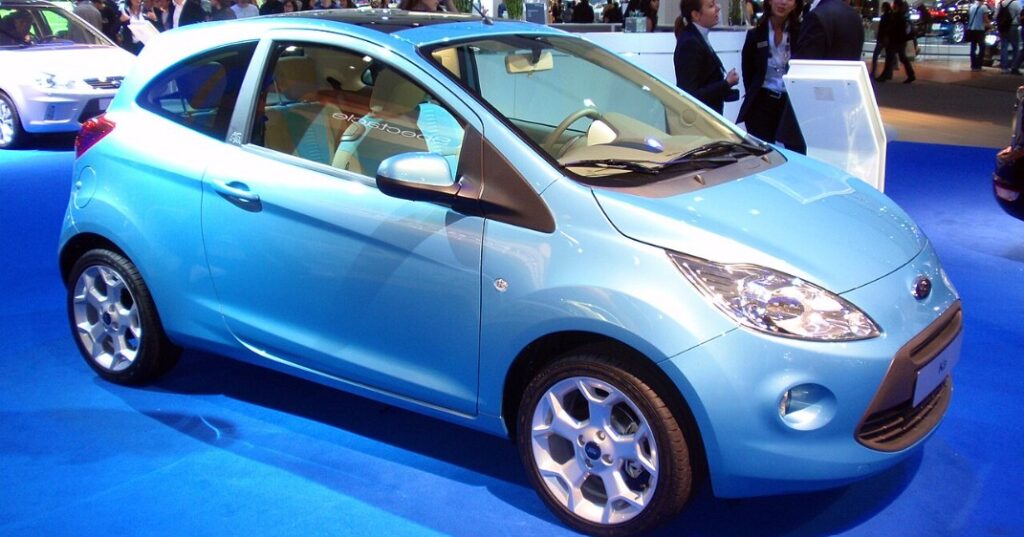
A Ford Ka not starting can turn a perfectly ordinary morning into an unexpected troubleshooting session. You get into the car, turn the key, and instead of hearing the familiar engine settle into an idle, you get silence, clicking, slow cranking, or an engine that spins enthusiastically but simply refuses to fire.
The frustrating part? “Not starting” isn't one specific fault. It is a symptom shared by everything from a tired battery to an immobiliser problem, failed starter motor, fuel delivery issue, ignition fault, or damaged sensor.
That means we shouldn't begin by randomly replacing parts. We should begin by listening to what the car is telling us.
Does the Ford Ka crank? Are the dashboard lights bright? Does it make one click? Does it start after several attempts? Is the immobiliser light flashing? Does it only refuse to start when hot?
Those clues narrow the problem dramatically.
In this guide, we'll work logically through the most common reasons a Ford Ka won't start, covering different generations and engine configurations while explaining what we can check ourselves and when professional diagnosis makes more sense.
Content in this publication
- Why Is My Ford Ka Not Starting?
- Ford Ka Won't Start: Identify What Happens When You Turn the Key
- 1. Weak or Flat Ford Ka Battery
- 2. Dirty or Loose Battery Terminals
- 3. Ford Ka Starter Motor Failure
- 4. Starter Fuse or Electrical Circuit Problem
- 5. Ford Ka Immobiliser Problem
- 6. Ignition Switch or Starting Circuit Fault
- 7. Ford Ka Crankshaft Position Sensor Problem
- 8. Camshaft Position Sensor Problems
- 9. Ford Ka Fuel Pump or Fuel Delivery Problem
- 10. Petrol Ford Ka Has No Spark
- 11. Ford Ka Engine Flooded
- 12. Timing Belt, Timing Chain, or Mechanical Timing Failure
- 13. Compression Problems
- 14. Ford Ka Won't Start in Cold Weather
- 15. Ford Ka Starts With Jump Leads but Not Normally
- 16. Ford Ka Starts Then Immediately Dies
- 17. Ford Ka Intermittently Won't Start
- 18. Ford Ka Not Starting After Battery Replacement
- 19. Should We Use an OBD Scanner?
- 20. Ford Ka Not Starting: Quick Diagnostic Order
- 21. What Not to Do When Your Ford Ka Won't Start
- 22. When Should a Ford Ka Be Taken to a Mechanic?
- 23. Ford Ka Not Starting Troubleshooting Chart
- 24. The Best Way to Diagnose a Ford Ka That Won't Start
- Conclusion: Finding the Cause of a Ford Ka Not Starting
- Frequently Asked Questions
Why Is My Ford Ka Not Starting?
At its simplest, an engine needs several things before it can run:
- Adequate electrical power
- A functioning starter system
- Correct fuel delivery
- Ignition or combustion
- Accurate engine-position information
- Correct immobiliser authorization
- Sufficient compression
Take away any one of these and our little Ka becomes a driveway ornament.
The first-generation Ford Ka arrived in the 1990s, followed by substantially different later generations. Engines, electronics, fuse layouts, and starting systems therefore vary considerably by model year and market.
For that reason, we should never assume that a fuse number, relay location, sensor, or engine-specific diagnosis applies to every Ford Ka.
Instead, diagnose the symptom first.
Ford Ka Won't Start: Identify What Happens When You Turn the Key
Before grabbing a multimeter or ordering a starter motor, turn the ignition and pay attention.
The reaction usually falls into one of four groups.
| Starting symptom | Common possibilities |
|---|---|
| Nothing happens | Battery, terminals, ignition circuit, immobiliser, starter circuit |
| Rapid clicking | Weak battery or poor electrical connection |
| One heavy click | Starter motor, solenoid, battery connection |
| Engine cranks but won't start | Fuel, ignition, sensor, immobiliser, timing/compression |
That distinction is enormously useful.
A Ford Ka that doesn't crank requires a different diagnostic path from one that cranks normally but fails to fire.
Ford Ka Has No Crank and No Start
Turn the key and hear virtually nothing?
Start with the electrical side.
Check whether the instrument cluster illuminates. Try the headlights. Operate the horn. Watch whether the dashboard lights become dramatically dimmer when attempting to start.
If electrical equipment is weak or dead, the battery should be our first suspect.
If everything appears electrically healthy but the starter remains silent, investigate the starter circuit, ignition switch, immobiliser system, clutch or transmission interlock where applicable, wiring, and starter motor itself.
Ford Ka Cranks but Won't Start
This is a completely different situation.
The starter motor is already doing its job. The crankshaft is turning, but combustion isn't beginning.
Now our suspects move toward:
- Fuel delivery
- Spark on petrol engines
- Engine management
- Crankshaft or camshaft position sensing
- Immobiliser
- Timing
- Compression
- Diesel glow/fuel-system problems where applicable
Think of it like trying to light a fireplace: spinning the engine merely prepares the fire. We still need the ingredients for combustion.
1. Weak or Flat Ford Ka Battery
Battery trouble should sit near the top of our checklist, especially when the Ford Ka has been parked for several days, temperatures are low, the battery is several years old, or the car has recently shown slower-than-usual cranking.
A battery doesn't necessarily have to be completely dead.
It may still illuminate the dashboard while being unable to deliver the much greater current demanded by the starter motor.
Ford Ka Flat Battery Symptoms
Common clues include:
- Rapid clicking when turning the key
- Dashboard lights dimming heavily
- Slow engine cranking
- Interior lights becoming weak
- Central locking behaving strangely
- Clock or radio settings resetting
- Starting successfully with a jump
Battery voltage measured while the vehicle is sitting can provide useful information, although a proper load test tells us far more about actual battery condition.
A battery showing reasonable voltage with no load can still collapse when the starter asks for several hundred amps.
Why Short Journeys Can Contribute
Small cars frequently spend their lives completing small journeys.
That sounds harmless, but repeated short trips can become troublesome when the alternator doesn't get sufficient running time to replace energy consumed during starting.
Add lights, heating, heated windows, audio equipment, and cold weather and the battery spends its life running an electrical marathon on snack-sized meals.
2. Dirty or Loose Battery Terminals
Before condemning the battery, inspect its connections.
Battery terminals should be clean and secure. Corrosion or looseness increases electrical resistance and can prevent sufficient current reaching the starter.
Sometimes everything works normally until we turn the key. Then the connection effectively falls apart under the heavy starter load.
Look for corrosion, damaged cables, loose clamps, or questionable earth connections.
Don't Forget the Engine Ground Connection
The electrical circuit doesn't end at the positive cable.
A poor engine or chassis earth can produce symptoms remarkably similar to those of a failed starter or weak battery.
If the battery tests well but cranking is slow or inconsistent, checking voltage drop across the starter and ground circuits can reveal resistance that a simple visual inspection misses.
3. Ford Ka Starter Motor Failure
A failing Ford Ka starter motor becomes a strong suspect when the battery and connections are healthy but the engine won't crank.
Typical symptoms include a single click, intermittent starting, no response from the starter, or occasional normal operation followed by sudden refusal.
Starter motors contain components that wear.
That means failure isn't always instantaneous.
One day it starts immediately. The next it takes three attempts. A week later, nothing.
Ford Ka Clicks Once but Won't Start
One substantial click may indicate that the starter solenoid is operating but the starter motor isn't successfully turning the engine.
Possible causes include:
- Weak battery
- Poor battery connection
- Bad ground
- Starter solenoid problem
- Worn starter motor
- Internal starter failure
Don't automatically replace the starter simply because it clicks. Verify battery condition and cable voltage drop first.
Ford Ka Starts After Several Attempts
Intermittent starter wear can produce this exact pattern.
You turn the key: click.
Try again: nothing.
Try once more: suddenly the engine cranks perfectly.
Intermittent electrical connections, ignition-switch problems, starter solenoid wear, or worn starter internals could all behave this way.
4. Starter Fuse or Electrical Circuit Problem
A fuse, relay, damaged wire, connector, or power-distribution fault can interrupt the starting circuit.
Fuse assignments vary by generation and specification, so use the handbook corresponding to the exact vehicle rather than copying a fuse number from another Ford Ka online.
Ford documentation for one Ka configuration, for example, identifies dedicated starter-related protection within the vehicle's fuse arrangements, illustrating why checking the correct model-specific diagram matters.
If a starter fuse has blown, don't simply keep replacing it.
A fuse is a safety device.
Repeated failure indicates an underlying electrical problem that should be diagnosed.
5. Ford Ka Immobiliser Problem
The immobiliser deserves special attention because it can make an otherwise mechanically healthy vehicle refuse to start.
The system is designed to recognize a correctly coded key before permitting normal engine operation.
Ford's Ka documentation states that the immobiliser disarms when the ignition recognizes the correct coded key. On the documented system, an indicator that remains illuminated or flashes abnormally can indicate that the key code hasn't been recognized or that a fault exists.
Ford Ka Immobiliser Light Flashing and Not Starting
If the immobiliser/security indicator behaves differently from normal, don't ignore it.
Try:
- Remove the key.
- Wait briefly.
- Try starting again.
- If available, try the spare correctly coded key.
- Keep other electronic keys and unnecessary objects away from the ignition area.
- If the fault remains, arrange immobiliser/key-system diagnosis.
Ford documentation specifically warns on some passive anti-theft systems that metallic objects, electronic devices, or another coded key close to the starting key can interfere with recognition.
Can a Ford Ka Key Cause a No-Start?
Yes.
A physically functional key can still experience transponder recognition problems.
The key blade turning the ignition doesn't necessarily prove that the immobiliser has authenticated its electronic code.
If one key consistently starts the vehicle while another doesn't, that comparison provides an extremely valuable diagnostic clue.
6. Ignition Switch or Starting Circuit Fault
We put the key in, turn it, and expect an orchestra of electrical events to happen behind the scenes.
The ignition switch initiates that sequence.
Ford's Ka documentation identifies the start position as the position in which the starter motor is activated.
Wear within the ignition-switch mechanism or related wiring can therefore cause intermittent no-crank conditions.
Possible signs include accessories behaving inconsistently, the starter responding only after repeated key movements, or a vehicle that occasionally starts perfectly and occasionally does nothing.
7. Ford Ka Crankshaft Position Sensor Problem
Now we're entering classic cranks but won't start territory.
The crankshaft position sensor tells the engine control system where the crankshaft is and how quickly it is rotating.
Without reliable position information, the ECU may be unable to correctly control ignition and fuel injection.
A failing sensor can cause:
- Engine cranks but won't fire
- Intermittent starting
- Sudden stalling
- No restart after stalling
- Starting after the engine cools
- Engine-management fault codes
The correct test is not simply “replace the sensor and see.”
Scan-tool data can help determine whether the ECU sees engine RPM during cranking. Wiring, connectors, reluctor components, and ECU inputs must also be considered.
Ford Ka Won't Start When Hot
A temperature-related no-start can be especially annoying.
The engine starts beautifully in the morning, drives normally, gets warm, is switched off—and then refuses to restart.
Once it cools, everything returns to normal.
Heat-sensitive electrical components or sensors, including crankshaft position sensing components on certain applications, can create intermittent faults like this.
However, don't diagnose a crank sensor purely from that symptom. Starter motors, electrical resistance, fuel-system faults, and other components can also become temperature-sensitive.
8. Camshaft Position Sensor Problems
Where fitted, camshaft position information helps the engine management system determine engine synchronization.
A faulty camshaft sensor does not produce identical behavior on every engine. Some engines may start poorly, run incorrectly, log fault codes, or take longer to start rather than becoming completely dead.
This is another area where scan-tool fault codes and live data beat guesswork.
Replacing both crank and cam sensors merely because the engine doesn't start can quickly become an expensive game of automotive bingo.
9. Ford Ka Fuel Pump or Fuel Delivery Problem
An engine can crank strongly all day, but without fuel it isn't going anywhere.
Fuel-system issues can involve more than the pump itself.
Potential causes include:
- Fuel pump failure
- Electrical supply problem
- Fuel-pump relay or fuse issue
- Wiring fault
- Low fuel pressure
- Injector problem
- Contaminated fuel
- Empty fuel tank or inaccurate gauge
- Diesel fuel-system faults
On vehicles where the pump can normally be heard briefly when the ignition is switched on, the absence of its usual sound can provide a clue—but silence alone does not prove the pump has failed.
Electrical testing and fuel-pressure verification are much stronger evidence.
Ford Ka Ran Out of Fuel and Won't Start
If the problem began immediately after running completely out of fuel, don't assume adding a small splash will instantly solve everything.
Park the vehicle safely and follow the appropriate starting or fuel-system procedure for the specific engine.
Diesel fuel systems in particular can require different handling after fuel starvation.
Repeatedly cranking an engine for extended periods is a bad strategy because it can discharge the battery and overheat the starter.
10. Petrol Ford Ka Has No Spark
Petrol engines need correctly timed ignition.
If fuel reaches the cylinders but there is no spark, the engine may crank normally without even attempting to start.
Possible ignition-side faults include:
- Ignition coil problems
- Spark-plug issues
- Wiring faults
- ECU power problems
- Crankshaft-position signal loss
- Related fuses or relays
Different Ka engines use different ignition arrangements, so diagnosis must match the engine installed.
Wet or Worn Spark Plugs
Spark plugs aren't usually the first thing we'd blame for an absolutely sudden total no-start, but severely worn, fouled, or fuel-soaked plugs can make starting difficult.
If the engine has already shown poor running, misfires, rough idle, increased fuel consumption, or hard starting, plug condition becomes more relevant.
11. Ford Ka Engine Flooded
On some petrol engines, repeated unsuccessful attempts can result in excess fuel entering the cylinders.
Now we face an annoying cycle:
the car won't start, so we crank it more; the additional attempts make starting even harder.
The smell of unburned petrol around the exhaust after repeated attempts may offer a clue.
Follow the starting procedure specified for the exact vehicle rather than holding the starter continuously.
Give the starter time to cool between attempts.
12. Timing Belt, Timing Chain, or Mechanical Timing Failure
Mechanical timing problems belong in the more serious category.
If the engine suddenly stopped while running and now cranks differently—particularly unusually quickly or with an uneven rhythm—stop repeatedly attempting to start it.
Loss of timing synchronization may prevent compression from developing correctly.
The exact timing arrangement depends on the particular Ford Ka engine.
Because some engine configurations can suffer expensive internal damage if valve timing is lost, aggressive repeated starting isn't worth the risk.
Listen to the Cranking Speed
Experienced technicians pay attention to the sound of an engine cranking.
Normally, resistance from compression creates a characteristic rhythm.
An engine that suddenly spins noticeably faster than before can suggest lost compression or a mechanical timing problem.
It isn't a definitive diagnosis, but it is an important warning sign.
13. Compression Problems
Fuel and spark aren't enough if the engine cannot compress the air-fuel charge properly.
Low compression may result from:
- Incorrect valve timing
- Valve damage
- Cylinder wear
- Head-gasket problems
- Other internal engine faults
If spark, fuel delivery, sensor signals, and immobiliser authorization all appear correct, compression testing may become part of the diagnostic process.
14. Ford Ka Won't Start in Cold Weather
Cold conditions expose weaknesses that warmer weather politely hides.
Battery output falls as temperatures drop, engine oil becomes harder to move, and the starter has to work harder.
For petrol models, a marginal battery or ignition problem may suddenly become obvious.
Diesel versions add another variable: cold-start assistance.
Diesel Ford Ka Glow Plug Problems
Diesel combustion depends on heat generated by compression, and glow plugs assist cold starting.
Problems involving glow plugs, their control system, wiring, or power supply can therefore create difficult cold starts on compatible diesel versions.
Typical behavior can include prolonged cranking, rough initial running, or difficulty starting during colder weather.
However, a diesel that won't start can also have fuel-pressure, injector, sensor, battery, starter-speed, or compression problems.
Don't automatically buy glow plugs because it's cold outside.
15. Ford Ka Starts With Jump Leads but Not Normally
This clue places the battery and its surrounding electrical system high on our suspect list.
If a jump start makes the engine crank and start normally, investigate:
- Battery state of charge
- Battery health
- Charging-system output
- Parasitic battery drain
- Battery terminals
- Ground cables
A successful jump start doesn't automatically prove that the battery itself is defective.
Imagine filling a leaking bucket: the low level is obvious, but we still need to discover why it became empty.
Could the Alternator Cause Starting Problems?
Indirectly, absolutely.
The alternator doesn't normally crank the engine. The battery does that.
But if the charging system fails to replenish the battery while driving, eventually the battery becomes too depleted to start the car.
Therefore, replacing a dead battery without checking why it went flat can result in another dead battery shortly afterward.
16. Ford Ka Starts Then Immediately Dies
If the engine actually fires and then stops, we've learned something important.
The starter has successfully turned the engine and combustion has occurred.
Now investigate areas such as engine management, fuel delivery, immobiliser operation, air metering, throttle control, and sensor inputs according to the exact engine.
An immobiliser-related problem can sometimes be particularly relevant when a vehicle appears to start but is not authorized to continue running, depending on system design.
17. Ford Ka Intermittently Won't Start
Intermittent faults are often harder than permanent failures because the car seems determined to behave perfectly whenever a mechanic looks at it.
Common areas worth investigating include:
- Battery terminal connections
- Ground cables
- Starter solenoid
- Starter motor
- Ignition switch
- Key recognition
- Crankshaft sensor or wiring
- Relays and electrical connections
Record the conditions each time the failure occurs.
Was the engine hot or cold? Had it been raining? Did the starter click? Was the immobiliser light flashing? Did dashboard lights dim? Did moving the key change anything?
Patterns turn random problems into diagnosable ones.
18. Ford Ka Not Starting After Battery Replacement
Suppose we've just installed a new battery and the Ka still won't start.
Don't immediately conclude that the new battery is faulty.
Check battery polarity, terminal tightness, electrical connections, grounds, and whether the original fault was incorrectly diagnosed.
A battery replacement also doesn't repair a defective starter motor, immobiliser, fuel pump, sensor, or ignition circuit.
New Battery but Only Clicking
Check whether:
- The new battery is adequately charged.
- Both terminals are tight.
- The ground connection is secure.
- The positive starter cable is intact.
- The engine can mechanically rotate.
- The starter motor is receiving proper voltage.
This is where voltage-drop testing becomes especially valuable.
19. Should We Use an OBD Scanner?
Yes—particularly if the Ford Ka cranks normally but doesn't start.
An OBD diagnostic scanner can reveal stored trouble codes related to engine-speed sensors, immobiliser communication, ignition, fuel systems, throttle control, and other electronics.
But fault codes require interpretation.
A code mentioning a sensor doesn't automatically mean the sensor itself has failed.
The real culprit might be broken wiring, corrosion, loss of reference voltage, poor grounding, damaged connectors, or another component affecting the same circuit.
Useful Live Data During Cranking
Depending on the engine and diagnostic equipment, technicians may inspect parameters such as:
- Engine RPM while cranking
- Battery voltage
- Coolant temperature
- Throttle position
- Immobiliser authorization
- Fuel-system information
- Cam/crank synchronization
That can reduce diagnosis from “maybe one of twenty things” to a much smaller list.
20. Ford Ka Not Starting: Quick Diagnostic Order
Instead of randomly replacing components, we can follow a simple sequence.
If the engine does not crank:
- Check battery condition.
- Inspect battery terminals.
- Check grounds and main cables.
- Observe immobiliser behavior.
- Verify the correct starting procedure.
- Check starter circuit protection.
- Test starter command and voltage.
- Test the starter motor.
If the engine cranks but doesn't start:
- Check immobiliser/security indications.
- Scan for diagnostic codes.
- Confirm engine RPM signal while cranking.
- Check fuel delivery.
- Check ignition on petrol engines.
- Inspect relevant wiring and connectors.
- Verify engine timing if symptoms suggest it.
- Test compression when required.
That method saves money because each step produces information before we move on.
21. What Not to Do When Your Ford Ka Won't Start
One of the easiest ways to turn a cheap repair into an expensive one is to attack a no-start problem without diagnosis.
Avoid blindly replacing the battery, starter motor, crank sensor, fuel pump, and ignition components one after another.
We should also avoid continuously operating the starter for long periods.
The starter generates substantial heat, while repeated cranking drains the battery.
Most importantly, stop attempting to start the engine if it suddenly sounds mechanically abnormal.
A significantly different cranking noise after the engine stopped running can justify professional inspection before further attempts.
22. When Should a Ford Ka Be Taken to a Mechanic?
Basic checks such as battery condition, terminal security, visible corrosion, spare-key testing, and reading basic diagnostic codes can often be performed without major dismantling.
More advanced diagnosis makes sense when:
- The starter receives power but doesn't work.
- The immobiliser continues rejecting a valid key.
- Fuel pressure must be measured.
- Electrical faults are intermittent.
- Engine timing is suspected.
- Compression appears low.
- Wiring needs detailed testing.
- The engine stopped suddenly while driving.
- The vehicle repeatedly blows a starting-system fuse.
Electrical diagnosis can look deceptively simple from the outside.
A professional technician may use wiring diagrams, voltage-drop tests, oscilloscope signals, diagnostic live data, and circuit measurements rather than guessing which component “sounds most likely.”
23. Ford Ka Not Starting Troubleshooting Chart
| Symptom | First things to investigate |
| No lights, no crank | Battery and battery connections |
| Rapid clicking | Weak battery or poor connection |
| One click | Battery cables, starter/solenoid |
| Normal cranking, no start | Fuel, spark, sensor signals, immobiliser |
| Starts with jump leads | Battery/charging system/connections |
| Won't start when hot | Starter, sensors, electrical/fuel faults |
| Security light abnormal | Key/immobiliser system |
| Starts after several attempts | Starter circuit, sensor or electrical fault |
| Cranks unusually fast | Timing/compression concern |
| Starts then stalls | Fuel, immobiliser, engine management |
24. The Best Way to Diagnose a Ford Ka That Won't Start
The biggest mistake we can make is asking only:
“What part causes a Ford Ka not to start?”
There isn't one.
Instead ask:
“What happens when I try to start it?”
That seemingly small change transforms our diagnostic approach.
A completely silent car sends us toward the battery, starter circuit, key authorization, and electrical supply.
A rapidly clicking one screams voltage trouble.
A strongly cranking engine pushes us toward fuel, ignition, sensor signals, security authorization, timing, and compression.
The symptom is our map.
Without it, we're walking through the repair process blindfolded.
Conclusion: Finding the Cause of a Ford Ka Not Starting
A Ford Ka not starting doesn't automatically mean we're facing an expensive repair. Batteries, connections, key-recognition issues, fuses, and relatively straightforward electrical faults can produce dramatic symptoms.
At the same time, we shouldn't underestimate a genuine mechanical or engine-management fault.
Start with the simplest question: does the engine crank?
If not, concentrate on the battery, terminals, grounds, starter circuit, immobiliser, ignition switch, and starter motor.
If it cranks normally but refuses to fire, turn our attention toward fuel delivery, ignition, crank and cam signals, immobiliser authorization, timing, and compression.
Most importantly, diagnose before replacing.
Throwing parts at a Ford Ka is like throwing darts with the lights off. We might eventually hit the target, but we'll probably spend far more money getting there.
A systematic diagnosis is quicker, cheaper, and far more likely to uncover the actual problem.
Frequently Asked Questions
Why is my Ford Ka not starting but making a clicking sound?
Rapid clicking commonly points toward insufficient battery voltage or excessive resistance at a battery or ground connection. A single stronger click can also occur when the starter solenoid operates but the starter motor fails to crank. Test the battery and electrical connections before replacing the starter.
Why does my Ford Ka crank but not start?
If the Ford Ka cranks at normal speed but doesn't fire, the starter system is probably doing its basic job. Possible causes include lack of fuel, absence of spark on petrol models, immobiliser problems, crankshaft or camshaft sensor faults, engine-management issues, incorrect valve timing, or low compression.
Can the immobiliser stop a Ford Ka from starting?
Yes. The immobiliser is specifically designed to prevent engine operation unless the correct coded key is recognized. Ford's Ka documentation states that abnormal immobiliser-indicator behavior can indicate an unrecognized key or system fault. Trying a correctly coded spare key can be a useful initial test.
Why does my Ford Ka start with jump leads but not from its own battery?
The battery may be discharged, deteriorated, or unable to supply enough current during cranking. Poor battery terminals or ground connections can produce similar symptoms. The charging system should also be checked because an alternator or related charging fault may be responsible for repeatedly discharging an otherwise serviceable battery.
Why does my Ford Ka sometimes start and sometimes not?
Intermittent starting can come from poor electrical connections, starter-motor or solenoid wear, ignition-switch problems, immobiliser/key recognition, sensor faults, damaged wiring, or relays. Record exactly what happens during each failed attempt—particularly clicking, cranking speed, dashboard behavior, engine temperature, and immobiliser-light activity—to make diagnosis easier.
If you want to know other articles similar to Ford Ka Not Starting: Causes, Diagnosis, and Fixes you can visit the category Common Problems.
Nissan Rogue AC Not Working? Causes, Diagnosis, and Fixes

Kia Sorento Issues: Common Problems, Reliability and What to Watch For

Honda Passport Not Starting: Causes, Symptoms, and How to Fix It
Honda Passport Keyless Remote Battery Low: What It Means and How to Fix It
Nissan Rogue Apple CarPlay Not Working: Causes and Fixes
Nissan Rogue No Key Detected: Causes, Fixes, and What to Do
Leave a Reply
More content of your interest