

Nissan Frontier Years to Avoid: A Smart Used-Truck Buyer’s Guide

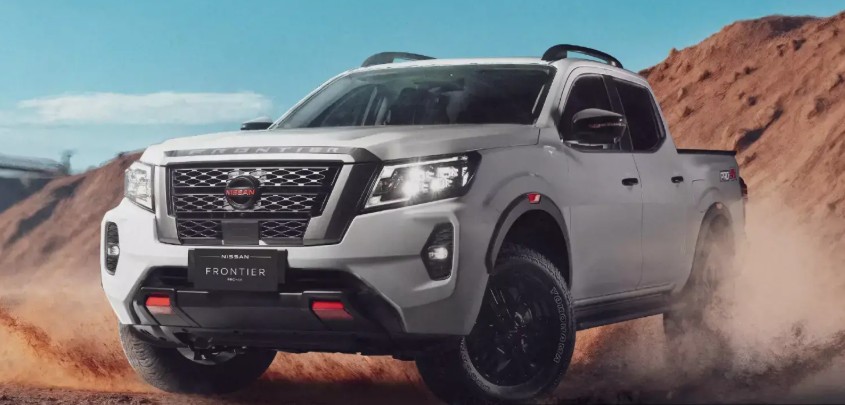
The Nissan Frontier has earned a reputation as a straightforward midsize pickup: sturdy frame, useful towing ability, available four-wheel drive, and far less mechanical drama than some buyers expect from an aging truck. But that does not mean every Frontier is created equal. When we shop the used market, a few model years deserve substantially more caution than others.
If we want the short answer, 2005, 2006, and 2007 are the Nissan Frontier years we would approach most carefully, particularly automatic-transmission trucks. Complaint data places the early second-generation trucks among the most troublesome Frontiers, with transmission problems standing out dramatically. CarComplaints, for example, identifies 2005 as the Frontier's worst model year overall and transmission trouble as the nameplate's worst problem category.
We would also inspect 2008-2010 Frontiers more aggressively than later second-generation trucks, although we would not automatically reject a well-maintained example. Meanwhile, the 2022 Frontier deserves a different kind of caution: it marked the introduction of the redesigned North American truck and was included in an important transmission parking-pawl recall. That recall alone does not make every 2022 Frontier a bad purchase, but verifying completion should be part of the buying process.
So, which Nissan Frontier years should we avoid, which ones merely require extra inspection, and which versions make stronger used-truck choices? Let's dig beneath the badges and find out.
Content in this publication
- What Are the Main Nissan Frontier Years to Avoid?
- Why the 2005 Nissan Frontier Is One to Approach Carefully
- 2006 Nissan Frontier: Perhaps the Year Requiring the Most Caution
- Why the 2007 Nissan Frontier Also Lands on Our Avoid List
- Are 2008 Nissan Frontiers Bad?
- 2009 Nissan Frontier: A Transitional Caution Year
- Should We Avoid the 2010 Nissan Frontier?
- The 2011-2019 Frontier Era Is Often More Appealing
- What About the 2012 Nissan Frontier?
- 2020 and 2021 Nissan Frontier: Old Body, New Powertrain
- Is the 2022 Nissan Frontier a Year to Avoid?
- Which Nissan Frontier Years Are Better to Buy?
- The Best Frontier Isn't Necessarily the Newest One
- Automatic vs Manual Frontier: Does Transmission Choice Matter?
- How to Tell If an Older Frontier Is Worth Buying
- Why a VIN Check Is Essential Before Buying
- Don't Confuse Recalls With Reliability
- Can a 2005-2007 Frontier Still Be a Good Buy?
- How Much Should Repair History Influence the Price?
- Nissan Frontier Years to Avoid for Budget Buyers
- Are High-Mileage Nissan Frontiers Worth Considering?
- Our Final Ranking of Nissan Frontier Years to Avoid
- Conclusion: Which Nissan Frontier Should We Actually Buy?
- Frequently Asked Questions About Nissan Frontier Years to Avoid
What Are the Main Nissan Frontier Years to Avoid?
For shoppers who want a simple starting point, we would divide used Frontiers into three categories:
- Highest caution: 2005, 2006, 2007
- Buy only after careful inspection: 2008, 2009, 2010 and some 2022 trucks
- Generally more appealing used choices: later second-generation trucks, particularly well-maintained examples after the troublesome early production period
That doesn't mean every 2006 Frontier is doomed or every newer truck is perfect. Reliability doesn't work like a light switch. Maintenance history, mileage, climate, towing use, previous repairs, accident history, and modifications can matter just as much as the year stamped on the registration.
Still, model-year patterns give us a useful map. And when a particular era repeatedly generates expensive complaints, ignoring that map would be like hiking through the woods after throwing away the compass.
Why the 2005 Nissan Frontier Is One to Approach Carefully
The 2005 model year launched the second-generation Frontier in North America. It was a major change from the smaller previous truck, bringing a tougher platform, stronger available V6 power, greater capability, and dimensions better suited to buyers wanting something closer to a serious midsize pickup.
Unfortunately, first-year redesigns sometimes bring teething problems, and the 2005 Frontier illustrates why cautious used-car shoppers often hesitate before buying year one of a new generation.
Owner-complaint databases identify the 2005 model as the Frontier's worst year overall, with transmission complaints particularly prominent.
The Radiator and Transmission Concern
The issue most closely associated with early second-generation Frontiers involves the cooling and automatic-transmission systems.
On affected trucks, a failure involving the radiator's internal transmission-fluid cooling arrangement could allow coolant and automatic transmission fluid to contaminate one another. Once those fluids mix, what begins as a cooling-system problem can become a very expensive transmission problem.
And that's the real danger.
Replacing a radiator is inconvenient. Replacing or rebuilding an automatic transmission can radically change whether an inexpensive used truck was actually a bargain.
The complaint pattern is especially visible in the neighboring 2006 model year, where owners have reported cracked radiators followed by transmission damage; CarComplaints lists radiator-related transmission failure among that year's worst reported problems.
Why Maintenance Records Matter So Much
We would not buy an early Frontier simply because the seller tells us, "The transmission shifts fine."
That's a snapshot, not a history.
We would want paperwork showing whether the radiator was replaced, whether transmission-fluid contamination was ever discovered, and whether the truck received major transmission work. A pre-purchase inspection should also examine coolant and transmission fluid for anything suspicious.
A properly repaired truck may be perfectly usable. An undocumented truck with unexplained transmission behavior is a much bigger gamble.
2006 Nissan Frontier: Perhaps the Year Requiring the Most Caution
If one model year deserves a giant magnifying glass, it is 2006.
Owner complaints for the 2006 Frontier include significant transmission, engine, and exhaust-system problems. CarComplaints reports more than a thousand problems and defects in its database for the year and highlights radiator failure leading to transmission contamination among its costliest recurring complaints.
Reported trouble isn't limited to one system either. Timing-chain and guide complaints have also appeared among the notable problems recorded for the 2006 model.
A Current Safety Concern Makes 2006 Even More Interesting
There is another reason we would inspect a 2006 truck especially carefully today.
In March 2026, NHTSA opened an investigation involving approximately 75,300 model-year 2006 Nissan Frontier pickups following concerns about possible fuel leaks. The investigation followed a petition alleging raw-fuel odor and engine stalling, while noting that Nissan had previously recalled certain trucks over fuel-filler-tube concerns. The investigation itself is not the same thing as a new recall or a finding that every truck is defective, but it adds another item buyers should investigate before purchase.
For that reason, a 2006 Frontier should receive more than the usual ten-minute test drive.
We would check the VIN for open recalls, smell carefully for fuel odors, inspect underneath for leakage, verify cold-start behavior, examine service records, and have an independent mechanic inspect the fuel and cooling systems.
Why the 2007 Nissan Frontier Also Lands on Our Avoid List
The 2007 Frontier shares much of its engineering with the 2005 and 2006 trucks, so it sits within the same early second-generation risk window.
Several used-vehicle reliability summaries identify 2005-2007 as the core period to avoid because reports of radiator-related transmission failure were concentrated heavily in these years.
Does that mean every 2007 Frontier will destroy its transmission?
Absolutely not.
A surviving truck may already have received an upgraded radiator, transmission repairs, excellent preventive maintenance, or relatively gentle use. At nearly two decades old, an individual vehicle's history can outweigh broad statistical patterns.
But when two trucks are similarly priced, similarly equipped, and similarly maintained, why knowingly choose the model year associated with the bigger historical risk?
That's the calculation we would make.
Are 2008 Nissan Frontiers Bad?
Here is where the answer becomes more nuanced.
We don't place the 2008 Frontier in quite the same red-alert category as 2005-2007. However, it belongs to the same general generation and remains old enough that age-related deterioration and early-platform problems deserve attention.
Nissan also issued safety-recall actions covering certain 2006 and 2008 Frontier vehicles, demonstrating why VIN-level recall checking is more useful than simply assuming that an entire model year is either "safe" or "unsafe."
Our approach to a 2008 would therefore be simple: don't automatically reject it, but don't buy casually either.
What We Would Inspect on a 2008 Frontier
Cooling-system history would come first. Then we would examine transmission behavior, listen for abnormal engine noises during a cold start, inspect the underbody for corrosion, test four-wheel drive where equipped, and check every electrical accessory.
Most importantly, we would ask whether the radiator has been replaced and why.
An owner who has detailed invoices explaining preventive repairs gives us much more confidence than someone saying, "I think the previous guy did it."
2009 Nissan Frontier: A Transitional Caution Year
By 2009, we are moving farther away from the most notorious 2005-2007 problem window, but we are not far enough away to switch off our skepticism.
At this age, condition becomes enormous.
A 2009 Frontier with 90,000 miles, extensive maintenance records, a clean chassis, and thoughtful ownership could easily be a smarter purchase than a neglected 2015 truck with 180,000 hard miles.
That's why "years to avoid" articles should be treated as screening tools rather than commandments carved into stone.
Mileage Isn't the Only Number That Matters
Used-truck buyers tend to stare at the odometer as if it were a fortune teller.
We wouldn't.
A pickup's life can be dramatically different depending on how those miles accumulated. Highway commuting is one thing. Repeated towing near maximum capacity, construction-site use, off-road abuse, snowbelt salt, and years of deferred maintenance are something else entirely.
Service history can tell us the story hiding behind the mileage.
Should We Avoid the 2010 Nissan Frontier?
The 2010 Frontier deserves another carefully qualified answer.
You may be interested in reading Nissan Frontier Best Years: The Smartest Model Years to Buy
We wouldn't automatically classify every 2010 as a model to avoid. However, buyers looking at early second-generation automatic trucks should still investigate their cooling-system and transmission history rather than assuming the concerns associated with earlier trucks disappear at an exact calendar boundary.
The model year was also subject to safety recall activity. NHTSA's vehicle record for the 2010 Frontier notes a Nissan recall campaign that began in August 2010.
Remember: recalls aren't necessarily evidence that a vehicle is unreliable. Manufacturers issue recalls to correct specific safety defects, and a completed recall can eliminate the concern it targeted.
The important question is whether the individual truck received the repair.
The 2011-2019 Frontier Era Is Often More Appealing
This is where the second-generation Frontier becomes particularly interesting for value-conscious buyers.
Instead of redesigning the truck every few years, Nissan kept the basic Frontier formula around for an unusually long time. That gave later examples the advantage of being built after the earliest problem-heavy years while retaining relatively uncomplicated truck engineering.
We would still never label an entire nine-year stretch "problem-free." No used vehicle deserves that promise.
Even a comparatively strong model year can develop air-conditioning problems, sensors, worn suspension components, engine issues, leaking seals, electronics trouble, or ordinary age-related failures.
For perspective, CarComplaints records far fewer owner-submitted problems for the 2015 Frontier than for the complaint-heavy 2006 model, although the 2015 still has reported body, HVAC, engine, transmission, and electrical concerns.
That distinction matters. We're choosing lower risk, not buying immortality.
What About the 2012 Nissan Frontier?
The 2012 model gets mentioned occasionally in discussions of Frontier reliability, but we wouldn't place it beside 2005-2007.
Reported complaints for the 2012 include paint problems, engine concerns, HVAC issues, clutch complaints, and other categories. CarComplaints lists paint chipping among its most reported owner issues for this year.
That makes the 2012 worth inspecting, particularly for cosmetic deterioration and evidence of expensive neglected maintenance.
But there's a huge difference between "this year has known complaints" and "we recommend avoiding it altogether."
Every long-running vehicle accumulates complaint records eventually.
2020 and 2021 Nissan Frontier: Old Body, New Powertrain
The final years of the long-running second-generation Frontier are unusual because Nissan introduced newer powertrain hardware before the complete body redesign arrived.
That means 2020 and 2021 trucks can appeal to someone who likes the older Frontier's straightforward styling but wants newer mechanical technology.
However, these years also matter because certain 2020-2021 Frontiers equipped with the nine-speed automatic transmission were included in a transmission parking-pawl recall alongside the 2022 Frontier. NHTSA recall documentation states that the condition could prevent the parking pawl from engaging, potentially allowing the vehicle to move after being shifted into Park.
Again, that's a VIN-check issue, not a reason to blacklist every 2020 or 2021 Frontier.
Is the 2022 Nissan Frontier a Year to Avoid?
The 2022 Frontier deserves its own discussion because it launched the redesigned D41-generation truck for North America.
Fresh design. Much more modern interior. Updated styling. Better technology.
Naturally, used buyers ask the familiar question: should we avoid the first year?
We would call the 2022 a caution year rather than an outright avoid year.
The 2022 Transmission Parking-Pawl Recall
NHTSA recall 22V-457 covered certain Nissan vehicles equipped with nine-speed transmissions, including 2022 Frontiers. The issue involved dimensional variation that could interfere with proper engagement of the transmission parking pawl. If the pawl did not engage, an affected truck could move after being shifted into Park.
Nissan's recall documentation identifies the 2022 Frontier among the affected vehicles and explains that the corrective action involved replacing the transmission parking-pawl pin.
That sounds alarming—and it certainly mattered—but there's an important distinction.
A safety recall with an established repair isn't necessarily a reason to abandon a model year forever. What matters to us as used buyers is whether the specific VIN was affected and, if so, whether the recall repair was completed.
Would We Buy a Used 2022 Frontier?
Yes, under the right conditions.
We would want documented recall completion, a clean maintenance history, normal transmission operation, no warning lights, good electronics, and a professional inspection.
We would also compare the price against a 2023 or later truck. If the newer one costs only slightly more, paying a little extra for a later production year could make sense.
Which Nissan Frontier Years Are Better to Buy?
Rather than obsessing exclusively over the years we dislike, let's flip the question.
What should we actually look for?
For shoppers chasing an affordable traditional midsize pickup, later examples of the long-running second-generation Frontier can be compelling precisely because they come after the earliest trouble-prone period.
We generally prefer a well-documented later second-generation truck over an early 2005-2007 automatic whose repair history is unknown.
And among current-generation trucks, later production years may appeal to buyers who prefer avoiding the first-year-redesign factor, although individual condition and recall status still matter.
The Best Frontier Isn't Necessarily the Newest One
This point is easy to miss.
Suppose we're choosing between a pristine, dealer-maintained older Frontier and a newer truck that spent its life towing, has questionable modifications, mismatched tires, accident repairs, and no service paperwork.
The older truck might be the obvious winner.
Age creates risk, but abuse creates risk too.
A pickup truck is fundamentally a tool. Some owners use that tool gently. Others use it like a hammer every day for 150,000 miles.
We want to know which one we're buying.
Automatic vs Manual Frontier: Does Transmission Choice Matter?
When shopping the early second-generation trucks, transmission type matters because the infamous radiator contamination concern centered on automatic transmissions whose fluid cooling circuit interacted with the radiator.
That means a manual-transmission truck changes the risk equation.
It doesn't magically eliminate every possible Frontier problem, of course. Manual trucks introduce their own wear items, particularly the clutch and associated components.
Still, when investigating a 2005-2007 Frontier, identifying the exact powertrain configuration is essential rather than applying a generic reliability verdict to every truck wearing the same model-year badge.
How to Tell If an Older Frontier Is Worth Buying
A beautiful photograph can hide a battlefield underneath.
Before buying, we would inspect the truck cold—not after the seller has conveniently warmed it up. Cold starts can reveal noises, smoke, weak batteries, rough idle, and other symptoms that disappear once the engine reaches operating temperature.
Then we would inspect maintenance records and drive the truck long enough for everything to reach normal temperature.
Our Pre-Purchase Frontier Checklist
For an older Nissan Frontier, we would specifically check:
You may be interested in readingNissan Frontier Best Years: The Smartest Model Years to BuyYou may be interested in reading
 Are Ford Ka and Fiat 500 the Same? The Real Connection Explained
- VIN recall status. NHTSA recommends checking recalls using the vehicle's VIN because recall eligibility applies to particular vehicles, not simply every truck from a given year.
- Radiator condition and replacement history, especially on early second-generation automatic trucks.
- Coolant appearance for contamination or neglected maintenance.
- Automatic transmission operation, checking for hesitation, slipping, shuddering, delayed engagement, or harsh shifts.
- Cold-start engine noise, particularly on early trucks.
- Fuel odor or leakage, with extra attention on a 2006 model given the 2026 NHTSA investigation.
- Frame and underbody corrosion, especially in regions using road salt.
- Differential and transfer-case operation on 4WD models.
- Suspension, wheel bearings, steering, and brakes.
- Evidence of towing or off-road abuse.
- Aftermarket modifications, including oversized tires, lifts, tuning, and electrical accessories.
- Service documentation confirming fluid changes and major repairs.
That inspection tells us far more than the seller's favorite phrase: "Never had a problem."
Why a VIN Check Is Essential Before Buying
Model-year guides can only take us so far because recalls frequently cover specific production ranges.
NHTSA's recall system lets owners and shoppers search using the vehicle's 17-character VIN to determine whether safety recalls remain open.
We would perform that check before handing over money.
And we'd save the result.
If the seller claims every recall was completed but the official database says otherwise, that's something we need resolved.
Don't Confuse Recalls With Reliability
This distinction deserves emphasis.
A recall is issued when a manufacturer or NHTSA determines that a vehicle or component presents an unreasonable safety risk or fails applicable safety standards.
Reliability is broader.
A truck can have several recalls but otherwise provide dependable mechanical service. Another truck might have no major safety recall yet suffer from expensive non-safety failures.
Therefore, counting recalls like baseball scores isn't a good way to rank used vehicles.
What matters is the type of problem, probability, repair cost, repair availability, and condition of the individual truck.
Can a 2005-2007 Frontier Still Be a Good Buy?
Yes—but the price and documentation need to compensate for the risk.
Imagine we find a 2006 Frontier owned by the same person for fifteen years. It has receipts showing radiator replacement, transmission service, relevant recall completion, regular fluid changes, recent suspension work, no significant corrosion, and a clean inspection from an independent mechanic.
Would we automatically walk away because the VIN begins with "2006"?
No.
The physical truck sitting in front of us matters more than a headline.
But if we're comparing that truck with a similarly priced, similarly maintained later model that avoids the most concerning early-production pattern, we'd usually choose the later one.
Used-car shopping is about stacking probabilities in our favor.
How Much Should Repair History Influence the Price?
A lot.
When evaluating an older Frontier, major documented repairs can actually be positive.
A new radiator isn't automatically bad news. A professionally rebuilt transmission isn't necessarily bad news either. We'd rather know exactly what happened and who repaired it than buy a suspiciously "original" truck whose failing parts are simply waiting for us.
The crucial word is documented.
An invoice has value. A story does not.
If the seller says a $4,000 repair was completed but cannot produce a single receipt, we would price the truck as though that repair might not exist.
Nissan Frontier Years to Avoid for Budget Buyers
Budget shoppers need to be especially cautious with the cheapest early Frontiers.
Why?
Because expensive problems hurt more when the purchase price is low.
A $4,000 repair on a $35,000 vehicle is painful. A $4,000 repair on a $6,000 truck can destroy the economic logic of the purchase entirely.
That bargain sitting at the back of the used-car lot may look like an inexpensive doorway into pickup ownership. But if it needs a radiator, transmission, timing-related work, tires, suspension repairs, and air conditioning within twelve months, the cheap truck suddenly becomes the expensive truck wearing camouflage.
Are High-Mileage Nissan Frontiers Worth Considering?
They can be.
Mileage alone doesn't scare us nearly as much as poor maintenance combined with age.
A high-mileage Frontier with meticulous servicing may have already proven its durability. A low-mileage truck that sat outside for years can present different problems: deteriorated rubber, corrosion, old fluids, seized components, and maintenance neglected simply because the owner "hardly drove it."
We would judge mileage together with condition, history, ownership pattern, and price.
Our Final Ranking of Nissan Frontier Years to Avoid
If we're condensing this entire guide into one buying strategy, 2005-2007 are the years we'd be most reluctant to buy without exceptional documentation, largely because early second-generation trucks accumulated the strongest pattern of serious transmission-related complaints.
We would treat 2008-2010 as inspection-heavy years rather than automatic rejects. They are old trucks now, and their mechanical history matters tremendously.
We'd place 2022 in a separate caution category. It doesn't share the same early-D40 radiator story, but it was the first year of the redesigned North American Frontier and certain trucks were included in the transmission parking-pawl recall. Verify the VIN and recall completion rather than simply blacklisting the whole year.
Meanwhile, later second-generation Frontiers can offer a sweet spot for buyers wanting an established platform without paying current-generation prices.
Conclusion: Which Nissan Frontier Should We Actually Buy?
The Nissan Frontier's reputation isn't defined solely by its worst years. In fact, one reason we're able to pinpoint troublesome periods is that the truck spent so many years using a relatively familiar formula.
Still, 2005, 2006, and 2007 are the Nissan Frontier years we'd approach with the greatest caution. The combination of owner-reported radiator and transmission problems makes these trucks difficult to recommend blindly, especially when repair history is missing. The 2006 deserves even closer attention because NHTSA opened a fuel-leak investigation concerning that model year in 2026.
The smartest purchase isn't about finding a supposedly magical model year. It's about reducing uncertainty.
Choose the cleaner truck. Choose the documented truck. Choose the truck that passes an independent inspection. Check its VIN for recalls. And when two examples look equally good, favor the one with the stronger reliability history.
That's how we turn "Which Frontier should I avoid?" into the question that really matters:
Which Frontier gives us the fewest reasons to worry after we bring it home?
Frequently Asked Questions About Nissan Frontier Years to Avoid
1. What is the worst Nissan Frontier year?
The 2005 Frontier is one of the strongest candidates, particularly when looking at owner-complaint history. CarComplaints identifies 2005 as the worst Frontier model year overall and transmission problems as the truck's worst complaint category. The 2006 also deserves significant caution because of numerous reported radiator and transmission problems.
2. Should we avoid all 2005-2007 Nissan Frontiers?
Not necessarily. A properly maintained truck with documented repairs, an updated cooling system, a healthy transmission, completed recalls, and a successful professional inspection could still be worth purchasing. However, we'd demand more documentation and a more thorough inspection than we would for a later Frontier because these years carry a stronger historical problem pattern.
3. Is the 2012 Nissan Frontier a bad year?
We wouldn't classify it among the main years to avoid. The 2012 does have reported problems involving areas such as paint, the engine, HVAC, clutch, and other systems, but its profile is different from the transmission-heavy complaint history surrounding some early second-generation models.
4. Should we avoid the 2022 Nissan Frontier?
Not automatically. Certain 2022 Frontiers were affected by a transmission parking-pawl recall that could allow vehicle movement after shifting into Park. Nissan's remedy involved replacing the parking-pawl pin. We would check the specific VIN and confirm recall completion before purchasing.
5. What should we check before buying a used Nissan Frontier?
We would inspect the cooling system, transmission, engine, suspension, brakes, frame, corrosion, four-wheel-drive equipment, electronics, tires, modifications, and maintenance history. On older automatic trucks, radiator and transmission history deserves extra attention. We would also check the VIN through NHTSA for any outstanding safety recalls.
You may be interested in readingNissan Frontier Best Years: The Smartest Model Years to BuyYou may be interested in reading
Are Ford Ka and Fiat 500 the Same? The Real Connection ExplainedYou may be interested in reading
 Hyundai Santa Fe Best Years: Which Models Should You Buy?
If you want to know other articles similar to Nissan Frontier Years to Avoid: A Smart Used-Truck Buyer’s Guide you can visit the category Models.
Honda Passport vs Toyota 4Runner: Which SUV Is Better?
Honda Passport vs Ford Bronco: Which SUV Is Better?
Honda Passport vs Ford Explorer: Which SUV Is Better?
Honda Passport or Pilot: Which SUV Is Better?
Honda Passport vs Jeep Grand Cherokee: Which SUV Is Better?
Honda Passport vs Nissan Pathfinder: Which SUV Is Better?
Leave a Reply
More content of your interest