

Toyota Estima Engine Capacity: Complete Engine Size Guide

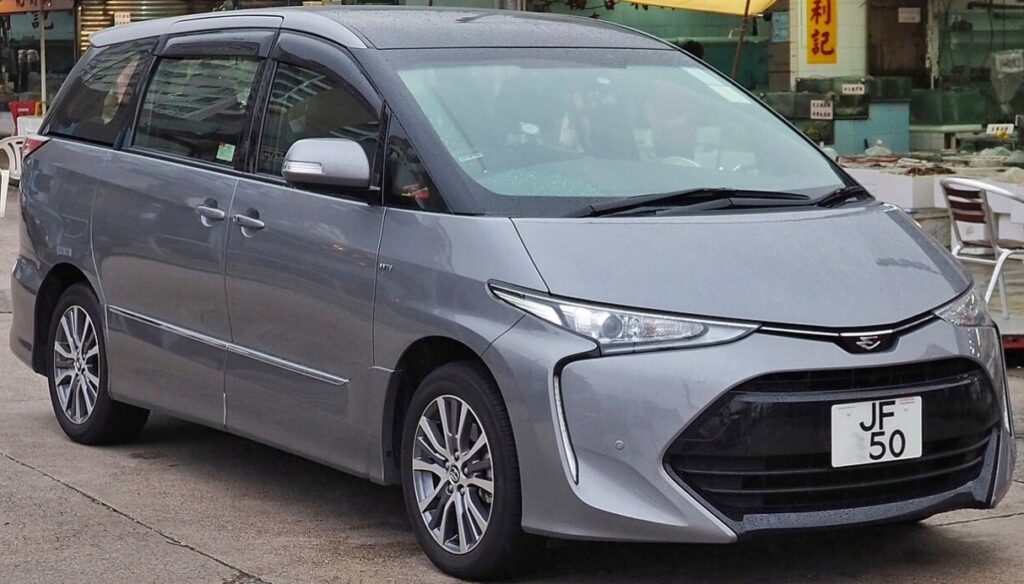
When we talk about the Toyota Estima engine capacity, one simple number does not tell the whole story. Toyota produced the Estima across several generations, and during its long lifespan the Japanese minivan used everything from unusual mid-mounted four-cylinder engines to smooth V6 petrol units and sophisticated hybrid powertrains.
Depending on the generation and specification, the Toyota Estima came with engines ranging primarily from 2.4 litres to 3.5 litres. The first generation used a 2,438 cc four-cylinder engine, while later versions offered 2,362 cc four-cylinder, 2,994 cc V6 and 3,456 cc V6 engines. Hybrid models also relied on a 2.4-litre petrol engine combined with electric motors. Toyota's own historical specifications confirm these capacities across the major generations.
But engine capacity is only part of the equation. A 2.4-litre Estima Hybrid behaves very differently from a conventional 2.4-litre petrol version, while the 3.5-litre V6 transforms the minivan into something surprisingly quick for a family vehicle.
So which engine did each Estima use? Which capacity makes the most sense today? And does the biggest engine automatically mean the best Estima?
Let's break it down.
Content in this publication
- Toyota Estima Engine Capacity at a Glance
- What Does Toyota Estima Engine Capacity Mean?
- First-Generation Toyota Estima Engine Capacity
- Second-Generation Toyota Estima Engine Capacity
- Toyota Estima 2.4 Engine Capacity
- Toyota Estima 3.0 V6 Engine Capacity
- Second-Generation Toyota Estima Hybrid Engine Capacity
- Third-Generation Toyota Estima Engine Capacity
- Third-Generation Toyota Estima 2.4 Capacity
- Toyota Estima 3.5 V6 Engine Capacity
- Third-Generation Toyota Estima Hybrid Engine Capacity
- Toyota Estima Engine Codes Explained
- Toyota Estima 2.4 vs 3.5: Which Is Better?
- Toyota Estima Hybrid vs Petrol Engine Capacity
- Does Bigger Engine Capacity Mean Higher Fuel Consumption?
- Which Toyota Estima Engine Is Best for City Driving?
- Which Toyota Estima Engine Is Best for Highway Driving?
- How to Check Your Toyota Estima Engine Capacity
- Does Engine Capacity Affect Estima Maintenance?
- What Toyota Estima Engine Capacity Should We Buy?
- Toyota Estima Engine Capacity by Generation
- Why Engine Capacity Alone Shouldn't Decide Your Purchase
- Final Thoughts on Toyota Estima Engine Capacity
- Frequently Asked Questions
Toyota Estima Engine Capacity at a Glance
Before digging into each generation, here is the easiest way to understand the main Toyota Estima engine sizes.
| Estima version | Approx. engine capacity | Exact displacement | Configuration |
|---|---|---|---|
| First generation petrol | 2.4L | 2,438 cc | Inline-four |
| Second generation petrol | 2.4L | 2,362 cc | Inline-four |
| Second generation V6 | 3.0L | 2,994 cc | V6 |
| Second generation Hybrid | 2.4L | 2,362 cc | Inline-four + electric motors |
| Third generation petrol | 2.4L | 2,362 cc | Inline-four |
| Third generation V6 | 3.5L | 3,456 cc | V6 |
| Third generation Hybrid | 2.4L | 2,362 cc | Inline-four + electric motors |
Toyota's historical records show that the second-generation Estima offered both the 2,362 cc 2AZ-FE and 2,994 cc 1MZ-FE, while the third generation moved to 2,362 cc and 3,456 cc petrol options.
That means most shoppers researching a used Estima today will encounter 2.4L, 3.0L or 3.5L engines, plus 2.4L hybrid variants.
What Does Toyota Estima Engine Capacity Mean?
Engine capacity—also called displacement—represents the total volume swept by all the pistons inside the cylinders.
A Toyota Estima advertised as a "2.4" does not necessarily have exactly 2,400 cc.
For example, the widely used Toyota 2AZ engine has an actual displacement of 2,362 cc, although manufacturers and sellers naturally round that figure to 2.4 litres. Toyota's first-generation 2TZ engine was slightly larger at 2,438 cc, yet it was also marketed as a 2.4-litre engine.
Think of engine capacity like the size of a pair of lungs. Larger capacity generally allows an engine to move more air and fuel with each combustion cycle. That can provide more torque and power, although modern engine design means capacity alone cannot tell us how strong or efficient an engine will be.
Is 2.4L Really 2400cc?
Not exactly.
In most Toyota Estima specifications, "2.4L" refers to approximately 2.4 litres rather than precisely 2,400 cc.
The common figures are:
- 2.4L first-generation engine: 2,438 cc
- 2.4L later petrol engine: 2,362 cc
- 2.4L hybrid engine: 2,362 cc
- 3.0L V6: 2,994 cc
- 3.5L V6: 3,456 cc
This explains why different websites may show slightly different-looking numbers while actually describing the same engine.
First-Generation Toyota Estima Engine Capacity
The original Toyota Estima arrived in Japan in 1990, and it was unlike almost anything else in Toyota's lineup.
Instead of simply placing the engine conventionally at the front, Toyota installed its four-cylinder engine beneath the floor at a steep angle. Toyota describes the engine as being tilted approximately 75 degrees, a layout that helped create the Estima's famously spacious and futuristic "egg-shaped" body.
First-Generation 2.4-Litre Engine
The original Estima used the 2TZ-FE, an inline-four petrol engine with:
Engine capacity: 2,438 cc
Rounded capacity: 2.4 litres
Configuration: Inline-four
Valve system: DOHC
Original quoted output: 135 PS
Toyota's historical specifications list exactly 2,438 cc for both rear-wheel-drive and four-wheel-drive versions of the original model.
The capacity sounds ordinary today, but the engine installation certainly was not.
Why Was the First Estima Engine So Unusual?
Packaging.
Toyota wanted a large passenger compartment without building a giant van. Putting the engine under the floor helped free up interior space and contributed to the Estima's distinctive silhouette.
It was clever engineering, although clever engineering can sometimes become interesting engineering when maintenance day arrives.
Toyota abandoned the underfloor mid-engine configuration after this generation and adopted a conventional front-engine arrangement for subsequent Estimas.
Supercharged 2.4-Litre Estima
Toyota later added a supercharged version of the 2.4-litre powerplant.
Toyota's historical account notes that the initial naturally aspirated engine produced 135 PS and that a 160 PS supercharged engine joined the range in 1994.
This is a useful reminder that two engines with essentially the same capacity can provide noticeably different performance.
Capacity tells us the size of the engine.
It does not tell us the entire personality of the vehicle.
Second-Generation Toyota Estima Engine Capacity
The second generation arrived in 2000 and represented a major mechanical change.
Toyota abandoned the original underfloor engine arrangement and switched to a conventional front-engine layout. That decision gave engineers more freedom when choosing engines, and buyers suddenly had considerably more variety.
The principal petrol choices became:
2.4-litre inline-four
and
3.0-litre V6
Then Toyota added something genuinely important: the Estima Hybrid.
Toyota Estima 2.4 Engine Capacity
One of the most common engines in the Estima family is Toyota's 2AZ-FE.
Its actual displacement is:
2,362 cc, or approximately 2.4 litres.
Toyota fitted this engine to the second-generation Estima and continued using the 2.4-litre format in the third generation. Toyota's specifications for the 2000 model list the 2AZ-FE as a four-cylinder DOHC engine producing 160 PS in representative Japanese-market specification.
Why Was the 2.4L Engine Popular?
Because it sits near the middle of the practical sweet spot.
A family minivan needs enough power to carry passengers, luggage and occasionally a very ambitious supermarket run. At the same time, many owners do not need the additional displacement of a V6.
The 2.4-litre therefore offers an appealing balance between:
- Reasonable engine size
- Adequate everyday performance
- Lower fuel appetite than a large V6 in many driving conditions
- Four-cylinder mechanical simplicity
- Broad availability in the used-import market
It is not the dramatic choice.
It is the sensible pair of shoes you somehow end up wearing five days a week.
Toyota Estima 3.0 V6 Engine Capacity
Want more cylinders?
Second-generation buyers could choose the 1MZ-FE 3.0-litre V6.
Toyota lists its exact displacement as 2,994 cc and its output at 220 PS in representative Japanese-market Estima specifications.
That gave the large minivan a noticeably different character.
2.4 vs 3.0 Toyota Estima
The difference is not simply 632 cc.
The 2.4 uses four cylinders, whereas the 3.0 uses six. That changes the way the vehicle delivers its performance.
The 2.4L generally appeals to drivers prioritizing everyday running costs and mechanical practicality. The 3.0L appeals to drivers who value smoother power delivery and stronger performance, especially with passengers aboard.
Imagine two people carrying the same sofa upstairs. One gets the job done. The other does it without looking quite as annoyed.
That roughly describes the difference.
Second-Generation Toyota Estima Hybrid Engine Capacity
In June 2001 Toyota expanded the Estima range with the Estima Hybrid.
Its petrol engine remained a 2.4-litre four-cylinder unit, but it was not simply the regular 2AZ-FE with some batteries thrown into the boot.
Toyota used the 2AZ-FXE, developed for hybrid operation.
Toyota specifications list:
Engine: 2AZ-FXE
Capacity: 2,362 cc
Layout: Inline-four DOHC
Petrol engine output: 131 PS in the original version
Does the Electric Motor Increase Engine Capacity?
No.
This causes plenty of confusion.
A hybrid Toyota Estima may use electric motors in addition to the petrol engine, but the electric motors do not increase the engine's cubic capacity.
The internal-combustion engine remains 2,362 cc.
Electric assistance affects the vehicle's total powertrain performance, not the displacement of the petrol engine.
So when someone asks, "What cc is an Estima Hybrid?" the simplest answer is:
2,362 cc, or 2.4 litres.
Third-Generation Toyota Estima Engine Capacity
Toyota completely redesigned the Estima again for 2006.
This generation is especially relevant in the used-car market because it remained in production for many years and appeared in numerous specifications.
At launch, Toyota offered two principal conventional petrol engines:
2.4-litre four-cylinder
3.5-litre V6
Toyota specifically described the redesigned Estima as offering an improved 2.4-litre four-cylinder 2AZ-FE and a high-performance 3.5-litre V6 2GR-FE.
Third-Generation Toyota Estima 2.4 Capacity
Once again, the regular four-cylinder Estima used the 2AZ-FE.
The exact capacity remained:
2,362 cc
Toyota's historical specification database lists the third-generation 2.4L Aeras with the 2AZ-FE inline-four engine and 2,362 cc displacement.
This became one of the defining Estima configurations.
Is the 2.4 Estima Powerful Enough?
For normal family driving, generally yes.
We should remember what the Estima actually is. It was never intended to behave like a lightweight sports coupe. It is a spacious multi-passenger vehicle designed around comfort and usability.
A 2.4-litre Estima may feel busier when heavily loaded or accelerating hard than a V6 version, but engine capacity should be judged in relation to how we intend to use the vehicle.
Mostly city driving?
School runs?
Family trips?
Moderate motorway driving?
The 2.4 can make plenty of sense.
Want effortless acceleration with seven people and luggage aboard?
Now the V6 becomes much more tempting.
Toyota Estima 3.5 V6 Engine Capacity
This is the big one.
Third-generation Estimas could be equipped with Toyota's 2GR-FE 3.5-litre V6.
The actual engine capacity is:
3,456 cc
Toyota lists the 2GR-FE as a V6 DOHC engine and gives a displacement of exactly 3,456 cc. Representative 3.5-litre Estima specifications were rated at up to 280 PS.
For a family minivan, that is substantial muscle.
How Different Is the 3.5L Estima?
Very.
The V6 provides substantially more performance potential than the 2.4-litre four-cylinder.
It turns the Estima from a vehicle that simply transports the family into something that can accelerate with surprising enthusiasm.
Floor the throttle and the big Toyota suddenly remembers it has a 3.5-litre V6 hiding beneath its family-friendly body.
Of course, power has a price.
More capacity and performance can mean greater fuel consumption, while six-cylinder vehicles can carry different servicing and ownership considerations from the four-cylinder alternatives.
Third-Generation Toyota Estima Hybrid Engine Capacity
Toyota also launched a redesigned Estima Hybrid in 2006.
Once again, the heart of the hybrid system was a 2,362 cc 2AZ-FXE four-cylinder petrol engine.
Toyota's technical information for the 2006 model identifies the 2AZ-FXE, 2,362 cc displacement and 150 PS petrol-engine output, working within Toyota's THS II hybrid system.
Electric motors supplemented the petrol engine, including the E-Four electrically assisted four-wheel-drive arrangement.
Why Can a 2.4 Hybrid Feel Different From a 2.4 Petrol?
Because displacement is only one ingredient.
Think of the petrol engine as one musician in a band. In the conventional Estima, it performs most of the song itself. In the Hybrid, electric motors join the performance.
The petrol engine can therefore operate differently while electric assistance contributes to propulsion.
That is why comparing the two vehicles exclusively by saying "both are 2.4 litres" misses an important part of the story.
Toyota Estima Engine Codes Explained
Engine codes are extremely useful when buying parts or researching an imported Estima.
The most important codes include:
2TZ-FE
Found in the first-generation Estima.
Capacity: 2,438 cc
It is a naturally aspirated inline-four and belongs to the unusual underfloor-engine era of the Estima.
2AZ-FE
One of the most common Estima petrol engines.
Capacity: 2,362 cc
It appears in both second- and third-generation conventional petrol models.
1MZ-FE
The second-generation V6.
Capacity: 2,994 cc
Toyota used it to give the Estima more effortless performance than the four-cylinder alternative.
2GR-FE
The third-generation performance heavyweight.
Capacity: 3,456 cc
This naturally aspirated V6 gave some Estima variants up to 280 PS in Toyota's representative specifications.
2AZ-FXE
The hybrid-focused 2.4-litre engine.
Capacity: 2,362 cc
Toyota used the 2AZ-FXE in Estima Hybrid models rather than the regular 2AZ-FE.
Toyota Estima 2.4 vs 3.5: Which Is Better?
This is probably the comparison that matters most to buyers looking at later Estimas.
The answer depends entirely on what we expect from the vehicle.
Choose the 2.4L If You Value Practicality
The 2.4-litre engine makes sense for drivers who prioritize normal family use over outright performance.
Its strengths include manageable performance, widespread availability and a straightforward four-cylinder layout.
For urban driving and everyday transportation, a healthy 2.4 can be all the Estima most families require.
Choose the 3.5L If You Value Performance
If performance matters more, the 3.5-litre V6 wins easily.
The extra capacity and two additional cylinders provide a much stronger power reserve.
It becomes particularly attractive when the vehicle frequently carries several adults, luggage or travels at motorway speeds.
But we should ask ourselves a simple question:
How often are we actually going to use that extra performance?
If the answer is "constantly," the V6 has a compelling case.
If the answer is "almost never," the 2.4 may be the smarter companion.
Toyota Estima Hybrid vs Petrol Engine Capacity
Here is another interesting comparison.
Both a conventional four-cylinder Estima and an Estima Hybrid can be described as having a 2.4-litre engine, and both later versions use engines with 2,362 cc displacement.
Yet they are fundamentally different powertrains.
The conventional vehicle uses the 2AZ-FE.
The Hybrid uses the 2AZ-FXE plus electric assistance. Toyota's 2006 hybrid specification confirms that its 2,362 cc petrol engine works as part of the THS II hybrid arrangement.
So shoppers should never assume two 2.4-litre Estimas are mechanically identical.
Does Bigger Engine Capacity Mean Higher Fuel Consumption?
Often, but not automatically.
A larger engine has the potential to burn more fuel because it can process more air and fuel. Yet real-world consumption depends on far more than displacement.
Vehicle weight, gearing, traffic, speed, driving habits, mechanical condition, tyre pressure and drivetrain specification can all affect consumption.
A driver constantly flooring a 2.4 may see surprisingly high fuel use, while someone gently cruising in a larger engine may produce a smaller difference than expected.
Engine capacity gives us a clue.
It does not hand us the final fuel bill.
Which Toyota Estima Engine Is Best for City Driving?
For predominantly urban driving, we would generally look toward the 2.4-litre petrol or 2.4-litre hybrid rather than choosing the 3.5 V6 purely for its performance.
The hybrid is particularly interesting because electric assistance is built into its operating strategy.
However, with older imported hybrid vehicles, buying purely according to fuel economy can be a mistake. Battery health and the overall condition of the hybrid system matter significantly.
A cheap neglected hybrid can quickly erase whatever money we hoped to save at the fuel pump.
Condition first.
Specification second.
Which Toyota Estima Engine Is Best for Highway Driving?
For drivers who frequently tackle longer, faster journeys, the 3.5-litre V6 has an obvious attraction.
Its extra power can make overtaking, merging and carrying heavy passenger loads feel more relaxed.
The 3.0-litre V6 in second-generation models provides a similar philosophy, although it belongs to an older generation.
Still, a well-maintained 2.4 remains perfectly capable of highway driving.
We should not confuse "less powerful" with "incapable."
How to Check Your Toyota Estima Engine Capacity
Never rely entirely on a classified advertisement.
Used-car advertisements are not sacred documents. Sellers make mistakes, registration information can be confusing, and imported vehicles sometimes change hands several times before reaching us.
The safest approach is to verify the vehicle itself.
Check:
- The engine code on the identification information.
- The chassis or model code.
- Registration documents.
- The VIN or Japanese chassis number where applicable.
- Service records and parts invoices.
For example, seeing 2AZ-FE points toward the conventional 2.4-litre engine, while 2GR-FE identifies the 3.5-litre V6.
That is far more useful than trusting a listing that simply says "Toyota Estima automatic."
Does Engine Capacity Affect Estima Maintenance?
Absolutely.
Different engines require different quantities of fluids, different components and potentially different maintenance procedures.
A four-cylinder 2AZ-FE and a 3.5-litre 2GR-FE should never be treated as though they were interchangeable just because they were installed in the same minivan.
Engine capacity can influence factors such as:
- Fuel consumption
- Oil requirements
- Spark plug quantity
- Cooling-system workload
- Parts pricing
- Insurance or taxation in some markets
- Performance
- Overall servicing costs
That is why identifying the engine before ordering parts is so important.
What Toyota Estima Engine Capacity Should We Buy?
For many used Estima shoppers, 2.4 litres is the most balanced capacity.
It offers sufficient performance for normal use without entering V6 territory, and Toyota produced 2.4-litre Estimas across multiple generations.
The 3.5 V6 is the enthusiast's answer—or simply the choice for someone who wants effortless performance from a large minivan.
The Hybrid adds another dimension. Its 2.4-litre displacement sounds ordinary on paper, but combining a petrol engine with electric propulsion changes the driving and ownership equation completely.
Above all, however, we would choose condition over capacity.
A beautifully maintained 2.4 is usually a smarter purchase than a neglected 3.5.
A carefully serviced 3.5 can be preferable to an abused hybrid.
The badge tells us what the vehicle was when it left Toyota.
Its maintenance history tells us what it is today.
Toyota Estima Engine Capacity by Generation
If we strip everything down to the essentials, the Estima's engine evolution looks like this.
First Generation: 1990–1999
The first Estima centered around a 2.4-litre four-cylinder, with Toyota listing its original 2TZ-FE displacement at 2,438 cc. A more powerful supercharged version appeared later.
Second Generation: From 2000
Toyota dramatically broadened the engine range.
Buyers could get a 2,362 cc 2.4-litre four-cylinder or 2,994 cc 3.0-litre V6, while the Estima Hybrid introduced a 2,362 cc hybrid-specific 2AZ-FXE petrol engine with electric assistance.
Third Generation: From 2006
The 2.4-litre engine continued, but Toyota replaced the 3.0 V6 option with a far more powerful 3,456 cc 3.5-litre V6. The redesigned Hybrid continued using a 2,362 cc petrol engine within its hybrid system.
Why Engine Capacity Alone Shouldn't Decide Your Purchase
It is tempting to compare used Estimas like numbers on a spreadsheet.
3.5 is bigger than 2.4, therefore 3.5 must be better.
Cars do not work that way.
The right engine depends on where we drive, how many passengers we carry, how much fuel costs locally, how long we intend to keep the vehicle and—most importantly—how well the specific vehicle has been maintained.
A minivan is a tool.
Choosing the largest hammer in the toolbox makes little sense when we only need to hang a picture.
On the other hand, choosing too little performance when regularly carrying a fully loaded vehicle can leave us wishing we had bought the stronger engine.
Balance matters more than bragging rights.
Final Thoughts on Toyota Estima Engine Capacity
The Toyota Estima engine capacity varies considerably depending on generation, but the range becomes easy to understand once we know the major engine families.
The original Estima used a distinctive 2,438 cc 2.4-litre engine. The second generation introduced the more familiar 2,362 cc 2.4-litre four-cylinder alongside a 2,994 cc 3.0-litre V6. Later third-generation models offered the 2.4 alongside the much stronger 3,456 cc 3.5-litre V6. Estima Hybrid versions also used a 2,362 cc 2.4-litre petrol engine, supplemented by electric motors.
For everyday family use, the 2.4L remains the natural middle ground. The 3.5L V6 is the performance choice, while the Estima Hybrid appeals to drivers interested in combining family practicality with Toyota's hybrid engineering.
Whichever engine we choose, the golden rule remains beautifully simple: buy the best-maintained Estima, not merely the biggest engine.
A healthy engine with a solid service history will matter far more on a rainy Monday morning than the number printed on the rear badge.
Frequently Asked Questions
1. What is the engine capacity of a Toyota Estima?
Toyota Estima engine capacity depends on the generation. Major versions include 2.4-litre, 3.0-litre and 3.5-litre petrol engines. The actual capacities include 2,438 cc, 2,362 cc, 2,994 cc and 3,456 cc depending on engine and model year.
2. What is the engine capacity of the Toyota Estima Hybrid?
The major Toyota Estima Hybrid generations use a 2,362 cc—or approximately 2.4-litre—petrol engine combined with electric motors. Toyota used the hybrid-specific 2AZ-FXE engine.
3. Is the Toyota Estima 2.4 a four-cylinder engine?
Yes. Later conventional 2.4-litre Toyota Estimas use the 2AZ-FE inline-four engine with 2,362 cc displacement. The original first-generation Estima also used a four-cylinder 2.4-litre engine, although its 2TZ-FE displaced 2,438 cc.
4. What is the biggest Toyota Estima engine?
Among the principal production Estima powertrains, the largest is the 3.5-litre 2GR-FE V6, with an exact displacement of 3,456 cc. Toyota offered it in the third-generation Estima.
5. Is the Toyota Estima 2.4 or 3.5 better?
The 2.4L is generally the more practical choice for drivers focused on everyday family transportation, while the 3.5L V6 provides considerably stronger performance. Neither is automatically better; vehicle condition, maintenance history, driving requirements and operating costs should guide the decision.
If you want to know other articles similar to Toyota Estima Engine Capacity: Complete Engine Size Guide you can visit the category Service and Parts.
Kia Sorento Service Reset: How to Reset the Service Light
Kia Sorento Fuel Tank Capacity: Gallons, Litres and Model Differences
Kia Sorento Tyre Pressure: Recommended PSI, Bar and Complete Guide
Kia Sorento Boot Space: How Much Luggage Space Does It Really Have?
Kia Sorento Towing Capacity: How Much Can a Sorento Tow?

Honda Passport Payload Capacity: How Much Weight Can It Carry?
Leave a Reply
More content of your interest