

Nissan Frontier Gas Tank Size: Complete Guide for All Generations

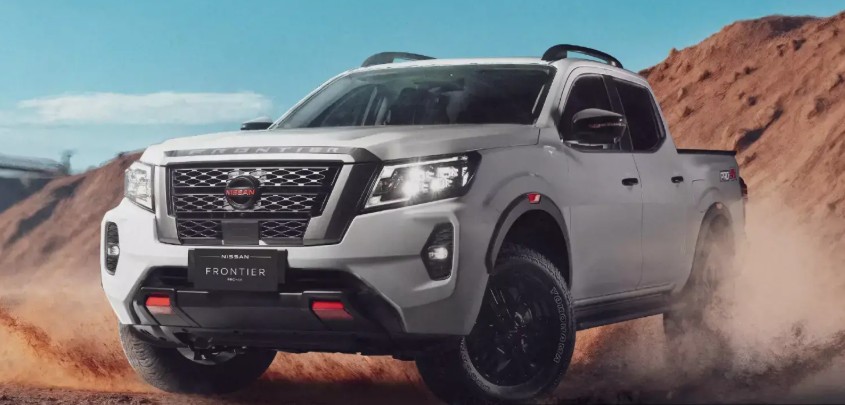
The Nissan Frontier gas tank size is one of those specifications that sounds simple until we start comparing different years, engines, cab styles, and generations. Ask how much fuel a modern Frontier holds and the answer is straightforward: roughly 21 gallons. Travel back to the late 1990s and early 2000s, though, and things become more interesting.
Some early Frontier configurations used smaller tanks, while others carried close to 20 gallons. Nissan then standardized the truck around a larger tank as the Frontier grew in size and capability.
For owners, shoppers, and anyone planning a long road trip, fuel capacity matters more than we might initially think. A bigger tank doesn't magically improve fuel economy, of course, but it can dramatically change how often we're hunting for a gas station.
In this guide, we'll break down the Nissan Frontier fuel tank capacity by generation and model year, convert gallons into liters, explain realistic driving range, and clear up the surprisingly common question: Why can't we ever pump the truck's entire advertised fuel capacity into it?
Content in this publication
- Quick Answer: How Big Is a Nissan Frontier Gas Tank?
- Nissan Frontier Gas Tank Size by Generation
- Third-Generation Nissan Frontier Gas Tank Size (2022–Present)
- Nissan Frontier Gas Tank Size in Liters
- Does Every Nissan Frontier Have the Same Gas Tank Size?
- King Cab vs Crew Cab: Does Tank Size Change?
- Nissan Frontier PRO-4X Gas Tank Size
- How Far Can a Nissan Frontier Travel on a Full Tank?
- Why Can't I Put 21 Gallons Into My Frontier?
- How Much Fuel Is Left When the Frontier Light Comes On?
- Why Does the Fuel Gauge Stay on Full After Filling?
- Should We Fill the Frontier Past the Pump's First Click?
- How Much Does It Cost to Fill a Nissan Frontier?
- Does a Bigger Gas Tank Improve Fuel Economy?
- Why Nissan Kept the Frontier Tank Around 21 Gallons
- Is the Frontier's 21-Gallon Tank Large Enough for Towing?
- How to Get More Miles From a Tank of Gas
- Used Frontier Buyers Should Verify Tank Capacity
- What If My Frontier Takes Much Less Fuel Than Expected?
- Nissan Frontier Fuel Capacity: What Owners Should Remember
- Conclusion: Nissan Frontier Gas Tank Size Explained
- Frequently Asked Questions
Quick Answer: How Big Is a Nissan Frontier Gas Tank?
For most modern U.S.-market Nissan Frontiers, the answer is approximately 21 gallons (about 80 liters).
Nissan currently lists the 2026 Frontier's fuel tank at 21.11 gallons, while recent Nissan brochures commonly round the published figure to 21 gallons.
Older Frontiers aren't quite as uniform.
Here is the simple generational overview:
| Nissan Frontier generation | Model years* | Typical U.S. fuel capacity |
|---|---|---|
| First generation (D22) | 1998–2004 | Approx. 15.9–19.4 gal |
| Second generation (D40) | 2005–2021 | Approx. 21.1 gal |
| Third generation (D41) | 2022–present | Approx. 21.0–21.1 gal |
*Generation dates refer primarily to the North American Nissan Frontier. The Frontier name and related Nissan/Navara platforms differ in other markets.
That's the bird's-eye view. Now let's open the hood—figuratively speaking—and look at why those numbers changed.
Nissan Frontier Gas Tank Size by Generation
The Frontier has evolved from a relatively compact and simple pickup into a larger midsize truck. Interestingly, its fuel tank capacity hasn't continually grown along with horsepower, towing capacity, and cabin technology.
Instead, Nissan made its biggest jump after the first generation and then stayed remarkably consistent.
First-Generation Nissan Frontier Gas Tank Size (1998–2004)
The first-generation D22 Frontier is where we need to be careful with blanket statements.
Depending on the year, engine, drivetrain, and body configuration, U.S. specifications show capacities around 15.9 gallons or 19.4 gallons.
For example, a 2000 Frontier Crew Cab is listed with a 19.4-gallon tank, while 2004 specifications show that certain configurations could have a 15.9-gallon tank and others a 19.4-gallon tank.
So if we're researching a first-generation Frontier, simply searching "2004 Frontier fuel capacity" may not be enough. The specific configuration matters.
Why Did Early Frontier Tank Sizes Differ?
Early Frontiers had a much wider mechanical spread than later models.
The lineup included different:
- four-cylinder and V6 engines,
- regular and extended-cab bodies,
- Crew Cab variants,
- two-wheel-drive and four-wheel-drive layouts,
- wheelbases and trim combinations.
Packaging a fuel tank underneath a pickup isn't as simple as dropping a plastic box wherever it fits. The frame, driveshaft, exhaust system, suspension, spare tire, and bed all compete for space underneath the vehicle.
That's why two Frontiers from the same model year can occasionally show different capacity figures in specification databases.
2000 Nissan Frontier Gas Tank Size
A representative 2000 Frontier Crew Cab carries approximately 19.4 gallons, or roughly 73.4 liters.
For a small pickup of its era, that was fairly generous.
Even at only 17 mpg, for example, multiplying 19.4 gallons by 17 mpg gives a theoretical maximum of roughly 330 miles.
Real-world range would normally be lower because we don't—and shouldn't—drive until every drop of fuel is gone.
2004 Nissan Frontier Gas Tank Size
The 2004 model demonstrates why configuration matters.
Published specifications list approximately 15.9 gallons for some four-cylinder versions, while other configurations are listed around 19.4 gallons.
That's nearly a 3.5-gallon difference.
At 20 mpg, those extra 3.5 gallons theoretically represent another 70 miles of driving range.
Not insignificant, right?
Second-Generation Nissan Frontier Gas Tank Size (2005–2021)
The arrival of the second-generation Frontier in 2005 changed the equation.
The truck became larger, stronger, and much more capable. Nissan also adopted a roughly 21.1-gallon fuel tank, which would remain a familiar Frontier specification for many years.
A 2005 Frontier, for example, is listed with approximately 21.1 gallons of fuel capacity.
Jump forward more than a decade and essentially the same number appears again.
Nissan's official 2019 Frontier brochure lists 21.1 gallons for both King Cab and Crew Cab configurations.
That consistency is useful for second-generation owners.
Instead of juggling half a dozen tank sizes, we can generally think of a D40 Frontier as carrying around 21 gallons.
2005–2019 Frontier Fuel Capacity
For most U.S. versions from this era:
Fuel tank capacity: approximately 21.1 U.S. gallons
That's approximately:
79.9 liters
or essentially 80 liters when rounded.
The second generation was famously long-lived, remaining in North American showrooms far longer than a typical vehicle generation.
Yet the fundamental fuel capacity stayed remarkably steady.
2020 Nissan Frontier Gas Tank Size
The 2020 Frontier was an unusual transition-year truck.
Although it retained the familiar second-generation body, Nissan introduced the newer 3.8-liter V6 and nine-speed automatic transmission that would later power the redesigned truck.
What didn't suddenly transform was the fuel tank.
The basic Frontier capacity remained around 21 gallons.
This means the driving-range equation changed more through engine efficiency than tank volume.
It's like swapping the runner without changing the size of the water bottle.
2021 Nissan Frontier Gas Tank Size
The 2021 Frontier continued the same general configuration.
Nissan's official 2021 brochure lists a 21.1-gallon tank for both King Cab and Crew Cab versions.
That's roughly 80 liters.
By this point, 21 gallons had essentially become the Frontier's signature fuel capacity.
Third-Generation Nissan Frontier Gas Tank Size (2022–Present)
The third-generation Frontier arrived with something owners had been waiting years to see: a thoroughly redesigned truck.
It looked dramatically different.
New interior. New exterior. New electronics. New safety technology.
Yet beneath all those changes, one familiar number remained.
Approximately 21 gallons.
The 2023 Nissan brochure lists a 21-gallon fuel tank for King Cab and Crew Cab models.
The 2024 brochure likewise lists 21 gallons.
In other words, Nissan redesigned almost everything around the tank without feeling compelled to make the tank significantly larger.
2022 Nissan Frontier Gas Tank Size
The redesigned 2022 Frontier carries approximately 21 gallons (around 80 liters).
That puts its capacity very close to the outgoing model.
For drivers moving from a D40 Frontier into the D41 generation, filling the tank therefore feels reassuringly familiar.
The difference is that improved drivetrain technology can alter how far those gallons take us.
2023 Nissan Frontier Gas Tank Size
The 2023 Frontier continues with a roughly 21-gallon tank.
Nissan's brochure applies that capacity across King Cab and Crew Cab configurations.
So whether we're looking at a work-oriented Frontier S or a more adventure-focused PRO-4X, fuel capacity isn't dramatically changing from trim to trim.
2024 Nissan Frontier Gas Tank Size
The story remains almost identical for 2024.
Official Nissan documentation lists:
Fuel tank: 21 gallons
for both primary cab styles.
That translates to roughly 79.5 liters if we convert exactly from 21 U.S. gallons.
2025 Nissan Frontier Gas Tank Size
For the refreshed 2025 Frontier, capacity stays at roughly 21 gallons.
Despite styling updates and improvements elsewhere in the truck, Nissan didn't suddenly bolt a giant expedition-size tank underneath it.
That's probably sensible for most buyers.
A larger tank adds weight, consumes packaging space, and costs considerably more to fill at one time.
2026 Nissan Frontier Gas Tank Size
The current 2026 Frontier gives us the most precise official number.
Nissan's U.S. specifications list a 21.11-gallon fuel tank across the Frontier variants displayed in its specification table.
Nissan's brochure rounds that to 21 gallons.
Therefore, if one website says 21 gallons and another says 21.1 gallons, they're essentially describing the same tank.
It's mostly rounding—not a secret extra fuel reservoir hiding under the PRO-4X.
Nissan Frontier Gas Tank Size in Liters
For readers outside the United States, gallons aren't especially useful.
Here are the approximate conversions:
| Tank capacity | Approximate liters |
| 15.9 U.S. gal | 60.2 L |
| 19.4 U.S. gal | 73.4 L |
| 21.0 U.S. gal | 79.5 L |
| 21.1 U.S. gal | 79.9 L |
| 21.11 U.S. gal | 79.9 L |
So when we describe a modern Frontier as having a 21-gallon tank, we can comfortably think of it as an 80-liter fuel tank.
Does Every Nissan Frontier Have the Same Gas Tank Size?
No.
That's especially important when shopping for an older Frontier.
First-generation trucks can differ according to configuration. Later U.S.-market Frontiers became much more standardized around the roughly 21-gallon mark.
We should also remember that Nissan sells trucks globally.
Vehicles related to the Frontier may appear under names such as Navara in international markets, and specifications can differ because of engines, emissions equipment, chassis configuration, regional regulations, and vehicle design.
That's why the safest rule is simple:
Check the owner's manual or official specifications for the exact model year, market, drivetrain, and body style.
King Cab vs Crew Cab: Does Tank Size Change?
On recent U.S. Frontiers, generally no.
Nissan's official 2019 documentation lists 21.1 gallons for both King Cab and Crew Cab models, while its 2026 brochure lists 21 gallons for both.
That's convenient because a buyer doesn't have to sacrifice fuel capacity simply to choose the larger Crew Cab.
The Crew Cab may weigh more, however.
And weight affects fuel consumption.
So identical tank size doesn't automatically produce identical range.
Nissan Frontier PRO-4X Gas Tank Size
The off-road-focused PRO-4X also uses roughly the same 21-gallon fuel tank as other modern Frontier configurations.
This makes sense from a manufacturing standpoint because Nissan doesn't need an entirely different fuel system just for the off-road trim.
What can change is consumption.
Four-wheel-drive components, off-road tires, extra equipment, terrain, and aggressive driving can all eat into range.
Picture two identical buckets of water.
One person walks calmly across a flat road. The other climbs a mountain.
Same bucket.
Very different distance.
That's essentially what happens with fuel range.
How Far Can a Nissan Frontier Travel on a Full Tank?
Now we get to the useful part.
Tank capacity tells us how much gasoline fits inside the truck.
Driving range tells us what that gasoline actually accomplishes.
The basic formula is:
Fuel tank capacity × fuel economy = theoretical range
Let's assume a modern Frontier holds approximately 21.1 gallons.
At:
- 16 mpg: 338 miles
- 18 mpg: 380 miles
- 20 mpg: 422 miles
- 22 mpg: 464 miles
- 24 mpg: 506 miles
Those are mathematical maximums, not promises.
Real-life range is normally lower.
Modern Nissan figures, for example, show the 2026 Frontier can achieve as much as 19 mpg city and 24 mpg highway depending on configuration.
That sounds promising, but we shouldn't multiply the best highway MPG by the complete tank capacity and assume we'll always travel that far.
What Reduces Frontier Driving Range?
Plenty of things.
Real-world mileage can fall because of:
- stop-and-go traffic,
- short trips,
- cold weather,
- strong headwinds,
- heavy cargo,
- towing,
- four-wheel-drive use,
- off-road terrain,
- oversized or aggressive tires,
- low tire pressure,
- idling,
- rapid acceleration,
- high highway speeds.
A loaded Frontier towing a trailer into a headwind can burn fuel like a fireplace burns logs.
A lightly loaded 2WD Frontier cruising gently down a highway is another story entirely.
Why Can't I Put 21 Gallons Into My Frontier?
This question confuses a surprising number of owners.
Imagine the specification sheet says the Frontier holds about 21 gallons.
The low-fuel light comes on.
We drive to the station.
Then the pump clicks off at 17 gallons.
Did Nissan lie?
No.
A tank's listed capacity and the amount required to refill it aren't the same thing.
When the gauge reaches "E," fuel normally remains in the tank.
Manufacturers deliberately provide a reserve because allowing a gasoline-powered vehicle to routinely run completely dry isn't desirable.
The fuel gauge also isn't a laboratory measuring instrument.
Its job is to give us a useful estimate of remaining fuel—not report capacity to the nearest fluid ounce.
So a 21-gallon Frontier needing only 17 or 18 gallons after the warning appears can be perfectly plausible.
How Much Fuel Is Left When the Frontier Light Comes On?
There isn't one universally reliable "you have exactly X gallons left" number we should use for every Frontier generation.
Sensor calibration, vehicle angle, model year, operating conditions, and fuel sloshing can influence gauge behavior.
That's why trying to turn the low-fuel warning into a personal endurance challenge is a bad game.
When the light appears, think:
Find fuel soon.
Not:
Excellent, let's see whether we can squeeze another 60 miles out of it.
Even if the truck continues running, repeatedly operating at extremely low fuel levels isn't a habit we need.
Why Does the Fuel Gauge Stay on Full After Filling?
Some Frontier owners notice that the gauge remains near "F" for quite a while after a fill-up and then seems to drop faster later.
That's not necessarily evidence of a problem.
Fuel tanks aren't perfectly rectangular boxes.
Their shape is dictated by the chassis surrounding them, and the relationship between fuel level and actual volume isn't always linear.
The sender and dashboard electronics smooth the reading so the needle doesn't dance around every time fuel sloshes through a corner.
In other words, the gauge is telling us a story—not reading a ruler.
Should We Fill the Frontier Past the Pump's First Click?
Generally, no.
When the fuel nozzle automatically clicks off, stop.
Continuing to squeeze additional gasoline into the filler neck in an attempt to reach the advertised tank capacity isn't a useful way to test the specification.
The fuel system includes evaporative-emissions components designed to manage fuel vapors.
Overfilling isn't going to magically give us meaningful additional road-trip range, and spilled gasoline certainly isn't money well spent.
How Much Does It Cost to Fill a Nissan Frontier?
Fuel prices constantly change, so the easiest method is to calculate it ourselves.
For a 21.1-gallon Frontier:
21.1 × local gasoline price = theoretical cost from completely empty
For example:
At $3.00 per gallon:
21.1 × $3.00 = $63.30
At $3.50:
21.1 × $3.50 = $73.85
At $4.00:
21.1 × $4.00 = $84.40
At $5.00:
21.1 × $5.00 = $105.50
Again, a normal fill-up usually costs less because we're almost never starting with a truly empty tank.
Does a Bigger Gas Tank Improve Fuel Economy?
No.
Fuel economy and fuel capacity are separate concepts.
A bigger tank increases potential driving range.
It doesn't make the engine more efficient.
Suppose Truck A and Truck B both achieve 20 mpg.
Truck A holds 15 gallons.
Truck B holds 21 gallons.
Their fuel economy is identical.
But their theoretical ranges are:
Truck A: 300 miles
Truck B: 420 miles
The larger tank simply lets Truck B stay on the road longer between stops.
Why Nissan Kept the Frontier Tank Around 21 Gallons
We can't know every engineering decision Nissan made without its internal development data, but 21 gallons represents a sensible compromise for a midsize pickup.
Increasing capacity sounds wonderful until we consider the consequences.
Gasoline weighs roughly six pounds per U.S. gallon.
Add five gallons and we're carrying around another 30 pounds of fuel when full, plus potentially additional tank structure.
Engineers also need to preserve space for:
- the frame,
- exhaust,
- rear suspension,
- drivetrain components,
- emissions hardware,
- spare tire,
- bed structure,
- crash protection.
A pickup truck is like a suitcase before vacation: underneath the body, every inch already has a job.
Is the Frontier's 21-Gallon Tank Large Enough for Towing?
For ordinary towing, yes.
But towing can dramatically reduce MPG.
Suppose a Frontier normally achieves 20 mpg.
With a trailer, perhaps conditions knock that down to 12 mpg.
The rough theoretical range changes from:
21.1 × 20 = 422 miles
to:
21.1 × 12 = 253 miles
And we wouldn't want to use every gallon.
That explains why towing trips sometimes feel like a tour of every fuel station on the interstate.
If we're hauling near the truck's limits, driving through remote areas, or fighting strong winds, planning refueling stops beforehand is much smarter than trusting the normal dashboard range estimate.
How to Get More Miles From a Tank of Gas
We don't need weird gadgets or miracle fuel additives.
The boring stuff usually works best.
Keep tires properly inflated, remove unnecessary cargo, maintain the engine according to schedule, accelerate smoothly, reduce excessive idling, and avoid unnecessarily high cruising speeds.
When towing, aerodynamic drag becomes particularly important.
A large enclosed trailer acts like a parachute tied to the back of the truck.
Sometimes dropping a little speed can make a surprisingly noticeable difference.
Used Frontier Buyers Should Verify Tank Capacity
If we're buying an older Frontier, especially a 1998–2004 truck, don't assume every online specification applies to the vehicle parked in front of us.
Check:
- Model year
- Engine
- Cab configuration
- 2WD or 4WD
- VIN-specific documentation
- Owner's manual
- Original equipment specifications
The first generation is precisely where generic internet answers can lead us astray.
A search result saying "19.4 gallons" might be correct for one Frontier and wrong for another.
What If My Frontier Takes Much Less Fuel Than Expected?
Usually, the simplest explanation is that more gasoline remained in the tank than the gauge made us think.
But if the gauge behaves strangely—perhaps jumping between levels, staying permanently full, dropping to empty unexpectedly, or giving obviously inaccurate readings—the fuel-level sending system may deserve inspection.
Don't diagnose a failed component based solely on one fill-up.
Track several tanks first.
Record:
- miles driven,
- gallons added,
- calculated MPG,
- indicated fuel level before refueling.
Patterns tell us much more than a single trip to the pump.
Nissan Frontier Fuel Capacity: What Owners Should Remember
After looking across the generations, the Frontier's fuel-tank history becomes fairly simple.
Early D22 trucks are the tricky ones. Depending on configuration, U.S. first-generation examples can be found with capacities around 15.9 or 19.4 gallons.
The second-generation truck moved to about 21.1 gallons, a figure confirmed in Nissan's 2019 and 2021 Frontier literature.
The third-generation Frontier retained essentially the same capacity. Recent brochures typically describe it as 21 gallons, while Nissan's current specifications give the more precise figure of 21.11 gallons.
That's nearly three decades of Frontier evolution summed up in one sentence:
The truck changed dramatically; after 2005, the fuel tank barely did.
Conclusion: Nissan Frontier Gas Tank Size Explained
So, what is the Nissan Frontier gas tank size?
For a modern U.S.-market Frontier, remember one number:
About 21 gallons, or approximately 80 liters.
Most second-generation trucks from 2005 onward also sit around the 21.1-gallon mark, making fuel capacity one of the more consistent Frontier specifications through the years.
The first generation requires closer attention. Some early configurations hold around 15.9 gallons, while others carry approximately 19.4 gallons.
And if our supposedly 21-gallon Frontier only accepts 17 gallons at the gas station, don't immediately assume something is wrong. "Empty" on the gauge doesn't mean the fuel tank has been drained like a bottle turned upside down.
Tank capacity is only half the story anyway.
Fuel economy, payload, towing, terrain, weather, and driving style ultimately determine whether those 21 gallons disappear like water through a sieve—or carry us hundreds of miles down the highway.
Frequently Asked Questions
1. How many gallons does a Nissan Frontier hold?
Most U.S.-market Nissan Frontiers from 2005 onward hold approximately 21 to 21.1 gallons of gasoline. The current 2026 Frontier is officially listed at 21.11 gallons, while Nissan brochures generally round the figure to 21 gallons.
2. How many liters is the Nissan Frontier fuel tank?
A modern Frontier's approximately 21.1-gallon tank equals roughly 80 liters. Earlier first-generation versions may have smaller tanks, so owners of 1998–2004 trucks should verify their specific model and configuration.
3. Why does my 21-gallon Frontier only take 17 gallons?
Because the fuel gauge can show empty or trigger the low-fuel warning while gasoline still remains in the tank. The advertised 21-gallon figure represents tank capacity, not necessarily the quantity required during a normal fill-up.
4. Does the Frontier PRO-4X have a larger gas tank?
Not significantly. Modern Frontier PRO-4X models use approximately the same 21-gallon fuel capacity as other Frontier configurations. Its real-world range may differ because four-wheel drive, off-road tires, terrain, and other factors affect fuel consumption.
5. How far can a Nissan Frontier go on a full tank?
It depends on fuel economy. With a roughly 21.1-gallon tank, 18 mpg mathematically equals around 380 miles, while 20 mpg equals around 422 miles. Actual usable range is lower because drivers normally refuel before the tank is completely empty.
If you want to know other articles similar to Nissan Frontier Gas Tank Size: Complete Guide for All Generations you can visit the category Service and Parts.
Kia Sorento Service Reset: How to Reset the Service Light
Kia Sorento Fuel Tank Capacity: Gallons, Litres and Model Differences
Kia Sorento Tyre Pressure: Recommended PSI, Bar and Complete Guide
Kia Sorento Boot Space: How Much Luggage Space Does It Really Have?
Kia Sorento Towing Capacity: How Much Can a Sorento Tow?

Honda Passport Payload Capacity: How Much Weight Can It Carry?
Leave a Reply
More content of your interest