
Hyundai Santa Fe Wheel Bearing Replacement Cost: Complete Guide

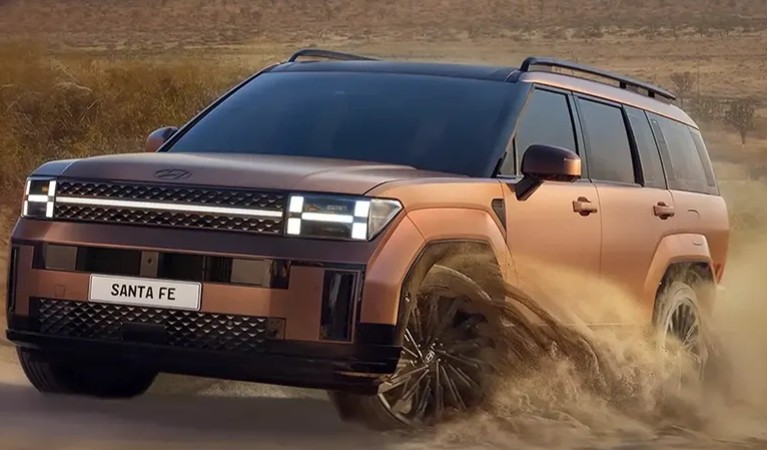
A humming noise that grows louder with speed can turn an otherwise comfortable Hyundai Santa Fe into something that sounds suspiciously like an airplane preparing for takeoff. Often, the culprit is a worn wheel bearing.
Then comes the obvious question: how much does Hyundai Santa Fe wheel bearing replacement cost?
As a general budgeting estimate, we can expect to spend roughly $300 to $700 per wheel for a Hyundai Santa Fe wheel bearing or hub assembly replacement at an independent repair shop in the United States. Dealer pricing can reach approximately $450 to $900 or more per wheel, depending on the model year, location, labor rates, and whether additional components need attention.
Those numbers are useful starting points rather than fixed prices. The Santa Fe has gone through several generations, and bearing designs, hub assemblies, AWD hardware, labor requirements, and parts prices aren't identical across every model.
Let's break down what actually determines the bill, how we can recognize a failing bearing, and whether replacing it sooner rather than later can save money.
Content in this publication
- How Much Does Hyundai Santa Fe Wheel Bearing Replacement Cost?
- What Is a Wheel Bearing?
- Why Santa Fe Wheel Bearing Costs Vary So Much
- Hyundai Santa Fe Wheel Bearing Parts Cost
- Labor Cost for Hyundai Santa Fe Wheel Bearing Replacement
- Front Hyundai Santa Fe Wheel Bearing Replacement Cost
- Rear Hyundai Santa Fe Wheel Bearing Replacement Cost
- Wheel Bearing vs Wheel Hub Assembly
- Signs Your Hyundai Santa Fe Has a Bad Wheel Bearing
- What Causes Hyundai Santa Fe Wheel Bearings to Fail?
- How Long Do Hyundai Santa Fe Wheel Bearings Last?
- Can We Drive a Hyundai Santa Fe With a Bad Wheel Bearing?
- What Happens If We Delay Wheel Bearing Replacement?
- Do Both Wheel Bearings Need to Be Replaced Together?
- Hyundai Dealer vs Independent Mechanic
- How to Get a Better Wheel Bearing Replacement Quote
- DIY Hyundai Santa Fe Wheel Bearing Replacement
- Can a Bad Wheel Bearing Damage the Tire?
- Wheel Bearing Noise vs Tire Noise
- How to Save Money on Santa Fe Wheel Bearing Replacement
- Is Hyundai Santa Fe Wheel Bearing Replacement Expensive?
- Example Santa Fe Wheel Bearing Budget
- Is Replacing a Santa Fe Wheel Bearing Worth It?
- How Can We Help the New Bearing Last Longer?
- Final Thoughts on Hyundai Santa Fe Wheel Bearing Replacement Cost
- Frequently Asked Questions
- 1. How much does it cost to replace a Hyundai Santa Fe wheel bearing?
- 2. Can I drive my Hyundai Santa Fe with a noisy wheel bearing?
- 3. Should I replace both Santa Fe wheel bearings at the same time?
- 4. How long do Hyundai Santa Fe wheel bearings last?
- 5. What does a bad Hyundai Santa Fe wheel bearing sound like?
How Much Does Hyundai Santa Fe Wheel Bearing Replacement Cost?
For most owners, a reasonable working budget looks something like this:
| Repair | Typical Estimated Cost |
|---|---|
| One wheel bearing/hub | $300–$700 |
| Dealer replacement | $450–$900+ |
| Parts only | $80–$300+ |
| Labor | $150–$400+ |
| Both bearings on one axle | $600–$1,400+ |
These are broad estimates rather than quotes. Prices vary considerably between regions and Santa Fe generations.
Labor rates make a particularly large difference. A repair that costs $400 at a small independent garage might approach $700 at a dealership or high-cost metropolitan workshop.
Parts quality matters too. A cheap aftermarket bearing can dramatically reduce the initial quote, while an OEM Hyundai hub assembly or premium bearing from a respected manufacturer can push the price upward.
That doesn't necessarily mean the cheaper repair provides better value.
What Is a Wheel Bearing?
Before talking about costs, let's understand what we're actually replacing.
The wheel bearing sits inside or around the wheel hub and allows the wheel to rotate smoothly while supporting substantial loads generated by the vehicle.
Think of it as a small mechanical mediator between two very different jobs. The wheel needs to spin freely, yet it also needs to remain firmly positioned while the vehicle accelerates, brakes, corners, and travels across rough roads.
The bearing makes that possible.
Inside are precisely manufactured rolling elements surrounded by hardened metal races and lubricated to minimize friction.
When everything works properly, we barely know the bearing exists.
When it starts failing, however, it becomes remarkably good at announcing itself.
Why Santa Fe Wheel Bearing Costs Vary So Much
Search for replacement prices online and we might see one owner reporting a $300 repair while another paid nearly $900.
Neither figure necessarily means somebody was overcharged.
Several variables determine the final price.
1. Hyundai Santa Fe Model Year
The Santa Fe has been produced across multiple generations with significant changes to suspension, hubs, drivetrains, electronics, and wheel-bearing arrangements.
Older versions may use components that require more disassembly or bearing pressing.
Many newer vehicles use integrated hub-and-bearing assemblies. Instead of removing the bearing from the hub, the technician replaces the assembly.
That can simplify certain parts of the job but increase the component cost.
2. Front vs Rear Wheel Bearing
Front and rear bearing replacement costs aren't automatically identical.
The front suspension must accommodate steering and driven components on many Santa Fe configurations. Rear arrangements differ depending on generation and whether we're dealing with front-wheel drive or all-wheel drive.
As a result, labor times can vary.
3. FWD vs AWD
An AWD Santa Fe has additional drivetrain components around the wheels.
That doesn't guarantee the bearing replacement will be dramatically more expensive, but AWD hardware can influence labor complexity and parts requirements.
Whenever we're comparing quotes, it's important to provide the shop with the exact year, engine, trim, and drivetrain.
4. OEM vs Aftermarket Parts
Parts selection can change the bill by hundreds of dollars.
An OEM Hyundai component usually costs more than a budget aftermarket alternative. Premium aftermarket brands often sit somewhere between the two.
For a component like a wheel bearing, we'd be cautious about choosing purely by price.
Bearings work constantly whenever the vehicle moves. Saving $50 or $100 doesn't look particularly clever if we're paying the labor charge again because a low-quality bearing fails prematurely.
Hyundai Santa Fe Wheel Bearing Parts Cost
Parts commonly account for roughly $80 to $300 or more of the repair.
The exact number depends on whether we're purchasing:
- A standalone wheel bearing
- A complete wheel hub assembly
- OEM Hyundai parts
- Premium aftermarket components
- Budget aftermarket components
- A hub with integrated ABS-related hardware
Complete assemblies generally cost more than an individual bearing, but they may reduce installation complexity.
Should We Buy the Cheapest Bearing?
Usually, no.
Wheel bearings operate under considerable heat, vibration, radial load, and impact. Manufacturing tolerances matter.
A bargain bearing that develops play or starts humming after a short period can turn a cheap repair into an expensive one because the labor has to be performed again.
When we're already paying substantial labor costs, using a reputable bearing or hub assembly usually makes sense.
Labor Cost for Hyundai Santa Fe Wheel Bearing Replacement
Labor frequently costs approximately $150 to $400 or more per wheel.
Why can something that sounds simple become a multi-hour repair?
Because "replace the bearing" isn't always as easy as removing a few bolts.
Depending on the Santa Fe, the mechanic may need to remove or work around the:
- Wheel
- Brake caliper
- Brake rotor
- Axle nut
- ABS sensor or wiring
- Steering knuckle
- CV axle
- Hub assembly
- Suspension hardware
Corrosion can make things considerably worse.
A ten-year-old fastener that has spent its life exposed to rain, road salt, heat, and dirt doesn't necessarily care what the official labor guide says. Sometimes it behaves like it has been welded into place.
That extra struggle can increase labor charges.
Front Hyundai Santa Fe Wheel Bearing Replacement Cost
A front wheel bearing replacement will commonly fall somewhere around $300 to $750 per side, although some repairs can exceed this range.
Front bearings deal with substantial loads because the front wheels typically handle steering and a large portion of braking forces. On front-wheel-drive models, they also sit around driven axle components.
The job may therefore involve removing the axle nut and separating components surrounding the hub.
If the vehicle has severe corrosion, a seized axle, damaged ABS hardware, or other complications, the price climbs.
Can Front Bearings Cost More Than Rear Bearings?
They can, but we shouldn't assume that's always the case.
Modern rear hub assemblies can also be expensive. What matters is the specific Santa Fe configuration rather than a universal front-versus-rear rule.
The best comparison is based on actual labor time and part numbers for our vehicle.
Rear Hyundai Santa Fe Wheel Bearing Replacement Cost
Rear wheel bearing replacement generally lands in a similar territory: approximately $300 to $700 per wheel.
Some versions use a relatively straightforward hub assembly, making replacement easier. Others may require additional work.
AWD versions can also have more hardware associated with the rear drivetrain.
Again, vehicle identification matters.
A quote for a 2010 Santa Fe shouldn't automatically be applied to a 2024 Santa Fe just because both vehicles share the same badge.
Wheel Bearing vs Wheel Hub Assembly
Here's where terminology can become confusing.
A mechanic may tell us that we need a "wheel bearing," but the invoice might list a "hub assembly."
Are we being sold something unnecessary?
Not necessarily.
Many modern vehicles integrate the bearing into a complete hub unit. Instead of pressing the old bearing out and installing another, the technician replaces the entire assembly.
Advantages of a Hub Assembly
A complete assembly can offer several benefits:
- Installation may be quicker.
- New components arrive preassembled.
- Bearing preload is established by the manufacturer.
- Related hub wear is eliminated.
- Some assemblies incorporate ABS-related components.
The disadvantage is straightforward: the part itself usually costs more.
However, lower labor time can partially compensate for the higher component price.
Signs Your Hyundai Santa Fe Has a Bad Wheel Bearing
Wheel bearings rarely send us a polite notification saying, "Please replace me next Tuesday."
Instead, they communicate through noise and vibration.
Humming or Growling Noise
This is perhaps the classic symptom.
We might hear a low humming, droning, grinding, or growling sound that increases as vehicle speed rises.
Unlike engine noise, the sound tends to correspond more closely with road speed than engine rpm.
Imagine distant aircraft noise that gets progressively louder. That's similar to how some failing bearings sound.
Noise Changes While Turning
Bearing noise can change when the vehicle corners because turning shifts weight from one side to the other.
A bearing may become louder when loaded and quieter when unloaded.
This behavior can help a technician identify which side is failing, although diagnosing bearings by sound alone isn't always foolproof.
Steering Wheel Vibration
A severely worn bearing may contribute to vibration through the steering wheel or chassis.
However, vibration has many possible causes, including:
- Wheel imbalance
- Damaged tires
- Worn suspension components
- Brake problems
- CV axle issues
We shouldn't automatically blame the bearing.
Wheel Play
As a bearing deteriorates, excessive movement can develop at the wheel.
A technician can raise the vehicle and inspect the wheel for abnormal play.
But even this isn't a perfect DIY diagnosis because worn suspension or steering components can create similar movement.
ABS Warning Light
On some configurations, wheel-speed sensing hardware is associated with the hub or bearing assembly.
A bearing or hub problem can potentially interfere with the wheel-speed signal and trigger an ABS or stability-control warning.
That doesn't mean every ABS light equals a bad bearing.
Scanning the vehicle for diagnostic trouble codes is the sensible first move.
What Causes Hyundai Santa Fe Wheel Bearings to Fail?
Wheel bearings are designed for long service, but they're not immortal.
Normal Wear
Thousands of miles of rotation eventually take their toll.
Every commute, highway trip, pothole, corner, and braking event contributes a tiny amount of wear.
Over many years, that adds up.
Potholes and Road Impacts
A hard pothole impact sends a shock through the tire, wheel, hub, bearing, and suspension.
One impact might not immediately destroy the bearing, but repeated abuse can shorten its lifespan.
Large wheels and low-profile tires may provide less cushioning against severe impacts.
Water and Contamination
Bearings depend on lubrication and sealing.
If moisture or contamination gets inside, corrosion and accelerated wear can follow.
Once the smooth internal surfaces become damaged, noise tends to increase progressively.
Incorrect Installation
Improper installation can kill a perfectly good new bearing.
Excessive force, incorrect pressing techniques, improper axle-nut torque, or applying force through the wrong bearing race can damage components before the vehicle even leaves the workshop.
This is one reason workmanship matters as much as the brand printed on the box.
How Long Do Hyundai Santa Fe Wheel Bearings Last?
There isn't a universal replacement interval.
A wheel bearing might last 100,000 miles or considerably longer, while another could fail much earlier due to road conditions, contamination, impacts, manufacturing differences, or previous repair work.
Unlike engine oil, wheel bearings aren't normally replaced simply because a predetermined mileage has arrived.
We replace them when inspection indicates wear or failure.
Does High Mileage Automatically Mean New Bearings?
No.
If the bearings remain quiet, smooth, and free from excessive play, replacing them merely because the odometer crossed a particular number usually isn't necessary.
Condition matters more than mileage alone.
Can We Drive a Hyundai Santa Fe With a Bad Wheel Bearing?
Technically, a vehicle with an early-stage noisy bearing may still move normally.
That doesn't make ignoring it a good strategy.
Bearing deterioration can progress. Excessive play may affect handling, braking, tires, and nearby components.
A badly deteriorated bearing can become a serious safety problem.
If we hear grinding, notice substantial wheel movement, experience abnormal handling, or suspect the wheel isn't securely supported, the vehicle should be inspected promptly rather than driven unnecessarily.
What Happens If We Delay Wheel Bearing Replacement?
Waiting rarely makes the repair cheaper.
A mildly noisy bearing may initially require only a bearing or hub replacement.
Allow severe wear to continue and secondary problems become more plausible.
Depending on the failure, additional wear could potentially affect nearby components such as the hub, axle, ABS hardware, tire, brakes, or steering/suspension components.
The repair bill can snowball.
It's rather like ignoring a small roof leak. The original defect may be manageable; the damage created by pretending it isn't there can become expensive.
Do Both Wheel Bearings Need to Be Replaced Together?
Usually not.
Wheel bearings aren't normally treated like brake pads, where both sides of an axle are routinely replaced together.
If the left bearing fails but the right bearing remains healthy, replacing only the defective side is generally reasonable.
However, there are situations where replacing both might make sense.
For example, if both bearings have extremely high mileage and the opposite side is already beginning to make noise, doing both can reduce the chance of returning to the shop shortly afterward.
Still, we shouldn't replace a perfectly healthy bearing automatically.
Diagnosis comes first.
Hyundai Dealer vs Independent Mechanic
Where we have the repair performed can significantly influence the final price.
Hyundai Dealership
A dealership may charge more because of higher hourly labor rates and greater reliance on OEM parts.
Potential advantages include technicians familiar with Hyundai vehicles, access to manufacturer procedures, and OEM components.
Independent Repair Shop
A reputable independent garage may provide substantially lower labor rates and a wider choice of aftermarket parts.
For an out-of-warranty Santa Fe, this can offer excellent value.
The important word is reputable.
Wheel-bearing installation isn't a repair where we'd automatically select the lowest quote without asking what parts are being used and what warranty is included.
How to Get a Better Wheel Bearing Replacement Quote
When requesting estimates, we should make sure we're comparing equivalent repairs.
Ask each shop:
- Does the quote include parts and labor?
- Are you replacing the bearing alone or the complete hub?
- What brand of part will you install?
- Is it OEM or aftermarket?
- Is there a labor warranty?
- Is the axle nut or other one-time-use hardware included?
- Are taxes and shop fees included?
- Is an alignment required afterward?
That last question deserves attention.
Will We Need an Alignment?
Not every wheel-bearing replacement requires a wheel alignment.
If the repair involves disturbing suspension geometry or removing certain components, however, checking alignment may be sensible.
If alignment is necessary, expect the total repair bill to rise.
We shouldn't assume it's automatically included in the bearing quote.
DIY Hyundai Santa Fe Wheel Bearing Replacement
Could we replace a Santa Fe wheel bearing ourselves?
Possibly.
Should every home mechanic attempt it?
Probably not.
A bolt-on hub assembly can be manageable for an experienced DIY mechanic with proper tools. A pressed bearing is a different animal.
The job may require:
- Floor jack and quality jack stands
- Large sockets
- Breaker bar
- Torque wrench
- Hub puller
- Bearing separator
- Hydraulic press
- Snap-ring tools
- Penetrating oil
- Vehicle-specific torque specifications
Improperly supporting the vehicle or incorrectly installing critical hub hardware introduces genuine safety risks.
The Axle Nut Matters
One detail deserves particular emphasis: torque specifications.
Overtightening or undertightening certain hub and axle components can affect bearing performance and safety.
"Very tight" isn't a specification.
Always use the correct service procedure and torque values for the exact model year and drivetrain.
Can a Bad Wheel Bearing Damage the Tire?
Potentially.
If bearing wear creates excessive wheel movement, tire contact with the road can become less consistent. That may contribute to unusual tire wear.
However, irregular tire wear has numerous possible causes.
Alignment problems, worn suspension bushings, incorrect inflation, damaged shocks, and tire defects can produce similar symptoms.
If we're replacing a badly worn bearing, it's worth asking the mechanic to inspect the tire and surrounding suspension components at the same time.
Wheel Bearing Noise vs Tire Noise
This is one of the trickiest parts of diagnosis.
A worn tire can produce a hum that sounds remarkably similar to a damaged bearing.
Aggressive tread patterns, uneven wear, cupping, and aging tires can all create road-speed-dependent noise.
A technician may inspect the tires, rotate them, listen while driving, lift the vehicle, check for bearing play, and sometimes use specialized listening equipment.
We shouldn't replace a $500 hub based solely on "it sounds like a bearing."
Confirmation matters.
How to Save Money on Santa Fe Wheel Bearing Replacement
We don't necessarily need the cheapest repair. We need the best balance between price, quality, and longevity.
A few strategies can help:
- Obtain two or three comparable quotes.
- Ask which bearing brand is included.
- Compare OEM and reputable aftermarket options.
- Avoid replacing the opposite bearing unless there's evidence it needs attention.
- Address the problem before secondary damage develops.
- Ask whether diagnostic charges are credited toward the repair.
- Confirm the warranty on both parts and labor.
Saving $100 on an unknown bearing isn't much of a victory if we're back in the workshop six months later.
Is Hyundai Santa Fe Wheel Bearing Replacement Expensive?
Compared with routine maintenance, yes, it can feel expensive.
We're not talking about a $50 oil change.
But in the wider world of modern SUV repairs, a few hundred dollars for a wheel bearing isn't extraordinary.
The painful scenarios tend to occur when several things happen simultaneously: premium OEM parts, high dealership labor rates, extensive corrosion, damaged surrounding components, and multiple bearings requiring replacement.
A straightforward one-wheel repair at an independent shop can be considerably more manageable.
Example Santa Fe Wheel Bearing Budget
Suppose our Santa Fe develops a humming front bearing.
A hypothetical independent-shop invoice could look something like this:
| Item | Example Cost |
| Quality hub/bearing assembly | $180 |
| Labor | $240 |
| Hardware/shop supplies | $25 |
| Estimated subtotal | $445 |
Now imagine the same repair requires a more expensive OEM assembly and dealer labor:
| Item | Example Cost |
| OEM hub/bearing assembly | $300 |
| Labor | $350 |
| Hardware/fees | $40 |
| Estimated subtotal | $690 |
These examples aren't quoted prices. They're simply illustrations of how quickly parts selection and hourly labor rates change the total.
Is Replacing a Santa Fe Wheel Bearing Worth It?
For an otherwise healthy vehicle, usually yes.
A wheel bearing is a wear component. Its failure doesn't automatically indicate that the vehicle has reached the end of its useful life.
If our Santa Fe is mechanically sound and the repair costs $400–$700, replacing the bearing generally makes far more financial sense than changing vehicles because of one worn component.
The calculation changes if the SUV simultaneously needs thousands of dollars in transmission, engine, suspension, and rust repairs.
In that situation, we'd evaluate the vehicle as a whole rather than looking at the bearing in isolation.
How Can We Help the New Bearing Last Longer?
We can't eliminate normal wear, but sensible driving and maintenance can help reduce unnecessary stress.
Try to avoid smashing into potholes whenever safely possible. Keep tires correctly inflated. Address damaged wheels and suspension problems promptly. Don't ignore unusual noises for months.
Most importantly, make sure replacement parts are installed correctly.
A quality bearing installed poorly can fail early. A quality bearing installed properly has a much better chance of providing years of quiet service.
Final Thoughts on Hyundai Santa Fe Wheel Bearing Replacement Cost
So, what should we budget?
For a Hyundai Santa Fe wheel bearing replacement, approximately $300 to $700 per wheel is a sensible broad estimate for many independent-shop repairs, while dealership jobs can reach roughly $450 to $900 or more.
The actual cost depends heavily on the Santa Fe's model year, drivetrain, bearing design, labor rates, parts selection, corrosion, and whether additional components need replacement.
The bigger lesson is simple: diagnose before buying parts.
A humming Santa Fe doesn't automatically have a bad bearing. Tires, drivetrain components, brakes, and suspension can produce surprisingly similar noises.
Once a worn bearing is confirmed, though, postponing the repair generally isn't worthwhile. Bearings are fundamental components hiding behind the wheel, quietly carrying thousands of pounds while spinning mile after mile.
When one finally starts complaining, it's worth listening.
Frequently Asked Questions
1. How much does it cost to replace a Hyundai Santa Fe wheel bearing?
A reasonable general estimate is approximately $300 to $700 per wheel at an independent repair shop. Dealer prices can reach roughly $450 to $900 or more, depending on the year, parts, drivetrain, location, and labor requirements.
2. Can I drive my Hyundai Santa Fe with a noisy wheel bearing?
A mildly noisy bearing may not fail immediately, but continued driving isn't something we should casually recommend. Bearing wear can worsen and potentially affect vehicle safety. Have persistent humming, grinding, looseness, or vibration diagnosed promptly.
3. Should I replace both Santa Fe wheel bearings at the same time?
Not automatically. If only one bearing has failed and the opposite side tests good, replacing the defective bearing is normally sufficient. Replacing both can make sense when both show wear or similar symptoms.
4. How long do Hyundai Santa Fe wheel bearings last?
There's no fixed lifespan. Many bearings can exceed 100,000 miles, while others fail earlier because of pothole impacts, contamination, road conditions, corrosion, installation problems, or normal variation in component life.
5. What does a bad Hyundai Santa Fe wheel bearing sound like?
The classic symptom is a humming, growling, rumbling, or grinding noise that becomes more noticeable as road speed increases. The sound may also change while cornering because the load placed on each bearing changes.
If you want to know other articles similar to Hyundai Santa Fe Wheel Bearing Replacement Cost: Complete Guide you can visit the category Service and Parts.
Nissan Rogue Oil Change Cost: Prices, Service Options, and What to Expect
Nissan Rogue Key Battery Replacement: Easy Step-by-Step Guide
Nissan Rogue Oil Change Interval: Complete Guide by Model Year
Nissan Rogue Brake Pads and Rotors Cost: Complete 2026 Guide

Kia Sorento Service Reset: How to Reset the Service Light
Kia Sorento Fuel Tank Capacity: Gallons, Litres and Model Differences
Leave a Reply
More content of your interest