

Toyota Sequoia Engine Problems: What Owners Should Know

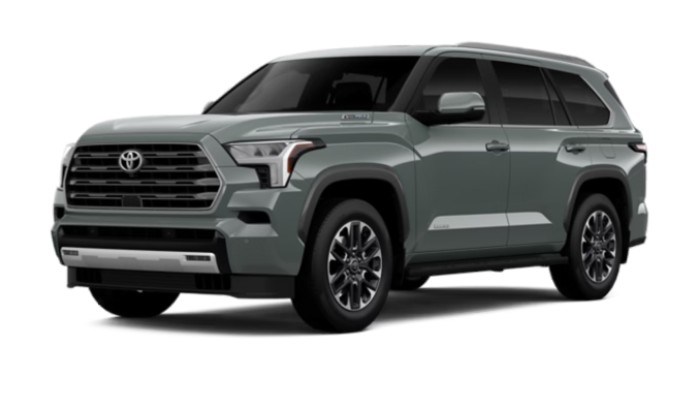
The Toyota Sequoia has built its reputation around a pretty simple formula: take a tough Toyota truck platform, add three rows of seats, install a large engine, and make the whole package durable enough for family trips, towing, commuting, and the occasional adventure far beyond pavement.
That reputation is largely deserved. Still, “reliable” does not mean “immune to problems.” Every generation has weak points, and Toyota Sequoia engine problems vary dramatically depending on whether we're talking about the early 4.7-liter V8, the long-running 5.7-liter V8, or the newer twin-turbocharged hybrid V6.
That distinction matters.
A 2005 Sequoia showing an air-injection fault isn't dealing with the same mechanical landscape as a 2018 model with a 5.7-liter V8, and neither resembles a 2025 Sequoia with Toyota's i-FORCE MAX hybrid powertrain.
So rather than lumping every Sequoia together, we're going to break the problems down by generation, explain the symptoms that deserve attention, look at which engines have the strongest track records, and discuss what we would inspect before buying one used.
Content in this publication
- Are Toyota Sequoia Engines Reliable?
- Toyota Sequoia Engine Generations at a Glance
- Most Common Toyota Sequoia Engine Problems
- 1. Secondary Air Injection System Problems
- 2. Secondary Air Injection Problems on the 5.7-Liter V8
- 3. Oil Leaks on High-Mileage Sequoias
- 4. Cooling-System Problems and Overheating
- 5. Ignition Coils and Engine Misfires
- 6. Timing Belt Concerns on Early 4.7-Liter Engines
- 7. Age-Related Sensor Failures
- 8. Rough Idle and Hesitation
- 9. 5.7-Liter V8 Problems: Is the 3UR-FE Bad?
- 10. Does the 5.7-Liter Sequoia Burn Oil?
- 11. Third-Generation Toyota Sequoia Engine Problems
- 12. Hybrid-Motor Rattle on Newer Sequoias
- 13. What About Toyota's Recent Twin-Turbo V6 Engine Recalls?
- 14. Turbocharger Problems: Should Sequoia Owners Worry?
- 15. Check-Engine Light on a Toyota Sequoia
- 16. Engine Knocking: When Should We Be Concerned?
- 17. Can a Toyota Sequoia Engine Last 200,000 Miles?
- 18. Which Toyota Sequoia Engine Is Most Reliable?
- 19. Toyota Sequoia Engine Problems by Generation
- 20. Warning Signs We Wouldn't Ignore
- 21. How to Inspect a Used Toyota Sequoia Engine
- 22. Should You Avoid a Sequoia With an Engine Warning Light?
- 23. How Expensive Are Toyota Sequoia Engine Repairs?
- 24. How to Prevent Sequoia Engine Problems
- 25. Should You Buy a Toyota Sequoia Despite Engine Problems?
- 26. The Sequoia Reliability Rule We Would Follow
- Conclusion: Toyota Sequoia Engine Problems Aren't the Whole Story
- Frequently Asked Questions About Toyota Sequoia Engine Problems
Are Toyota Sequoia Engines Reliable?
Generally, yes.
The first two generations built much of the Sequoia's reputation for longevity around Toyota's naturally aspirated V8 engines. These engines are relatively uncomplicated compared with today's turbocharged, electrically assisted powertrains, and many remain on the road after substantial mileage.
That doesn't make them maintenance-free.
Age introduces its own problems. Rubber seals harden. Cooling-system components wear out. Sensors fail. Pumps stop working. Small oil leaks become bigger leaks when ignored.
The newer third-generation Sequoia is a different animal altogether. Instead of a naturally aspirated V8, Toyota uses a 3.4-liter twin-turbo V6 combined with an electric motor in the i-FORCE MAX hybrid system. Toyota rates this setup at 437 horsepower and 583 lb-ft of torque.
That's a huge technological leap. It delivers more torque and better efficiency than the old V8 formula, but it also adds turbochargers, hybrid hardware, more electronics, and additional cooling requirements.
In other words, comparing the engines directly is like comparing a mechanical wristwatch with a modern smartwatch. Both tell time, but what can go wrong—and how we diagnose it—is very different.
Toyota Sequoia Engine Generations at a Glance
Before discussing individual faults, it helps to know what we're working with.
First-Generation Sequoia: 2001-2007
The original Sequoia relied primarily on Toyota's 4.7-liter 2UZ-FE V8.
It's an old-school engine by modern standards, which is actually part of the appeal. There's no turbocharging and no hybrid assistance. Properly maintained examples can accumulate substantial mileage.
But because even the newest first-generation Sequoias are now old vehicles, age-related repairs deserve just as much attention as inherent engine weaknesses.
Second-Generation Sequoia: 2008-2022
The second-generation Sequoia is closely associated with Toyota's 5.7-liter 3UR-FE V8.
For shoppers who want a big, naturally aspirated Toyota V8, this is often the sweet spot.
The engine offers strong towing performance and straightforward power delivery without turbochargers. Its weaknesses are generally less about catastrophic internal engine failures and more about peripheral systems, leaks, emissions equipment, and the effects of age or poor maintenance.
Third-Generation Sequoia: 2023-Present
Toyota changed direction dramatically for 2023.
The modern Sequoia uses the i-FORCE MAX twin-turbo V6 hybrid system, rather than offering a traditional V8.
This generation is considerably newer, which creates an important limitation whenever we discuss long-term reliability: a 2023 or 2024 Sequoia simply hasn't had the same decades of real-world aging as a 2005 or 2010 truck.
That means we should separate documented technical issues from speculation.
Most Common Toyota Sequoia Engine Problems
Across the Sequoia's lifespan, the problems owners may encounter include secondary air-injection faults, oil leakage, cooling-system aging, ignition-related misfires, sensor failures, exhaust-related trouble codes, hybrid-system noises on newer models, and problems caused simply by neglected maintenance.
The most useful approach is to ask three questions whenever an engine fault appears:
- Which engine and model year do we have?
- What symptoms and diagnostic trouble codes are present?
- Has Toyota issued a recall, service campaign, or technical service bulletin covering that specific vehicle?
That last question is important because Toyota has issued official guidance for several Sequoia-related conditions over the years. Toyota also maintains a VIN-based recall lookup, while NHTSA recommends checking recalls using the vehicle's 17-character VIN.
1. Secondary Air Injection System Problems
One of the better-documented Sequoia problems involves the secondary air injection system.
What Does the Secondary Air Injection System Do?
The system introduces additional air into the exhaust during certain operating conditions to help emissions-control components reach their effective operating temperature.
The engine itself may still be mechanically healthy when this system fails.
That's an important distinction.
A secondary air-injection fault can illuminate the check-engine light and potentially affect engine operation without meaning that pistons, bearings, valves, or cylinder walls are failing.
Problems on the 4.7-Liter 2UZ-FE
Toyota issued a technical service bulletin covering certain 2005-2007 Sequoias equipped with the 4.7-liter 2UZ-FE engine.
The bulletin identified several possible diagnostic trouble codes, including P0412, P0418, P1440/P1443, P2440, P2441, and P2445. Toyota stated that debris passing through the air-injection pump assembly could contaminate other components.
That's far more useful than vague internet claims that “the air pumps are bad.”
We know Toyota itself documented the condition and specified a diagnostic and repair procedure.
Symptoms We Might Notice
The obvious clue is a check-engine light.
Depending on the precise failure and ECU strategy, drivers might also experience reduced performance or other warning indicators.
A diagnostic scan becomes essential here. Replacing parts blindly is an expensive game of darts.
2. Secondary Air Injection Problems on the 5.7-Liter V8
The 5.7-liter Sequoia isn't completely removed from the air-injection story either.
Toyota launched a Limited Service Campaign involving certain 2012-2013 Sequoia and Tundra models equipped with 5.7-liter gasoline or Flex Fuel engines.
According to Toyota's campaign documentation, an ECM calibration could cause the air-injection pump to fail under certain driving conditions. If this happened, the vehicle could enter a fail-safe or “limp-home” mode that reduced power and speed. Toyota's remedy included checking and, where necessary, updating the ECM calibration; a failed pump resulting from the condition could also require replacement.
This is a perfect example of why we shouldn't immediately conclude that a reduced-power Sequoia needs an engine replacement.
Sometimes the engine is the innocent passenger while emissions-control equipment creates the drama.
3. Oil Leaks on High-Mileage Sequoias
Oil leakage becomes increasingly relevant as Sequoias age.
We need to distinguish between a tiny seep and a meaningful leak.
A slightly damp engine on a fifteen- or twenty-year-old SUV isn't automatically catastrophic. Oil actively dripping onto the driveway, coating the underside, reaching the exhaust, or causing measurable oil loss between services is another matter.
Where Should We Look?
On an older Sequoia, we'd inspect carefully around seals, gaskets, timing-related covers, oil-pan areas, and anywhere oil appears to migrate down the engine.
Oil is sneaky.
Gravity and airflow can move it far away from the actual source, making the lowest wet point look guilty even when the leak started much higher.
Why Small Oil Leaks Shouldn't Be Ignored
Running low on oil is far more dangerous than the leak itself.
The Sequoia's V8s can be very durable, but no internal-combustion engine appreciates lubrication starvation.
If our dipstick repeatedly shows a falling level between services, finding the cause matters more than simply topping it off forever.
4. Cooling-System Problems and Overheating
Overheating is one of the fastest ways to turn an otherwise healthy Sequoia engine into a very expensive object.
Older trucks naturally become more vulnerable to radiator deterioration, aging hoses, thermostat problems, water-pump wear, coolant loss, and other cooling-system weaknesses.
Never Treat Repeated Overheating as Normal
If the temperature gauge moves unusually high, coolant repeatedly disappears, or we smell coolant after driving, the vehicle needs inspection.
Continuing to drive an overheating engine is essentially gambling with cylinder heads, head gaskets, and internal components.
The stakes aren't small.
What About a One-Time Temperature Spike?
Even one overheating episode deserves investigation.
Maybe it was a simple coolant leak. Maybe a cooling fan problem. Maybe something more serious.
What we shouldn't do is refill the reservoir, forget about it, and hope the SUV has forgiven us.
Cars rarely practice forgiveness.
5. Ignition Coils and Engine Misfires
A Sequoia that shakes at idle or suddenly loses smoothness doesn't necessarily have severe internal engine damage.
Misfires can originate from ignition components, spark plugs, fueling problems, vacuum leaks, sensors, wiring, or mechanical faults.
Common Misfire Symptoms
We may notice rough idling, hesitation, diminished acceleration, increased fuel consumption, a check-engine light, or—in more urgent cases—a flashing check-engine light.
A flashing light shouldn't be treated casually because an active misfire can send unburned fuel into the exhaust and damage catalytic converters.
Diagnose Before Replacing Parts
If the scan tool reports a cylinder-specific misfire such as P0301 or P0305, that tells us where the computer detected the problem—not necessarily which component caused it.
Moving a suspected ignition coil from one cylinder to another can sometimes help a technician determine whether the misfire follows the coil.
That's a much smarter approach than replacing half the engine bay because a parts-store scan showed one code.
6. Timing Belt Concerns on Early 4.7-Liter Engines
Owners shopping for an early Sequoia should pay attention to timing-belt maintenance.
The first-generation 4.7-liter V8 belongs to an era when scheduled timing-belt service was part of ownership.
Unlike an accessory belt sitting visibly at the front of the engine, the timing belt is critical to synchronization inside the engine.
Why Service History Matters
When buying an older Sequoia, we shouldn't accept “the previous owner probably did it” as maintenance documentation.
Receipts are better.
Service records are better.
Physical evidence from a qualified inspection is better.
If timing-belt history is unknown, we should budget accordingly rather than assuming everything is fine.
That principle applies to the water pump and related components commonly evaluated when major timing service is performed as well.
Old sensors eventually behave like old reading glasses: technically they're still there, but the information they provide isn't always as sharp as we'd like.
Aging oxygen sensors, airflow-related sensors, crankshaft or camshaft position sensors, and other electronics can generate drivability issues or warning lights.
The dangerous mistake is confusing an electronic problem with internal engine failure.
Read the Codes, Then Test
Diagnostic trouble codes are clues, not verdicts.
A code identifying an oxygen-sensor-related condition doesn't automatically mean the oxygen sensor itself is defective. Exhaust leaks, wiring faults, fueling problems, or other conditions can produce misleading symptoms.
Good diagnosis follows evidence.
Bad diagnosis follows the parts catalog.
8. Rough Idle and Hesitation
A rough-running Sequoia can have dozens of potential causes.
Spark plugs and ignition coils are obvious candidates, but we should also consider air leaks, fuel-delivery problems, dirty or malfunctioning intake-related components, electrical issues, and mechanical problems.
The pattern matters.
Does it happen only cold?
Only hot?
Only under acceleration?
Only after refueling?
Only at idle?
Those details are diagnostic breadcrumbs.
A mechanic who receives precise symptoms has a much better starting point than one who simply hears, “The engine feels weird.”
9. 5.7-Liter V8 Problems: Is the 3UR-FE Bad?
Calling Toyota's 5.7-liter 3UR-FE a bad engine would be misleading.
Its long production run and widespread use across Toyota's truck-based vehicles helped establish it as one of the company's recognizable large-displacement engines.
That said, buying a 5.7-liter Sequoia solely because someone online says the engine is “bulletproof” isn't sensible either.
Nothing mechanical is bulletproof.
What Matters More Than Internet Reputation?
Maintenance history.
A carefully serviced 150,000-mile Sequoia can be a better purchase than a neglected 80,000-mile example.
We're looking for evidence of consistent oil changes, cooling-system maintenance, prompt repair of warning lights, clean operation, proper fluid levels, and reasonable ownership habits.
A Toyota badge can't reverse neglect.
10. Does the 5.7-Liter Sequoia Burn Oil?
Oil consumption should be judged individually rather than automatically attributed to every 5.7-liter Sequoia.
Some consumption may appear as engines accumulate mileage, but substantial or rapidly increasing oil use needs diagnosis.
We should check whether the engine is actually burning oil or leaking it externally.
Signs of Possible Oil Consumption
Blue exhaust smoke, recurring low-oil readings without visible leakage, fouled spark plugs, unusual exhaust residue, or steadily increasing oil use deserve further investigation.
Before purchasing a used vehicle, checking the dipstick is almost embarrassingly simple—and surprisingly revealing.
An engine arriving for sale nearly empty on oil tells us something about its recent life, regardless of how shiny the paint looks.
11. Third-Generation Toyota Sequoia Engine Problems
The 2023-and-newer Sequoia introduces a more complicated discussion.
Toyota's i-FORCE MAX drivetrain combines a twin-turbocharged V6 with an electric motor and hybrid battery system. The result is impressive torque and strong performance, but substantially greater technological complexity than the outgoing naturally aspirated V8. Toyota lists the system at 437 horsepower and 583 lb-ft of torque.
We need to be careful with reliability claims here.
These SUVs simply haven't accumulated twenty years of road experience yet.
12. Hybrid-Motor Rattle on Newer Sequoias
Toyota has documented at least one noise-related condition concerning newer Sequoia hybrid vehicles.
A 2025 Toyota service bulletin describes a condition in which a Sequoia HV may exhibit a rattling noise near the hybrid motor while the vehicle is Ready-on in Drive or Park.
That doesn't mean every third-generation Sequoia suffers from the issue.
Nor does a rattle automatically mean the gasoline engine is failing.
The distinction is especially important with hybrid vehicles because sounds can originate from the gasoline engine, electric motor, transmission-related components, pumps, cooling systems, or accessories operating independently of conventional engine speed.
Why Newer Sequoias Need Proper Diagnosis
Listening for noises with the hood open is useful, but modern hybrid drivetrains aren't ideal candidates for guesswork.
If we hear persistent knocking, rattling, metallic noises, or abnormal turbo sounds, professional diagnosis becomes especially valuable.
13. What About Toyota's Recent Twin-Turbo V6 Engine Recalls?
This topic requires careful wording.
Toyota has issued recalls affecting certain vehicles using related twin-turbo V6 engines. For example, Toyota announced additional Tundra-related engine recalls involving manufacturing debris that could damage a main bearing. In May 2026, Toyota stated that debris remaining in certain 2024 Tundra engines could damage the No. 1 main bearing.
However, we shouldn't automatically transfer every Tundra recall to the Sequoia simply because the vehicles share elements of their engine architecture.
Recall applicability is VIN-specific and model-specific.
That's why the correct question isn't, “Does this engine family have a recall?”
It's, “Is this particular Sequoia VIN included in an active campaign?”
Toyota provides a VIN-based recall search, and NHTSA also recommends checking the VIN directly.
That approach prevents both false reassurance and unnecessary panic.
14. Turbocharger Problems: Should Sequoia Owners Worry?
Turbochargers inevitably add components that a naturally aspirated V8 doesn't have.
There are turbochargers themselves, associated oil and cooling pathways, pressurized intake plumbing, additional controls, and a higher degree of thermal complexity.
Does that automatically make the new Sequoia unreliable?
No.
It simply changes the maintenance and diagnostic landscape.
Watch for Changes, Not Just Noise
A little turbo-related sound can be normal.
A sudden increase in whistling, loss of power, smoke, warning messages, abnormal oil consumption, or boost-related fault codes deserves inspection.
We care about changes in behavior.
A vehicle often gives us hints before a problem turns into a breakdown.
15. Check-Engine Light on a Toyota Sequoia
The check-engine light is probably the most misunderstood dashboard warning.
It doesn't literally mean “the engine is broken.”
It means the powertrain control system has detected a fault that meets defined diagnostic criteria.
That could range from an emissions-control problem to an ignition misfire or more substantial mechanical trouble.
Solid vs. Flashing Check-Engine Light
A steady light generally provides more room for diagnosis, although it still shouldn't be ignored.
A flashing light is more urgent, especially when accompanied by shaking, loss of power, or obvious misfiring.
What Should We Do First?
Read the codes.
Then investigate the condition those codes describe.
Replacing whatever component appears in the code description without testing is how a relatively cheap fault becomes an expensive guessing contest.
16. Engine Knocking: When Should We Be Concerned?
Not every tick is a knock.
Fuel injectors, valvetrain components, exhaust components, pumps, hybrid-system equipment, and accessories can all create sounds that owners interpret as engine knocking.
A genuine deep knock that increases with engine load or RPM deserves immediate professional attention.
Don't Diagnose Engine Noise Through the Internet Alone
Recorded audio can help establish context, but engine noises can sound dramatically different through a phone microphone.
If we're dealing with persistent metallic knocking, low oil pressure, warning lights, or metal contamination in the oil, the safest path is physical inspection.
The cost of diagnosis is tiny compared with the cost of guessing wrong about internal engine damage.
17. Can a Toyota Sequoia Engine Last 200,000 Miles?
A well-maintained Sequoia from the V8 generations can certainly be a candidate for very high mileage, but mileage alone doesn't determine condition.
We would rather buy a high-mileage example accompanied by years of maintenance records than a lower-mileage SUV that spent its life missing oil changes.
Think of mileage like someone's age.
It tells us how long they've been around, but it doesn't tell us how they've been treated.
Maintenance Changes the Equation
Frequent short trips, severe heat, heavy towing, dusty environments, long idling periods, and neglected fluid service can all influence wear.
That's why two Sequoias displaying identical odometer readings can feel like completely different vehicles.
18. Which Toyota Sequoia Engine Is Most Reliable?
If simplicity and a lengthy real-world track record are our priorities, the naturally aspirated V8 generations remain compelling.
The 4.7-liter 2UZ-FE has an especially old-school reputation, while the later 5.7-liter 3UR-FE provides considerably more power and became the defining engine of the second-generation Sequoia.
The 2023-and-newer i-FORCE MAX powertrain is far newer.
It's more powerful, more efficient, and technologically sophisticated, but we don't yet have the same decades-long dataset available for the older V8 engines.
The Best Engine Depends on the Buyer
Someone wanting maximum mechanical simplicity may naturally lean toward a V8.
Someone wanting current safety technology, stronger low-end torque, improved efficiency, and a newer vehicle may happily accept the increased complexity of the hybrid V6.
There isn't one universal winner.
There's simply a better match for each owner.
19. Toyota Sequoia Engine Problems by Generation
For the first generation, we would pay particular attention to age-related maintenance, timing-belt history, cooling-system condition, air-injection faults on applicable models, leaks, and overall service documentation.
For second-generation Sequoias, we'd inspect the 5.7-liter V8 for leaks, smooth operation, emissions-system faults, evidence of proper maintenance, cooling-system condition, and any unresolved campaigns applicable to the VIN. Certain 2012-2013 vehicles received Toyota's limited service campaign addressing ECM calibration and air-injection pump concerns.
For third-generation models, we'd focus more heavily on diagnostic history, hybrid-system operation, warning messages, unusual powertrain noises, dealer service records, software updates, and VIN-specific recall status.
These aren't necessarily unreliable vehicles. They're simply complicated enough that documentation matters.
20. Warning Signs We Wouldn't Ignore
A used Sequoia may look gorgeous and still be hiding mechanical headaches.
We would become particularly cautious if we encountered persistent blue or white exhaust smoke, repeated overheating, unexplained coolant loss, low oil pressure, severe knocking, strong oil or coolant contamination, multiple unresolved powertrain codes, obvious misfires, substantial oil loss, or a seller who clears warning lights immediately before a test drive.
One warning sign doesn't always equal engine failure.
Several warning signs together create a pattern.
And patterns matter.
21. How to Inspect a Used Toyota Sequoia Engine
Start the vehicle cold whenever possible.
A seller who has already warmed the engine before we arrive removes an opportunity to observe cold-start rattles, smoke, rough running, delayed oil-pressure behavior, and other symptoms.
Then listen.
A healthy engine should settle into a relatively consistent idle without dramatic shaking or persistent abnormal knocking.
Check the oil level and condition. Look around the engine bay and underneath the vehicle for active leakage. Inspect the coolant reservoir when the engine is safely cold. Watch the exhaust after startup. Scan the ECU for stored and pending codes.
Then drive it.
Acceleration should feel predictable. Engine temperature should remain stable. Warning lights shouldn't appear halfway through the test drive.
Finally, for an expensive used Sequoia, a pre-purchase inspection is money well spent.
Skipping a $200 inspection to protect a vehicle purchase worth tens of thousands is the financial equivalent of refusing to buy an umbrella because we don't like carrying it while clouds gather overhead.
22. Should You Avoid a Sequoia With an Engine Warning Light?
Not automatically.
The warning light might indicate something relatively manageable, particularly on older vehicles with emissions-system faults.
But we would never buy the explanation without evidence.
“The mechanic says it's just a sensor” is meaningless unless the seller can show us the diagnosis.
Get the Code Before Negotiating
If the issue really is minor, the seller shouldn't object to having the vehicle scanned and inspected.
If they refuse?
That's information too.
Mystery problems rarely become cheaper after money changes hands.
23. How Expensive Are Toyota Sequoia Engine Repairs?
There's no meaningful single figure because “engine problem” can describe everything from a small sensor fault to complete internal engine failure.
Diagnostics, ignition components, air-injection equipment, cooling-system repairs, sealing work, turbo-related repairs, hybrid components, and complete engine replacement exist on completely different financial planets.
The biggest cost-saving move usually isn't finding cheaper parts.
It's identifying the correct fault early.
Diagnosis Is Part of the Repair
Owners sometimes view diagnostic labor as wasted money because nothing tangible gets bolted onto the vehicle.
We see it differently.
Accurate diagnosis prevents unnecessary parts replacement.
A technician who spends an hour determining that a $150 component caused the problem may save us thousands compared with replacing expensive assemblies through trial and error.
24. How to Prevent Sequoia Engine Problems
Preventive maintenance isn't glamorous.
Nobody posts a dramatic social-media video celebrating an oil change performed exactly when required.
Yet boring maintenance is precisely what keeps expensive engines boring.
Follow Toyota's maintenance requirements for the specific model year, use the appropriate fluids and replacement parts, investigate warning lights quickly, maintain the cooling system, check fluid levels between services, and avoid continuing to drive when the engine is clearly overheating or misfiring.
For older Sequoias, maintenance history becomes increasingly important because decades of previous ownership matter as much as engineering.
For newer models, keeping software updates, dealer campaigns, and VIN-based recalls current is equally sensible.
Toyota's recall lookup allows owners to check individual vehicles rather than relying on broad model-year assumptions.
25. Should You Buy a Toyota Sequoia Despite Engine Problems?
For many buyers, yes.
The existence of known issues doesn't suddenly erase the Sequoia's strengths.
Every vehicle line has failure points.
What matters is the severity of those problems, how frequently they appear, whether they're diagnosable, and how well a particular vehicle has been maintained.
The V8 Sequoias remain attractive to buyers who appreciate naturally aspirated engines and long-established mechanical designs.
The latest Sequoia offers substantially more advanced technology and tremendous torque from its hybridized turbocharged powertrain. Toyota's official specifications list 583 lb-ft, which explains why the newer SUV feels so different from the V8-era models.
Neither philosophy is inherently wrong.
We're simply choosing between proven simplicity and modern capability.
26. The Sequoia Reliability Rule We Would Follow
Buy the vehicle, not the reputation.
A model can have excellent reliability statistics and still contain individual lemons.
Conversely, an SUV with a known weakness can deliver years of service if that weakness has already been addressed properly.
Service history beats mythology.
Inspection beats assumption.
And a clean dashboard on a ten-minute test drive beats nothing if someone cleared the codes fifteen minutes earlier.
Those principles apply to practically every used vehicle, but they're particularly valuable when shopping for a large SUV where neglected repairs can become expensive quickly.
Conclusion: Toyota Sequoia Engine Problems Aren't the Whole Story
Toyota Sequoia engine problems vary significantly by generation.
Early 4.7-liter V8 models can experience aging-related issues and documented secondary air-injection faults. Toyota specifically addressed air-injection trouble on certain 2005-2007 4.7-liter Sequoias through technical guidance.
The 5.7-liter V8 generally has a strong reputation but isn't exempt from leaks, ignition problems, aging cooling components, emissions-system trouble, and neglected-maintenance consequences. Toyota also documented an ECM calibration and air-injection pump concern affecting certain 2012-2013 Sequoias.
The 2023-and-newer Sequoia enters more complicated territory with its twin-turbo hybrid V6. The system produces impressive power, but its long-term reliability picture is still developing simply because the vehicles are relatively new. Toyota has already published technical guidance concerning certain hybrid-motor rattling noises, which reinforces the importance of proper diagnosis rather than assuming every unusual sound represents gasoline-engine failure.
So, should Toyota Sequoia engine problems scare us away?
Usually, no.
They should make us better shoppers.
Find the exact engine. Check the service records. Scan for codes. Inspect the vehicle cold. Verify recall status by VIN. And when something sounds suspicious, diagnose it rather than guessing.
Do those things and a Sequoia can still make tremendous sense as a long-term full-size SUV.
Frequently Asked Questions About Toyota Sequoia Engine Problems
1. What is the most common Toyota Sequoia engine problem?
There isn't one problem covering every generation. Older 4.7-liter models have documented secondary air-injection issues, while certain 2012-2013 5.7-liter Sequoias were included in a Toyota service campaign concerning ECM calibration and air-injection pump operation. Newer hybrid models have an entirely different powertrain and therefore different diagnostic concerns.
2. Is the Toyota Sequoia 5.7 V8 reliable?
The 5.7-liter 3UR-FE is generally regarded as a durable engine when properly maintained. We would still check carefully for leakage, smooth operation, cooling-system condition, warning lights, service history, and unresolved VIN-specific campaigns before purchasing a used one.
3. Does the new Toyota Sequoia have engine problems?
The current Sequoia uses Toyota's 437-hp i-FORCE MAX twin-turbo V6 hybrid powertrain. Because the current generation arrived for 2023, its decades-long durability cannot yet be evaluated in the same way as older V8 models. Toyota has issued service information covering certain hybrid-system noises, so unusual sounds should be properly diagnosed rather than immediately interpreted as internal engine failure.
4. How long can a Toyota Sequoia engine last?
There is no guaranteed mileage figure. Maintenance history, operating conditions, oil-change habits, cooling-system health, towing use, climate, and previous repairs all influence lifespan. Well-maintained V8 Sequoias can remain viable at high mileage, but condition matters more than an arbitrary odometer target.
5. What should I check before buying a used Toyota Sequoia?
We would inspect the vehicle from a cold start, check engine oil and coolant, look for leaks and exhaust smoke, listen for abnormal knocking or rattling, scan for stored and pending codes, review maintenance records, test-drive it until fully warm, and verify its VIN for outstanding recalls. Toyota and NHTSA both provide VIN-based recall resources.
If you want to know other articles similar to Toyota Sequoia Engine Problems: What Owners Should Know you can visit the category Common Problems.
Kia Sorento Issues: Common Problems, Reliability and What to Watch For

Honda Passport Not Starting: Causes, Symptoms, and How to Fix It
Honda Passport Keyless Remote Battery Low: What It Means and How to Fix It

Nissan Rogue Apple CarPlay Not Working: Causes and Fixes
Nissan Rogue No Key Detected: Causes, Fixes, and What to Do
Nissan Rogue Engine Problems: Common Issues, Symptoms, Years and Solutions
Leave a Reply
More content of your interest