

Volkswagen Amarok Weight: Kerb, Payload, GVM and Towing Explained

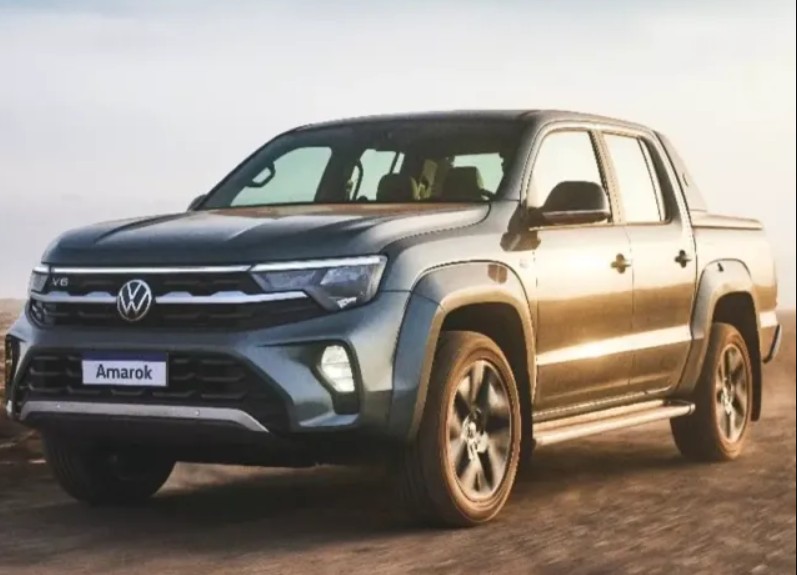
The Volkswagen Amarok weight is more than a specification buried near the back of a brochure. If we're buying one for work, planning to tow a caravan, fitting a canopy, loading motorcycles into the tray, or simply comparing the Amarok with rival pickups, weight affects almost everything.
And here's where things become slightly messy. There isn't one universal number that answers the question, "How much does a Volkswagen Amarok weigh?" Different engines, transmissions, equipment levels, model years, and markets produce different figures. Even two Amaroks that look almost identical can have noticeably different tare masses and payload limits.
Using Volkswagen's published Australian specifications as a useful real-world reference, Amarok variants have been listed with tare masses ranging from roughly 2,185 kg to 2,332 kg, while gross vehicle mass can vary between approximately 3,100 kg and 3,350 kg, depending on specification.
That gives us a good starting point, but there's much more worth understanding. Let's unpack the numbers without turning this into an engineering textbook.
Content in this publication
- How Much Does a Volkswagen Amarok Weigh?
- What Does Volkswagen Amarok Tare Weight Mean?
- Volkswagen Amarok Gross Vehicle Mass Explained
- Volkswagen Amarok Payload Capacity
- Volkswagen Amarok Weight With Passengers and Cargo
- Volkswagen Amarok GCM: The Number Towing Owners Need
- Volkswagen Amarok Towing Capacity and Vehicle Weight
- Volkswagen Amarok Front and Rear Axle Weight Limits
- Volkswagen Amarok Roof Weight Capacity
- Does the Amarok V6 Weigh More?
- How Amarok Weight Changes Fuel Economy and Handling
- First-Generation Amarok Weight vs New Amarok Weight
- How to Find the Exact Weight of Your Amarok
- Is the Volkswagen Amarok a Heavy Pickup?
- Why Volkswagen Amarok Weight Matters Before Buying
- Conclusion: Understanding Volkswagen Amarok Weight
- Frequently Asked Questions About Volkswagen Amarok Weight
How Much Does a Volkswagen Amarok Weigh?
A modern Volkswagen Amarok generally weighs a little over 2.1 tonnes when unloaded, although the precise figure depends heavily on the version.
Volkswagen Australia's published Amarok specification table, for example, lists tare masses ranging from 2,185 kg for an Amarok Core manual to 2,332 kg for an Aventura TDI automatic in the referenced lineup. Other versions sit somewhere between those points.
Converted into pounds, we're roughly talking about a pickup weighing between 4,817 and 5,141 lb before passengers and meaningful cargo are added.
That's substantial, but hardly unusual for a modern body-on-frame double-cab pickup. Think of the Amarok as wearing hiking boots rather than running shoes. Its frame, four-wheel-drive hardware, suspension, diesel drivetrain, safety equipment, large wheels and increasingly luxurious cabin all contribute kilograms.
Volkswagen Amarok Weight at a Glance
Here's an example from Volkswagen Australia's published Amarok specifications:
| Amarok version | Tare mass | GVM | Payload |
|---|---|---|---|
| Core Manual | 2,185 kg | 3,250 kg | 1,065 kg |
| Core Automatic | 2,208 kg | 3,250 kg | 1,042 kg |
| Life Automatic | 2,242 kg | 3,230 kg | 988 kg |
| Style 2.0 Automatic | 2,271 kg | 3,280 kg | 1,009 kg |
| Style 3.0 Automatic | 2,319 kg | 3,350 kg | 1,031 kg |
| PanAmericana Automatic | 2,319 kg | 3,350 kg | 1,031 kg |
| Aventura TDI Automatic | 2,332 kg | 3,190 kg | 858 kg |
| Aventura TSI Automatic | 2,228 kg | 3,100 kg | 872 kg |
These figures demonstrate why asking only for "Amarok weight" can be misleading. Volkswagen's own published figures vary significantly between configurations.
They're also market-specific. Equipment packages, homologation rules, engines and even definitions of unladen or kerb weight can differ between countries, so we should always check the specification plate, registration documents or official information for the exact vehicle we're considering.
What Does Volkswagen Amarok Tare Weight Mean?
Tare weight is essentially the weight of the vehicle before we start loading it with people and equipment, although the exact legal definition depends on the country.
Volkswagen Australia specifies that its Amarok unladen mass includes 10 litres of fuel and vehicle fluids, but no occupants, and notes that its quoted figures apply to base-model vehicles.
That distinction matters.
Suppose our Amarok has a published tare mass of 2,319 kg. We can't simply assume the vehicle parked outside actually weighs exactly 2,319 kg. Add a steel bull bar, winch, canopy, drawers, roof rack, tow bar and auxiliary battery and the real vehicle could be hundreds of kilograms heavier.
That's where many owners accidentally eat into their payload before loading a single suitcase.
Kerb Weight vs Tare Weight
"Kerb weight," "curb weight," "unladen mass," and "tare mass" often appear interchangeable in casual conversation, but definitions are not completely universal.
One country may include a full tank of fuel. Another might define the fuel allowance differently. Some specifications incorporate a nominal driver; others don't.
That's why comparisons across websites sometimes appear inconsistent even when nobody has technically made a mistake.
Instead of obsessing over terminology, we prefer to ask a better question:
What does the manufacturer include in this particular number?
Once we know that, the figure becomes genuinely useful.
Why Online Amarok Weight Figures Sometimes Disagree
One site may quote kerb weight. Another may quote tare mass. Another may list maximum permissible mass. And someone on a forum may be describing the actual weight measured on a public weighbridge after adding accessories.
Same Amarok name. Four very different numbers.
It's like asking how much a suitcase weighs without saying whether it's empty or packed for a three-week holiday.
Volkswagen Amarok Gross Vehicle Mass Explained
Gross Vehicle Mass, commonly abbreviated as GVM, is far more important than many buyers initially realise.
GVM represents the maximum permitted operating mass of the vehicle. That includes the vehicle itself plus passengers, cargo and relevant accessories.
In Volkswagen Australia's referenced specifications, Amarok GVM figures range from 3,100 kg to 3,350 kg, depending on the model.
We should never treat GVM as an approximate target.
It's a limit.
If the vehicle exceeds its permitted GVM, handling, braking, suspension performance, tyres and legal compliance can all become concerns.
How GVM Affects Everyday Driving
Imagine an Amarok with four adults aboard.
Add luggage.
Then install a canopy, drawer system, fridge and roof rack.
Now attach a caravan that applies substantial downward force onto the tow ball.
Suddenly that apparently generous payload doesn't look quite as huge.
That's why serious touring builds should be planned backwards from legal weight limits instead of forwards from an accessories catalogue.
The shiny accessories are the fun part. Arithmetic comes first.
Volkswagen Amarok Payload Capacity
Payload tells us approximately how much additional mass the vehicle can carry before reaching its GVM.
Volkswagen describes payload as being derived by subtracting unladen weight from gross vehicle mass and warns that the final payload of an individual vehicle depends on its specific configuration.
The current Australian Amarok page advertises payload capacity of up to 974 kg for its present offer and specification context, illustrating why model-year and trim-specific figures should always be checked rather than assuming an older brochure applies to every current vehicle.
Broadly speaking, depending on model and market, we can therefore expect an Amarok's useful carrying capacity to sit somewhere around the one-tonne neighborhood, with premium trims sometimes offering less usable payload because the vehicle itself weighs more.
Why Luxury Equipment Can Reduce Payload
Here's one of the strange realities of premium pickups.
We pay more money, receive more equipment… and sometimes end up able to carry less weight.
Electric seats, bigger wheels, additional sound insulation, premium audio hardware, trim components and extra technology all weigh something.
Individually, those additions seem trivial. Together, they're like coins accumulating in a jar.
That's why a work-focused Amarok may provide more theoretical payload than an equipment-heavy flagship.
Accessories Count Against Payload Too
This is the part we'd never ignore when building an Amarok for touring or work.
Payload isn't simply "whatever fits in the tray." It needs to account for everything added to the base vehicle.
That can include:
- passengers, luggage and tools;
- bull bars, winches and underbody protection;
- canopies, drawers and cargo systems;
- roof racks, rooftop tents and recovery equipment;
- tow-ball download when towing.
Volkswagen Australia similarly defines payload elsewhere in its commercial-vehicle information as the difference between GVM and kerb mass and notes that occupants, cargo, added structures and tow-ball down weight all contribute to vehicle load.
Volkswagen Amarok Weight With Passengers and Cargo
Let's make this practical.
Imagine our Amarok has 1,000 kg of available payload.
That sounds enormous.
Now put two adults weighing a combined 170 kg inside. Fit 180 kg worth of permanent accessories. Carry 120 kg of camping equipment. Add 80 kg of food, water and miscellaneous gear.
We've already used around 550 kg.
Attach a heavily loaded trailer producing 300 kg of tow-ball download and we're suddenly around 850 kg into our theoretical 1,000 kg allowance.
Only 150 kg remains.
And that's before inviting another couple along.
The lesson isn't that the Amarok lacks carrying capacity. Quite the opposite—it can be a highly capable load carrier. The lesson is that a tonne disappears faster than we'd expect when a vehicle becomes a fully equipped tourer.
Volkswagen Amarok GCM: The Number Towing Owners Need
Gross Combination Mass, or GCM, is another crucial number when towing.
GCM represents the maximum permissible combined mass of the loaded vehicle and trailer combination, subject to the manufacturer and local regulatory definitions.
Volkswagen Australia's referenced Amarok specifications list GCM figures ranging from 6,150 kg to 6,400 kg, depending on the variant.
Notice something interesting?
If an Amarok has a 3,350 kg GVM and 3,500 kg maximum braked trailer rating, simply adding the two numbers gives 6,850 kg. Yet the referenced GCM can be lower than that.
This means we cannot automatically assume we can operate simultaneously at maximum GVM and maximum trailer weight.
That's one of the most important concepts in pickup towing.
Does the Amarok Weigh More When Towing?
Technically, the vehicle's loaded mass increases when the trailer places vertical load onto the tow ball.
Volkswagen's referenced Australian specifications list a maximum down-ball weight of 350 kg across those variants.
That doesn't mean every trailer should place 350 kg onto the hitch. Actual requirements depend on trailer design, loading, vehicle limits and local regulations.
But whatever downward load is transferred to the Amarok matters when we're calculating how close the vehicle is to its legal mass limits.
Volkswagen Amarok Towing Capacity and Vehicle Weight
Volkswagen currently promotes the Amarok with up to 3.5 tonnes of braked towing capacity, depending on version and market. Volkswagen's UK Amarok page likewise highlights a 3.5-tonne towing capability with automatic transmission, while Volkswagen Australia's published specifications show 3,500 kg braked trailer ratings for the referenced variants.
That's impressive.
But towing capacity isn't a magic 3,500 kg permission slip.
We also have to consider vehicle payload, tow-ball load, GVM, GCM, axle limits, trailer limits, tyres and local licensing or regulatory requirements.
A properly calculated 3,200 kg caravan combination can be safer and more compliant than a badly loaded trailer that technically weighs less.
Volkswagen Amarok Front and Rear Axle Weight Limits
Another pair of figures often forgotten are the maximum axle loads.
Volkswagen Australia's referenced specifications show front axle limits of 1,450 or 1,490 kg, while rear axle limits vary between 1,785 and 1,959 kg, depending on version.
Why should we care?
Because staying beneath total GVM doesn't automatically guarantee each axle remains within its individual limit.
Heavy drawer systems, spare wheels, long-range tanks, toolboxes and trailer nose weight can concentrate mass toward the rear.
Likewise, heavy front-mounted equipment such as steel bars and winches affects the front axle.
Weight distribution matters almost as much as total weight.
Why a Weighbridge Is Better Than Guessing
If we're building an Amarok for serious towing or remote touring, a weighbridge gives us something an online specification sheet never can:
the actual weight of our exact vehicle.
Ideally, we'd measure the vehicle after permanent accessories are installed and with representative passengers, fuel and equipment aboard.
Even better, where suitable weighing facilities are available, individual axle weights help us understand distribution.
The result replaces assumptions with numbers.
That's money well spent.
Volkswagen Amarok Roof Weight Capacity
Roof capacity deserves its own discussion because static and dynamic loads aren't the same thing.
In Volkswagen Australia's referenced specification table, the listed Amarok roof load is 85 kg dynamically and 350 kg statically.
Dynamic load refers to what the roof can support while the vehicle is moving under the relevant manufacturer conditions.
Static load applies while stationary.
That's why a rooftop tent can potentially accommodate occupants while parked even though the total occupied tent mass would greatly exceed the dynamic roof rating while driving.
We should still check the limits of the roof rack, mounting system and specific vehicle, because the lowest-rated component generally becomes the practical constraint.
Does the Amarok V6 Weigh More?
Often, yes.
A larger V6 diesel engine, associated drivetrain hardware and higher equipment specification can add mass compared with lighter four-cylinder variants.
Volkswagen Australia's referenced specifications make the pattern easy to see. The Style 2.0 automatic is listed at 2,271 kg tare, while the Style 3.0 automatic is listed at 2,319 kg.
That's a 48 kg difference before considering aftermarket equipment.
However, engine size alone doesn't determine vehicle weight. Trim specification matters too.
For example, the petrol Aventura TSI in the same reference table has a lower tare figure than the diesel Aventura TDI despite belonging to the same premium model family.
So we'd never estimate payload purely from engine type.
Do Automatic Amaroks Weigh More Than Manuals?
They can.
In Volkswagen's referenced Australian figures, the Core manual carries a tare mass of 2,185 kg, while the Core automatic is listed at 2,208 kg—a difference of 23 kg.
Again, this isn't a universal rule for every generation or market, but it illustrates how drivetrain configuration changes the number.
Modern pickups are basically giant mechanical layer cakes. Change the gearbox, engine, wheels or equipment and another layer of weight appears.
How Amarok Weight Changes Fuel Economy and Handling
More mass requires more energy to accelerate.
That's physics, not brand marketing.
An empty Amarok will generally require less energy to move than the same vehicle loaded to its maximum permitted mass. Frequent acceleration in city traffic magnifies that difference because we're repeatedly asking the engine to move extra kilograms from rest.
Weight also influences braking distances, suspension movement and cornering behavior.
A loaded pickup doesn't necessarily drive badly—it's designed to carry weight—but it will feel different.
That's why tyre pressures, load placement and driving style matter more once we load the vehicle heavily.
Why Weight Distribution Matters Off Road
Off road, kilograms have an even louder voice.
Heavy accessories mounted high increase the vehicle's center of gravity. Equipment hanging beyond the rear axle behaves like leverage on a long wrench. Loads mounted low and close to the vehicle's center generally produce more predictable behavior than identical mass perched high on the roof or hanging far behind the axle.
This is why experienced touring builds sometimes look surprisingly restrained.
More accessories don't automatically create a more capable vehicle.
Sometimes they merely create a heavier one.
First-Generation Amarok Weight vs New Amarok Weight
Older Amarok generations shouldn't be assumed to share the same mass figures as the current vehicle.
The Amarok name has existed since 2010, and the model has appeared with different cab configurations, engines, transmissions and drivetrains over its life.
Earlier Amaroks included configurations quite different from today's heavily equipped dual-cab pickups, while later V6 models and newer-generation vehicles introduced increasingly substantial drivetrains and equipment.
When buying used, we'd therefore search specifically for:
model year + engine + cab + drivetrain + trim + market.
Searching only "Volkswagen Amarok weight" can blend several generations into one misleading answer.
How to Find the Exact Weight of Your Amarok
If accuracy matters, don't rely exclusively on an article—including this one.
Start with the identification plate or compliance information fitted to the vehicle, registration documentation where applicable, and the official manual or specification sheet for that VIN and market. Volkswagen UK, for example, directs owners to retrieve the appropriate owner's manual using the vehicle identification number.
Then weigh the actual vehicle if you're approaching its limits.
That's especially worthwhile after fitting significant accessories.
Published specifications tell us what the vehicle started life as.
A weighbridge tells us what it has become.
Is the Volkswagen Amarok a Heavy Pickup?
By passenger-car standards, absolutely.
At well above two tonnes unladen in many modern configurations, an Amarok is a substantial machine.
Within the modern midsize pickup world, however, that mass isn't surprising.
Vehicles in this category need strong frames, robust suspension systems, four-wheel-drive components, large brakes, towing hardware, substantial wheels and increasingly sophisticated cabins.
The weight contributes to the solid feel many drivers appreciate, but it also explains why managing payload intelligently is essential.
Why Volkswagen Amarok Weight Matters Before Buying
We'd check weight specifications before purchasing an Amarok for three particular use cases.
First, towing.
A caravan buyer should calculate the complete combination rather than focusing solely on advertised towing capacity.
Second, commercial use.
If we're carrying heavy tools or materials every day, payload may matter more than leather seats or wheel size.
Third, overlanding.
An elaborate touring build can consume payload frighteningly quickly.
A steel canopy here. Drawers there. Second spare wheel. Fridge. Water. Battery. Roof tent.
Before long, we've built a miniature apartment on four wheels.
A spreadsheet isn't nearly as exciting as ordering new accessories, but it might be the most valuable modification we make.
Conclusion: Understanding Volkswagen Amarok Weight
The simplest answer to how much does a Volkswagen Amarok weigh? is that modern versions typically sit somewhere above two tonnes unloaded, but that broad answer only scratches the surface.
Volkswagen's Australian specification material provides a useful example, showing referenced tare masses between 2,185 and 2,332 kg, GVM figures from 3,100 to 3,350 kg, payload figures that vary considerably by trim, and GCM values reaching as high as 6,400 kg in that particular specification set.
The important takeaway is not memorizing one number.
It's understanding the relationship between tare weight, payload, GVM, axle limits, tow-ball load and GCM.
Once we understand those numbers, the Amarok stops being a vague "one-tonne ute" and becomes something we can load intelligently.
Whether we're hauling tools Monday morning or towing a caravan into the mountains on Friday afternoon, that's the kind of knowledge that keeps capability from turning into guesswork.
Frequently Asked Questions About Volkswagen Amarok Weight
How much does a Volkswagen Amarok weigh in kg?
Depending on version and market, modern Amaroks can weigh roughly 2,200 kg or more when unloaded. Volkswagen Australia's referenced specification table lists tare masses between 2,185 kg and 2,332 kg across several variants. Always verify the exact model because engines, transmissions and trim equipment alter the figure.
What is the Volkswagen Amarok GVM?
GVM varies by version. In Volkswagen Australia's referenced specifications, Amarok GVM ranges between 3,100 kg and 3,350 kg. The correct figure for a specific vehicle should be verified from its official vehicle information.
How much weight can a Volkswagen Amarok carry?
Payload depends on model and equipment. Volkswagen's current Australian Amarok page advertises up to 974 kg of payload in its present specification context. Accessories, passengers, cargo and tow-ball download can all reduce the remaining usable payload.
Does tow-ball weight count toward Amarok payload?
Yes, tow-ball download contributes load to the vehicle and needs to be considered when calculating available payload and legal operating mass. Volkswagen Australia's commercial-vehicle guidance explicitly includes tow-ball down weight when describing payload usage.
Can an Amarok tow 3,500 kg while fully loaded?
We shouldn't assume so simply by adding the maximum trailer rating to the vehicle's GVM. Volkswagen's referenced Amarok specifications show braked towing ratings of 3,500 kg while GCM varies between 6,150 and 6,400 kg, meaning the combination limit can restrict how heavily the vehicle and trailer may be loaded simultaneously. Always calculate GVM, GCM, axle loading and trailer mass together.
If you want to know other articles similar to Volkswagen Amarok Weight: Kerb, Payload, GVM and Towing Explained you can visit the category Service and Parts.
Kia Sorento Service Reset: How to Reset the Service Light
Kia Sorento Fuel Tank Capacity: Gallons, Litres and Model Differences
Kia Sorento Tyre Pressure: Recommended PSI, Bar and Complete Guide
Kia Sorento Boot Space: How Much Luggage Space Does It Really Have?
Kia Sorento Towing Capacity: How Much Can a Sorento Tow?

Honda Passport Payload Capacity: How Much Weight Can It Carry?
Leave a Reply
More content of your interest