

Ram 1500 Issues: Common Problems, Warning Signs, and What Owners Should Know

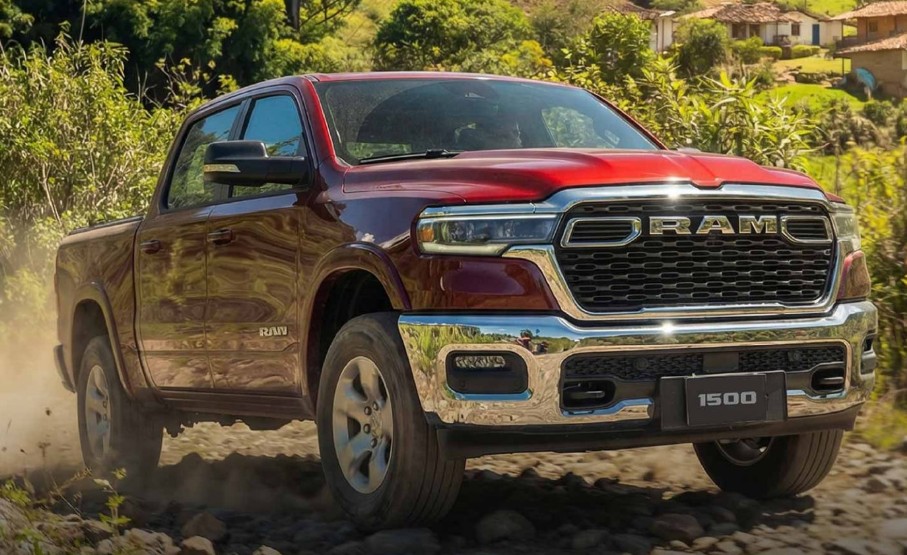
The Ram 1500 has earned a loyal following for a simple reason: it blends pickup-truck muscle with an interior that can feel surprisingly close to a luxury SUV. It can tow, haul, commute, tackle rough roads, and still keep everyone comfortable on a long highway run. Yet no truck is bulletproof, and anyone shopping used—or trying to understand a truck already sitting in the driveway—should know the Ram 1500 issues that tend to attract attention.
The tricky part is separating genuine patterns from internet noise. Search for problems with almost any popular vehicle and we can quickly convince ourselves that every example is seconds away from falling apart. That is not a useful way to judge the Ram 1500.
Instead, we need to look at problems by model year, engine, equipment, symptoms, severity, and documented manufacturer action.
Some Ram 1500 problems are relatively minor annoyances. Others deserve immediate attention because they involve braking, stability control, wheel-speed information, trailer brakes, or other safety-related systems. Several have also been addressed through recalls, technical service bulletins, or warranty extensions.
So, is the Ram 1500 unreliable? Not necessarily. But it is a truck we would buy with our eyes open rather than our fingers crossed.
Content in this publication
- What Are the Most Common Ram 1500 Issues?
- 1. Ram 1500 HEMI Exhaust Manifold Ticking
- 2. Rear Window and Back Glass Water Leaks
- 3. ABS and Electronic Stability Control Problems
- 4. 2025 Ram 1500 Wheel-Speed and Stability-Control Concerns
- 5. Ram 1500 Electrical Issues
- 6. Ram 1500 Infotainment and Display Problems
- 7. Transmission Shifting Concerns
- 8. Ram 1500 eTorque Issues and Misdiagnosis
- 9. EcoDiesel Ram 1500 Issues
- 10. Suspension and Ride-Height Problems
- 11. Battery and No-Start Problems
- 12. Trailer Brake and Towing-System Recall on 2025–2026 Trucks
- 13. Tire-Pressure Information Problems on Certain 2025 Trucks
- 14. Ram 1500 Problems by Severity
- 15. Which Ram 1500 Years Have the Most Issues?
- 16. How to Inspect a Used Ram 1500 Before Buying
- 17. Should We Avoid a Ram 1500 With Previous Repairs?
- 18. How Expensive Are Ram 1500 Issues to Fix?
- 19. Are Ram 1500 Issues Worse Than Other Full-Size Trucks?
- 20. Can Regular Maintenance Prevent Ram 1500 Problems?
- 21. Is the Ram 1500 Still Worth Buying?
- Closing Thoughts on Ram 1500 Issues
- Frequently Asked Questions
What Are the Most Common Ram 1500 Issues?
Across different generations and configurations, several problem areas repeatedly deserve closer inspection.
They include engine ticking around the exhaust manifolds, water leaks around the rear window or third brake light, electronic glitches, infotainment problems, warning lights, suspension concerns, transmission behavior, battery-related symptoms, and recall-related ABS or stability-control faults.
Later trucks bring more sophisticated electronics into the equation. That means a problem that feels mechanical may sometimes be caused by software, a sensor, a control module, or communication between modules.
That distinction matters.
A strange dashboard warning does not automatically mean the transmission has failed. A ticking engine does not automatically mean internal HEMI damage. And water on the rear carpet does not necessarily mean the entire cab is poorly sealed.
Diagnosis matters more than guesswork.
Ram 1500 Problems Vary Dramatically by Model Year
We should avoid treating every Ram 1500 as though it were mechanically identical.
The fifth-generation DT Ram 1500 arrived for the 2019 model year and introduced significant changes in electronics, chassis design, interior technology, powertrain options, and available equipment. Meanwhile, the older-generation Ram continued alongside it for several years as the Ram 1500 Classic.
That overlap can confuse buyers.
A “2020 Ram 1500 problem,” for example, can mean a problem affecting the newer DT truck or an older-design 1500 Classic. Parts, engines, electronics, and known trouble areas may differ.
Whenever we research a problem, identifying the exact generation should be step one.
1. Ram 1500 HEMI Exhaust Manifold Ticking
One of the better-documented Ram 1500 5.7 HEMI issues involves a ticking noise coming from the exhaust manifold area.
Owners sometimes hear a sharp ticking shortly after a cold start. The sound may become quieter—or disappear—as the engine warms.
Ram addressed this symptom in a technical service bulletin covering certain 2019–2021 DT Ram 1500 trucks equipped with the 5.7-liter HEMI, including eTorque and non-eTorque versions. The bulletin directs technicians to inspect for cracked exhaust manifolds and replace affected manifolds when necessary.
That is important because not every HEMI tick means catastrophic internal engine damage.
How Can We Recognize an Exhaust Manifold Problem?
A manifold-related tick typically becomes easiest to hear when the engine is cold.
As metal expands with heat, the sound may fade. That cold-start personality is an important clue, although we should never diagnose an engine exclusively by sound.
A technician may inspect the manifold for cracks and determine whether exhaust gases are escaping around the manifold area.
Is Every HEMI Tick the Same Problem?
No.
This is where owners can accidentally turn a manageable repair into a sleepless night.
The HEMI has developed an online reputation for “ticking,” but several different conditions can produce ticking, tapping, or knocking sounds. Exhaust leakage, valvetrain components, injectors, normal mechanical operation, oil-related concerns, and other engine problems can sound surprisingly similar to an untrained ear.
If the noise remains after the engine warms, becomes louder, appears with a misfire, triggers a check-engine light, or changes with oil pressure, we would investigate further rather than simply calling it an exhaust manifold.
2. Rear Window and Back Glass Water Leaks
Water intrusion is another particularly notable fifth-generation Ram 1500 concern.
Ram issued a technical service bulletin for certain 2019–2020 trucks describing water leaks from the rear sliding backlite. The bulletin identifies symptoms including moisture reaching the rear seats, carpeting, and potentially the roof area. Inspection may reveal cracks in the rear sliding-window frame.
The issue was significant enough that later documentation covered certain 2019–2021 trucks and identified a cracked backlite frame as a possible cause of interior water leakage.
Water is sneaky. It behaves like a burglar that enters through one window and leaves fingerprints in another room.
The wet spot we see is not always where the leak began.
Why Ram 1500 Water Leaks Should Not Be Ignored
A few drops may look harmless, but persistent moisture can create secondary trouble.
Wet carpeting can produce odors and staining. Repeated moisture around wiring, connectors, modules, or interior electronics can potentially create much more expensive complications.
That is why we would inspect a used Ram after rain rather than merely looking at the paint on a sunny dealership lot.
Check around the upper rear window frame, headliner, back of the cab, under the rear seats, and carpeting.
The Third Brake Light Can Also Matter
The rear glass is not the only possible source.
FCA documentation has also addressed water intrusion associated with the center high-mounted stop lamp, better known as the third brake light. A warranty bulletin extended coverage on the CHMSL for select 2019–2021 Ram 1500 trucks because certain affected vehicles could experience water around the headliner or rear of the cab.
This is exactly why replacing random seals without confirming the leak source can become frustrating.
Water can enter around the backlite, brake-light area, antenna, or another seam and then travel before revealing itself.
3. ABS and Electronic Stability Control Problems
Modern trucks rely heavily on electronic stability systems, and one of the most important Ram 1500 safety issues involved ABS control-module software.
A major recall covered certain 2019 and 2021–2024 Ram 1500 vehicles because an ABS control-module software malfunction could disable Electronic Stability Control. The recall population reported to NHTSA exceeded 1.2 million potentially involved trucks.
This is not the same category as a squeaky trim panel or glitchy radio.
Electronic Stability Control helps drivers maintain directional control in situations where the vehicle begins to lose stability. A warning involving ABS, ESC, traction control, or braking therefore deserves proper investigation.
What Warning Lights Should Get Our Attention?
An occasional electronic message can sometimes disappear after restarting a vehicle, but recurring ABS or stability-control warnings should not simply be erased and forgotten.
The diagnostic codes stored in the vehicle can provide valuable clues.
Before replacing wheel-speed sensors or other components blindly, we would also check the VIN for outstanding recalls. A recall-related software repair may solve an issue without the owner paying for unnecessary parts.
4. 2025 Ram 1500 Wheel-Speed and Stability-Control Concerns
The redesigned 2025 Ram 1500 introduced another stability-control-related recall, although the cause differed from the earlier ABS software issue.
NHTSA recall documentation states that some 2025 Ram 1500 trucks may have been produced with damaged front wheel-bearing encoder rings. Loss of the wheel-speed signal could disable Electronic Stability Control.
This illustrates an important lesson about searching for Ram 1500 issues by year.
Two trucks can display similar warning lights but have completely different underlying causes.
On one model year, the problem may involve software. On another, wheel-speed information may be interrupted by a physical component.
We should diagnose the truck—not diagnose the Google search result.
5. Ram 1500 Electrical Issues
Electrical complaints can be among the most frustrating problems in a modern pickup because the symptoms often seem unrelated.
One day we may get a warning message. Another day the truck may hesitate to recognize a key, reboot an infotainment screen, disable a feature, or behave normally as though yesterday never happened.
Modern vehicles contain multiple modules communicating through networks. Low voltage, a weak battery, a poor ground, a failing sensor, outdated software, damaged wiring, or a module problem can therefore produce symptoms that resemble something far more serious.
That is why battery voltage and stored diagnostic trouble codes should often be checked early in an electrical diagnosis.
Start With the Simple Things
Before assuming that an expensive control module has failed, we would investigate the basics.
That includes battery condition, terminals, grounds, charging-system performance, relevant fuses, software updates, connectors, and fault-code history.
Throwing components at an electrical problem is like trying to repair a leaking roof by replacing furniture. We may eventually change something useful, but the method becomes painfully expensive.
6. Ram 1500 Infotainment and Display Problems
Large touchscreens are one of the Ram 1500 interior's biggest attractions.
They also increase the amount of software sitting between the driver and many everyday functions.
Owners encountering frozen screens, delayed startup, Bluetooth glitches, camera problems, or unexplained reboots should first determine whether the issue is hardware, software, connectivity, or voltage related.
The distinction became particularly important on newer vehicles because certain 2025–2026 Ram 1500 pickups equipped with particular 12-inch instrument clusters were recalled over software capable of causing the cluster to go blank at startup or while driving.
That does not mean every blank Ram screen is part of that recall.
It means owners of affected model years should check the VIN rather than assuming a random repair is required.
7. Transmission Shifting Concerns
Search for Ram 1500 transmission problems and we will find discussions about hesitation, hard shifts, delayed engagement, hunting between gears, or unusual behavior at low speeds.
Those symptoms need context.
Automatic transmissions can behave differently when cold, while adapting to driving habits, during towing, after software updates, or when powertrain components are not operating correctly.
A hard shift by itself does not prove that the transmission needs replacement.
Before condemning the gearbox, we would want to know whether diagnostic codes exist, whether fluid leakage is present, whether the behavior occurs cold or hot, whether it appears under a particular throttle position, and whether any powertrain software updates or service bulletins apply to the specific VIN.
When Transmission Symptoms Become More Concerning
Repeated slipping, delayed engagement accompanied by engine flare, loss of drive, severe banging into gear, overheating messages, contaminated fluid, or persistent transmission-related fault codes deserve professional attention.
This is especially important on a used truck.
A test drive should include light acceleration, moderate acceleration, stop-and-go driving, reverse engagement, highway cruising, and several downshifts.
Ten minutes around the dealership block tells us very little.
8. Ram 1500 eTorque Issues and Misdiagnosis
The eTorque system adds a belt-driven motor-generator and 48-volt electrical architecture to certain Ram 1500 powertrains.
That complexity sometimes makes eTorque the first suspect whenever a truck behaves strangely.
But we should resist that temptation.
An auto stop/start concern, charging warning, unusual restart, battery issue, or electrical message does not automatically prove that the eTorque motor-generator has failed.
Because the system interacts with conventional 12-volt electronics and other vehicle modules, proper scanning and electrical testing are preferable to internet diagnosis.
If we are buying an eTorque-equipped truck, we would pay particular attention to cold starting, stop/start operation, warning messages, stored codes, charging behavior, and service history.
9. EcoDiesel Ram 1500 Issues
The 3.0-liter EcoDiesel gives the Ram 1500 a very different personality from the HEMI.
Its appeal is easy to understand: strong low-rpm torque and attractive highway efficiency make diesel feel tailor-made for a full-size pickup.
But diesel ownership brings additional emissions equipment and high-pressure fuel-system components into the equation.
For example, an FCA safety recall involved the high-pressure fuel pump on certain 2020–2022 Ram 1500 EcoDiesel trucks. Recall repair documentation identifies the affected DT Ram 1500 alongside other diesel-equipped Stellantis vehicles.
That does not make every EcoDiesel a bad purchase.
It does mean a used EcoDiesel deserves careful VIN-level recall verification and a thorough service-history review.
Diesel Trucks Reward the Right Owner
Someone who routinely drives longer distances and allows the powertrain to reach operating temperature may have very different ownership needs from someone who drives three miles to work and shuts the engine off.
Modern diesel emissions systems generally prefer proper operating temperatures and regular highway use.
We would therefore choose the engine based on how the truck will actually be used rather than simply chasing fuel-economy numbers.
10. Suspension and Ride-Height Problems
Ram's available air suspension is one of the features that helps make the truck feel unusually polished.
It can also add another layer of complexity as the vehicle ages.
If an air-suspension-equipped Ram sits unevenly, struggles to raise itself, displays suspension warnings, or changes height unpredictably, we would inspect it carefully before purchase.
Leaks, compressors, valves, height sensors, lines, electrical faults, and control issues can all enter the diagnostic picture.
Traditional coil-spring setups are mechanically simpler.
That does not automatically make air suspension unreliable, but complexity nearly always raises the number of things that can require diagnosis.
11. Battery and No-Start Problems
Modern Ram 1500 trucks depend heavily on stable voltage.
A weakening battery can create symptoms that look far more dramatic than “the battery is getting old.”
We may see warning lights, communication codes, slow cranking, random electronic behavior, stop/start problems, or modules that appear to misbehave.
When a truck suddenly develops several unrelated electrical warnings at once, battery and charging-system testing belongs near the beginning of our diagnostic process.
Replacing sensors one by one while ignoring low system voltage is a recipe for an impressive repair bill and very little progress.
12. Trailer Brake and Towing-System Recall on 2025–2026 Trucks
Owners who tow should pay particular attention to a more recent recall involving certain 2025–2026 Ram 1500 trucks equipped with a trailer tow module.
According to NHTSA documentation published in 2026, affected Ram 1500 vehicles may lose trailer lighting and, where equipped, trailer braking functionality. The Ram 1500 portion of the recall covered more than 300,000 potentially involved vehicles.
This is a perfect example of why we should check recalls before towing with a recently purchased truck.
A pickup may drive perfectly normally when disconnected from a trailer while still having an unresolved trailer-system safety recall.
Never Assume the Trailer Is the Problem
If trailer lights or brakes suddenly stop functioning, our instinct may be to blame the trailer connector, trailer wiring, or brake controller.
Those are logical possibilities.
But on affected trucks, VIN-level recall verification should also be part of the investigation.
13. Tire-Pressure Information Problems on Certain 2025 Trucks
Even seemingly simple dashboard information can matter.
A 2025 safety recall addressed certain Ram 1500 trucks whose instrument-panel cluster could incorrectly display an “Inflate to: 50 psi” message during a low-tire-pressure condition. FCA warned that following incorrect information could result in tires being inflated beyond appropriate pressure ratings, increasing the risk of a failure.
The repair involves corrected instrument-cluster software.
The practical lesson is straightforward: tire pressure should be set according to the vehicle's correct placard information, not an unexplained dashboard number that appears inconsistent with the truck's specifications.
14. Ram 1500 Problems by Severity
Not every issue deserves the same response. We can roughly think of Ram 1500 trouble areas this way:
- Immediate safety attention: brake warnings, ABS/ESC faults, wheel-speed-related stability issues, trailer-brake loss, tire-pressure recall conditions, loss of steering assistance, or serious drivetrain warnings.
- Diagnose promptly: persistent check-engine lights, transmission slipping, overheating, misfires, charging-system faults, air-suspension warnings, major fluid leaks, or repeated no-start conditions.
- Fix before secondary damage develops: rear-window leaks, third-brake-light leaks, exhaust-manifold leaks, minor coolant or oil seepage, and recurring electrical faults.
- Usually lower urgency: infotainment glitches, rattles, cosmetic defects, isolated trim noises, or convenience-feature malfunctions that do not affect vehicle control.
That hierarchy keeps us from treating every rattle like an emergency while also preventing genuine safety warnings from being dismissed as “just another Ram thing.”
15. Which Ram 1500 Years Have the Most Issues?
There is no honest single-year answer that applies to every configuration.
Early examples of a redesigned generation often attract attention because manufacturers are introducing large numbers of new components simultaneously. The 2019 DT Ram 1500, for example, appears in manufacturer documentation involving rear-window water intrusion, exhaust-manifold ticking, and a major ABS/ESC software recall.
That does not mean every 2019 truck is troublesome.
Likewise, newer does not automatically mean flawless. Certain 2025 trucks have been involved in recalls associated with wheel-speed information and instrument-cluster tire-pressure messaging, while certain 2025–2026 trucks have more recent recalls involving instrument clusters and trailer-tow modules.
For us, condition, maintenance history, recall completion, engine choice, equipment, and VIN-specific records matter more than declaring one entire model year good or bad.
16. How to Inspect a Used Ram 1500 Before Buying
Used-truck shopping should feel more like detective work than speed dating.
Start the engine completely cold. Listen carefully around the exhaust-manifold area. Watch the exhaust. Let the truck idle while checking warning messages.
Then test every electronic feature you can reasonably reach.
Operate the windows, locks, cameras, infotainment screen, Bluetooth, climate controls, heated and ventilated seats if fitted, power outlets, adjustable pedals, parking sensors, tailgate features, four-wheel-drive modes, and trailer-related equipment.
Look closely around the rear window and third brake light for water stains.
Lift floor mats.
Touch the carpet.
Smell the interior.
A musty odor can sometimes tell us something a freshly detailed dashboard will not.
During the road test, pay attention to transmission engagement, steering feel, brake response, suspension behavior, vibration, wheel-bearing noise, alignment, engine temperature, and warning lights.
Finally, check the VIN for outstanding recalls through NHTSA or the manufacturer. NHTSA specifically provides VIN-based recall lookup so owners can identify unrepaired safety recalls.
17. Should We Avoid a Ram 1500 With Previous Repairs?
Not automatically.
A documented repair can actually be reassuring.
Imagine two otherwise identical trucks. One has records showing that a leaking rear window was professionally replaced, the recall software was completed, and routine servicing was performed on schedule.
The second has no records whatsoever.
Which truck gives us more confidence?
The first one may have technically experienced “more problems,” yet it provides far more evidence that those problems were properly addressed.
We care more about unresolved problems, repeated failures, poor repairs, neglect, and missing history than whether a truck has ever visited a dealership.
18. How Expensive Are Ram 1500 Issues to Fix?
Repair cost varies too widely for a single reliable number.
Software recall repairs may be performed at no charge when a truck qualifies. A water leak may involve sealing, lamp replacement, glass replacement, interior drying, or secondary electrical work depending on how far the problem progressed.
Transmission problems range from software or minor component concerns to major mechanical repairs.
Air suspension likewise ranges from relatively contained faults to expensive multi-component problems.
That variation is exactly why we hesitate to publish generic repair prices as though they were universal.
Labor rates differ dramatically by location, trim level affects part prices, and a symptom can have several possible causes.
The cheapest diagnosis is usually the one performed correctly the first time.
19. Are Ram 1500 Issues Worse Than Other Full-Size Trucks?
Every modern full-size truck comes with trade-offs.
The more technology, engines, cameras, driver-assistance systems, screens, suspension options, emissions hardware, towing electronics, and luxury features manufacturers add, the more possible failure points exist.
That is not uniquely a Ram problem.
Where the Ram 1500 stands out is its combination of ride comfort, cabin design, available technology, powertrain choices, and towing capability. Buyers who value those strengths may consider some additional complexity worthwhile.
Someone whose only priority is mechanical simplicity may make different choices.
Reliability is not merely a scoreboard. It is also about whether a vehicle's strengths justify its maintenance demands for our use.
20. Can Regular Maintenance Prevent Ram 1500 Problems?
Maintenance cannot prevent every defect.
We cannot change faulty software with an oil change or prevent every manufacturing defect by washing the truck more often.
But maintenance can reduce avoidable failures and help problems reveal themselves earlier.
Keeping correct fluids in the vehicle, addressing warning lights quickly, maintaining the battery and charging system, inspecting for leaks, servicing drivetrain components appropriately, using correct tire pressures, and keeping software or recall repairs current can make a meaningful difference.
The worst strategy is ignoring small symptoms until they become expensive ones.
A tiny water stain today can become saturated carpet tomorrow.
A faint exhaust tick can become a louder leak.
An intermittent electrical warning can leave diagnostic breadcrumbs long before the system fails completely.
21. Is the Ram 1500 Still Worth Buying?
Yes—for the right buyer and the right truck.
The existence of documented Ram 1500 issues should not automatically eliminate it from our shortlist.
It should improve the way we shop.
A well-maintained Ram 1500 with verified recall completion, a clean inspection, healthy electronics, dry interior, smooth drivetrain, and documented service history can still be an extremely appealing full-size pickup.
What we would avoid is buying based solely on trim level, giant touchscreen, leather seats, or the sound of a HEMI during a five-minute test drive.
Used trucks tell stories.
Our job is to read the entire story before signing the paperwork.
Closing Thoughts on Ram 1500 Issues
The Ram 1500 is neither an indestructible workhorse nor the rolling reliability disaster that internet searches can occasionally make it appear to be.
Reality lives somewhere in the middle.
Some fifth-generation trucks have documented trouble areas involving exhaust manifolds and water intrusion. Certain model years have also been subject to significant safety recalls involving ABS and electronic stability control, wheel-speed information, instrument-cluster software, tire-pressure messaging, and trailer-tow modules.
The smartest approach is therefore not “avoid all Rams” or “Rams never have problems.”
It is much simpler: buy the individual truck, not the badge.
Check the VIN. Examine the service records. Start it cold. Test the electronics. Inspect for moisture. Drive it long enough to expose shifting or suspension problems. Scan it when possible. And treat safety warnings seriously.
Do that, and many of the scary-looking Ram 1500 issues become less mysterious—and far easier to manage.
Frequently Asked Questions
1. What is the most common problem with the Ram 1500?
There is no single problem affecting every Ram 1500. Among better-documented fifth-generation concerns are cold-start exhaust-manifold ticking on certain 5.7-liter HEMI trucks and rear-window water leaks on some early DT models. Specific model years have also been involved in ABS/ESC and other safety recalls.
2. Is the Ram 1500 5.7 HEMI reliable?
The 5.7-liter HEMI can deliver long service when properly maintained, but buyers should investigate abnormal ticking rather than assuming it is normal. FCA documentation for certain 2019–2021 Ram 1500 trucks specifically addresses cold-engine ticking caused by cracked exhaust manifolds.
3. Why does my Ram 1500 leak water behind the rear seats?
Potential sources include the sliding rear-window assembly and the center high-mounted stop lamp area. FCA issued service and warranty documentation covering water intrusion in these areas on certain 2019–2021 Ram 1500 trucks. Proper leak testing is important because water can travel before becoming visible.
4. Should I buy a used 2019 Ram 1500?
A 2019 Ram 1500 should be evaluated individually rather than rejected solely because of its year. We would pay close attention to exhaust-manifold noise, rear-window leakage, electronics, service records, and recall completion. The 2019 model year appears in manufacturer documentation covering several of these areas.
5. How can I check whether my Ram 1500 has an open recall?
Use the vehicle's 17-character VIN with the official NHTSA recall lookup or the manufacturer's recall resources. Recall status should be checked by VIN because two trucks from the same model year may have different production dates, equipment, and recall eligibility.
If you want to know other articles similar to Ram 1500 Issues: Common Problems, Warning Signs, and What Owners Should Know you can visit the category Common Problems.
Kia Sorento Issues: Common Problems, Reliability and What to Watch For

Honda Passport Not Starting: Causes, Symptoms, and How to Fix It
Honda Passport Keyless Remote Battery Low: What It Means and How to Fix It

Nissan Rogue Apple CarPlay Not Working: Causes and Fixes
Nissan Rogue No Key Detected: Causes, Fixes, and What to Do
Nissan Rogue Engine Problems: Common Issues, Symptoms, Years and Solutions
Leave a Reply
More content of your interest