
Ford Edge Boot Space: Dimensions, Capacity, and Practical Cargo Guide

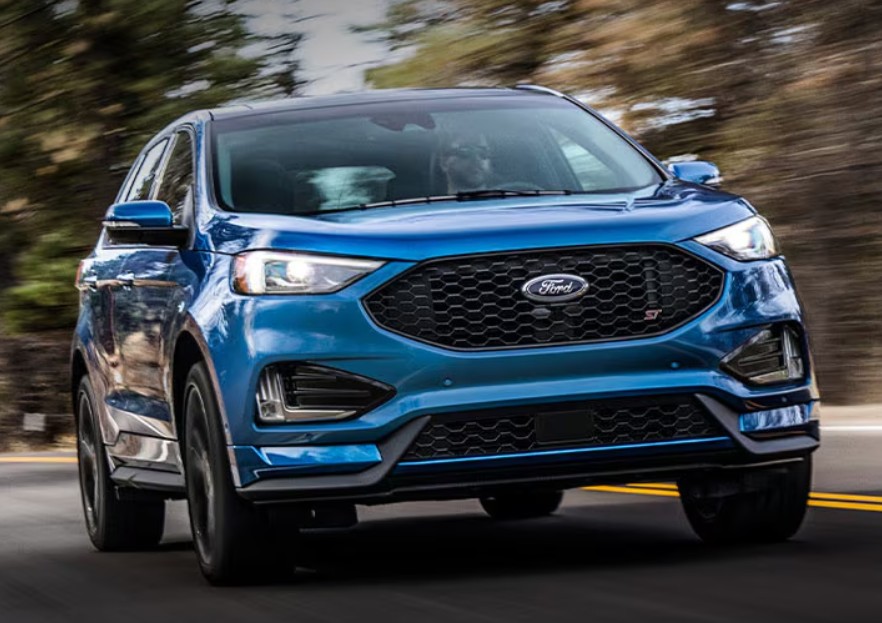
The Ford Edge has always occupied an interesting place in the SUV world. It is larger and roomier than many compact crossovers, yet it avoids the bulk and third-row compromises of a traditional seven-seat SUV. For anyone comparing vehicles based on everyday practicality, that raises an obvious question: how much Ford Edge boot space do we actually get?
Quite a lot, as it turns out.
In the North American second-generation Ford Edge, the cargo area offers 39.2 cubic feet behind the rear seats and 73.4 cubic feet with those seats folded. Those figures remained remarkably consistent across many later Edge model years. Ford's published 2019 specifications, for example, list exactly those capacities.
European specifications tell the story differently because the measuring standard is different. Ford listed 602 litres beneath the luggage cover, 800 litres loaded to the roof in five-seat configuration, and 1,847 litres with the rear seats folded and cargo loaded to the roof.
So, is the Edge roomy enough for families, luggage, dogs, shopping trips, airport runs, or bulky equipment? Let's open the tailgate and find out.
Content in this publication
- How Big Is the Ford Edge Boot Space?
- Ford Edge Boot Space in Litres
- Ford Edge Boot Dimensions
- How Practical Is the Ford Edge Cargo Area?
- How Many Suitcases Fit in a Ford Edge?
- Can the Ford Edge Carry a Stroller?
- Can You Fit a Bike in a Ford Edge?
- Can You Sleep in the Back of a Ford Edge?
- Ford Edge Boot Space by Model Year
- Ford Edge Boot Space With a Spare Tire
- Ford Edge Tailgate and Loading Height
- How the Ford Edge Boot Works for Dog Owners
- Ford Edge Boot Space vs Compact SUVs
- Ford Edge Cargo Space for Moving Large Items
- How to Maximize Ford Edge Boot Space
- Is the Ford Edge Boot Big Enough for Everyday Life?
- Things to Check Before Buying a Used Ford Edge
- Ford Edge Boot Space: Final Verdict
- Frequently Asked Questions
How Big Is the Ford Edge Boot Space?
For most second-generation Ford Edge models sold in North America, the headline cargo numbers are:
| Configuration | Cargo Capacity |
|---|---|
| Rear seats upright | 39.2 cu ft |
| Rear seats folded | 73.4 cu ft |
| European five-seat mode, below cover | 602 litres |
| European five-seat mode, to roof | 800 litres |
| European two-seat mode, to roof | 1,847 litres |
Ford officially reported 39.2 cubic feet behind the second row and 73.4 cubic feet behind the first row for the 2019 Edge, and its 2021 technical specifications show the same figures.
That's an important point because cargo specifications found online can look contradictory. One website may quote roughly 39 cubic feet while another gives 600, 800, or even 1,800 litres.
They aren't necessarily describing different trunks.
They're often using different measurement methods.
Ford Edge Boot Space With the Rear Seats Up
With all five seating positions available, North American Edge models provide approximately 39.2 cubic feet of cargo volume behind the second row.
That is a healthy amount of room for a two-row midsize SUV.
Imagine the boot as a large cupboard turned sideways. Instead of stacking everything vertically and hoping the tailgate closes, we get a relatively broad loading floor that works well for suitcases, shopping bags, sports equipment, and everyday family gear.
This configuration makes the most sense when we need to carry four or five occupants without sacrificing luggage capacity.
Ford Edge Boot Space With the Rear Seats Folded
Drop the second-row seatbacks and maximum cargo capacity expands to approximately 73.4 cubic feet on the North American Edge.
The transformation is substantial.
Suddenly, the Edge goes from family SUV to something approaching a compact furniture mover. We're not suggesting it replaces a van, of course, but the extra length becomes genuinely useful for flat-pack furniture, bicycles with some preparation, camping equipment, bulky boxes, and larger household purchases.
Ford equips the Edge with a 60/40 split-folding rear seat, so we don't always have to choose between passengers and cargo.
That flexibility is arguably more useful than the headline number itself.
Ford Edge Boot Space in Litres
Drivers in the UK, Europe, Australia, and other markets may find litres easier to understand than cubic feet.
Using Ford's European technical specifications, the Edge offered:
- 602 litres in five-seat mode when loaded to the luggage cover
- 800 litres in five-seat mode when loaded to the roof
- 1,847 litres in two-seat mode with luggage loaded to the roof
Those figures shouldn't be directly converted and compared with the American SAE cargo ratings as though they were measured identically.
Different standards count space differently.
That's why the safest approach is to compare Ford Edge cargo figures with competing vehicles measured under the same standard.
Why Cubic Feet and Litres Can Be Confusing
SUV cargo specifications can resemble comparing two apartments when one listing measures usable floor space and another includes closets, balconies, and storage rooms.
Both numbers may be technically correct while telling slightly different stories.
European luggage measurements often reference whether cargo is stacked to the luggage cover or roof. American specifications commonly publish cargo volume behind a particular seating row.
So if we see 602 litres on one page and calculate considerably more litres from 39.2 cubic feet, we shouldn't immediately assume one source is wrong.
We're looking at two rulers measuring the same box in different ways.
Ford Edge Boot Dimensions
Capacity tells us how much volume exists. Dimensions tell us whether the thing we're carrying will actually fit.
And that's often more useful.
Ford's European specifications provide unusually helpful cargo-area measurements:
| Cargo Measurement | Ford Edge |
| Load opening height | 794 mm |
| Load opening width at floor | 1,178 mm |
| Width between wheelhouses | 1,150 mm |
| Cargo height | 802 mm |
| Floor length to second row | 1,071 mm |
| Floor length to first row | 1,918 mm |
| Lift-over height | 754 mm |
These figures come from Ford's technical specifications for the European Edge.
Now we're getting into the details that matter when standing outside IKEA wondering whether our latest purchase was overly ambitious.
Ford Edge Boot Length
With the rear seats upright, Ford specifies approximately 1,071 mm of cargo-floor length in the European model.
Fold the rear seats and available floor length stretches to approximately 1,918 mm.
That's nearly 1.92 metres.
It means longer cargo can fit far more easily once we sacrifice the second-row passenger area.
Actual usable length can vary depending on where the front seats are positioned, how bulky an object is, and whether its shape allows the tailgate to close.
Ford Edge Boot Width
Ford lists a load-opening width of approximately 1,178 mm at floor level, while width between the wheelhouses is around 1,150 mm.
That second measurement matters.
Wheel arches often pinch the cargo compartment at exactly the point where we'd like to slide in a wide box. The Edge retains a respectable amount of width between them, making the luggage area more usable than a trunk that achieves an impressive volume mainly through height.
Ford Edge Boot Height
Cargo height is approximately 802 mm, while the maximum opening height is around 794 mm according to Ford's European specification sheet.
Again, the opening can be more important than the interior.
A large box may theoretically fit inside the cargo compartment but prove impossible to squeeze through the tailgate opening. It's the automotive equivalent of buying a sofa that fits perfectly in the living room but refuses to go through the front door.
How Practical Is the Ford Edge Cargo Area?
Numbers don't carry groceries.
A practical boot needs a sensible shape, manageable loading height, flexible seating, and enough width to prevent every packing exercise from becoming a game of three-dimensional Tetris.
The Edge performs well in this area.
Its boot is relatively broad, and the two-row layout means Ford doesn't have to hide a third-row seat beneath the cargo floor.
That matters because three-row SUVs sometimes advertise enormous maximum cargo capacities while providing a relatively small luggage compartment when every passenger seat is occupied.
The Edge takes the opposite approach: five seats, then a generous boot behind them.
A Wide and Useful Loading Area
The approximately 1,150 mm width between the rear wheelhouses gives us considerable usable floor space.
This helps when carrying:
- Large suitcases
- Storage boxes
- Golf bags
- Baby equipment
- Folding chairs
- Camping gear
- Pet carriers
- Toolboxes
- Sports equipment
Rather than creating one cavernous but awkward void, the Edge offers a fairly straightforward rectangular cargo area.
Why Shape Matters More Than Raw Capacity
Suppose two SUVs both advertise around 40 cubic feet.
One has a narrow cargo floor with dramatically sloped bodywork. The other has a wide, relatively square compartment.
Which would we rather load?
Almost certainly the second one.
Real objects don't arrive as litres of water. They have corners, handles, wheels, frames, and inconvenient shapes.
That's why usable boot geometry deserves almost as much attention as total volume.
How Many Suitcases Fit in a Ford Edge?
There is no official Ford suitcase count because luggage dimensions vary enormously.
Still, 39.2 cubic feet behind the rear seats gives us enough space for a substantial family load.
In practical terms, we can reasonably expect the Edge to accommodate several medium or large suitcases with additional soft bags packed around them, although exact capacity depends heavily on suitcase dimensions and whether we're loading above the seatback line.
For an airport trip involving four adults, the Edge is considerably easier to work with than many compact SUVs.
Best Way to Pack the Edge for a Road Trip
Heavy items should go low and toward the front of the cargo compartment, ideally close to the rear seatbacks.
Suitcases can then be arranged like bricks rather than stacked randomly.
Soft duffel bags are particularly useful for filling irregular spaces around rigid luggage.
And we shouldn't forget visibility. Loading cargo all the way to the roof may maximize capacity, but it can obstruct the rear window and increase the danger posed by unsecured objects.
Can the Ford Edge Carry a Stroller?
For most conventional folding strollers, yes.
The Edge's 39.2-cubic-foot cargo compartment should make stroller duty relatively painless, while still leaving room for shopping bags or other baby equipment in many situations.
Of course, giant double strollers can consume an astonishing amount of space. Anyone buying an Edge specifically for family use should take their actual stroller to the dealership.
It sounds excessive until we remember how many parents discover that their beautifully spacious new SUV has a boot shaped exactly wrong for the pushchair they already own.
Ford Edge Boot Space for Families
This is arguably where the Edge makes the strongest case for itself.
We can leave both rear seats available for children while maintaining nearly 40 cubic feet of luggage space.
The second-row legroom is also generous. Ford lists approximately 40.6 inches of rear legroom on relevant North American specifications, meaning passengers aren't paying for the large cargo compartment with cramped knees.
That's a useful balance.
Can You Fit a Bike in a Ford Edge?
Usually, yes—with the rear seats folded and depending on bicycle size.
The Edge provides up to 73.4 cubic feet behind the front seats and considerable floor length when the second row is down.
For larger adult bicycles, removing the front wheel may make loading dramatically easier.
Mountain bikes with wide handlebars can be particularly awkward, not because the cargo compartment lacks overall volume but because bicycle geometry wastes space spectacularly.
Using the 60/40 Split Seat for Long Loads
The 60/40 rear bench gives us another option.
Instead of folding the entire second row, we can lower one side and slide longer equipment through while keeping one or two rear seating positions available.
Ford specifically promoted this arrangement as a way to carry cargo and passengers side by side.
That can be ideal for skis, narrow furniture boxes, fishing equipment, or similar long items.
Can You Sleep in the Back of a Ford Edge?
For some adults, potentially.
Ford's European cargo specifications list floor length of approximately 1,918 mm to the first row, or roughly 6 feet 3.5 inches, when the rear seating area is incorporated into the load floor.
That doesn't automatically mean we get a perfectly flat 1.92-metre bed.
Front-seat position, interior trim, mattress thickness, and the shape of the folded seatbacks all matter.
Still, for camping or an occasional overnight stop, the Edge has considerably more potential than a small crossover.
Turning the Edge Into a Camping Setup
A compact inflatable mattress or foam pad can make the cargo area more comfortable.
Storage containers can sit toward the front or underneath a raised sleeping platform if we're building something more elaborate.
Just remember that sleeping inside any vehicle requires sensible ventilation and proper safety precautions. Never run the engine in an enclosed space.
Ford Edge Boot Space by Model Year
One reason the Edge is relatively easy to research is that the cargo dimensions of the second-generation model remained stable for many years.
Ford's 2018 specification sheet lists 39.2 cubic feet behind the rear seats and 73.4 cubic feet behind the front seats.
The 2019 specifications give the same figures.
Ford's 2021 technical data again lists 39.2 and 73.4 cubic feet.
So owners comparing a 2018, 2019, 2020, or later second-generation North American Edge aren't likely to find a dramatic cargo-capacity difference simply by changing model years.
First-Generation vs Second-Generation Ford Edge Boot Space
The second-generation Edge improved cargo volume compared with its predecessor.
When Ford introduced the newer Edge, the company said cargo capacity behind the second row increased by 7.0 cubic feet to 39.2 cubic feet, while maximum cargo space increased by 4.5 cubic feet to 73.4 cubic feet.
That tells us something useful when shopping used.
The newer body didn't merely change styling and technology. It delivered a meaningful improvement in everyday luggage room as well.
Ford Edge Boot Space With a Spare Tire
Underfloor storage configuration can vary by trim, market, drivetrain, equipment, and spare-tire arrangement.
Some Edge models use the area beneath the main cargo floor for additional storage and vehicle equipment. Ford's published equipment information refers to a below-floor Rear Cargo Management System on relevant versions.
For shoppers who care about every last litre, it's worth lifting the boot floor during a test drive.
Hidden storage is surprisingly valuable for smaller things we'd rather not leave rolling around the main luggage compartment.
Underfloor Storage Is More Useful Than It Looks
Think charging cables, emergency equipment, cleaning supplies, gloves, reusable shopping bags, or small tools.
None of these items needs prime cargo-floor real estate.
By hiding them underneath, we preserve the main boot for luggage while keeping everyday accessories accessible.
Ford Edge Tailgate and Loading Height
Ford lists a North American liftover height of approximately 29.6 inches for the 2019 Edge.
European technical specifications list around 754 mm, which is essentially in the same neighborhood.
That's high enough that lifting heavy objects still takes effort, but reasonable for a midsize crossover SUV.
Power Liftgate Convenience
Depending on model year and trim, certain Edge versions offered a hands-free, foot-activated liftgate.
Ford described the system as allowing users to trigger the rear hatch by moving a foot beneath the rear bumper when approaching with their hands full.
Is it essential?
No.
Does it suddenly feel essential when we're carrying six grocery bags and it's raining?
Absolutely.
How the Ford Edge Boot Works for Dog Owners
The Edge can be a strong choice for dog owners because of its combination of width, height, and overall cargo capacity.
A medium or large dog can occupy the rear cargo compartment while the second-row seats remain available, depending on crate requirements.
The broad opening also makes loading a crate easier than in SUVs with sharply tapered rear bodywork.
Cargo Covers and Pet Equipment
Ford sells a retractable interior cargo cover for 2019–2024 Edge models designed to conceal items behind the second-row seats.
Owners carrying pets will generally remove or retract the cover to create more vertical room.
A proper pet barrier, secured crate, or other appropriate restraint is far more important than maximizing raw cargo capacity when transporting an animal.
Ford Edge Boot Space vs Compact SUVs
The Edge's biggest advantage becomes clear when we stop viewing it purely as another crossover.
It's a midsize two-row SUV.
That means buyers often get noticeably more luggage room than they would in a smaller compact crossover while avoiding the packaging compromises associated with squeezing a third row into the cabin.
For people who regularly travel with four occupants plus substantial luggage, that middle ground can be appealing.
Do We Really Need a Three-Row SUV?
This is the question worth asking.
Many families automatically move toward a large three-row SUV because they want more space.
But if we rarely need six or seven seats, a roomy five-seat vehicle such as the Edge may use its footprint more effectively for our actual lifestyle.
Instead of carrying two empty seats everywhere, we carry a larger permanent boot.
Ford Edge Cargo Space for Moving Large Items
With the second row folded, 73.4 cubic feet gives the Edge meaningful hauling ability.
That makes it suitable for occasional bulky loads such as boxed televisions, small flat-pack furniture, moving cartons, gardening supplies, and larger shopping trips.
But dimensions still rule.
Measure Before Buying, Not After
If we're collecting a piece of furniture, compare its packaging dimensions with approximately:
- 1,918 mm maximum floor length
- 1,150 mm width between wheelhouses
- 1,178 mm load-opening width
- 794 mm maximum opening height
Then leave some margin.
A cardboard box that measures exactly the same width as the advertised opening may still catch on trim, weather seals, or interior contours.
Tape measures save arguments.
How to Maximize Ford Edge Boot Space
Getting more practical capacity doesn't require modifying the vehicle.
Smart packing is usually enough.
We can place rectangular, heavy luggage on the floor first; fill gaps with soft bags; use the 60/40 seat split rather than folding everything unnecessarily; move loose small items into underfloor storage; remove unused cargo organizers when maximum room is needed; and keep fragile or lightweight belongings toward the top.
The objective isn't simply to squeeze in more possessions.
It's to use the space without creating a pile that becomes dangerous under hard braking.
Use Vertical Space Carefully
The Edge offers considerable height, and European figures demonstrate the difference clearly: Ford lists 602 litres below the luggage cover but 800 litres when the same five-seat cargo compartment is measured to the roof.
That's nearly 200 litres of additional theoretical volume above the cover line.
But cargo stacked high needs to be secured properly.
Otherwise, the rear luggage area turns into a shelf full of projectiles during a sudden stop.
Is the Ford Edge Boot Big Enough for Everyday Life?
For most five-person households, yes.
The Edge combines nearly 40 cubic feet behind the rear bench with more than 73 cubic feet when the second row is folded. Those are useful numbers rather than marketing decoration because the cargo compartment also has a broad, relatively practical shape.
It's especially attractive for drivers who need luggage space more often than they need a third row.
A compact SUV may be easier to park. A three-row SUV may carry more people.
The Edge plants its flag between those two worlds.
And for many buyers, that's exactly where the sweet spot lies.
Things to Check Before Buying a Used Ford Edge
Cargo capacity may be similar across several second-generation years, but the condition of an individual used vehicle matters.
Open the tailgate and inspect the cargo floor, liftgate operation, rear seat releases, underfloor storage, trim panels, weather seals, and folding-seat mechanisms.
Make sure both parts of the 60/40 rear bench fold and latch properly.
If a power or hands-free liftgate is fitted, operate it several times.
Bring Your Own Gear to the Test Drive
This might be the simplest buying advice in the entire article.
If the Edge needs to carry a stroller, dog crate, wheelchair, golf clubs, camping equipment, musical instrument, or unusually large suitcase, bring it along.
Specifications tell us whether something should fit.
Our own equipment tells us whether it actually does.
Ford Edge Boot Space: Final Verdict
The Ford Edge is a genuinely practical cargo carrier.
On second-generation North American models, we're looking at approximately 39.2 cubic feet behind the rear seats and 73.4 cubic feet with them folded. Ford published these same headline capacities across multiple model years, including 2018, 2019, and 2021.
European specifications provide another useful perspective: 602 litres below the cargo cover, 800 litres loaded to the roof with five seats in use, and 1,847 litres in two-seat configuration when loaded to the roof.
More importantly, the Edge's boot isn't merely large on paper. Its broad loading floor, useful 60/40 rear seat, nearly 1.92-metre maximum floor length on the European specification, and generous width make the space easy to exploit.
If we regularly carry five people, luggage, family equipment, or bulky purchases but don't need a third row, the Edge makes a compelling argument.
Sometimes practicality isn't about having the biggest SUV in the parking lot.
It's about having exactly enough space—and being able to use nearly every inch of it.
Frequently Asked Questions
1. How much boot space does a Ford Edge have?
Second-generation North American Ford Edge models offer approximately 39.2 cubic feet of cargo space behind the second-row seats and 73.4 cubic feet behind the front row when the rear seats are folded.
2. What is the Ford Edge boot capacity in litres?
Ford's European specifications list 602 litres beneath the luggage cover, 800 litres when loaded to the roof with five seats in use, and 1,847 litres in two-seat mode when loaded to the roof. Measurement standards differ from North American cargo-volume calculations.
3. Do the Ford Edge rear seats fold flat?
The Edge uses a 60/40 split-folding rear seat, allowing us to expand the cargo compartment or create space for long objects while retaining some rear seating. Ford describes the rear seat as fold-flat in relevant specifications.
4. Can you fit a bicycle in a Ford Edge?
Many adult bicycles can fit with the second-row seats folded, particularly if the bicycle's front wheel is removed. Maximum North American cargo volume reaches approximately 73.4 cubic feet, although actual fit depends on bike dimensions.
5. Is the Ford Edge good for families needing lots of luggage space?
Yes. Its combination of five usable seats, approximately 39.2 cubic feet of cargo room behind the second row, a 60/40 folding rear bench, and a broad luggage compartment makes the Edge well suited to family trips and everyday cargo duty.
If you want to know other articles similar to Ford Edge Boot Space: Dimensions, Capacity, and Practical Cargo Guide you can visit the category Service and Parts.
Volvo S90 Engine Oil: Type, Capacity & Change Guide
Volvo S90 Boot Space: Size, Capacity and Practicality
SEO Title: Volvo S90 Oil Capacity: Complete Guide by Engine

Kia Sorento Oil Type: Complete Guide by Year & Engine
Kia Sorento Engine Capacity: Complete Guide by Year
Peugeot 308 Clutch Replacement Cost: Complete UK Guide for 2026
Leave a Reply
More content of your interest