

Mazda CX-9 Engine Size: Complete Guide by Model Year

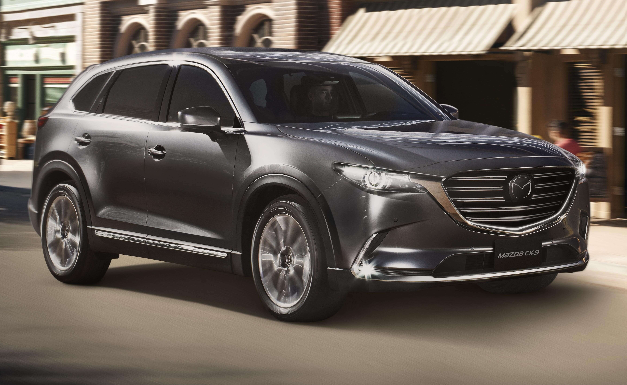
If you’re wondering about Mazda CX-9 engine size, the simple answer is that it depends heavily on the model year. During its lifespan, the CX-9 moved from a naturally aspirated V6 to a much smaller turbocharged four-cylinder engine.
And that change was far more important than the numbers might suggest.
The original 2007 Mazda CX-9 came with a 3.5-liter V6. Mazda enlarged that engine to 3.7 liters for 2008, and the 3.7L remained under the hood through the end of the first-generation CX-9. When the redesigned CX-9 arrived for the 2016 model year, Mazda took an entirely different approach: a 2.5-liter turbocharged four-cylinder replaced the larger V6.
So, despite looking like a straightforward three-row family SUV, the CX-9 actually has a surprisingly interesting engine history.
In this guide, we’ll break down every major Mazda CX-9 engine size, explain horsepower and torque differences, compare the V6 with the turbo engine, and help used-car shoppers figure out which configuration makes the most sense.
Content in this publication
- What Engine Size Does the Mazda CX-9 Have?
- 2007 Mazda CX-9 Engine Size: 3.5-Liter V6
- 2008–2015 Mazda CX-9 Engine Size: 3.7-Liter V6
- 2016–2023 Mazda CX-9 Engine Size: 2.5-Liter Turbo
- Mazda CX-9 2.5 Turbo Horsepower
- Mazda CX-9 3.7 vs 2.5 Turbo Engine
- Does Every Mazda CX-9 Have a Turbo?
- How Many Cylinders Does a Mazda CX-9 Have?
- Why Did Mazda Downsize the CX-9 Engine?
- Mazda CX-9 Engine Size by Generation
- Is a Bigger CX-9 Engine Better?
- Which Mazda CX-9 Engine Is Best?
- Mazda CX-9 Engine Size and Towing
- Mazda CX-9 Engine Size in Liters vs CC
- What Does SKYACTIV-G 2.5T Mean?
- What Was the Last Mazda CX-9 Engine Size?
- Quick Mazda CX-9 Engine Identification Guide
- Mazda CX-9 Engine Size: Final Thoughts
- Frequently Asked Questions About Mazda CX-9 Engine Size
What Engine Size Does the Mazda CX-9 Have?
The Mazda CX-9 was sold with three primary engine displacements in the North American market:
| Model year | Engine size | Configuration | Approx. output |
|---|---|---|---|
| 2007 | 3.5L | Naturally aspirated V6 | 263 hp |
| 2008–2015 | 3.7L | Naturally aspirated V6 | 273 hp |
| 2016–2023 | 2.5L | Turbocharged inline-four | Up to 250 hp |
That table tells only half the story.
Yes, the second-generation CX-9 lost roughly 1.2 liters of engine displacement compared with the 3.7-liter model. But Mazda added turbocharging and concentrated on producing torque at low engine speeds.
The result was an engine that felt surprisingly muscular despite having two fewer cylinders.
Mazda CX-9 Engine Size in Cubic Centimeters
For buyers who prefer cubic centimeters rather than liters, the figures become more precise.
The 2007 3.5-liter V6 displaced 3,496 cc, while Mazda's later 3.7-liter V6 displaced 3,726 cc. The second-generation SKYACTIV-G 2.5 Turbo has an official displacement of approximately 2,488 cc.
In everyday language, we simply call those engines 3.5L, 3.7L, and 2.5L.
2007 Mazda CX-9 Engine Size: 3.5-Liter V6
The first Mazda CX-9 launched for the 2007 model year with a 3.5-liter DOHC V6 gasoline engine.
Its exact displacement was 3,496 cc, and Mazda rated the engine at 263 horsepower at 6,250 rpm and 249 lb-ft of torque at 4,500 rpm. It used a 10.3:1 compression ratio and was designed to run on regular 87-octane gasoline.
For a large three-row crossover appearing in the mid-2000s, those were healthy numbers.
The basic recipe was traditional:
- 3.5-liter displacement
- Six cylinders arranged in a V
- 24 valves
- Dual overhead camshafts
- Naturally aspirated induction
- Six-speed automatic transmission
There was no turbocharger trying to squeeze more performance from a smaller engine. Instead, displacement did much of the heavy lifting.
How Powerful Is the 3.5L CX-9?
With 263 horsepower, the original CX-9 wasn't exactly slow.
Its character, however, differed significantly from the later turbo model. Maximum torque didn't arrive until 4,500 rpm, which meant drivers had to let the engine rev when they wanted strong acceleration.
Think of it like a runner who builds speed progressively rather than exploding off the starting line.
That naturally aspirated character can be appealing. Power builds in a predictable fashion, and the V6 offers the smoother sound and feel that many drivers associate with traditional midsize SUVs.
Why Was the 3.5L Used for Only One Model Year?
Mazda quickly upgraded the CX-9.
For 2008, the SUV received a new 3.7-liter V6, raising both horsepower and torque. Mazda said the change added 10 horsepower and 21 lb-ft of torque compared with the original 2007 vehicle.
That makes the 2007 CX-9 something of an oddball in the lineup.
If you're shopping for replacement parts or checking specifications on an early CX-9, knowing the exact model year matters.
2008–2015 Mazda CX-9 Engine Size: 3.7-Liter V6
Beginning with the 2008 model year, Mazda increased displacement to 3.7 liters.
This became the defining engine of the first-generation CX-9.
By 2015, Mazda's published specifications listed the engine at precisely 3,726 cc (227.4 cubic inches). It was a DOHC 24-valve V6 producing 273 horsepower at 6,250 rpm and 270 lb-ft of torque at 4,250 rpm.
That engine remained naturally aspirated.
No turbocharger. No downsizing. Just a relatively large V6 doing exactly what we'd expect a large V6 to do.
3.7L CX-9 Engine Specifications
Key specifications include:
| Specification | Mazda CX-9 3.7 V6 |
|---|---|
| Displacement | 3,726 cc |
| Cylinders | V6 |
| Valves | 24 |
| Horsepower | 273 hp |
| Torque | 270 lb-ft |
| Compression ratio | 10.3:1 |
| Recommended fuel | Regular 87 octane |
| Aspiration | Naturally aspirated |
These figures help explain why the first-generation CX-9 had such a conventional large-crossover feel.
The engine wanted some revs before delivering its best performance, but once moving, the V6 supplied reassuring power.
Is the 3.7-Liter Mazda CX-9 Fast?
"Fast" is relative when we're talking about a three-row SUV.
Nobody buys a CX-9 expecting sports-car acceleration. Still, 273 horsepower was respectable for its era, and Mazda tuned the CX-9 to feel more responsive than many family-focused rivals.
Where the 3.7L differs noticeably from the later 2.5T is torque delivery.
Peak torque arrives at 4,250 rpm.
The turbo engine, meanwhile, generates maximum torque much lower in the rev range.
That difference matters every time we pull away from a traffic light, merge onto a freeway, or climb a hill with passengers aboard.
2016–2023 Mazda CX-9 Engine Size: 2.5-Liter Turbo
The biggest transformation in CX-9 history arrived with the redesigned 2016 model.
Mazda threw away the traditional "big SUV needs a big V6" formula.
In its place came the SKYACTIV-G 2.5T, a 2.5-liter direct-injection turbocharged four-cylinder gasoline engine.
The official displacement is approximately 2,488 cc. Mazda lists an 89.0 mm bore and 100.0 mm stroke together with a 10.5:1 compression ratio.
On paper, this sounds like a dramatic downgrade.
It isn't.
How Can a 2.5L Engine Replace a 3.7L V6?
Turbocharging changes the equation.
A naturally aspirated engine relies largely on atmospheric pressure to fill its cylinders. A turbocharger compresses incoming air, allowing more air—and therefore more fuel—to enter the engine during combustion.
In simple terms, Mazda made the smaller engine punch above its weight.
Imagine replacing a large hammer with a smaller pneumatic one. The tool got smaller, but the force didn't disappear.
Mazda designed the 2.5T specifically to provide strong torque in the low- and middle-rpm ranges frequently used in everyday driving.
Mazda Dynamic Pressure Turbo Explained
One particularly interesting part of the SKYACTIV-G 2.5T is Mazda's Dynamic Pressure Turbo system.
Mazda designed the turbocharger to improve response at low engine speeds. At lower rpm, a valve changes how exhaust gases reach the turbine, increasing their velocity and helping the turbo spool quickly.
Mazda itself compared the basic effect to putting a thumb over the end of a garden hose: restricting the opening increases the velocity of the flow.
That matters because traditional turbocharged engines can sometimes hesitate before producing boost.
Mazda wanted the CX-9 to respond immediately when the driver pressed the accelerator.
Mazda CX-9 2.5 Turbo Horsepower
Horsepower depends partly on fuel octane.
In later CX-9 models, Mazda rated the 2.5T at up to 250 horsepower with 93-octane premium fuel and 227 horsepower with regular 87-octane fuel.
For the 2023 CX-9, Mazda quoted:
- 250 hp and 320 lb-ft with 93-octane premium fuel
- 227 hp and 310 lb-ft with 87-octane regular fuel
Those numbers are important because they demonstrate why engine displacement alone tells us very little about real-world performance.
No—not for the U.S.-spec turbocharged CX-9 represented by these Mazda specifications.
The engine can operate on regular 87-octane fuel, but using higher-octane fuel allows it to produce greater maximum output.
For owners, that creates a nice compromise.
Want maximum performance? Use premium.
Want to reduce fuel expenses during ordinary commuting? Regular gasoline remains an option.
Always follow the fuel recommendation in the owner's manual for your particular market and model year.
Mazda CX-9 3.7 vs 2.5 Turbo Engine
This is where things become interesting.
At first glance, we'd naturally expect a 3.7-liter V6 to dominate a 2.5-liter four-cylinder. After all, it has nearly 50% more displacement and two additional cylinders.
Yet real-world driving isn't governed by displacement alone.
| Feature | 3.7L V6 | 2.5L Turbo |
|---|---|---|
| Cylinders | 6 | 4 |
| Displacement | 3,726 cc | ~2,488 cc |
| Aspiration | Naturally aspirated | Turbocharged |
| Horsepower | 273 hp | Up to 250 hp |
| Torque | 270 lb-ft | Up to 320 lb-ft |
| Peak torque behavior | Higher rpm | Strong low-rpm torque |
| Character | Smooth, rev-oriented | Punchy, torque-focused |
The old V6 wins the displacement contest.
The turbo wins the torque contest.
Which CX-9 Engine Feels Stronger?
For normal driving, many people may perceive the 2.5 turbo as the stronger engine.
Why?
Torque.
The 2016 CX-9's turbo engine was already producing 310 lb-ft at only 2,000 rpm, whereas the 3.7-liter V6 reached its 270 lb-ft peak at 4,250 rpm.
That's a huge difference in where the engine delivers its muscle.
You don't have to wind out the turbo engine as aggressively to get meaningful acceleration.
Press the pedal, boost builds, and the CX-9 moves.
Which Engine Sounds Better?
This one is subjective, but enthusiasts often prefer the natural sound of a V6.
Six-cylinder engines typically deliver a richer and smoother note than an inline-four.
The turbocharged 2.5L isn't trying to win a soundtrack competition, though. Mazda engineered it primarily around responsiveness, usable torque, and efficiency.
Does Every Mazda CX-9 Have a Turbo?
No.
This is one of the easiest CX-9 specifications to misunderstand.
First-generation Mazda CX-9 models use naturally aspirated V6 engines.
Second-generation models use the turbocharged 2.5-liter four-cylinder.
In simplified terms:
2007: 3.5 V6, non-turbo
2008–2015: 3.7 V6, non-turbo
2016–2023: 2.5 four-cylinder, turbo
If an advertisement describes a 2012 CX-9 as having a "2.5 turbo," something is wrong.
Likewise, a standard North American 2020 CX-9 shouldn't have a 3.7-liter V6.
How Many Cylinders Does a Mazda CX-9 Have?
The answer again depends on generation.
Older CX-9s have six cylinders.
Newer CX-9s have four cylinders.
This transition mirrors a broader automotive trend. Manufacturers increasingly discovered they could use smaller turbocharged engines to generate the torque customers expected from larger engines while reducing weight and potentially improving efficiency.
Mazda simply applied that strategy to its largest SUV of the period.
Does Fewer Cylinders Mean Less Power?
Not necessarily.
Cylinder count is only one piece of the puzzle.
Engine output is affected by:
- Displacement
- Turbocharging or supercharging
- Compression ratio
- Fuel delivery
- Ignition timing
- Airflow
- Exhaust design
- Engine-management software
- Fuel octane
That's why comparing engines solely on displacement can be misleading.
A modern turbocharged 2.5-liter engine can easily outperform a larger naturally aspirated engine in certain areas.
Why Did Mazda Downsize the CX-9 Engine?
Mazda wanted more than a smaller engine.
When developing the second-generation CX-9, the company focused on strong real-world torque and fuel efficiency rather than chasing a huge horsepower figure.
The SKYACTIV-G 2.5T incorporated direct injection, turbocharging, cooled exhaust gas recirculation, and Mazda's Dynamic Pressure Turbo technology. Mazda stated that the engine was designed to give the CX-9 V6-like performance without the corresponding fuel-efficiency penalty.
That philosophy makes sense for a family crossover.
How often do we actually drive around at redline?
Almost never.
We spend much more time accelerating between 1,500 and 4,000 rpm. That's exactly where abundant torque becomes useful.
Low-End Torque Matters More Than You Think
Consider everyday situations:
You're carrying five passengers and luggage.
You're climbing a long hill.
You're pulling onto a busy road.
You're passing another vehicle.
In these circumstances, low-end and midrange torque can make an SUV feel effortless.
The 2.5T was engineered around precisely that type of driving.
Mazda CX-9 Engine Size by Generation
Another easy way to remember the engines is by generation.
First-Generation Mazda CX-9
The first generation covers model years 2007 through 2015 in the North American lineup.
Within that generation, however, we have two engine sizes:
- 2007: 3.5-liter V6
- 2008–2015: 3.7-liter V6
The 3.7 became the familiar engine most shoppers associate with an older CX-9.
Second-Generation Mazda CX-9
The redesigned CX-9 arrived for 2016.
It used Mazda's 2.5-liter SKYACTIV-G turbo four-cylinder throughout the generation, including the final 2023 U.S. model.
Mazda's 2023 owner's specifications identify it as a DOHC 16-valve inline-four displacing about 2,488.5 cc.
Is a Bigger CX-9 Engine Better?
Not automatically.
A bigger engine can provide advantages, but displacement shouldn't be treated like a scoreboard.
The 3.7-liter V6 offers a traditional naturally aspirated experience. Its throttle response is linear, it has no turbocharger, and it delivers the smooth character we'd expect from six cylinders.
The 2.5T gives us much more low-rpm torque from substantially less displacement.
So rather than asking, "Which engine is bigger?" we'd ask:
How do we want the SUV to behave?
If we like the traditional feel of a naturally aspirated six-cylinder engine, the 3.7L has appeal.
If we prefer immediate torque and newer vehicle technology, the 2.5T is usually the more attractive package.
Which Mazda CX-9 Engine Is Best?
For most shoppers, we'd lean toward the second-generation 2.5-liter turbo CX-9 as the more sophisticated overall package.
It provides strong torque without needing a large-displacement engine, and it belongs to the significantly newer generation of CX-9.
But used-car decisions aren't made by engine specifications alone.
Condition matters enormously.
A beautifully maintained older CX-9 can be a smarter purchase than a neglected newer one.
Before buying any used CX-9, we would check:
- Service history
- Oil-change records
- Coolant condition and maintenance history
- Warning lights
- Signs of leaks
- Cold-start behavior
- Transmission operation
- Vehicle history
- Outstanding recalls or service campaigns
- A pre-purchase inspection by a qualified technician
That's less exciting than comparing horsepower figures, but it could save thousands of dollars.
Mazda CX-9 Engine Size and Towing
Engine size isn't the only factor determining towing capacity.
Cooling capacity, transmission gearing, drivetrain configuration, brakes, chassis design, hitch equipment, and manufacturer limits all matter.
For example, Mazda listed the 2022 CX-9 with the 2.5-liter turbo engine as capable of towing up to 3,500 pounds when properly equipped.
That's another useful reminder that a small turbocharged engine isn't automatically incapable of doing serious work.
Never determine safe trailer weight based solely on engine displacement. Check the owner's manual and vehicle-specific towing ratings.
Mazda CX-9 Engine Size in Liters vs CC
Engine terminology can look unnecessarily complicated when listings use different measurements.
Here's the quick translation:
- 2.5 liters ≈ 2,500 cc
- 3.5 liters ≈ 3,500 cc
- 3.7 liters ≈ 3,700 cc
Actual displacement differs slightly because automakers round engine sizes when naming them.
For the CX-9:
3.5L = 3,496 cc
3.7L = 3,726 cc
2.5T = approximately 2,488 cc
So if you're looking at an international listing and see "2488 cc," you're essentially looking at the familiar 2.5-liter engine.
What Does SKYACTIV-G 2.5T Mean?
Mazda's terminology looks complicated, but we can break it down.
SKYACTIV-G refers to Mazda's family of gasoline engines developed under its SKYACTIV engineering philosophy.
2.5 refers to the approximate displacement in liters.
T means turbocharged.
So SKYACTIV-G 2.5T essentially means Mazda's 2.5-liter turbocharged gasoline engine.
Simple enough once we strip away the branding.
Is the CX-9 2.5T Direct Injected?
Yes.
Mazda describes the SKYACTIV-G 2.5T as a direct-injection turbocharged gasoline engine.
Direct injection delivers fuel directly into the combustion chamber rather than injecting it farther upstream into the intake port.
Combined with precise engine management and turbocharging, this helps Mazda extract considerable performance from 2.5 liters of displacement.
What Was the Last Mazda CX-9 Engine Size?
For the final U.S.-market 2023 Mazda CX-9, engine size remained 2.5 liters.
More precisely, Mazda's owner's manual specifies 2,488.5 cc, with a DOHC 16-valve inline-four layout and 10.5 compression ratio.
Mazda also confirmed that every 2023 CX-9 trim used the SKYACTIV-G 2.5 Turbo engine.
That means there was no optional V6 hiding at the top of the lineup.
Whether you bought the more affordable trim or a better-equipped CX-9, the fundamental engine architecture remained the same.
Quick Mazda CX-9 Engine Identification Guide
Need to identify a CX-9 quickly?
Use the model year as your first clue.
- 2007 CX-9: 3.5L V6
- 2008–2015 CX-9: 3.7L V6
- 2016–2023 CX-9: 2.5L turbo inline-four
For absolute certainty, verify the VIN, emissions label, engine identification information, and documentation for the individual vehicle.
This is especially important with used cars. Engines can theoretically have been replaced during a vehicle's life, and specifications can differ between countries.
Mazda CX-9 Engine Size: Final Thoughts
The Mazda CX-9's engine evolution is a perfect example of why we shouldn't judge an engine by displacement alone.
The story started with a 3.5-liter V6 in 2007. Mazda then expanded the first-generation SUV to a 3.7-liter V6 beginning in 2008. Finally, the company went in the opposite direction for the second generation and introduced a 2.5-liter turbocharged four-cylinder for 2016.
Smaller engine, fewer cylinders—and yet substantially stronger low-rpm torque.
That's modern engine engineering in a nutshell.
If we're shopping for an older CX-9, the 3.7L V6 offers the smoothness and predictable response of a conventional naturally aspirated six-cylinder. If we're looking at a second-generation model, the 2.5T provides a completely different personality, using turbocharging to produce strong torque from far less displacement.
Neither choice can be judged by liters alone.
Model year, maintenance, condition, fuel requirements, driving style, and ownership history matter far more than whether the badge hides a 2.5, 3.5, or 3.7-liter engine.
And if you only came here looking for the fastest possible answer, here it is one last time:
The North American Mazda CX-9 used a 3.5L V6 in 2007, a 3.7L V6 from 2008–2015, and a 2.5L turbo four-cylinder from 2016–2023.
Frequently Asked Questions About Mazda CX-9 Engine Size
1. What size engine is in a Mazda CX-9?
It depends on the year. The 2007 Mazda CX-9 uses a 3.5-liter V6, 2008–2015 models use a 3.7-liter V6, and second-generation 2016–2023 CX-9 models use a 2.5-liter turbocharged four-cylinder engine in the North American market.
2. Is the Mazda CX-9 a V6 or four-cylinder?
It can be either. First-generation CX-9 models have V6 engines, while the redesigned 2016–2023 CX-9 uses a turbocharged four-cylinder. The switch allowed Mazda to reduce displacement while delivering considerably more low-rpm torque.
3. Does the Mazda CX-9 have a 3.7-liter engine?
Yes. Mazda used a 3.7-liter naturally aspirated V6 in North American CX-9 models beginning in 2008 and continuing through the end of the first generation. Mazda's 2015 specification sheet lists displacement at 3,726 cc, output at 273 hp, and torque at 270 lb-ft.
4. Is the Mazda CX-9 2.5 engine turbocharged?
Yes. The second-generation CX-9's 2.5-liter SKYACTIV-G engine is turbocharged. Mazda introduced the SKYACTIV-G 2.5T with the redesigned 2016 CX-9. Its displacement is approximately 2,488 cc, and later versions could produce up to 250 horsepower and 320 lb-ft of torque on 93-octane premium gasoline.
5. Which Mazda CX-9 has the biggest engine?
The 2008–2015 Mazda CX-9 has the largest engine by displacement: a 3.7-liter V6. However, the smaller 2.5-liter turbo engine in the second-generation CX-9 generates more peak torque, showing that a larger displacement doesn't automatically mean stronger everyday performance.
If you want to know other articles similar to Mazda CX-9 Engine Size: Complete Guide by Model Year you can visit the category Service and Parts.
Volvo S90 Engine Oil: Type, Capacity & Change Guide
Volvo S90 Boot Space: Size, Capacity and Practicality
SEO Title: Volvo S90 Oil Capacity: Complete Guide by Engine

Kia Sorento Oil Type: Complete Guide by Year & Engine
Kia Sorento Engine Capacity: Complete Guide by Year
Peugeot 308 Clutch Replacement Cost: Complete UK Guide for 2026
Leave a Reply
More content of your interest