
Leapmotor C10 Weight: Kerb Weight, Payload and What It Means

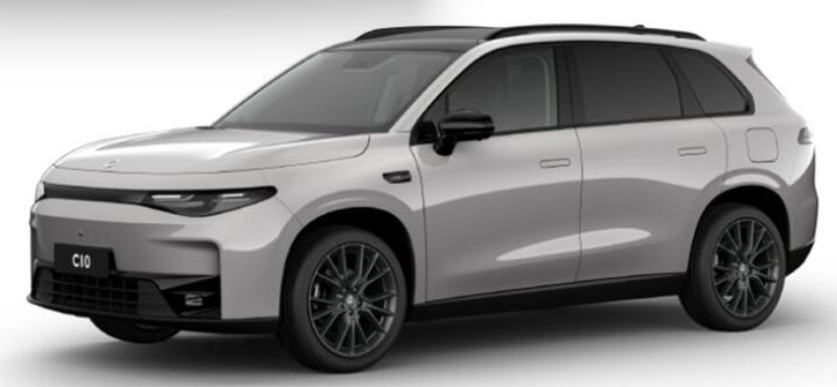
If you are researching Leapmotor C10 weight, the quick answer is that the familiar rear-wheel-drive C10 battery-electric model weighs about 1,980 kg, or roughly 4,365 lb, in kerb/unladen form. Its maximum permitted laden mass is around 2,460 kg, depending on specification and market.
That sounds straightforward. Then we start looking at different C10 powertrains, newer long-range versions and the AWD model, and suddenly there is no single number that describes every C10.
The C10 is a large electric SUV, and its weight reflects that. There is a sizeable battery beneath the cabin, a substantial body, generous equipment and enough structural hardware to accommodate five passengers in comfort. In other words, this is not an oversized hatchback pretending to be an SUV. It carries some genuine mass.
But should that worry us?
Not necessarily.
Vehicle weight affects acceleration, efficiency, tyres, braking, handling, payload and even the way a car feels over broken roads. Yet weight is only half of the story. Where that mass sits and how the suspension manages it can matter just as much.
Let's unpack the numbers.
Content in this publication
- How Much Does the Leapmotor C10 Weigh?
- Leapmotor C10 Kerb Weight Explained
- What Is the Leapmotor C10 Gross Vehicle Weight?
- Leapmotor C10 Payload Capacity
- Why Is the Leapmotor C10 So Heavy?
- Leapmotor C10 Weight Distribution
- How Weight Affects Leapmotor C10 Performance
- How Weight Affects Leapmotor C10 Range
- Does Weight Affect Leapmotor C10 Braking?
- Does C10 Weight Increase Tyre Wear?
- How Weight Influences Leapmotor C10 Handling
- Leapmotor C10 Weight vs Size
- Leapmotor C10 REEV Weight
- Leapmotor C10 Long Range Weight
- Leapmotor C10 AWD Weight
- Can Leapmotor C10 Weight Affect Running Costs?
- Does Leapmotor C10 Weight Matter for Towing?
- Is the Leapmotor C10 Too Heavy?
- Leapmotor C10 Weight: The Numbers That Matter
- Conclusion: What Leapmotor C10 Weight Really Tells Us
- Frequently Asked Questions About Leapmotor C10 Weight
How Much Does the Leapmotor C10 Weigh?
For the commonly sold rear-wheel-drive C10 BEV with the 69.9 kWh battery, the official unladen/kerb figure is approximately 1,980 kg.
Leapmotor specifications list the following figures for several C10 powertrains:
| Leapmotor C10 version | Approximate weight |
|---|---|
| C10 BEV | 1,980 kg |
| C10 BEV Long Range | 2,061 kg |
| C10 BEV AWD | 2,191 kg |
| C10 Ultra Hybrid REEV | 1,950 kg |
These figures demonstrate why we should always check which version someone means when they quote a C10 weight. Current Leapmotor material for markets offering the expanded C10 range gives the standard BEV at 1,980 kg, Long Range at 2,061 kg, AWD at 2,191 kg and REEV at 1,950 kg. Availability and homologated figures can vary between countries.
That's a spread of more than 200 kg between certain versions—roughly the equivalent of adding several adult passengers.
Leapmotor C10 Weight in Pounds
For readers who prefer imperial units, 1,980 kg equals roughly 4,365 lb.
That puts the standard electric C10 firmly in modern electric-SUV territory.
A two-tonne vehicle would once have sounded enormous. Today, large-battery EVs regularly find themselves around—or beyond—that landmark because batteries are heavy. Think of the battery as the C10's enormous electronic fuel tank: it stores plenty of energy, but unlike petrol disappearing from a tank during a journey, the battery still weighs essentially the same when its charge is depleted.
Leapmotor C10 Kerb Weight Explained
"Kerb weight" sounds like one of those automotive terms everyone casually uses until we actually have to define it.
Broadly speaking, it means the weight of the vehicle ready for normal use, without its normal passenger and cargo load. Exact regulatory definitions differ by jurisdiction, which explains why we occasionally see slightly different "kerb", "tare" and "unladen" figures quoted for what appears to be the same vehicle.
Official European technical material has listed the C10 BEV at 1,980 kg unladen and 2,460 kg maximum technically permissible laden mass.
The important lesson is simple: don't compare two weight numbers unless they use the same measurement standard.
Kerb Weight vs Gross Vehicle Weight
These two figures are easily confused.
The approximately 1,980 kg kerb/unladen figure tells us roughly what the standard C10 BEV itself weighs.
The 2,460 kg gross vehicle mass represents the permitted maximum when the vehicle is loaded within its homologated limits.
The difference is effectively the space available for occupants, luggage and other allowable load, although local definitions and equipment specifications can alter the exact payload calculation.
That distinction matters far more than many buyers realise.
A family might never care whether an SUV is 1,950 or 1,980 kg when empty. They absolutely should care about how much weight they can legally add when filling every seat and packing the luggage compartment for a holiday.
What Is the Leapmotor C10 Gross Vehicle Weight?
For the standard C10 BEV, technical documentation has quoted a maximum mass of approximately 2,460 kg. The REEV has been listed at around 2,410 kg gross vehicle mass in Leapmotor specification material.
Gross vehicle weight isn't a target. We aren't supposed to load the car until we reach it every morning.
It is a ceiling.
Once passengers, suitcases, child seats and anything else aboard are counted, the vehicle should remain within the limits stated on its certification plate and official documentation.
Why Gross Weight Matters
Imagine five adults heading to the airport. Add large suitcases, cabin luggage, perhaps a pushchair, drinks and assorted bags.
The cabin can swallow everything surprisingly easily.
Physics doesn't care how easily the boot closes.
Everything we place inside adds to the vehicle's actual operating weight. That's why families who routinely travel heavily loaded should understand payload rather than focusing only on boot litres.
Leapmotor C10 Payload Capacity
Using the common European-style figures of 1,980 kg unladen and 2,460 kg maximum laden mass, there is approximately 480 kg between the two headline figures. ADAC similarly lists a 480 kg payload figure for the relevant C10 BEV specification.
Real-world allowable payload should always be checked against the specific vehicle's documentation because equipment, market definitions and homologation can affect the figure.
Still, roughly 480 kg gives us a useful reference.
Five occupants averaging 75 kg each would account for 375 kg. That would leave considerably less capacity for everything else.
For everyday use with two adults and children? Usually far less challenging.
For five large adults plus a boot filled to the roof? Pay attention.
Does Luggage Count Toward Vehicle Weight?
Absolutely.
Payload isn't just the suitcase in the boot. Depending on the applicable definition and published limit, the usable load may have to account for occupants and practically everything else added to the vehicle.
That includes items such as:
- passengers, luggage, child seats, sports equipment, shopping, accessories and other cargo carried in or on the vehicle.
This is one reason why an enormous luggage compartment doesn't automatically mean we can fill every cubic centimetre with something heavy.
Volume and weight are different constraints.
Why Is the Leapmotor C10 So Heavy?
The C10 weighs roughly two tonnes because modern EV engineering asks the vehicle to perform several contradictory jobs at once.
We want long range.
We want a spacious cabin.
We want a panoramic roof, powered equipment, large displays, climate control and extensive safety technology.
We want excellent structural protection.
Then we wonder why the scales aren't showing 1,400 kg.
Something has to give.
The Battery Is a Major Contributor
The battery is one of the biggest reasons.
The standard C10 BEV has been offered with a 69.9 kWh LFP battery, while newer Long Range and AWD specifications use larger batteries in markets where those variants are available.
Battery packs include much more than cells.
They require housing, cooling systems, wiring, electronics and substantial structural protection. The complete unit is closer to a reinforced energy vault than a giant laptop battery.
LFP Batteries and Weight
Lithium iron phosphate, usually shortened to LFP, has become popular because of characteristics including durability, cost and thermal stability.
Its energy density characteristics, however, mean engineers still have to carry a substantial pack to achieve meaningful driving range.
That doesn't automatically make LFP the wrong choice. We're simply trading some mass for a combination of other attributes.
Leapmotor C10 Weight Distribution
One advantage of an EV platform is that a large portion of its mass can sit low in the chassis.
Imagine carrying a heavy suitcase.
Holding it above your head feels awkward.
Place the same suitcase close to the floor and everything becomes easier to control.
Electric cars exploit a similar principle. Installing the battery beneath the passenger compartment lowers a major portion of the vehicle's mass.
That doesn't magically erase 1,980 kg, but it can make that weight less clumsy than the headline number suggests.
Does the C10 Feel Like a Two-Tonne SUV?
Drivers usually notice mass most clearly during abrupt direction changes, emergency braking and aggressive cornering.
During relaxed urban and motorway driving, an electric powertrain can disguise weight surprisingly effectively.
Immediate motor torque gets the vehicle moving without the strained sensation we might associate with a heavy, low-powered combustion SUV.
The standard C10 BEV has been rated at 160 kW and 320 Nm, enough for a claimed 0–100 km/h time around 7.5 seconds in the established specification.
That's not sports-car theatre.
It's simply brisk.
And for a family SUV nudging two tonnes, brisk is more useful than dramatic.
How Weight Affects Leapmotor C10 Performance
Mass and acceleration have an uneasy relationship.
More weight means more inertia, which means more energy is required to accelerate the car.
Yet electric motors produce torque almost instantly, making heavy EVs feel much livelier than their mass might suggest.
For the regular 160 kW rear-wheel-drive C10, the power-to-weight relationship is adequate rather than spectacular.
That actually suits the car's mission.
We aren't buying a C10 to attack a racetrack. We're buying a spacious SUV that needs enough performance to merge confidently, overtake safely and climb steep roads without feeling breathless.
What About the C10 AWD?
The newer AWD C10 changes the equation dramatically.
Leapmotor material has listed an AWD version at approximately 2,191 kg, significantly heavier than the regular BEV, while providing far greater system output.
Extra motors, larger battery hardware and associated components all increase mass.
That sounds like bad news until we remember why the additional hardware exists: considerably stronger performance and all-wheel drive.
This is the classic EV trade-off. We add weight in order to add capability.
How Weight Affects Leapmotor C10 Range
Here is where physics sends us the bill.
Every time we accelerate a heavier vehicle, we need more energy.
On hills, the effect becomes even clearer.
That's why adding passengers, luggage, roof boxes and other load can reduce electric range.
Weight is not the only factor, though.
At motorway speeds, aerodynamic drag becomes hugely important. Temperature, tyre pressure, speed, heating, air-conditioning and road conditions can also materially affect consumption.
So we shouldn't assume that removing 40 kg of luggage will suddenly transform the C10 into an efficiency champion.
City Driving and Regenerative Braking
Electric vehicles have one clever trick: regenerative braking.
When we decelerate, the electric motor can recover some kinetic energy and send it back toward the battery rather than wasting virtually all of it as brake heat.
That helps partially offset the energy penalty of repeatedly accelerating a heavy vehicle.
"Partially" is the important word.
Regeneration isn't perpetual motion. Losses still exist.
Weight always has consequences.
Does Weight Affect Leapmotor C10 Braking?
Yes.
A heavier moving object carries more kinetic energy than a lighter one travelling at the same speed.
The brakes and tyres therefore have more work to do.
This is exactly why engineers don't simply take braking hardware from a compact hatchback and bolt it onto a two-tonne SUV.
The C10 uses disc brakes at both ends in published technical specifications.
Regenerative braking can also reduce reliance on the friction brakes during normal driving.
In an emergency stop, though, tyre grip and the complete braking system become critical.
Why Tyres Matter More Than Many Owners Think
Tyres are the C10's only physical connection with the road.
Four contact patches—each not much larger than your hand—are being asked to accelerate, stop and steer roughly two tonnes of SUV.
Correct tyre specification therefore matters.
The original C10 has been offered with tyre sizes including 235/55 R18 and 245/45 R20, depending on specification.
Replacing tyres solely because a cheaper alternative looks similar is not clever economics.
Load rating, speed rating, dimensions and manufacturer requirements all deserve attention.
Does C10 Weight Increase Tyre Wear?
Potentially.
Mass increases the forces transmitted through the tyres, particularly during acceleration, braking and cornering.
But driving style matters enormously.
An owner who accelerates progressively and keeps pressures correct may experience perfectly respectable tyre life.
Someone who treats every green traffic light as a drag-strip Christmas tree can vaporise expensive tyres surprisingly quickly.
Instant EV torque doesn't help temptation.
20-Inch Wheels vs 18-Inch Wheels
Wheel and tyre choice can change comfort, efficiency and unsprung mass.
Larger wheels usually look more dramatic. They can also introduce trade-offs through wider tyres, reduced sidewall height and potentially greater rotating mass.
The smaller-wheel configuration may therefore appeal to buyers who value ride comfort and efficiency over showroom drama.
A beautiful alloy wheel is nice.
A comfortable spine is nicer.
How Weight Influences Leapmotor C10 Handling
Heavy doesn't automatically mean badly behaved.
Low-mounted battery weight can give an EV a reassuring sense of stability. The vehicle can feel planted, especially on sweeping roads.
Where the mass reveals itself is during fast transitions.
Ask nearly two tonnes to change direction abruptly and inertia joins the conversation.
Motorway Stability
Extra mass can contribute to a substantial, settled feeling at speed.
Crosswinds and uneven road surfaces don't necessarily toss a heavy SUV around as easily as they might a lightweight city car.
Combined with the C10's long 2,825 mm wheelbase, that mass can help create the relaxed character many buyers expect from a family SUV.
Urban Driving
In town, physical dimensions may matter more than kilograms.
At 4,739 mm long and 1,900 mm wide, the C10 is a sizeable vehicle.
We will notice its width in narrow parking structures long before we feel personally offended by its kerb weight.
Weight becomes more relevant when braking sharply, climbing gradients or repeatedly accelerating in dense traffic.
Leapmotor C10 Weight vs Size
The C10 measures approximately:
| Dimension | Leapmotor C10 |
|---|---|
| Length | 4,739 mm |
| Width | 1,900 mm |
| Height | 1,680 mm |
| Wheelbase | 2,825 mm |
| Ground clearance | about 180 mm |
| Standard BEV weight | about 1,980 kg |
Those dimensions help put the weight into perspective.
This is a genuine mid-size family SUV.
If the same 1,980 kg figure belonged to a tiny supermini, we'd have questions.
In something approaching 4.74 metres long with a substantial battery and spacious interior, it is far less surprising.
Leapmotor C10 REEV Weight
The range-extender C10 deserves special attention because it combines a traction battery and electric drive system with a combustion engine used as part of its range-extender arrangement.
You might expect it to be dramatically heavier.
Interestingly, one current Leapmotor specification sheet quotes a 1,950 kg tare vehicle mass for the REEV, versus 1,980 kg for the standard BEV. The same sheet quotes gross masses of 2,410 kg for the REEV and 2,460 kg for the BEV.
Why?
Because the REEV uses a smaller traction battery than the full BEV. The added engine and fuel system therefore don't tell the whole story.
This perfectly illustrates why simply counting components doesn't tell us what a vehicle will weigh.
Why Some Sources Quote Different REEV Weights
You may encounter figures above 2,000 kg for C10 REEV models in type-approval databases.
For example, Swiss homologation information has listed certain C10 REEV variants at 2,025 kg kerb weight, while other published market specifications use a 1,950 kg tare figure.
That isn't necessarily a contradiction.
Kerb weight, tare mass, homologation equipment, market specification and regulatory definitions may differ.
When comparing weights, the safest approach is to compare the exact version, country and measurement standard.
Leapmotor C10 Long Range Weight
Newer C10 line-ups introduce another useful comparison.
Leapmotor technical material published for an expanded model range lists the C10 BEV Long Range at 2,061 kg, compared with 1,980 kg for the standard BEV.
The reason isn't mysterious.
More battery capacity generally means more physical battery hardware.
More energy stored onboard can extend range, but the extra cells don't float into the vehicle like weightless magic.
We pay for additional range partly in kilograms.
Leapmotor C10 AWD Weight
The AWD version goes further.
The same technical material lists it at approximately 2,191 kg.
That makes it roughly 211 kg heavier than the standard 1,980 kg BEV.
For perspective, 211 kg is around the combined weight of three average adults.
Why carry it?
Because the AWD powertrain provides substantially more performance and traction capability.
For buyers who want it, the trade makes sense.
For buyers commuting quietly through a city, the lighter rear-wheel-drive version may be all the C10 they actually need.
Can Leapmotor C10 Weight Affect Running Costs?
Indirectly, yes.
More mass can contribute to higher energy consumption, greater tyre loads and additional stress on consumable components.
But we shouldn't exaggerate the effect.
Vehicle software, regenerative braking, aerodynamics, tyre design and driving style all influence ownership costs too.
A careful driver in a heavier C10 could easily consume fewer tyres and less energy than an aggressive driver in a lighter car.
Weight establishes the physical conditions.
The driver still writes part of the story.
Will a Heavy EV Wear Out Suspension Faster?
Not inherently.
Suspension components are engineered for the vehicle they support.
A two-tonne SUV doesn't automatically have an overloaded suspension any more than a commercial truck is permanently overloaded simply because it weighs more than a hatchback.
Problems arise when components are poorly designed, badly maintained or continually subjected to impacts and loads outside their intended operating envelope.
The C10's weight alone is therefore not evidence of a durability problem.
Does Leapmotor C10 Weight Matter for Towing?
Yes, although towing capacity isn't determined by kerb weight alone.
Vehicle structure, cooling, powertrain capability, braking performance and homologation all influence the permitted trailer load.
For the established BEV specification, European data has listed up to 1,500 kg braked towing capacity and 750 kg unbraked.
Drivers should check the precise limits applicable to their model before towing because C10 variants and regional specifications can differ.
Vehicle weight can provide stability when towing, but it never gives us permission to ignore maximum train mass, tow-ball load or trailer limits.
Is the Leapmotor C10 Too Heavy?
For a traditional car, 1,980 kg sounds heavy.
For a modern mid-size electric SUV, it sounds much less shocking.
The better question is whether the vehicle uses its weight effectively.
The C10 offers substantial interior space, a large battery, a low-mounted centre of mass and competitive everyday performance.
Would we prefer the same car to weigh 300 kg less without sacrificing safety, range, comfort or price?
Of course.
So would its engineers.
But engineering is the art of choosing compromises, not eliminating physics.
Who Should Care Most About the Weight?
Most everyday buyers don't need to obsess over the 1,980 kg figure.
People who regularly carry five occupants, transport unusually heavy cargo, tow trailers, drive on weight-restricted roads or depend on maximum efficiency have stronger reasons to pay attention.
For everyone else, the biggest practical effects will probably appear through energy consumption, tyre choice and the general feel of the vehicle.
Leapmotor C10 Weight: The Numbers That Matter
The number worth remembering is approximately 1,980 kg for the standard C10 BEV.
But that number shouldn't live alone.
The familiar standard electric version has a maximum gross mass around 2,460 kg, and newer versions broaden the range considerably. Current C10 technical material has listed approximately 2,061 kg for a Long Range BEV, 2,191 kg for AWD and 1,950 kg under the stated tare-mass definition for the REEV.
Regional availability matters, and the plate on the actual vehicle remains more authoritative than a generic specification page.
Conclusion: What Leapmotor C10 Weight Really Tells Us
The Leapmotor C10 is not light, but neither is its weight unusual once we consider what we're looking at.
The standard battery-electric C10 weighs approximately 1.98 tonnes. That's the price—in kilograms—of combining a large electric battery, spacious SUV body, safety structure, technology and family-friendly equipment in one package.
The important thing is not to treat weight as an isolated score where lower automatically means better.
A heavy vehicle can be stable, efficient for its size and pleasant to drive. A lighter vehicle can still be inefficient or poorly controlled.
What matters is the complete package.
For prospective C10 buyers, we'd pay particular attention to the specific powertrain, the payload shown on the vehicle documentation and how the car will actually be used. A couple commuting with occasional luggage has a completely different loading profile from a five-person family towing on holiday.
And that's really the point.
The Leapmotor C10 weight figure tells us where the conversation begins—not where it ends.
Frequently Asked Questions About Leapmotor C10 Weight
1. How much does a Leapmotor C10 weigh?
The standard rear-wheel-drive Leapmotor C10 BEV is commonly specified at approximately 1,980 kg, or around 4,365 lb, in unladen/kerb form. Exact figures depend on the market, powertrain and measurement definition.
2. What is the gross vehicle weight of the Leapmotor C10?
The standard C10 BEV has been officially listed with a 2,460 kg maximum technically permissible/gross vehicle mass. Other versions can have different limits, so owners should verify their vehicle's certification plate.
3. Is the Leapmotor C10 REEV heavier than the electric C10?
Not necessarily. Leapmotor specification material lists a 1,950 kg tare mass for one REEV specification compared with 1,980 kg for the standard BEV, largely because the REEV uses a smaller traction battery despite adding a combustion range extender. Different homologation systems may quote a different kerb figure.
4. Why does the Leapmotor C10 weigh nearly two tonnes?
The battery pack is a major contributor, but the C10 is also a large 4,739 mm SUV carrying its body structure, electric drivetrain, suspension, safety systems, cabin technology and comfort equipment. Its dimensions and 69.9 kWh standard-BEV battery help explain why the total approaches two tonnes.
5. Does the Leapmotor C10's weight reduce its range?
Weight influences energy consumption because more energy is required to accelerate and lift a heavier vehicle uphill. However, real-world range also depends strongly on speed, temperature, aerodynamics, tyres, climate-control use, terrain and driving style. Regenerative braking can recover some energy during deceleration, although it cannot eliminate the physical penalty of extra mass.
If you want to know other articles similar to Leapmotor C10 Weight: Kerb Weight, Payload and What It Means you can visit the category Service and Parts.
Volvo S90 Engine Oil: Type, Capacity & Change Guide
Volvo S90 Boot Space: Size, Capacity and Practicality
SEO Title: Volvo S90 Oil Capacity: Complete Guide by Engine

Kia Sorento Oil Type: Complete Guide by Year & Engine
Kia Sorento Engine Capacity: Complete Guide by Year
Peugeot 308 Clutch Replacement Cost: Complete UK Guide for 2026
Leave a Reply
More content of your interest