

Kia Carnival vs Kluger: Which Family Car Makes More Sense?

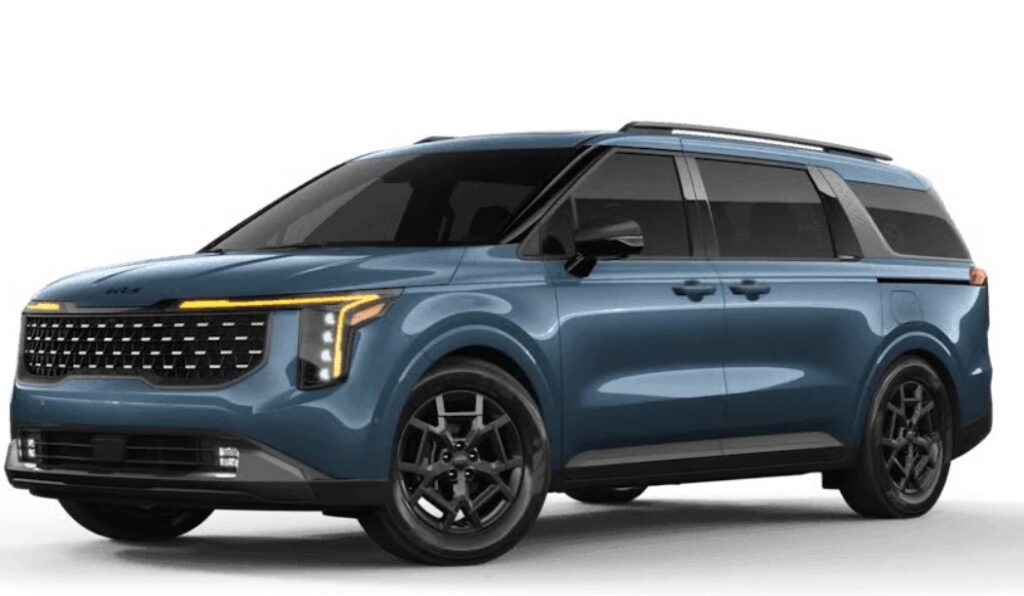
Choosing between the Kia Carnival vs Kluger looks straightforward until we actually start comparing how these two vehicles fit into family life. Both can carry a crowd. Both offer modern safety technology, comfortable cabins, and hybrid options. Both are aimed squarely at buyers who need more room than the average five-seat SUV.
Yet they approach the job from opposite directions.
The Kia Carnival is an eight-seat people mover dressed with SUV-inspired styling. It prioritises passenger access, enormous cargo capacity, third-row usability, and family-friendly convenience.
The Toyota Kluger, meanwhile, is a seven-seat large SUV. It gives us standard hybrid AWD in the current Australian range, higher ground clearance, strong towing ability, and the familiar driving position many SUV buyers prefer.
So which one should we put in the driveway?
For most large families, the Carnival's sheer practicality is difficult to beat. But if our adventures regularly involve rougher roads, towing, or slippery surfaces, the Kluger starts making a compelling argument.
Let's break down the differences that actually matter.
Content in this publication
- Kia Carnival vs Toyota Kluger at a Glance
- The Fundamental Difference: People Mover vs SUV
- Kia Carnival vs Kluger Interior Space
- Carnival Wins the Seat-Count Battle
- Boot Space: Kia Carnival vs Kluger
- Kia Carnival vs Kluger Hybrid Performance
- What About the Kia Carnival Diesel?
- Fuel Economy: Does the Kluger Beat the Carnival?
- Kia Carnival vs Kluger AWD Capability
- Towing Capacity: A Surprise Win for the Kluger
- Dimensions and Parking
- Ground Clearance and Rough-Road Use
- Ride and Driving Experience
- Technology and Cabin Experience
- Safety: Which One Is Better?
- Kia Carnival vs Kluger for a Family of Five
- Kia Carnival vs Kluger for a Family of Seven
- Which Is Better for Road Trips?
- Which Is Better for City Driving?
- Kia Carnival vs Kluger Reliability and Ownership
- Where the Kia Carnival Is Better
- Where the Toyota Kluger Is Better
- Kia Carnival vs Kluger: Which One Should We Buy?
- Conclusion: Kia Carnival vs Kluger Final Verdict
- FAQs About the Kia Carnival vs Kluger
Kia Carnival vs Toyota Kluger at a Glance
The current Australian-market comparison makes the personalities of these vehicles fairly obvious.
| Specification | Kia Carnival | Toyota Kluger |
|---|---|---|
| Vehicle type | People mover | Large SUV |
| Seating | 8 | 7 |
| Current powertrains | 2.2L turbo-diesel / 1.6L turbo hybrid | 2.5L hybrid |
| Drivetrain | Front-wheel drive | AWD |
| Hybrid system output | 180 kW | 184 kW |
| Combined fuel use | 6.5L/100km diesel / 5.8L/100km hybrid | 5.6L/100km hybrid |
| Cargo space, all seats occupied | 627L | 241L |
| Maximum quoted cargo space | 2,827L | 1,150L |
| Braked towing | 2,000kg diesel / 1,000kg hybrid | 2,000kg |
| Length | 5,155mm | 4,966mm |
| Width | 1,995mm | 1,930mm |
| Wheelbase | 3,090mm | 2,850mm |
Kia currently lists the Carnival with an eight-seat interior, while Toyota specifies seven seats for the Kluger. Kia also quotes an enormous 627 litres of luggage capacity with all seats in use, compared with Toyota's 241 litres for the Kluger.
That difference tells us a great deal before we've even driven them.
The Fundamental Difference: People Mover vs SUV
This isn't really a battle between two versions of the same formula.
The Carnival was designed around transporting people. The Kluger was designed as an SUV that happens to accommodate seven.
That distinction affects almost everything.
Why the Carnival Feels Purpose-Built for Families
Sliding rear doors sound like a minor detail until we're wrestling a toddler into a child seat inside a narrow shopping-centre parking bay.
Then they feel like genius.
Depending on grade, the Carnival offers powered sliding doors and a powered tailgate, including hands-free functions on selected versions. Its long 3,090mm wheelbase also gives Kia considerably more physical space to distribute between passengers and luggage.
It is essentially the automotive equivalent of a well-designed family house: plenty of doors, plenty of storage, and far fewer arguments about who sits where.
Why the Kluger Still Feels More Like an SUV
The Toyota gives us conventional rear doors and a more upright SUV format.
Some buyers will immediately prefer that.
Its seating position, AWD system, 2000kg braked towing capacity and greater emphasis on all-road versatility make the Kluger feel more adventurous than the Carnival. Toyota's current Australian Kluger range is exclusively 2.5-litre hybrid and AWD.
If we're regularly leaving sealed roads behind, that becomes important.
Kia Carnival vs Kluger Interior Space
This is where the Carnival starts swinging a very large hammer.
The Kluger isn't cramped. Far from it. It's a proper large family SUV.
But the Carnival is bigger where families usually notice it most.
Second-Row Comfort
Both vehicles can work extremely well with adults or child seats in the second row, but the Carnival benefits from its people-mover architecture.
There's more of a feeling that the second row is a destination rather than merely somewhere passengers sit.
Wide door openings make climbing aboard easier, while sliding doors are especially useful when installing child seats or loading passengers who need extra room.
Kia also offers features such as heated outer second-row seating on selected grades.
Third-Row Usability
Here is an important question we should ask before buying any seven-seat SUV:
Will adults actually use the third row?
If the answer is frequently, the Carnival deserves serious consideration.
Most large SUVs package their third rows beneath a relatively conventional roofline and behind a second row designed primarily for five-seat use. That inevitably introduces compromises.
The Carnival was built around three rows from day one.
Its tall body, long wheelbase and sliding-door access make the back row easier to reach and generally more useful when carrying a full load of passengers.
What About Children?
Both work perfectly well when the third row is predominantly for kids.
But the Carnival provides more flexibility as those kids grow.
That's something families sometimes underestimate. A third row that seems perfectly adequate for an eight-year-old may feel considerably less impressive five years later.
Carnival Wins the Seat-Count Battle
One passenger might not sound like much.
Until we need it.
The Kia Carnival seats eight, versus seven in the Kluger.
That additional centre seat gives us much more flexibility for larger households, grandparents, children's friends, sports teams or airport runs.
For a five-person family, it may not matter.
For a six- or seven-person household, however, that extra seat can transform the vehicle from "large enough" into genuinely useful.
Boot Space: Kia Carnival vs Kluger
If this comparison had a knockout round, cargo capacity would probably be it.
Toyota quotes the Kluger at:
- 241 litres with all three rows in use
- 552 litres with the third row folded
- 1,150 litres with the second and third rows folded
Kia quotes the Carnival at 627 litres with all seats up and as much as 2,827 litres with the rear seating folded into its maximum luggage configuration.
The measurement standards and exact seat configurations shouldn't be treated as perfectly apples-to-apples, but the overall conclusion isn't remotely close.
The Carnival is the cargo champion.
Why That Matters in Real Life
Picture seven people going away for a week.
Seven suitcases.
A stroller.
Food.
Maybe sports equipment.
Perhaps a portable cot.
The problem with many seven-seat SUVs isn't carrying seven people. It's carrying seven people and their belongings simultaneously.
That's exactly where the Carnival's deep rear luggage area pays dividends.
The Kluger becomes much more accommodating once the third row is folded, but if we need the third row and a genuinely useful boot at the same time, the Carnival is the stronger tool.
Kia Carnival vs Kluger Hybrid Performance
Now things get much closer.
The current Carnival hybrid combines a 1.6-litre turbocharged petrol engine with an electric motor for 180kW of system output and 367Nm. It drives through a conventional six-speed automatic transmission.
The current Kluger uses Toyota's 2.5-litre Hybrid Electric System, producing 184kW combined, paired with an automatic CVT and AWD.
On paper, therefore, power is remarkably similar.
Carnival Hybrid Character
The Carnival's turbo-hybrid drivetrain feels conceptually different from Toyota's setup.
Because Kia pairs its electric assistance with a turbocharged engine and stepped automatic transmission, it should appeal to drivers who prefer more conventional gear changes.
The electric motor also supplies its torque immediately, helping a large vehicle move away cleanly in urban traffic.
Kluger Hybrid Character
Toyota's hybrid system is more focused on seamless efficiency.
The CVT doesn't provide the same stepped feeling as a conventional automatic, but that's rather the point. The system can continuously juggle petrol and electric propulsion without demanding much thought from us.
It's the sort of powertrain that quietly gets on with the job.
What About the Kia Carnival Diesel?
Here's where the comparison becomes more interesting.
The Carnival still gives Australian buyers a 2.2-litre turbo-diesel, producing 148kW and 440Nm, paired with an eight-speed automatic.
You may be interested in reading Kia Carnival vs Kia Sorento: Which One Is Better for Your Family?
That chunky torque output suits a heavily loaded people mover beautifully.
If we're regularly carrying eight occupants, travelling long highway distances or towing, the diesel remains compelling.
Its official combined consumption is 6.5L/100km, which is impressive considering the Carnival's size.
Fuel Economy: Does the Kluger Beat the Carnival?
Barely, when comparing hybrids.
Toyota quotes 5.6L/100km combined for the Kluger hybrid AWD.
Kia quotes 5.8L/100km combined for the Carnival hybrid and 6.5L/100km for the diesel.
On paper:
Kluger hybrid → 5.6L/100km
Carnival hybrid → 5.8L/100km
Carnival diesel → 6.5L/100km
That's a remarkably small gap between the two hybrids considering the Carnival is substantially larger.
Of course, official laboratory numbers aren't guarantees of real-world economy. Traffic, temperature, load, driving style and journey length can all change the result.
Which Hybrid Is Better Around Town?
The Kia's official urban figure is particularly interesting: 4.2L/100km for the Carnival hybrid.
That illustrates a classic hybrid advantage. Regenerative braking and electric assistance work particularly well in stop-start environments. Kia's extra-urban figure rises to 6.7L/100km, reinforcing that its efficiency advantage is strongest in urban use.
For school runs and metropolitan commuting, that's appealing.
Kia Carnival vs Kluger AWD Capability
This category belongs to Toyota.
The Carnival's huge practical advantage comes with a trade-off: it remains fundamentally a road-focused front-wheel-drive vehicle.
The Kluger is AWD across the current Australian range.
Does everyone need AWD?
Absolutely not.
For suburban commuting, school runs, highways and ordinary holiday travel, the Carnival's drivetrain is perfectly sensible.
But if we're heading frequently toward:
- gravel roads,
- snowy regions,
- wet rural tracks,
- steep properties,
- campsites,
- boat ramps,
the Kluger's AWD system becomes meaningful.
Is the Kluger an Off-Roader?
We shouldn't confuse AWD with LandCruiser capability.
The Kluger remains a road-biased family SUV.
It's better viewed as having an extra layer of confidence and versatility rather than serious bush-bashing credentials.
The difference is similar to hiking shoes versus work boots: one handles varied terrain more confidently, but neither turns us into an expedition vehicle.
Towing Capacity: A Surprise Win for the Kluger
Here's one category where the powertrain choice radically changes the Carnival's appeal.
The Kluger hybrid has a quoted 2,000kg braked towing capacity.
The Carnival diesel also reaches 2,000kg braked.
However, the Carnival hybrid is rated to just 1,000kg braked.
That's a major difference.
Best Choice for Towing
If we tow a decent-sized caravan, boat or trailer:
Kluger hybrid: excellent proposition
Carnival diesel: equally serious on paper
Carnival hybrid: noticeably more limited
So buyers attracted to the Carnival hybrid need to check their trailer's actual loaded weight rather than assuming the hybrid shares the diesel's tow rating.
Dimensions and Parking
Big families need big vehicles. Unfortunately, shopping-centre parking spaces don't seem to have received the memo.
The Carnival measures 5,155mm long and 1,995mm wide, with a 3,090mm wheelbase.
The Kluger measures 4,966mm long and 1,930mm wide, with a 2,850mm wheelbase.
So the Carnival is approximately:
189mm longer and 65mm wider.
That doesn't sound enormous on paper, but we'll notice it in underground parking garages.
Yet Sliding Doors Fight Back
Ironically, the larger Carnival can actually be easier when passengers are getting in or out beside another vehicle.
Why?
Sliding doors.
We don't need a huge arc of empty space beside the vehicle, which is especially convenient when dealing with child seats.
So the Kluger is easier to physically fit into tight spaces, while the Carnival can be easier to live with once we're parked.
Ground Clearance and Rough-Road Use
The Carnival's latest Australian specifications list minimum ground clearance at approximately 162mm for diesel versions and 172mm for hybrids.
That tells us exactly what kind of machine this is.
It's a road-focused family carrier.
The Kluger's SUV architecture is more appropriate if our driveway resembles a rally stage after heavy rain.
Again, neither decision is objectively better. It depends where the family actually drives.
Ride and Driving Experience
The Carnival can surprise people who haven't driven a modern people mover.
It doesn't feel like an old commercial van with extra seats bolted into the back.
Kia uses independent suspension, including a multi-link rear arrangement, while the vehicle's long wheelbase works in its favour when absorbing larger road undulations.
The result should suit long-distance family touring nicely.
Where the Kluger Has the Edge
The Kluger gives us the more conventional SUV driving experience.
It's shorter, narrower and more naturally suited to drivers who want an elevated SUV feel without moving into an enormous off-roader.
For everyday commuting with five passengers and occasional use of row three, that can make the Toyota feel less like we're driving the family bus.
Technology and Cabin Experience
Feature availability depends heavily on grade, but both vehicles provide the technology we'd expect from modern family cars.
The latest Carnival offers features such as a 12.3-inch infotainment display, available panoramic instrumentation, surround-view monitoring, head-up display, digital centre mirror, Bose audio, connected services and over-the-air updates depending on variant.
Toyota's Kluger GXL, for example, includes a 12.3-inch touchscreen, satellite navigation, wireless Apple CarPlay, wired Android Auto and connected services.
Kia Feels More Like a Family Lounge
Technology aside, the Carnival's strongest trick remains its packaging.
USB connections throughout the cabin, available rear heating, multiple climate-control zones and huge passenger space make it feel purpose-built for road trips.
Toyota counters with a familiar SUV layout that may feel more natural to drivers moving from a RAV4, Prado or other conventional SUV.
Safety: Which One Is Better?
Both manufacturers load these vehicles with modern driver-assistance technology, although specific equipment changes by trim.
The Carnival offers systems including autonomous emergency braking, blind-spot collision avoidance, rear cross-traffic functions, safe-exit technologies and adaptive cruise control, with additional equipment on higher grades.
The Kluger provides Toyota Safety Sense technologies including pre-collision assistance, lane support and radar cruise control, with additional systems such as blind-spot monitoring and rear cross-traffic alert on applicable grades.
We wouldn't choose purely from a feature checklist, though.
Family safety also includes visibility, ease of loading children, passenger space and how comfortably the driver can manage the vehicle every day.
Kia Carnival vs Kluger for a Family of Five
For five people, things become surprisingly close.
We don't necessarily need eight seats, so the Kluger's smaller footprint becomes attractive.
You may be interested in readingKia Carnival vs Kia Sorento: Which One Is Better for Your Family?You may be interested in reading
Kia Carnival vs Toyota Alphard: Which Premium MPV Is Better?With row three folded, Toyota quotes 552 litres of luggage capacity.
That's plenty for everyday family life.
The Kluger is therefore arguably the more balanced choice for a family of five that wants occasional seven-seat capability plus AWD.
The Carnival still wins if we're carrying bulky gear, large prams, bikes, dogs or grandparents regularly.
Kia Carnival vs Kluger for a Family of Seven
Carnival.
This is where the debate becomes much shorter.
Seven people in a Kluger means essentially every passenger seat is occupied and Toyota's quoted cargo capacity drops to 241 litres.
Seven people in a Carnival still leaves us with one spare passenger position and a quoted 627-litre luggage area.
That's a completely different level of practicality.
For permanently large households, the Carnival's body shape simply makes more sense.
Which Is Better for Road Trips?
For long highway holidays, we'd lean toward the Carnival.
Why?
More passenger room.
More luggage room.
Better third-row usefulness.
Sliding doors.
Eight seats.
And either a torquey diesel or efficient hybrid powertrain.
The Kluger fights back if the destination involves gravel roads, towing or terrain where AWD adds reassurance.
So the question isn't simply, "Which is the better road-trip car?"
It's what happens during the final 20 kilometres of our road trip?
Which Is Better for City Driving?
The answer is more nuanced.
The Kluger is shorter and narrower, making it easier to manoeuvre through tight garages.
The Carnival hybrid, however, combines urban-friendly fuel consumption with sliding doors and exceptional passenger access.
For inner-city living with narrow streets, we'd probably appreciate the Kluger's smaller dimensions.
For suburban school-run life, we'd probably appreciate the Carnival's sliding doors every single morning.
Kia Carnival vs Kluger Reliability and Ownership
Toyota has cultivated an extremely strong reputation around its hybrid technology, and the Kluger's system benefits from the brand's long-running experience with electrified drivetrains.
Kia, meanwhile, backs Australian Carnival buyers with its seven-year unlimited-kilometre warranty subject to the manufacturer's conditions, alongside capped-price servicing programs.
Rather than assuming one vehicle will automatically be trouble-free, we'd focus on servicing requirements, warranty coverage, tyre replacement costs, insurance and—if buying used—the individual vehicle's service history.
Diesel Ownership Needs Different Thinking
Carnival diesel buyers should also remember that modern diesels use emissions-control hardware including a diesel particulate filter.
That drivetrain generally makes more sense for drivers doing enough longer-distance running to keep the diesel system operating in the environment it was designed for.
If our entire life consists of five-minute urban journeys, the hybrid becomes much more appealing.
Where the Kia Carnival Is Better
The Carnival makes the strongest case when practical family transportation comes first.
Its biggest advantages are its eight-seat layout, vastly superior cargo space when every seat is occupied, sliding rear doors, more spacious third-row accommodation and tremendous flexibility.
It feels almost unfair to compare boot space.
Toyota brings a large suitcase to the airport.
Kia brings the luggage trolley.
Where the Toyota Kluger Is Better
The Kluger responds with capabilities the Carnival can't fully replicate.
AWD is standard across the current range. Hybrid fuel consumption is excellent. The 2,000kg braked towing rating comfortably beats the Carnival hybrid's 1,000kg figure. And its smaller body should be easier to manage around town.
Most importantly, the Kluger feels like an SUV because it is one.
For many buyers, that matters.
Kia Carnival vs Kluger: Which One Should We Buy?
Our decision can be surprisingly simple.
Choose the Kia Carnival if we regularly use all three rows, have three or more children, need maximum luggage space, carry grandparents or friends frequently, value easy passenger access, or simply want the most practical family vehicle possible.
Choose the Toyota Kluger if we normally travel with five people, only occasionally need seats six and seven, want AWD, tow a substantial trailer, spend more time on gravel or challenging roads, or strongly prefer the SUV format.
Our Pick for Maximum Family Practicality: Kia Carnival
As a pure family machine, the Carnival wins.
Its packaging advantage is simply enormous.
A 627-litre luggage compartment while retaining all eight seats is the sort of specification that solves problems we encounter every week rather than impressing us once during a test drive.
Our Pick for Versatility Beyond the Suburbs: Toyota Kluger
The Kluger is the better all-rounder where terrain and towing enter the equation.
Its AWD hybrid drivetrain delivers a strong combination of 184kW output, 5.6L/100km official combined consumption and 2,000kg braked towing capacity.
That's an excellent trio.
The Simplest Way to Decide
Ask ourselves one question:
Do we need a better family carrier or a more versatile SUV?
Family carrier: Carnival.
SUV: Kluger.
That distinction matters more than almost anything else in this comparison.
Conclusion: Kia Carnival vs Kluger Final Verdict
The Kia Carnival vs Kluger comparison proves why specifications alone don't tell the whole story.
Toyota's Kluger is an impressively complete large SUV. Its hybrid AWD drivetrain is efficient, powerful enough for family duties and capable of towing 2,000kg. It provides seven seats without forcing buyers into something as large or cumbersome as a full-size off-roader.
But the Carnival operates on another level when space becomes the priority.
Eight seats, sliding doors and 627 litres of luggage volume with every seat available make it an extraordinarily useful family vehicle. Fold the rear seating and Kia quotes up to 2,827 litres of cargo capacity.
The Carnival hybrid adds impressive efficiency, while the diesel retains the superior 2,000kg towing rating for buyers who need it.
So we'd give the Kia Carnival the overall win for large-family practicality.
But there is an important caveat.
If AWD, towing and rough-road versatility matter more than maximum cabin space, we'd buy the Toyota Kluger instead.
Neither vehicle is trying to win the other's game. The Carnival is essentially a family lounge on wheels. The Kluger is a family SUV that can carry seven when necessary.
The winner depends on which description sounds more like our life.
FAQs About the Kia Carnival vs Kluger
1. Is the Kia Carnival bigger than the Toyota Kluger?
Yes. The current Carnival is 5,155mm long and 1,995mm wide, compared with 4,966mm and 1,930mm for the Kluger. The Kia also has a considerably longer 3,090mm wheelbase versus the Toyota's 2,850mm.
2. Does the Kia Carnival have more boot space than the Kluger?
Significantly more. Kia quotes 627 litres with all seats in position, while Toyota lists 241 litres for the Kluger with all three rows being used. Different measurement methodologies and configurations can affect direct comparisons, but the Carnival unquestionably provides substantially more luggage room for a fully occupied family.
3. Which is more fuel efficient, the Carnival or Kluger?
Toyota quotes 5.6L/100km combined for the Kluger hybrid, versus Kia's 5.8L/100km for the Carnival hybrid. The Carnival diesel is rated at 6.5L/100km. Real-world consumption will vary.
4. Can the Kia Carnival tow as much as a Toyota Kluger?
It depends on the Carnival engine. The diesel Carnival is rated at 2,000kg braked, matching the Kluger. The Carnival hybrid is rated at only 1,000kg braked, making the Kluger much more suitable for heavier trailers when comparing the two hybrids.
You may be interested in readingKia Carnival vs Kia Sorento: Which One Is Better for Your Family?You may be interested in reading
Kia Carnival vs Toyota Alphard: Which Premium MPV Is Better?You may be interested in reading
Kia Carnival or Similar: The Best Alternatives for Families5. Is the Kia Carnival or Toyota Kluger better for a large family?
The Carnival is generally the stronger choice for a genuinely large family because it accommodates eight people instead of seven and provides substantially more luggage space when all rows are occupied. The Kluger becomes more attractive for smaller families wanting occasional seven-seat flexibility alongside AWD and greater towing capability.
If you want to know other articles similar to Kia Carnival vs Kluger: Which Family Car Makes More Sense? you can visit the category Models.
Honda Passport vs Toyota 4Runner: Which SUV Is Better?
Honda Passport vs Ford Bronco: Which SUV Is Better?
Honda Passport vs Ford Explorer: Which SUV Is Better?
Honda Passport or Pilot: Which SUV Is Better?
Honda Passport vs Jeep Grand Cherokee: Which SUV Is Better?
Honda Passport vs Nissan Pathfinder: Which SUV Is Better?
Leave a Reply
More content of your interest