
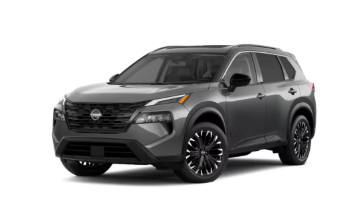
Nissan Rogue Competitors: Best Alternatives to the Rogue

The Nissan Rogue sits right in the middle of one of the most competitive vehicle categories in America: the compact SUV segment. If we are shopping for a practical family crossover, there are plenty of Nissan Rogue competitors offering similar passenger space, fuel economy, technology, all-wheel drive, and cargo capacity.
Some alternatives focus on fuel economy. Others offer more cargo room, standard all-wheel drive, hybrid powertrains, stronger performance, or better off-road capability.
For the 2026.5 model year, the Nissan Rogue continues to use its 1.5-liter VC-Turbo three-cylinder engine producing 201 horsepower and 225 lb-ft of torque. Front-wheel-drive versions can achieve up to an EPA-estimated 29 mpg city and 36 mpg highway. Nissan also offers Intelligent AWD on compatible trims.
So, what SUVs compete with the Nissan Rogue?
The main Nissan Rogue competitors include:
- Honda CR-V
- Toyota RAV4
- Hyundai Tucson
- Kia Sportage
- Subaru Forester
- Mazda CX-50
- Chevrolet Equinox
- Volkswagen Tiguan
- Mitsubishi Outlander
- Ford Escape
Let's compare them and see how each stacks up against the Rogue.
Content in this publication
- What Type of SUV Is the Nissan Rogue?
- Nissan Rogue Competitors Comparison
- 1. Honda CR-V
- 2. Toyota RAV4
- 3. Kia Sportage
- 4. Hyundai Tucson
- 5. Subaru Forester
- 6. Mazda CX-50
- 7. Chevrolet Equinox
- 8. Volkswagen Tiguan
- 9. Mitsubishi Outlander
- 10. Ford Escape
- Which Nissan Rogue Competitor Has the Most Cargo Space?
- Which Nissan Rogue Competitor Gets the Best Gas Mileage?
- Which Nissan Rogue Alternative Is Best for AWD?
- Which Rogue Competitor Is Best for Families?
- Which Nissan Rogue Competitor Is Best for Performance?
- Nissan Rogue vs Competitors: Where Does the Rogue Stand Out?
- Nissan Rogue Competitors to Consider by Priority
- Are There Cheaper Alternatives to the Nissan Rogue?
- Is the Nissan Rogue Better Than Its Competitors?
- Frequently Asked Questions
- Final Thoughts on the Best Nissan Rogue Competitors
What Type of SUV Is the Nissan Rogue?
The Nissan Rogue is a five-passenger compact crossover SUV.
It competes primarily with vehicles measuring roughly 180 to 186 inches long and offering two rows of seating.
The Rogue combines several characteristics that make compact SUVs popular:
- Five-passenger seating
- Available AWD
- Good highway fuel economy
- Flexible cargo space
- Comfortable rear seating
- Modern driver-assistance technology
- Manageable exterior dimensions
- Higher seating position than a sedan
The current Rogue offers around 36 cubic feet of cargo capacity behind the second row depending on configuration, while maximum cargo capacity approaches 73 cubic feet with the rear seats folded.
That places it directly against vehicles such as the Honda CR-V, Toyota RAV4, Sportage, Tucson, and Forester.
Nissan Rogue Competitors Comparison
| SUV | Main Strength | Hybrid Available? | AWD Available? | Seats |
|---|---|---|---|---|
| Nissan Rogue | Efficient turbo engine | PHEV model available separately | Yes | 5 |
| Honda CR-V | Space and efficiency | Yes | Yes | 5 |
| Toyota RAV4 | Hybrid efficiency and versatility | Yes | Yes | 5 |
| Kia Sportage | Cargo and rear-seat space | Yes | Yes | 5 |
| Hyundai Tucson | Technology and practicality | Yes | Yes | 5 |
| Subaru Forester | Standard AWD | Yes | Standard | 5 |
| Mazda CX-50 | Driving experience | Yes | Standard | 5 |
| Chevrolet Equinox | Value and technology | No conventional hybrid | Yes | 5 |
| Volkswagen Tiguan | Refined interior | No conventional hybrid | Yes | 5 |
| Mitsubishi Outlander | Available third row | PHEV available | Yes | Up to 7 |
Specifications and powertrain availability can vary by trim and model year.
1. Honda CR-V
The Honda CR-V is arguably one of the closest Nissan Rogue competitors because the two SUVs target almost exactly the same buyer.
Both offer:
- Two-row seating
- Five-passenger capacity
- Front-wheel drive
- Available AWD
- Turbocharged gasoline engines
- Similar exterior dimensions
- Large cargo areas
- Extensive driver-assistance technology
Nissan Rogue vs Honda CR-V
The Rogue's 1.5-liter VC-Turbo engine produces 201 horsepower, while the regular 2026 CR-V uses a 1.5-liter turbocharged four-cylinder producing 190 horsepower.
Honda also offers a 204-horsepower hybrid system.
Fuel economy is another important difference. The gasoline CR-V reaches approximately 30 mpg combined with front-wheel drive, while hybrid versions can achieve considerably better efficiency. The Rogue can reach around 32 mpg combined in certain front-wheel-drive configurations.
Cargo capacity is one of Honda's strengths. The CR-V offers up to 76.5 cubic feet with the rear seats folded.
Who Should Consider the CR-V?
The CR-V makes sense if we prioritize:
- Maximum cargo flexibility
- Hybrid fuel economy
- Spacious rear seating
- Traditional four-cylinder power
- A simple family-oriented interior
The Rogue is particularly interesting if we prefer stronger turbo torque and impressive highway fuel economy without purchasing a hybrid.
2. Toyota RAV4
No list of Nissan Rogue competitors would be complete without the Toyota RAV4.
The RAV4 has long competed against the Rogue for buyers wanting a practical five-seat crossover.
For 2026, Toyota introduced an all-new sixth-generation RAV4 and moved the U.S. lineup entirely to electrified powertrains. Buyers can choose between hybrid and plug-in hybrid models rather than a traditional gasoline-only version.
Nissan Rogue vs Toyota RAV4
This creates one of the biggest differences between the two SUVs.
The Rogue continues to offer a conventional gasoline-powered turbo engine, while the RAV4 focuses on hybrid technology.
The 2026 RAV4 Hybrid produces up to 236 combined horsepower with AWD or 226 horsepower with front-wheel drive. Toyota says certain FWD models can achieve a manufacturer-estimated 44 mpg combined.
That gives the RAV4 a major fuel-economy advantage.
However, buyers who simply want a conventional gasoline vehicle without a hybrid battery system may find the Rogue more straightforward.
RAV4 Advantages
The RAV4 stands out for:
- Excellent hybrid efficiency
- Available plug-in hybrid
- Strong combined horsepower
- Available AWD
- Multiple rugged and sporty trims
- Up to 3,500 pounds of towing capacity on certain AWD configurations
The Rogue counters with a relatively simple gasoline powertrain lineup and competitive passenger and cargo space.
3. Kia Sportage
The Kia Sportage has become an increasingly serious Rogue rival.
One reason is interior space.
The 2026 Sportage offers approximately 39.6 cubic feet of cargo space behind the second row and about 41.3 inches of rear-seat legroom, giving it impressive practicality for a compact SUV.
Nissan Rogue vs Kia Sportage
The Rogue provides roughly 36 cubic feet behind its rear seats, depending on trim, meaning the Sportage can provide slightly more space for groceries, luggage, strollers, and everyday cargo.
The Kia also offers:
- Gasoline powertrains
- Hybrid versions
- Plug-in hybrid versions
- Available AWD
- X-Line and X-Pro variants
- Large dashboard displays
The 2026 redesign also gives the Sportage an updated interior with available dual 12.3-inch displays.
Why Consider the Sportage?
The Sportage is especially attractive if passenger and cargo space are priorities.
Families frequently carrying adults in the rear seats may also appreciate its generous second-row legroom.
4. Hyundai Tucson
The Hyundai Tucson competes closely with both the Rogue and Sportage.
Its combination of interior space, technology, available hybrid powertrains, and competitive equipment makes it one of the most important alternatives in this segment.
The regular 2026 Tucson uses a 2.5-liter four-cylinder producing 187 horsepower.
Front-wheel-drive versions are rated at approximately 25 mpg city, 33 highway, and 28 combined, while AWD versions return approximately 26 mpg combined.
Nissan Rogue vs Hyundai Tucson
The Rogue has more horsepower:
- Rogue: 201 hp
- Tucson: 187 hp
It also offers better EPA fuel economy than the conventional gasoline Tucson in comparable FWD configurations.
The Tucson fights back with excellent interior packaging.
Hyundai lists up to 41.2 cubic feet of cargo space using its measurement method, or 38.7 cubic feet under SAE measurements.
Tucson Strengths
We might prefer the Tucson for:
- Spacious cabin
- Large cargo area
- Hybrid availability
- Plug-in hybrid availability
- Large infotainment displays
- Strong feature content
The Rogue may appeal more to shoppers wanting stronger gasoline-engine performance while retaining good efficiency.
5. Subaru Forester
The Subaru Forester takes a slightly different approach.
Where many compact SUVs make AWD optional, the Forester includes Subaru's Symmetrical All-Wheel Drive as standard.
That immediately makes it one of the most interesting Nissan Rogue alternatives for drivers regularly dealing with:
- Snow
- Gravel roads
- Rural roads
- Mountain areas
- Wet conditions
- Outdoor recreation
Nissan Rogue vs Subaru Forester
The Rogue is available with front-wheel drive or AWD, allowing shoppers to prioritize fuel economy or traction.
The Forester includes AWD throughout the lineup.
For 2026, Subaru also offers both gasoline and hybrid Forester variants. Gas-powered versions can achieve up to approximately 26 mpg city and 33 mpg highway, while selected hybrids improve efficiency further.
You may be interested in reading Nissan Rogue S vs SV: Which Trim Should You Buy?
Why Choose the Forester?
The Forester's biggest advantages include:
- Standard AWD
- Excellent outward visibility
- Practical cabin design
- Good ground clearance
- Adventure-oriented versions
- Hybrid availability
Drivers who spend most of their time commuting on highways may appreciate the Rogue's higher highway efficiency, while outdoor-oriented buyers may prefer the Subaru's standard AWD approach.
6. Mazda CX-50
Drivers who want something sportier should consider the Mazda CX-50.
Mazda tends to emphasize steering feel, handling, interior design, and driving experience more than many traditional family crossovers.
Nissan Rogue vs Mazda CX-50
The Rogue focuses heavily on comfort, practicality, efficiency, and family use.
The CX-50 adds:
- Standard AWD
- More driver-focused handling
- Available turbocharged performance
- Upscale interior materials
- Rugged exterior styling
- Hybrid availability
The 2026 CX-50 Hybrid produces 219 total system horsepower and is rated at approximately 39 mpg city, 37 highway, and 38 combined.
Cargo space is smaller than some class leaders, however, with approximately 31 cubic feet behind the rear seats depending on configuration.
Who Should Buy the CX-50?
The CX-50 makes sense if we want a compact SUV that feels more engaging behind the wheel.
The Rogue is likely the more practical choice when maximum passenger comfort and everyday fuel efficiency are higher priorities.
7. Chevrolet Equinox
The Chevrolet Equinox is another direct Rogue rival.
The latest generation emphasizes technology, rugged styling, and value.
Its standard 1.5-liter turbocharged engine produces 175 horsepower, while AWD is available. Chevrolet also rates the Equinox to tow up to 1,500 pounds when properly equipped.
Nissan Rogue vs Chevrolet Equinox
Engine output favors the Nissan:
- Nissan Rogue: 201 hp
- Chevrolet Equinox: 175 hp
Both offer available AWD and similar overall dimensions.
The Equinox may attract buyers who prefer Chevrolet's infotainment ecosystem and more truck-inspired styling.
The Rogue offers significantly more torque than many traditional naturally aspirated compact SUVs, with 225 lb-ft from its VC-Turbo engine.
8. Volkswagen Tiguan
The Volkswagen Tiguan competes with the Rogue while offering a distinctly European design.
The newest Tiguan places greater emphasis on interior technology, styling, and premium-feeling materials.
Nissan Rogue vs Volkswagen Tiguan
The 2026 Tiguan provides approximately 33.8 cubic feet behind the second row and 69.8 cubic feet with the rear seats folded.
The Rogue offers slightly greater maximum cargo capacity.
Volkswagen's 4MOTION AWD system is available on several Tiguan trims and standard on selected high-performance configurations.
Tiguan Strengths
Consider the Tiguan if we prioritize:
- Refined road manners
- Modern cabin design
- Large displays
- European styling
- Available AWD
The Rogue remains especially competitive for fuel efficiency and cargo flexibility.
9. Mitsubishi Outlander
The Mitsubishi Outlander deserves attention because it offers something unusual among Rogue competitors: an available third row.
The third row is small, but it gives the Outlander seating flexibility that most compact SUVs cannot provide.
Nissan Rogue vs Mitsubishi Outlander
Both vehicles share similar compact-crossover dimensions, but the Outlander can accommodate up to seven passengers in certain configurations.
Mitsubishi also offers the Outlander PHEV, giving buyers a plug-in hybrid option.
The Rogue remains strictly focused on five-passenger practicality.
Why Consider the Outlander?
The Outlander could make more sense when we occasionally need additional seating.
The Rogue is better suited to shoppers who would rather dedicate available interior space to five passengers and cargo.
10. Ford Escape
The Ford Escape is another established compact SUV competitor.
Like the Rogue, it prioritizes daily usability rather than serious off-road performance.
Depending on model and configuration, buyers can find gasoline, hybrid, and plug-in hybrid options.
Nissan Rogue vs Ford Escape
One of the Escape's advantages is powertrain variety.
However, the Rogue's VC-Turbo engine offers an appealing balance between torque and fuel economy without requiring an electrified powertrain.
The two vehicles are particularly close competitors for commuters and small families looking for a relatively efficient crossover.
Which Nissan Rogue Competitor Has the Most Cargo Space?
Cargo measurements vary slightly depending on trim, measurement standards, spare tires, moonroofs, hybrid components, and adjustable cargo floors.
Among the Rogue's major competitors, however, the Honda CR-V, Hyundai Tucson, and Kia Sportage are particularly strong choices for cargo capacity.
The CR-V offers up to 76.5 cubic feet with the rear seats folded.
The 2026 Sportage offers 39.6 cubic feet behind the rear seats and up to approximately 74.1 cubic feet with them folded.
The Rogue remains competitive with roughly 36 cubic feet behind the second row and around 73 cubic feet maximum depending on configuration.
Which Nissan Rogue Competitor Gets the Best Gas Mileage?
Hybrid SUVs have a clear advantage.
Models worth considering include:
- Toyota RAV4 Hybrid
- Honda CR-V Hybrid
- Hyundai Tucson Hybrid
- Kia Sportage Hybrid
- Subaru Forester Hybrid
- Mazda CX-50 Hybrid
The 2026 RAV4 represents an especially significant change because Toyota eliminated the conventional gasoline-only powertrain from the U.S. lineup and moved completely to hybrid and plug-in hybrid versions.
Among conventional gasoline compact SUVs, however, the Rogue remains impressively efficient.
Selected front-wheel-drive Rogue configurations reach approximately 29 mpg city, 36 highway, and 32 combined.
Which Nissan Rogue Alternative Is Best for AWD?
The Subaru Forester is one of the most obvious alternatives for drivers prioritizing all-weather traction because AWD is standard throughout the lineup.
Mazda also makes AWD standard on the CX-50.
The Rogue gives us more flexibility because buyers who do not need AWD can stay with front-wheel drive and potentially benefit from slightly better fuel economy and a lower purchase price.
Which Rogue Competitor Is Best for Families?
Several vehicles make strong family SUVs.
The Honda CR-V offers exceptional cargo capacity and a roomy rear seat.
The Kia Sportage provides excellent rear legroom and cargo space.
The Hyundai Tucson combines plenty of interior room with strong technology.
You may be interested in readingNissan Rogue S vs SV: Which Trim Should You Buy?You may be interested in reading
Nissan Rogue SL vs SV: Which Trim Is the Better Choice?The Mitsubishi Outlander adds a small third row.
Meanwhile, the Rogue remains a strong all-rounder thanks to its comfortable seating, useful cargo area, available three-zone climate control, and available family-friendly features such as rear door sunshades.
Which Nissan Rogue Competitor Is Best for Performance?
Performance means different things depending on what we want.
For a sportier driving experience, the Mazda CX-50 deserves attention.
For electrified power, the redesigned Toyota RAV4 offers significantly stronger total system horsepower than the standard Rogue on several configurations.
The Rogue's advantage is torque. Its small VC-Turbo engine generates 225 lb-ft, which is substantial for a mainstream gasoline compact SUV.
That gives it responsive low- and mid-range acceleration without requiring a larger engine.
Nissan Rogue vs Competitors: Where Does the Rogue Stand Out?
The compact SUV market has become incredibly competitive, so there isn't one area where the Rogue dominates every rival.
Instead, its appeal comes from balancing several characteristics.
Efficient Gasoline Engine
Drivers who want excellent fuel economy but do not necessarily want a hybrid should pay attention to the Rogue.
Up to 36 mpg highway is impressive for a conventionally powered compact SUV.
Strong Torque
The Rogue produces 225 lb-ft from just 1.5 liters.
That gives the Nissan substantially more torque than several naturally aspirated four-cylinder competitors.
Comfortable Interior
Passenger comfort remains one of the Rogue's strongest characteristics.
Nissan lists approximately 38.5 inches of rear legroom, providing adults with usable space in the second row.
Available AWD
Buyers can choose between FWD and Intelligent AWD instead of paying for AWD when they do not need it.
Useful Cargo Capacity
The Rogue provides enough space for luggage, groceries, sports equipment, strollers, and typical family needs without becoming a larger midsize SUV.
Nissan Rogue Competitors to Consider by Priority
Instead of asking which competitor is universally better, it can be more useful to choose based on what matters most.
For hybrid fuel economy:
Toyota RAV4 or Honda CR-V Hybrid.
For cargo space:
Honda CR-V, Kia Sportage, or Hyundai Tucson.
For standard AWD:
Subaru Forester or Mazda CX-50.
For sporty driving:
Mazda CX-50.
For occasional seven-passenger seating:
Mitsubishi Outlander.
For a refined European feel:
Volkswagen Tiguan.
For gasoline fuel economy and strong torque:
Nissan Rogue.
This is why cross-shopping is particularly important in this segment. Each manufacturer approaches the same basic compact-SUV formula differently.
Are There Cheaper Alternatives to the Nissan Rogue?
Pricing changes regularly according to trim, incentives, destination charges, and dealer inventory, but several Rogue competitors typically occupy a similar price range.
Models worth comparing include:
- Chevrolet Equinox
- Kia Sportage
- Hyundai Tucson
- Subaru Forester
- Honda CR-V
Rather than comparing only base MSRP, we should compare similarly equipped trims.
A cheaper base model may become more expensive once we add:
- AWD
- Heated seats
- Power liftgate
- Larger touchscreen
- Blind-spot monitoring
- Adaptive cruise control
- Premium audio
- Panoramic roof
Comparing equipment level rather than simply starting price gives us a much more realistic picture of value.
Is the Nissan Rogue Better Than Its Competitors?
The Nissan Rogue remains one of the most balanced compact SUVs on the market.
Its biggest strengths include its efficient VC-Turbo engine, strong torque, comfortable interior, available AWD, and practical cargo space.
But competitors excel in particular areas.
The Honda CR-V provides greater maximum cargo capacity and an excellent hybrid option.
The Toyota RAV4 delivers outstanding hybrid efficiency and stronger electrified performance.
The Sportage and Tucson provide exceptional interior packaging.
The Forester brings standard AWD.
The CX-50 offers a sportier driving experience.
The right choice therefore depends heavily on how we plan to use the vehicle.
Frequently Asked Questions
What vehicles compete with the Nissan Rogue?
The Nissan Rogue primarily competes with the Honda CR-V, Toyota RAV4, Hyundai Tucson, Kia Sportage, Subaru Forester, Mazda CX-50, Chevrolet Equinox, Volkswagen Tiguan, Ford Escape, and Mitsubishi Outlander.
What Toyota is comparable to the Nissan Rogue?
The Toyota RAV4 is the closest Toyota competitor to the Nissan Rogue. Both are five-passenger compact SUVs with similar dimensions, cargo capacity, available AWD, and family-oriented interiors. The major difference for 2026 is that the RAV4 is offered exclusively with hybrid or plug-in hybrid powertrains in the U.S.
What Honda is comparable to the Nissan Rogue?
The Honda CR-V is Honda's direct Nissan Rogue competitor. The CR-V offers gasoline and hybrid powertrains, available AWD, seating for five, and up to 76.5 cubic feet of cargo space.
Is the Nissan Rogue bigger than the Honda CR-V?
The Rogue and CR-V are extremely close in overall size. The Rogue measures around 183 inches long, while both provide spacious two-row cabins. The CR-V has an advantage in maximum cargo volume, while passenger-space differences depend on the specific measurement being compared.
What is the closest competitor to the Nissan Rogue?
The Honda CR-V, Toyota RAV4, Hyundai Tucson, and Kia Sportage are probably the Rogue's closest direct competitors because all four target similar buyers and provide comparable passenger space, cargo room, technology, fuel economy, and available AWD.
Final Thoughts on the Best Nissan Rogue Competitors
There has probably never been a better selection of compact SUVs.
The Honda CR-V is an excellent option for families needing maximum cargo space.
The Toyota RAV4 stands out for hybrid fuel economy and electrified power.
The Kia Sportage offers impressive passenger and cargo space.
The Hyundai Tucson provides a spacious cabin and plenty of technology.
The Subaru Forester makes sense for buyers who want standard AWD.
The Mazda CX-50 brings more driving enjoyment to the category.
And the Nissan Rogue continues to distinguish itself with excellent gasoline fuel economy, strong turbocharged torque, comfortable seating, available AWD, and practical dimensions.
When comparing Nissan Rogue competitors, we should therefore consider more than horsepower or starting price. Fuel economy, cargo space, rear-seat comfort, powertrain type, AWD availability, technology, and long-term ownership needs can all change which compact SUV makes the most sense for us.
You may be interested in readingNissan Rogue S vs SV: Which Trim Should You Buy?You may be interested in reading
Nissan Rogue SL vs SV: Which Trim Is the Better Choice?You may be interested in reading
Nissan Rogue Best Years: Most Reliable Models to BuyFor shoppers who want a traditional gasoline compact SUV without sacrificing efficiency, practicality, or useful performance, the Rogue remains a very competitive option.
If you want to know other articles similar to Nissan Rogue Competitors: Best Alternatives to the Rogue you can visit the category Models.
Nissan Rogue PHEV vs Outlander PHEV: Which Plug-In Hybrid SUV Is Better?
Nissan Rogue Best and Worst Years: Which Models Should You Buy or Avoid?
Nissan Rogue Model Years: Generations, Changes and Complete Guide
Nissan Rogue Best Years: Most Reliable Models to Buy
Nissan Rogue SL vs SV: Which Trim Is the Better Choice?
Nissan Rogue S vs SV: Which Trim Should You Buy?
Leave a Reply
More content of your interest