
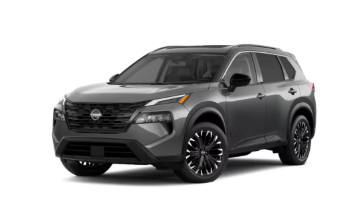
Nissan Rogue Best and Worst Years: Which Models Should You Buy or Avoid?

If we are shopping for a used Nissan Rogue, choosing the right model year can make a surprisingly big difference. The Rogue has been one of Nissan’s most popular compact SUVs for years, offering good interior space, comfortable driving manners, practical cargo capacity, and competitive fuel economy.
However, reliability has not been completely consistent throughout its history.
Some Nissan Rogue years have developed a reputation for CVT transmission problems, loss of acceleration, automatic emergency braking issues, or engine concerns. Other years have proven to be much less troublesome and can represent excellent value on the used-car market.
So, what are the Nissan Rogue best and worst years?
For most used buyers, 2020 is one of the strongest Nissan Rogue years to consider, with the 2019 and certain 2021 models also deserving attention. On the other hand, 2011, 2012, 2013, 2014, 2015, and 2016 deserve considerably more caution, mainly because of their history of CVT-related complaints.
The 2013 Nissan Rogue is particularly notable. Complaint data collected by CarComplaints identifies the 2013 Rogue as its worst model year overall, with transmission problems—especially loss of acceleration—among the most frequently reported issues.
There is also an important new consideration. Certain newer Rogues equipped with Nissan's 1.5-liter VC-Turbo engine have been included in major engine-related recalls, meaning shoppers looking at 2021-2025 vehicles should check the VIN and recall completion history carefully.
Content in this publication
- Nissan Rogue Best and Worst Years at a Glance
- Best Nissan Rogue Years
- 2019 Nissan Rogue
- 2021 Nissan Rogue
- Are 2017 and 2018 Nissan Rogues Good?
- Worst Nissan Rogue Years
- 2013 Nissan Rogue: The Year We Would Be Most Careful With
- 2012 Nissan Rogue
- 2011 Nissan Rogue
- Why Older Nissan Rogue CVTs Developed Problems
- 2014 Nissan Rogue
- 2015 Nissan Rogue
- 2016 Nissan Rogue
- What About the 2022 Nissan Rogue?
- 2021-2024 Nissan Rogue Engine Recall
- 2023-2025 Nissan Rogue Engine Concerns
- Nissan Rogue Generations Explained
- Best Nissan Rogue Year for Reliability
- Best Nissan Rogue Year on a Budget
- Which Nissan Rogue Years Have the Most Transmission Problems?
- How Long Can a Good Nissan Rogue Last?
- What to Check Before Buying a Used Nissan Rogue
- Should We Avoid Nissan Rogues With High Mileage?
- Nissan Rogue Best and Worst Years: Final Verdict
- Frequently Asked Questions
Nissan Rogue Best and Worst Years at a Glance
Here is our quick overview before we examine each generation in more detail.
| Model Year | General Used-Car Assessment | Main Reason |
|---|---|---|
| 2008 | Caution | Early CVT complaints |
| 2009 | Caution | CVT-related problems |
| 2010 | Average/Caution | Aging first-generation CVT |
| 2011 | Avoid if possible | Numerous transmission complaints |
| 2012 | Avoid if possible | Loss of acceleration/CVT issues |
| 2013 | One of the worst | Heavy transmission complaint history |
| 2014 | Caution | CVT campaign and early redesign year |
| 2015 | Caution | CVT and other reliability complaints |
| 2016 | Caution | CVT durability concerns |
| 2017 | Average | Improved, but AEB concerns exist |
| 2018 | Average | Improved overall; AEB complaints |
| 2019 | Good used option | Mature second generation |
| 2020 | One of the best | Mature design and fewer major drivetrain complaints |
| 2021 | Good with conditions | Redesigned; 2.5L models can be attractive |
| 2022 | Caution | VC-Turbo engine needs recall verification |
| 2023 | Caution | Engine recall considerations |
| 2024 | Caution | Engine recall considerations |
| 2025 | Too new/Caution | Engine recall and limited long-term data |
| 2026 | Too new to judge | Insufficient long-term reliability history |
This does not mean every Rogue from a "bad" year will fail or every Rogue from a "good" year will be trouble-free. Maintenance history, mileage, driving conditions, previous ownership, and individual vehicle condition are equally important.
Best Nissan Rogue Years
If reliability and ownership costs are our priorities, a few Rogue years stand out more positively than others.
2020 Nissan Rogue
The 2020 Nissan Rogue is arguably one of the safest bets among older used Rogues.
By 2020, Nissan had been producing the second-generation Rogue since the 2014 model year, meaning many of the early-production problems had already been addressed.
The 2020 model continued using Nissan's naturally aspirated 2.5-liter four-cylinder engine paired with the Xtronic CVT.
Complaint aggregation shows relatively few transmission-specific complaints compared with earlier Rogues. CarComplaints currently lists only two owner-reported transmission problem categories for the 2020 model on its transmission page, compared with dozens for several earlier years.
Another advantage is safety.
The 2019-2020 Rogue received an IIHS Top Safety Pick designation when equipped with specific headlights. Its available safety technology included automatic emergency braking, pedestrian detection, blind-spot monitoring, and rear cross-traffic alert.
Why We Like the 2020 Rogue
The major advantages include:
- Mature second-generation platform
- Proven 2.5-liter naturally aspirated engine
- Lower transmission complaint volume than early Rogue years
- Good passenger and cargo space
- Strong availability on the used market
- Modern driver-assistance equipment
- No dependence on the newer 1.5-liter VC-Turbo engine
For someone wanting a Rogue without spending new-car money, the 2020 model is one of the first years we would investigate.
2019 Nissan Rogue
The 2019 Rogue is another worthwhile used option, particularly when we can find one with a complete maintenance history.
It shares most of its mechanical components with the 2020 Rogue and benefits from several years of improvements to the second-generation platform.
It also avoided the 1.5-liter turbocharged three-cylinder engine introduced later.
What to Check on a 2019 Rogue
The 2019 model is not perfect.
Automatic emergency braking generated complaints during this era, so during a test drive we should make sure the forward collision and braking systems operate normally and check whether relevant software updates or service campaigns were completed.
CarComplaints also records some transmission, brake, electrical, and engine complaints for the 2019 model, although its overall pattern is considerably less alarming than what we see with some early Rogues.
A well-maintained 2019 Rogue can still be a very practical used SUV.
2021 Nissan Rogue
The 2021 model year deserves a more nuanced recommendation.
This was the beginning of the third-generation Nissan Rogue, bringing a much more modern interior, improved technology, better refinement, and updated styling.
The standard engine originally offered for the U.S. Rogue was a 2.5-liter four-cylinder producing 181 horsepower and 181 lb-ft of torque, according to Nissan's 2021 brochure.
That naturally aspirated four-cylinder is particularly interesting for used buyers who want the newer Rogue platform without automatically choosing the later 1.5-liter VC-Turbo powertrain.
Why Engine Identification Matters
Some 2021 vehicles are associated in Nissan's parts and maintenance databases with both 2.5-liter and 1.5-liter engine configurations, and certain 2021-2024 Rogues equipped with the 1.5-liter VC-Turbo have been included in an engine-bearing recall.
Therefore, rather than buying based purely on model year, we would verify:
- VIN
- Exact engine
- Production date
- Open recalls
- Completed recall repairs
- Oil-change records
- Previous engine repairs
A clean 2021 Rogue with the 2.5-liter four-cylinder and a solid maintenance record can be an attractive alternative to the older 2019-2020 generation.
Are 2017 and 2018 Nissan Rogues Good?
The 2017 and 2018 models sit somewhere in the middle.
They can be good values because they are newer than the most problematic early Rogues while usually costing less than 2019-2021 vehicles.
However, they have one particular issue worth knowing about.
Automatic Emergency Braking Issues
NHTSA investigated reports involving unintended activation of automatic emergency braking on 2017-2018 Nissan Rogue vehicles.
Nissan reported that certain roadway environments could be incorrectly interpreted as objects in the vehicle's path. Nissan released an AEB software update in 2018 intended to improve object recognition.
That does not make every 2017 or 2018 Rogue unreliable.
In fact, the 2018 Rogue performed well in IIHS crashworthiness testing and received a Top Safety Pick award when equipped with qualifying headlights.
But if we are considering one, checking the AEB system and service history should be part of our pre-purchase inspection.
Worst Nissan Rogue Years
The years that deserve the most attention are concentrated primarily in the first generation and early part of the second generation.
Transmission reliability is the biggest recurring concern.
2013 Nissan Rogue: The Year We Would Be Most Careful With
If someone asks us which Nissan Rogue year has the worst reputation, the 2013 Rogue is usually near the top of the list.
The biggest concern is its CVT.
CarComplaints identifies the 2013 Rogue as its worst Rogue model year overall and lists transmission problems as the vehicle's most problematic category. One frequently reported problem is loss of acceleration.
Common 2013 Nissan Rogue Problems
Reported problems can include:
- Loss of acceleration
- CVT overheating
- Transmission whining
- Hesitation
- Shuddering
- Reduced power
- Expensive transmission repairs
- Transmission failure
The risk becomes more significant when shopping for high-mileage examples with little or no transmission service history.
Unless the price is extremely attractive and the vehicle passes a thorough professional inspection, we would generally look for a later Rogue.
2012 Nissan Rogue
The 2012 Rogue has a similar problem profile.
You may be interested in reading Nissan Rogue PHEV vs Outlander PHEV: Which Plug-In Hybrid SUV Is Better?
Transmission-related complaints include loss of acceleration and CVT problems, sometimes appearing after substantial highway driving or when the transmission becomes hot.
Complaint data places the 2012 model among the Rogue years with a relatively high number of reported transmission problems.
For someone considering a 2012 Rogue, transmission behavior should be examined very carefully during an extended test drive.
2011 Nissan Rogue
The 2011 model also deserves caution.
CarComplaints lists the 2011 Rogue among the worst Rogue years for transmission problems, with reports including vehicles that would not accelerate properly or would stop accelerating while driving.
Again, the CVT is the main reason we would hesitate.
Why Older Nissan Rogue CVTs Developed Problems
Nissan used continuously variable transmissions extensively because CVTs can keep an engine operating efficiently while providing smooth acceleration.
The problem was that some earlier Rogue CVTs experienced excessive heat under demanding driving conditions.
Nissan issued a technical bulletin covering certain 2011-2013 Rogue and 2014-2015 Rogue Select vehicles concerning reduced performance triggered by the CVT temperature-protection system.
Conditions mentioned in the bulletin included extended high-speed driving, high ambient temperatures, and long or steep hills.
That history helps explain why we repeatedly hear about older Rogues suddenly losing acceleration during extended highway driving.
2014 Nissan Rogue
The 2014 model represented an important redesign.
It looked better, provided improved interior space, and became a more competitive compact SUV.
Unfortunately, being the first year of a new generation usually adds some uncertainty.
The CVT remained a concern.
Nissan later conducted a voluntary service campaign involving approximately 473,566 model-year 2014-2016 Rogues to reprogram the CVT software.
According to Nissan's campaign documentation, under certain driving conditions hydraulic pressure could decrease and cause belt slip within the CVT, potentially resulting in poor acceleration and durability concerns.
That makes the 2014 Rogue another year we would inspect particularly carefully.
2015 Nissan Rogue
The 2015 Nissan Rogue also falls into our higher-caution category.
Transmission complaints continued, while owners also reported issues involving air conditioning, electrical components, and other systems.
A 2015 Rogue with low mileage and excellent maintenance records may still provide years of service, but the model year would not be our first choice when similarly priced 2019 or 2020 Rogues are available.
2016 Nissan Rogue
The 2016 model is somewhat improved but still falls within the population covered by Nissan's CVT software service campaign.
That campaign involved 2014-2016 Rogue vehicles and was intended to address CVT belt-slip and durability concerns.
If we are looking at a 2016 Rogue, we should confirm whether the campaign work was completed and pay close attention to how the CVT behaves.
CVT Warning Signs During a Test Drive
Watch for:
- Delayed acceleration
- Engine RPM rising without proportional acceleration
- Shuddering
- Jerking
- Whining noises
- Hesitation from a stop
- Transmission overheating warnings
- Loss of power after extended driving
Any of these symptoms deserve professional diagnosis before purchase.
What About the 2022 Nissan Rogue?
The 2022 Rogue is significantly more modern than the troublesome early models.
It introduced Nissan's 1.5-liter VC-Turbo three-cylinder engine, producing 201 horsepower and 225 lb-ft of torque.
The engine offered an appealing combination of performance and fuel economy.
However, reliability developments have changed the used-buying equation.
2021-2024 Nissan Rogue Engine Recall
In 2025, Nissan recalled certain 2021-2024 Rogue vehicles equipped with VC-Turbo engines because engine bearings could have manufacturing defects potentially leading to engine failure.
NHTSA campaign 25V437 covered hundreds of thousands of Nissan and Infiniti vehicles, including affected Rogues.
For affected vehicles, the remedy can involve inspection for metal debris, oil-related service, ECM programming, and potentially engine replacement depending on inspection results.
This is why we would never purchase a newer used Rogue without checking its VIN against recall databases first.
2023-2025 Nissan Rogue Engine Concerns
Another significant development arrived in 2026.
Nissan issued NHTSA recall 26V080 covering certain 2023-2025 Nissan Rogue models equipped with the 1.5-liter VC-Turbo engine.
According to the recall documentation, increased engine temperatures can degrade engine oil, which may contribute to engine-bearing seizure and damage. Engine failure can potentially cause loss of drive power, and in some circumstances damage to the engine block could allow hot oil to escape.
Nissan reported 690 warranty claims related to the condition in its recall chronology, while noting that it was not aware of crashes or injuries related to the issue when the report was filed.
Does That Mean We Should Avoid Every 2023-2025 Rogue?
Not necessarily.
A recall does not automatically mean every vehicle will experience the defect.
However, it means we should treat these years differently from a used vehicle with no comparable active reliability concern.
Before purchasing one, we would want confirmation that:
- The VIN was checked
- Applicable recalls were completed
- Dealer documentation is available
- Oil changes were performed correctly
- The engine runs quietly
- No metal contamination was discovered
- There are no unexplained oil-pressure or engine warning lights
Until more long-term reliability information becomes available, we would not automatically call the 2023-2025 Rogues the "best" years simply because they are newer.
Nissan Rogue Generations Explained
Understanding the generations makes Rogue reliability easier to interpret.
First Generation: 2008-2013
The first Rogue arrived for the 2008 model year.
These vehicles are inexpensive today, but age and CVT history make them risky choices unless they have exceptional maintenance documentation.
Among them, 2011-2013 deserve particular attention.
Second Generation: 2014-2020
The second generation brought major improvements in comfort, technology, interior space, and styling.
Early examples still had CVT concerns.
You may be interested in readingNissan Rogue PHEV vs Outlander PHEV: Which Plug-In Hybrid SUV Is Better?You may be interested in reading
 Test Drive Review: The Fiat 500 Abarth 0-60 Acceleration
By 2019-2020, however, the platform was very mature, which is one reason those years are so attractive on the used market.
Third Generation: 2021-Present
The redesigned 2021 Rogue represented a substantial step forward.
The cabin became more upscale, technology improved, and Nissan eventually transitioned to the 1.5-liter VC-Turbo engine.
Unfortunately, the newer turbo engine has subsequently been involved in significant engine-related recalls.
Because these vehicles are still relatively young, their full long-term reliability picture continues to develop.
Best Nissan Rogue Year for Reliability
For a traditional used-car buyer trying to balance reliability, price, equipment, and available history, we would put the 2020 Nissan Rogue near the top of the shopping list.
It benefits from being the final year of a long-running generation.
That usually gives manufacturers plenty of time to refine production and address earlier issues.
It also retains the naturally aspirated 2.5-liter four-cylinder engine rather than the newer 1.5-liter VC-Turbo.
Best Nissan Rogue Year on a Budget
If our budget cannot stretch to a 2020 model, a well-maintained 2017-2019 Rogue may make sense.
We would prefer the newest, best-maintained example rather than focusing exclusively on the odometer.
A 2018 Rogue with 80,000 miles and extensive service records can easily be a smarter purchase than a neglected 2019 Rogue with 55,000 miles.
Condition always matters.
Which Nissan Rogue Years Have the Most Transmission Problems?
The largest concentration of Rogue transmission complaints occurs among earlier vehicles.
Years frequently associated with CVT concerns include:
- 2008
- 2011
- 2012
- 2013
- 2014
- 2015
- 2016
The 2011-2013 period deserves particular caution, while 2014-2016 vehicles were involved in Nissan's CVT software campaign.
The 2013 Rogue stands out most clearly in owner complaint data.
How Long Can a Good Nissan Rogue Last?
A properly maintained Rogue can exceed 150,000 miles, and some examples can reach 200,000 miles or more.
But mileage alone does not tell us much.
A Rogue's longevity depends heavily on:
- Engine oil changes
- CVT maintenance
- Driving conditions
- Climate
- Highway versus city mileage
- Previous repairs
- Accident history
- Owner driving habits
The transmission is particularly important on older Rogues.
Buying an inexpensive 130,000-mile Rogue with an unknown CVT history can become much more expensive than buying a better-maintained example initially.
What to Check Before Buying a Used Nissan Rogue
A pre-purchase inspection is extremely valuable.
We would check the vehicle from cold start through an extended test drive rather than simply driving around the dealership for five minutes.
Check the Transmission
Acceleration should feel smooth.
Some CVT behavior naturally feels different from a traditional automatic transmission, but strong shuddering, hesitation, whining, or slipping should not be ignored.
Check the Engine
Listen for:
- Knocking
- Ticking
- Unusual vibration
- Rough idle
- Turbo noise
- Oil-pressure warnings
This becomes especially important with newer VC-Turbo-equipped models.
Check the Recall History
Use the vehicle's VIN rather than assuming that every Rogue of a particular year has the same recall status.
Two seemingly identical Rogues can have completely different recall histories.
Review Maintenance Records
Look for evidence of routine:
- Oil changes
- Filter changes
- Brake maintenance
- Coolant service
- CVT fluid service
- Tire rotations
- Recall repairs
Service records can tell us much more about a used Rogue than a freshly detailed interior.
Get a Pre-Purchase Inspection
Spending a relatively small amount on an independent inspection can protect us from thousands of dollars in repairs.
This is particularly worthwhile with 2011-2016 Rogues and newer VC-Turbo models.
Should We Avoid Nissan Rogues With High Mileage?
Not automatically.
A high-mileage Rogue that spent most of its life driving on highways and received regular maintenance could be a much better purchase than a lower-mileage SUV that was neglected.
However, once an older Rogue reaches high mileage, CVT condition becomes increasingly important.
Ask specifically whether the transmission has:
- Been serviced
- Been replaced
- Been rebuilt
- Had fluid changes
- Ever overheated
- Produced diagnostic trouble codes
Do not rely only on the seller saying that it "drives fine."
Nissan Rogue Best and Worst Years: Final Verdict
The Nissan Rogue can be a comfortable, practical, fuel-efficient compact SUV, but model-year selection matters considerably.
For used buyers, the 2020 Nissan Rogue stands out as one of the most attractive years, combining a mature platform, the naturally aspirated 2.5-liter engine, modern safety equipment, and a more favorable complaint profile than many earlier models.
The 2019 Rogue is another solid candidate, while certain 2021 2.5-liter models may appeal to buyers who want the newer third-generation body and interior.
On the opposite end of the spectrum, we would be particularly careful with 2011-2016 Rogues, with the 2013 Nissan Rogue having one of the poorest reputations due largely to CVT transmission complaints.
Newer does not automatically mean safer from a reliability perspective, either. Certain 2021-2025 Rogues equipped with the 1.5-liter VC-Turbo engine require careful recall verification, especially following the engine-bearing recalls announced in 2025 and 2026.
Ultimately, the best Nissan Rogue is not simply a particular model year. It is a Rogue from one of the stronger years with documented maintenance, completed recalls, a healthy CVT, a clean inspection, and evidence that the previous owner actually took care of it.
Frequently Asked Questions
What Is the Best Year for a Used Nissan Rogue?
The 2020 Nissan Rogue is one of the strongest overall used choices. It is the final model year of the second-generation Rogue, uses the established naturally aspirated 2.5-liter four-cylinder engine, and generally shows fewer serious drivetrain complaints than many older models.
What Is the Worst Year for the Nissan Rogue?
The 2013 Nissan Rogue is among the years we would approach most cautiously. It has a significant history of owner-reported CVT problems, including loss of acceleration and transmission failure.
Which Nissan Rogue Years Should I Avoid?
We would exercise the most caution with 2011, 2012, 2013, 2014, 2015, and 2016 models because of their history of CVT-related problems. Newer 2021-2025 VC-Turbo models should also have their recall and engine history verified before purchase.
Are Newer Nissan Rogues More Reliable?
They offer better technology, refinement, efficiency, and safety equipment, but newer does not automatically mean more reliable. Certain 2021-2025 Rogue vehicles have been affected by engine-related recalls involving the VC-Turbo engine, so checking the specific VIN is essential.
You may be interested in readingNissan Rogue PHEV vs Outlander PHEV: Which Plug-In Hybrid SUV Is Better?You may be interested in reading
Test Drive Review: The Fiat 500 Abarth 0-60 AccelerationYou may be interested in reading
 Customizing Your Ride: A Comprehensive Guide to the Fiat 500 Body Kit
Is a Used Nissan Rogue Worth Buying?
Yes, a used Nissan Rogue can be a good purchase when we choose the right model year and vehicle. A well-maintained 2019 or 2020 Rogue—or an appropriately inspected newer model—can offer plenty of interior space, good fuel economy, comfortable driving, and strong value for the money. The key is avoiding poorly maintained examples and checking transmission, engine, service, and recall history before buying.
If you want to know other articles similar to Nissan Rogue Best and Worst Years: Which Models Should You Buy or Avoid? you can visit the category Models.
Nissan Rogue PHEV vs Outlander PHEV: Which Plug-In Hybrid SUV Is Better?
Nissan Rogue Model Years: Generations, Changes and Complete Guide
Nissan Rogue Best Years: Most Reliable Models to Buy
Nissan Rogue SL vs SV: Which Trim Is the Better Choice?
Nissan Rogue S vs SV: Which Trim Should You Buy?
Nissan Rogue Competitors: Best Alternatives to the Rogue
Leave a Reply
More content of your interest