
How Much Does a Ford EcoSport Weigh? Complete Weight Guide

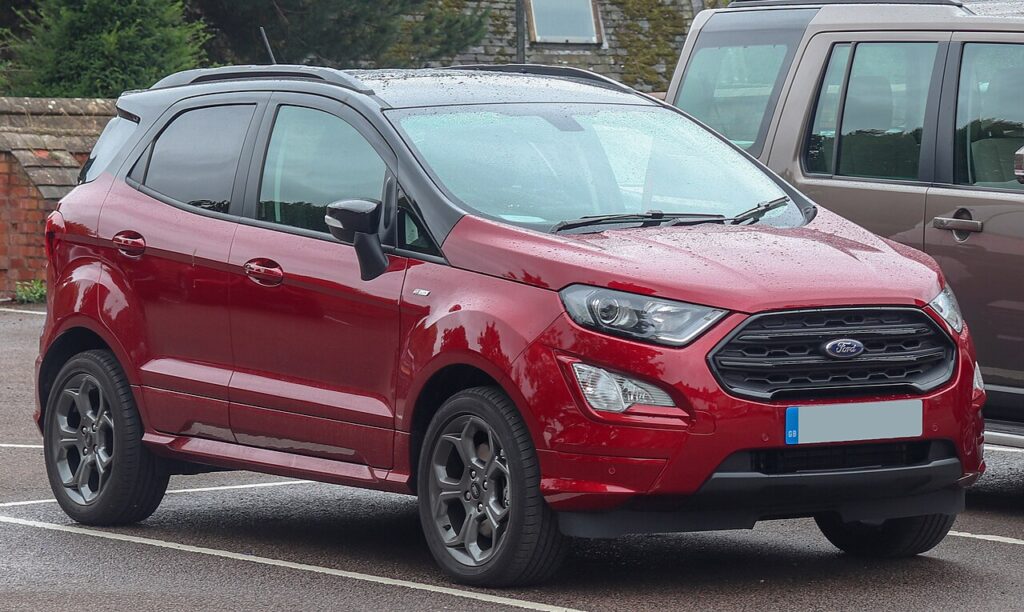
If you're considering buying a Ford EcoSport, comparing different versions, or simply checking its specifications, you might be wondering: How much does a Ford EcoSport weigh?
The answer depends on several factors, including the model year, engine, transmission, drivetrain, and trim level.
In the United States, the Ford EcoSport generally weighs between 3,020 and 3,360 pounds (1,370–1,524 kg), depending on its configuration. However, international versions can have different weights because they use different engines, transmissions, and equipment.
Although the EcoSport is classified as a subcompact SUV, its weight plays an important role in fuel efficiency, acceleration, braking, towing, and everyday driving.
In this comprehensive guide, we'll explore Ford EcoSport weight specifications by year, engine, and trim level. We'll also explain how vehicle weight affects performance and why understanding the difference between curb weight and gross vehicle weight matters.
Content in this publication
- How Much Does a Ford EcoSport Weigh in Pounds and Kilograms?
- Ford EcoSport Weight by Model Year
- Ford EcoSport Weight by Engine Size
- Ford EcoSport Front-Wheel Drive vs Four-Wheel Drive Weight
- What Is Ford EcoSport Curb Weight?
- Ford EcoSport Gross Vehicle Weight Rating (GVWR)
- How Much Weight Can a Ford EcoSport Carry?
- Does Ford EcoSport Weight Affect Fuel Consumption?
- How Does Ford EcoSport Weight Affect Acceleration?
- Does the Ford EcoSport's Weight Affect Braking?
- How Does Ford EcoSport Weight Affect Handling?
- How Much Can a Ford EcoSport Tow?
- How Much Weight Can a Ford EcoSport Roof Carry?
- Ford EcoSport Weight in the UK
- Ford EcoSport Weight in Other International Markets
- Is the Ford EcoSport a Heavy SUV?
- Can You Reduce the Weight of a Ford EcoSport?
- How to Find the Exact Weight of Your Ford EcoSport
- Common Mistakes When Checking Ford EcoSport Weight
- Frequently Asked Questions About Ford EcoSport Weight
- Final Thoughts: How Much Does a Ford EcoSport Weigh?
How Much Does a Ford EcoSport Weigh in Pounds and Kilograms?
The Ford EcoSport's weight varies considerably depending on the version we're discussing.
For North American models, the most commonly quoted base curb weights are:
- Ford EcoSport 1.0L EcoBoost FWD: 3,021 lbs (1,370 kg).
- Ford EcoSport 2.0L 4WD: 3,300 lbs (1,497 kg).
- Heavier, fully equipped versions: Up to approximately 3,360 lbs (1,524 kg).
These figures describe curb weight, meaning the vehicle's weight in its standard operating condition without passengers or cargo.
It is important to understand that weight specifications can vary between markets. A Ford EcoSport sold in the United Kingdom may have a different engine, transmission, and official kerb-weight measurement from one sold in the United States.
Ford EcoSport Weight Specifications at a Glance
| Configuration | Weight (lbs) | Weight (kg) |
|---|---|---|
| 1.0L EcoBoost FWD, U.S. base | 3,021 | 1,370 |
| 2.0L 4WD, U.S. base | 3,300 | 1,497 |
| Heavier U.S. configurations | 3,360 | 1,524 |
| UK 1.0L EcoBoost 125 PS manual | 2,974 | 1,349 |
| UK 1.0L EcoBoost 140 PS manual | 2,987 | 1,355 |
The UK figures include a 75 kg driver under Ford's published kerb-weight convention, so they should not be treated as directly equivalent to every U.S. curb-weight figure.
Ford EcoSport Weight by Model Year
One of the most useful ways to understand the EcoSport's weight is to examine the different model years.
The EcoSport was available in the United States from the 2018 through 2022 model years, and several engine and drivetrain combinations were offered during that period.
2018 Ford EcoSport Weight
The 2018 Ford EcoSport was the first model year sold in the United States.
It was offered with two main powertrain configurations:
- 1.0L EcoBoost three-cylinder engine with front-wheel drive.
- 2.0L four-cylinder engine with four-wheel drive.
The base curb weights were approximately 3,021 lbs and 3,300 lbs, respectively.
This difference reflects more than just engine displacement. The four-wheel-drive model has additional drivetrain components that increase its overall mass.
2019 Ford EcoSport Weight
The 2019 Ford EcoSport retained the same basic engine choices and vehicle architecture.
Its published base curb weights remained approximately:
- 3,021 lbs for the 1.0L FWD.
- 3,300 lbs for the 2.0L 4WD.
Individual trim levels and optional equipment could push the actual weight higher.
For buyers comparing a 2018 and 2019 EcoSport, weight alone is unlikely to be the deciding factor.
2020 Ford EcoSport Weight
The 2020 EcoSport continued with the 1.0L EcoBoost and 2.0L engine options.
The base vehicle weight remained around 3,021–3,300 lbs, depending on the drivetrain.
Higher trims may include heavier comfort and convenience equipment, although the difference is generally smaller than the gap between the two powertrain configurations.
2021 Ford EcoSport Weight
The 2021 Ford EcoSport was available in S, SE, SES, and Titanium trims.
Recorded U.S. curb weights include:
| 2021 EcoSport configuration | Curb weight |
|---|---|
| S FWD | 3,020 lbs |
| SE FWD | 3,080 lbs |
| Titanium FWD | 3,104 lbs |
| S 4WD | 3,300 lbs |
| SE 4WD | 3,333 lbs |
| SES 4WD | 3,360 lbs |
| Titanium 4WD | 3,360 lbs |
The table shows why two Ford EcoSport vehicles from the same model year can have noticeably different weights.
Even when two versions share the same engine, equipment and drivetrain differences can affect their total mass.
2022 Ford EcoSport Weight
The 2022 Ford EcoSport introduced an important change for the U.S. market.
Ford discontinued the 1.0L EcoBoost option, leaving the 2.0L four-cylinder engine with four-wheel drive as the standard powertrain.
Consequently, 2022 models generally weigh more than the lightest EcoSport versions offered in previous years.
| 2022 EcoSport trim | Curb weight |
|---|---|
| S 4WD | 3,300 lbs |
| SE 4WD | 3,333 lbs |
| SES 4WD | 3,360 lbs |
| Titanium 4WD | 3,360 lbs |
The 2022 model was also the final EcoSport model year in the U.S. market.
If we're shopping for a used 2022 EcoSport, we should expect a curb weight of approximately 3,300–3,360 lbs, depending on the specific trim.
Ford EcoSport Weight by Engine Size
Engine size is another major factor affecting vehicle weight.
Throughout its international production history, the Ford EcoSport was available with several petrol and diesel engines.
Ford EcoSport 1.0 EcoBoost Weight
The 1.0L EcoBoost is a compact turbocharged three-cylinder petrol engine.
In U.S. configurations, the base EcoSport 1.0L FWD weighs approximately 3,021 lbs (1,370 kg).
In a later UK specification, the 125 PS manual version has a kerb weight of approximately 1,349 kg (2,974 lbs).
The different figures reflect market-specific specifications and measurement conventions.
The 1.0L engine's relatively compact design helps keep the powertrain weight down.
However, the engine must still move the entire vehicle, meaning acceleration and fuel consumption depend on much more than engine size alone.
Ford EcoSport 1.5L Petrol Weight
The 1.5L petrol EcoSport was available in several international markets.
Ford's published specifications for certain versions list the following weights:
- 1.5L petrol manual: approximately 1,250 kg.
- 1.5L petrol automatic: approximately 1,292 kg.
These figures apply to particular international configurations rather than U.S. models.
They demonstrate how transmission type can affect total vehicle weight.
Automatic transmissions may be heavier than equivalent manual transmissions, although the difference depends on their design and associated components.
Ford EcoSport 1.5L Diesel Weight
Ford also offered diesel-powered EcoSport models in selected markets.
An earlier UK specification lists the 1.5L Duratorq TDCi manual at approximately 1,372 kg.
Other diesel versions can have different weights.
Diesel engines often include components designed to withstand higher combustion pressures, while emissions-control systems can add further mass.
However, the actual difference depends on the specific petrol and diesel engines being compared.
Ford EcoSport 2.0L Weight
The 2.0L petrol engine was primarily associated with the heavier four-wheel-drive versions sold in North America.
The base U.S. EcoSport 2.0L 4WD weighs approximately 3,300 lbs (1,497 kg).
Depending on trim level, this can increase to approximately 3,360 lbs.
The additional mass comes from the combined vehicle configuration, including its engine, drivetrain, suspension, and equipment.
The 2.0L engine also provides more power than the 1.0L unit offered in earlier U.S. models.
Ford EcoSport Front-Wheel Drive vs Four-Wheel Drive Weight
One of the biggest differences in Ford EcoSport curb weight comes from the drivetrain.
Front-wheel-drive vehicles transfer engine power to the front wheels, while four-wheel-drive configurations include additional components that can send power to the rear wheels.
How Much Does a Front-Wheel-Drive EcoSport Weigh?
A base U.S. Ford EcoSport with the 1.0L EcoBoost engine and front-wheel drive weighs approximately 3,021 lbs.
This configuration typically has fewer drivetrain components than the four-wheel-drive version.
The lower mass can offer advantages in efficiency and may help reduce the amount of energy required for acceleration.
How Much Does a Four-Wheel-Drive EcoSport Weigh?
The base 2.0L four-wheel-drive EcoSport weighs approximately 3,300 lbs.
That makes it around 279 lbs heavier than the base 1.0L FWD model.
The weight difference reflects the whole powertrain package, not just the four-wheel-drive system.
Four-wheel drive may provide improved traction in difficult conditions, particularly on slippery or loose surfaces.
However, it does not automatically improve braking performance, and it cannot compensate for unsuitable tyres or excessive speed.
What Is Ford EcoSport Curb Weight?
Curb weight is one of the most frequently used measurements in automotive specifications.
It describes how much a vehicle weighs in its normal operating condition, generally including essential fluids and fuel but excluding passengers and luggage.
However, definitions differ by market.
For example, Ford's UK kerb-weight figures may include an assumed 75 kg driver and 90% fuel load, while U.S. specifications follow a different convention.
This is important when comparing vehicles from different countries.
Does Curb Weight Include Passengers?
Generally, U.S. curb weight does not include passengers.
However, some European kerb-weight standards include an allowance for a driver.
Therefore, we should always check the manufacturer's definition before comparing figures.
Does Curb Weight Include Fuel?
Typically, curb weight includes fuel, but the assumed fuel quantity can differ.
Some specifications use a full tank, while others use a prescribed percentage.
A vehicle weighed on a scale may therefore produce a different result from its published curb weight.
Ford EcoSport Gross Vehicle Weight Rating (GVWR)
Gross Vehicle Weight Rating, commonly abbreviated as GVWR, represents the maximum permitted loaded weight of the vehicle as established by the manufacturer.
It includes the vehicle itself along with occupants, luggage, accessories, and other loads.
We should never confuse GVWR with curb weight.
Curb Weight vs GVWR
| Measurement | Meaning |
|---|---|
| Curb weight | Vehicle in its specified operating condition |
| GVWR | Maximum permitted total loaded vehicle weight |
| Payload | Permitted additional load, subject to the vehicle's ratings |
| Gross axle weight rating | Maximum permitted weight supported by an individual axle |
| Gross combined weight rating | Maximum permitted combined vehicle and trailer weight, where applicable |
For example, Ford's later UK EcoSport specification lists a gross vehicle mass of 1,730 kg for its 1.0L manual versions.
That figure is considerably higher than their kerb weight because it allows for additional loads.
Actual ratings vary by market, engine, and configuration.
Where Can We Find the Exact GVWR?
The most reliable places to check include:
- The vehicle certification label.
- The driver's door opening or door pillar.
- The owner's manual.
- The manufacturer's specifications for the exact model.
For loading decisions, the label on the individual vehicle should take priority over generic online specifications.
How Much Weight Can a Ford EcoSport Carry?
The amount of weight a Ford EcoSport can carry depends on its certified payload capacity.
Payload includes occupants, luggage, and any additional load carried by the vehicle.
To understand payload, we must consider the relationship between the manufacturer's GVWR, the vehicle's actual weight, and its loading limits.
For example, carrying five adults and several heavy suitcases may use much more of the available payload than we expect.
We should also remember that aftermarket accessories increase the vehicle's actual weight.
How to Avoid Overloading a Ford EcoSport
When preparing for a journey, we recommend several practical precautions:
- Check the vehicle's loading information label.
- Include the weight of every passenger.
- Account for luggage and equipment.
- Consider any added accessories.
- Distribute cargo securely and appropriately.
- Respect individual axle weight limits.
Exceeding the permitted weight can affect braking, tyre loading, handling, and suspension performance.
If we're carrying an unusually heavy load, weighing the vehicle is a useful way to confirm that it remains within its limits.
Does Ford EcoSport Weight Affect Fuel Consumption?
Yes, vehicle weight influences fuel consumption, although it is only one of several factors.
Generally, a heavier vehicle requires more energy to accelerate and climb hills.
This becomes especially noticeable in stop-and-go driving, where the engine repeatedly accelerates the vehicle from lower speeds.
Why Lighter Vehicles Can Be More Efficient
A lighter vehicle generally requires less energy to achieve the same acceleration.
However, the relationship between weight and fuel economy is not always straightforward.
Engine efficiency, transmission gearing, drivetrain losses, aerodynamics, and driving conditions all matter.
For example, a heavier EcoSport with a different engine might perform more efficiently in a particular driving situation than expected.
We should therefore compare official fuel-consumption ratings rather than using weight alone to predict mileage.
Does Carrying Extra Luggage Increase Fuel Consumption?
Yes, additional cargo can increase energy demand.
The effect depends on how much weight we add and how we drive.
The difference is often more noticeable in city traffic or mountainous areas than during steady highway cruising.
How Does Ford EcoSport Weight Affect Acceleration?
Weight plays an important role in acceleration because the engine must move the vehicle's total mass.
All else being equal, a lighter vehicle can accelerate more quickly with the same available power.
However, the EcoSport's engine options produce different levels of horsepower and torque.
For example, the U.S. 1.0L EcoBoost produced approximately 123 horsepower, while the 2.0L four-cylinder produced approximately 166 horsepower.
Although the 2.0L version is heavier, its additional power can compensate for some of the extra mass.
Power-to-Weight Ratio Explained
Power-to-weight ratio compares engine output with vehicle mass.
A higher ratio generally indicates greater acceleration potential, although traction, gearing, and engine characteristics also influence real-world performance.
When comparing two EcoSport versions, we should consider both horsepower and curb weight.
Does the Ford EcoSport's Weight Affect Braking?
Vehicle weight influences the amount of energy the brakes must dissipate.
A heavier vehicle travelling at the same speed carries more kinetic energy, assuming the other conditions are equal.
However, stopping distance also depends heavily on:
- Tyre grip and condition.
- Road surface.
- Brake system performance.
- Weather conditions.
- Vehicle loading.
- Driver reaction time.
The EcoSport's braking system is designed for its intended operating conditions, but exceeding permitted loads can compromise safety.
Keeping the tyres and brakes properly maintained is essential regardless of the vehicle's weight.
How Does Ford EcoSport Weight Affect Handling?
The EcoSport's relatively compact dimensions contribute to its suitability for urban driving.
However, weight distribution and suspension tuning are just as important as the vehicle's total mass.
City Driving
In urban environments, the EcoSport's compact footprint helps with parking and navigating narrow streets.
Its weight is moderate compared with many larger SUVs.
Nevertheless, a heavier four-wheel-drive configuration may feel different from a lighter front-wheel-drive model.
Highway Driving
On highways, stability depends on suspension design, tyres, aerodynamics, road conditions, and vehicle loading.
We should not assume that a heavier vehicle is automatically safer or more stable.
Proper maintenance and appropriate driving are much more important than weight alone.
Driving With Passengers and Luggage
Additional weight can change how a vehicle responds to steering, braking, and acceleration.
When carrying several passengers and luggage, we should anticipate longer stopping distances and allow adequate space between vehicles.
How Much Can a Ford EcoSport Tow?
The Ford EcoSport's towing capacity depends on its engine, drivetrain, model year, and market.
For many U.S. models, Ford published the following maximum towing capacities:
| Engine and drivetrain | Maximum towing capacity |
|---|---|
| 1.0L EcoBoost FWD | 1,400 lbs |
| 2.0L 4WD | 2,000 lbs |
These are maximum published ratings for applicable configurations, not guaranteed limits for every EcoSport worldwide.
Certain UK models have different ratings, including braked trailer limits of 900 kg and 1,100 kg in Ford's later 1.0L EcoBoost specifications.
Does a Heavier EcoSport Tow More?
Not necessarily.
Towing capacity depends on multiple engineering factors, including engine performance, transmission, cooling, braking, structural limits, and manufacturer certification.
A heavier vehicle does not automatically have a higher towing rating.
Before towing, we should verify the exact trailer-weight limit, tow-ball or tongue-weight limit, and any combined-weight restrictions.
Trailer equipment must also comply with local regulations.
How Much Weight Can a Ford EcoSport Roof Carry?
The roof-loading limit is separate from the vehicle's curb weight and towing capacity.
For certain UK EcoSport versions, Ford specifies a maximum roof load of 40 kg.
This limit is specific to the relevant model and should not automatically be applied to every EcoSport worldwide.
Roof bars, luggage boxes, and other equipment may also have their own limits.
We should always follow the lowest applicable rating.
Heavy roof cargo can raise the vehicle's centre of gravity and influence handling, particularly during sudden manoeuvres.
Ford EcoSport Weight in the UK
The Ford EcoSport sold in the United Kingdom differs from many North American versions.
Different engine options, manual transmissions, equipment packages, and measurement standards affect the reported kerb weight.
An earlier UK EcoSport specification lists the following:
| UK EcoSport version | Kerb weight |
|---|---|
| 1.0 EcoBoost 125 PS manual | 1,337 kg |
| 1.0 EcoBoost 140 PS manual | 1,337 kg |
| 1.5 Duratec petrol manual | 1,314 kg |
| 1.5 Duratec petrol automatic | 1,350 kg |
| 1.5 Duratorq diesel manual | 1,372 kg |
Later UK specifications list approximately 1,349 kg and 1,355 kg for the 125 PS and 140 PS 1.0L EcoBoost manual versions, respectively.
These figures show why it is important to identify the exact model year and specification.
Ford EcoSport Weight in Other International Markets
The EcoSport was offered in several markets outside North America and Europe.
Some international versions featured smaller petrol engines, diesel options, manual transmissions, and different equipment packages.
For example, Ford's published owner information for certain 1.5L petrol configurations lists curb weights of approximately 1,250–1,292 kg.
A 1.0L manual configuration is listed at approximately 1,344 kg in the same market-specific documentation.
This variation means there is no single universal EcoSport weight figure.
When researching an imported vehicle, we should make sure we're consulting specifications intended for its country of origin.
Is the Ford EcoSport a Heavy SUV?
The Ford EcoSport is generally considered a relatively light SUV compared with larger vehicle classes.
However, its weight is not unusually low for a subcompact crossover equipped with modern safety systems, comfort features, and, in some versions, four-wheel drive.
We should also remember that the EcoSport is designed primarily for everyday practicality rather than heavy-duty towing or carrying exceptionally large loads.
Ford EcoSport vs Larger SUVs
Larger SUVs often require heavier structures, more powerful engines, larger braking systems, and stronger suspension components.
They may also offer higher payload and towing ratings.
The EcoSport's smaller dimensions can make it more convenient for drivers who primarily use their vehicle in urban environments.
Nevertheless, exact comparisons should use the specific model years and trim levels rather than broad vehicle categories.
Can You Reduce the Weight of a Ford EcoSport?
Although we cannot easily change the weight of the vehicle's main structure, we can avoid carrying unnecessary items.
Removing unused equipment and luggage helps prevent unnecessary additional loading.
Practical measures include:
- Removing heavy objects that are no longer needed.
- Taking off unused roof boxes and carriers.
- Avoiding unnecessary cargo in the boot.
- Choosing accessories appropriate for the vehicle.
We should never remove safety equipment or make structural modifications simply to reduce weight.
For normal everyday driving, maintaining the vehicle correctly is more important than attempting significant weight reduction.
How to Find the Exact Weight of Your Ford EcoSport
Published specifications are useful, but the exact weight of an individual vehicle can vary.
Manufacturing differences, optional equipment, accessories, fuel level, and modifications may affect the actual result.
Step 1: Identify the Model Year
Start by confirming the year of manufacture and model year.
These are not necessarily identical.
Step 2: Check the Engine and Drivetrain
Determine whether your EcoSport has a 1.0L, 1.5L, or 2.0L engine and whether it uses front-wheel drive or four-wheel drive.
Step 3: Identify the Trim Level
The S, SE, SES, Titanium, ST-Line, and other market-specific versions may have different equipment and weights.
Step 4: Consult the Owner's Manual
The owner's manual and manufacturer specifications provide the relevant rated weights and loading information.
Step 5: Check the Vehicle Certification Label
Look for the manufacturer's vehicle-weight ratings, usually displayed on a label in the driver's door opening or another designated location.
Step 6: Weigh the Vehicle if Necessary
If you need the actual weight rather than a published estimate, use a suitable certified vehicle scale.
This is particularly useful when carrying heavy accessories or planning to tow.
Common Mistakes When Checking Ford EcoSport Weight
It is easy to misinterpret vehicle-weight information, especially when comparing specifications from different countries.
Some common mistakes include:
Confusing curb weight with GVWR. These are completely different measurements.
Assuming every model year weighs the same. Engine and drivetrain changes can affect weight.
Ignoring trim-level differences. Additional equipment can increase the vehicle's mass.
Comparing U.S. and European figures directly. The kerb-weight definitions may be different.
Assuming towing capacity equals payload. These are separate limits.
Using another market's specifications. A model sold in the UK may have different ratings from one sold in the United States.
Understanding these distinctions helps us find more reliable information and avoid potentially unsafe loading decisions.
Frequently Asked Questions About Ford EcoSport Weight
1. How much does a 2022 Ford EcoSport weigh?
The 2022 Ford EcoSport weighs approximately 3,300–3,360 pounds (1,497–1,524 kg), depending on the trim level.
U.S. models use a 2.0L four-cylinder engine with four-wheel drive.
2. How much does a 2020 Ford EcoSport weigh?
The 2020 Ford EcoSport has published base curb weights of approximately 3,021 pounds for the 1.0L FWD and 3,300 pounds for the 2.0L 4WD.
The exact weight depends on its equipment and configuration.
3. How much does a Ford EcoSport weigh in kilograms?
Many U.S. Ford EcoSport versions weigh approximately 1,370–1,524 kg.
International models may be lighter or heavier depending on their engines, transmissions, equipment, and kerb-weight definitions.
4. Is the Ford EcoSport heavier than the Ford Fiesta?
Generally, yes. The EcoSport is a taller crossover SUV, while the Fiesta is a smaller passenger car.
However, exact weights depend on the model years, engines, and trim levels being compared.
5. Does Ford EcoSport weight affect towing capacity?
Vehicle weight is relevant to towing, but it does not determine towing capacity by itself.
The EcoSport's maximum permitted trailer weight depends on its engine, drivetrain, transmission, and manufacturer's specifications.
Applicable U.S. versions have maximum published towing ratings of 1,400 or 2,000 pounds.
Final Thoughts: How Much Does a Ford EcoSport Weigh?
So, how much does a Ford EcoSport weigh?
For U.S. models, the most useful general answer is approximately 3,020–3,360 pounds (1,370–1,524 kg), depending on the model year and configuration.
The lighter versions typically use the 1.0L EcoBoost engine with front-wheel drive, while heavier models feature the 2.0L engine and four-wheel drive.
The 2022 U.S. EcoSport weighs approximately 3,300–3,360 pounds because all versions feature the 2.0L four-wheel-drive powertrain.
International versions can have different weights, particularly when equipped with manual transmissions, diesel engines, or market-specific equipment.
Ultimately, understanding the Ford EcoSport's weight helps us make better decisions about fuel efficiency, handling, passenger loading, and towing.
Whether we're comparing used vehicles or preparing for a family road trip, the most reliable approach is to check the specifications for the exact model and confirm its permitted loading limits.
That way, we can enjoy the EcoSport's everyday practicality while operating it safely and within its intended capabilities.
If you want to know other articles similar to How Much Does a Ford EcoSport Weigh? Complete Weight Guide you can visit the category Service and Parts.
Peugeot 308 Clutch Replacement Cost: Complete UK Guide for 2026
Ford C-Max Tyre Size: Complete Guide by Year, Model and Wheel
How to Reset Haval Jolion Service Light: Complete Guide
Vauxhall Agila Tyre Pressure: Complete PSI and Bar Guide

Kia Sorento Windscreen Replacement Cost: Complete 2026 Price Guide
Kia Sorento Tyre Pressure Reset: Complete TPMS Guide
Leave a Reply
More content of your interest