

Kia Sorento Model Differences: Complete Trim Guide

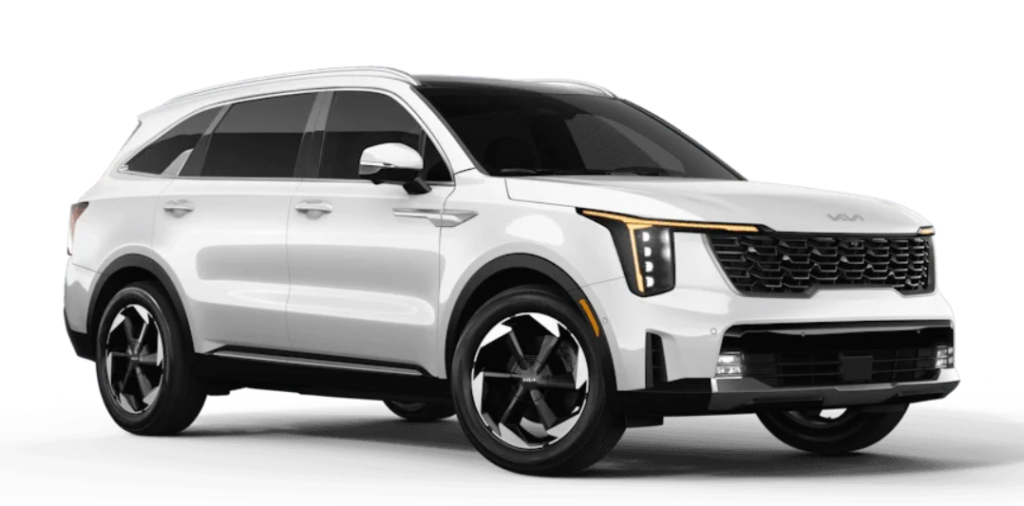
The Kia Sorento model differences can be confusing, especially when we compare versions such as the LX, S, EX, SX, X-Line, X-Pro, and GT-Line. Although they share the same basic SUV platform, these models can offer significantly different engines, equipment, interior features, and driving characteristics.
The Sorento is a popular three-row family SUV, positioned between smaller crossovers and larger vehicles such as the Kia Telluride in markets where the latter is sold.
However, not every Kia Sorento is configured the same way. Some versions focus on affordability, others prioritise luxury, and certain models add all-wheel drive and equipment designed for more demanding road conditions.
In this guide, we'll explain the differences between Kia Sorento models, compare the main trim levels, explore petrol, diesel, hybrid, and plug-in hybrid options, and help determine which version makes the most sense.
Note: This guide primarily covers the 2026 Kia Sorento. Equipment, engine availability, trim names, and specifications vary between countries and model years.
Content in this publication
- Kia Sorento Model Differences at a Glance
- Kia Sorento LX vs S vs EX vs SX vs X-Line vs X-Pro
- 2026 Kia Sorento Model Price Comparison
- Kia Sorento Engine Differences Explained
- Kia Sorento Hybrid vs Petrol Models
- Kia Sorento Hybrid Trim Differences
- Kia Sorento Plug-in Hybrid Differences
- Kia Sorento S vs Sport vs Sport+ vs GT-Line
- Kia Sorento UK Model Differences: 2 vs 3 vs 4
- Kia Sorento Front-Wheel Drive vs All-Wheel Drive
- Kia Sorento Interior Differences Between Models
- Kia Sorento Safety Feature Differences
- Kia Sorento Towing Capacity Differences
- Kia Sorento Wheel Size Differences
- Kia Sorento Model Year Differences
- What Changed for the 2026 Kia Sorento?
- Which Kia Sorento Model Is Best for Families?
- Which Kia Sorento Is Best for Long-Distance Driving?
- Which Kia Sorento Model Is the Most Reliable?
- Kia Sorento Model Comparison: Which Should We Buy?
- Frequently Asked Questions About Kia Sorento Models
- Conclusion: Understanding Kia Sorento Model Differences
Kia Sorento Model Differences at a Glance
Before examining individual models, it's useful to understand how Kia structures the Sorento lineup.
In the United States, the main petrol-powered trim levels include LX, S, EX, SX, X-Line, and X-Pro variants.
In Australia, the Sorento is generally organised into S, Sport, Sport+, and GT-Line grades.
The United Kingdom uses a different naming system, with grades 2, 3, and 4.
Kia Sorento Trim Level Comparison
| Market | Entry-Level | Mid-Range | Premium | Specialised |
|---|---|---|---|---|
| United States | LX, S | EX | SX, SX Prestige-based variants | X-Line, X-Pro |
| Australia | S | Sport, Sport+ | GT-Line | Hybrid and PHEV powertrains |
| United Kingdom | 2 | 3 | 4 | Hybrid, PHEV, diesel |
| Other markets | Varies | Varies | Varies | Market-dependent |
This distinction matters because an Australian Sorento GT-Line is not directly equivalent to an American Sorento X-Line.
The naming conventions, available engines, and standard equipment can all differ.
Kia Sorento LX vs S vs EX vs SX vs X-Line vs X-Pro
Let's begin with the American lineup, where buyers can choose between several equipment levels and two main conventional petrol engines.
Kia Sorento LX: The Entry-Level Model
The Kia Sorento LX is the starting point of the American petrol range.
It is designed for families who want a practical three-row SUV without paying for expensive luxury features.
The 2026 LX uses a naturally aspirated 2.5-litre four-cylinder petrol engine producing approximately 191 horsepower.
Its main characteristics include:
- 2.5-litre naturally aspirated petrol engine.
- Eight-speed automatic transmission.
- Front-wheel drive.
- Three-row seating.
- Essential driver-assistance technologies.
- Cloth seating surfaces.
- Modern infotainment and connectivity features.
The LX is particularly attractive for buyers who prioritise affordability and everyday transportation.
However, the naturally aspirated engine provides less acceleration than the turbocharged versions.
When the vehicle is loaded with passengers and luggage, this difference can become more noticeable.
Who should buy it?
We would consider the LX if our priorities were keeping the initial purchase price down, enjoying practical family transportation, and avoiding unnecessary luxury equipment.
Kia Sorento S: More Comfort and Style
The Kia Sorento S builds on the LX with additional convenience and appearance features.
It retains the same 191-horsepower 2.5-litre engine, so the primary differences concern equipment rather than performance.
Depending on configuration, the S offers:
- Upgraded interior materials.
- SynTex synthetic leather seating.
- Additional convenience equipment.
- More distinctive exterior styling.
- Larger wheels than the base model.
- Available all-wheel drive.
For families who spend considerable time commuting, the improved cabin equipment can make the S feel noticeably more refined.
One important detail is that the 2026 American S does not include the navigation and Wi-Fi equipment previously associated with some versions.
We should therefore check the exact specification instead of assuming an S model automatically includes every technology feature from earlier years.
Who should buy it?
The S is a sensible option when we want better comfort and appearance without moving to the more expensive turbocharged models.
Kia Sorento EX: The Performance Upgrade
The Kia Sorento EX represents one of the most important steps in the range.
Unlike the LX and S, the American petrol EX receives a turbocharged 2.5-litre four-cylinder engine.
This produces approximately 281 horsepower and 311 lb-ft of torque.
That represents a substantial performance increase compared with the entry-level engine.
The EX also introduces or offers additional comfort equipment, depending on the selected packages.
For 2026, Kia introduced an EX Premium Package that can add:
- Panoramic sunroof.
- Bose premium audio.
- Second-row captain's chairs.
The turbocharged petrol EX uses an eight-speed dual-clutch transmission rather than the conventional eight-speed automatic fitted to naturally aspirated petrol versions.
This transmission difference is another reason to test-drive both engines before making a decision.
Who should buy it?
We would seriously consider the EX if we frequently travel on highways, carry several passengers, or simply want stronger acceleration without moving into the highest equipment grades.
The Sorento SX adds more premium features while retaining the powerful turbocharged petrol engine.
The 2026 American SX includes improvements such as:
- Bose premium audio system.
- Heated steering wheel.
- Rear integrated sunshades.
- Auto-dimming rearview mirror with HomeLink.
- Additional comfort and technology equipment.
The SX aims to offer a more luxurious experience without necessarily requiring the rugged exterior styling of an X-Line or X-Pro.
This makes it appealing to buyers who primarily drive on paved roads.
Who should buy it?
The SX is a strong choice when we value interior technology, comfort, and the turbocharged engine more than specialised all-terrain equipment.
Kia Sorento X-Line: Rugged Appearance and AWD
The Sorento X-Line introduces a different character to the lineup.
Rather than simply adding luxury, the X-Line combines premium equipment with distinctive SUV styling and standard all-wheel drive.
The American 2026 petrol lineup includes:
- X-Line EX AWD.
- X-Line SX AWD.
- X-Line SX Prestige AWD.
Important X-Line characteristics include unique exterior styling, black design accents, raised-style roof rails, and an AWD drivetrain.
The X-Line is especially attractive if we frequently encounter rain, snow, gravel roads, or changing road surfaces.
However, we should remember that all-wheel drive improves traction in appropriate conditions; it does not turn the Sorento into a dedicated off-road vehicle.
The tyre choice and ground clearance still influence what the SUV can safely handle.
Who should buy it?
We would choose an X-Line if we wanted the Sorento's comfort and practicality with standard AWD and a more adventurous appearance.
Kia Sorento X-Pro: The Adventure-Oriented Model
The X-Pro SX Prestige AWD sits at the top of the American petrol lineup.
Its main distinction is additional equipment aimed at drivers who want greater capability on challenging roads.
The 2026 Sorento X-Pro includes:
- 2.5-litre turbocharged engine.
- 281 horsepower.
- Standard all-wheel drive.
- Terrain driving modes.
- 17-inch X-Pro wheels.
- All-terrain tyres.
- Special exterior styling.
- Premium interior equipment.
- Up to 4,500 pounds of towing capacity when properly equipped.
One interesting difference is that the X-Pro uses smaller wheels and taller-profile all-terrain tyres than some more road-focused Sorento models.
This configuration can provide additional tyre sidewall protection on rough surfaces.
However, all-terrain tyres can introduce compromises in road noise, steering feel, fuel efficiency, and replacement cost.
The X-Pro is still a unibody family SUV, not a substitute for a purpose-built, low-range four-wheel-drive vehicle.
Who should buy it?
The X-Pro makes sense when we want a highly equipped family SUV that can handle rougher roads and occasional outdoor adventures, while respecting its capabilities and limitations.
2026 Kia Sorento Model Price Comparison
For American buyers, price is another major difference between trims.
The following table uses Kia's published starting MSRPs for the 2026 conventional petrol Sorento.
| Kia Sorento Model | Starting MSRP |
|---|---|
| LX | $32,390 |
| S | $35,290 |
| EX | $38,490 |
| SX | $42,290 |
| X-Line EX AWD | $42,790 |
| X-Line SX AWD | $44,090 |
| X-Line SX Prestige AWD | $46,790 |
| X-Pro SX Prestige AWD | $47,790 |
These prices exclude destination charges, taxes, registration, optional equipment, and dealer-related charges.
For comparison, the 2026 Sorento Hybrid EX starts at $38,890, while the Plug-in Hybrid EX AWD starts at $48,290 in the US market.
Actual transaction prices and availability can change.
Which Sorento Offers the Best Value?
If we compare only purchase prices, the LX is the most affordable.
However, the EX is arguably one of the most interesting options because it provides a significant engine upgrade without requiring us to purchase the most expensive model.
The S remains a good compromise if we prefer the naturally aspirated engine and want additional equipment.
For buyers who value AWD and rugged styling, the X-Line EX deserves particular attention.
Kia Sorento Engine Differences Explained
The choice of engine can have a greater impact on daily driving than the trim level itself.
Sorento engines vary considerably around the world.
2.5-Litre Naturally Aspirated Petrol Engine
The American LX and S use a 2.5-litre four-cylinder petrol engine.
Key specifications include:
- Power: 191 hp.
- Torque: 181 lb-ft.
- Transmission: Eight-speed automatic.
- Intended use: Everyday family driving.
The naturally aspirated engine provides predictable power delivery without relying on a turbocharger.
Its primary limitation is performance when the vehicle is carrying heavy loads or accelerating at motorway speeds.
2.5-Litre Turbocharged Petrol Engine
The American EX, SX, X-Line, and X-Pro petrol variants use the more powerful turbocharged engine.
Its main specifications are:
- Power: 281 hp.
- Torque: 311 lb-ft.
- Transmission: Eight-speed wet dual-clutch.
- Intended use: Drivers seeking stronger acceleration and greater performance.
The turbocharged engine has significantly more torque available at lower engine speeds.
This makes overtaking and climbing hills feel easier, particularly with several passengers aboard.
However, it generally consumes more fuel than the most economical hybrid versions.
2.2-Litre Diesel Engine
In markets such as the United Kingdom and Australia, the Sorento has also been offered with a 2.2-litre turbocharged diesel engine.
The UK specification lists approximately 190 bhp and 440 Nm of torque.
You may be interested in reading 12 Best Kia Sorento Alternatives in 2026
Diesel models can be particularly interesting for:
- Frequent long-distance driving.
- Motorway journeys.
- Drivers covering substantial annual mileage.
- Certain towing requirements.
Diesel suitability depends on fuel costs, emissions regulations, maintenance requirements, and the type of driving we normally do.
If we mainly travel short distances through congested urban areas, a diesel may not be the ideal choice.
Kia Sorento Hybrid vs Petrol Models
The Sorento Hybrid combines a petrol engine with an electric motor and a small battery.
In the US, the 2026 hybrid uses a 1.6-litre turbocharged petrol engine combined with an electric motor, producing 227 horsepower.
Unlike a plug-in hybrid, the regular Sorento Hybrid does not require external charging.
Its battery is replenished through regenerative braking and operation of the petrol engine.
Advantages of the Sorento Hybrid
- Lower fuel consumption in many driving conditions.
- Efficient operation during urban journeys.
- Electric assistance during acceleration.
- No need to install home charging equipment.
- A familiar refuelling experience.
Disadvantages of the Sorento Hybrid
- Higher purchase price than some petrol variants.
- More complex electrified components.
- Fuel savings depend on driving conditions.
- Certain seating configurations and features vary by trim.
For families covering substantial mileage in urban and suburban traffic, the hybrid can be particularly appealing.
However, if we primarily drive long distances at constant motorway speeds, the efficiency advantage may be different.
Kia Sorento Hybrid Trim Differences
In the United States, the 2026 Sorento Hybrid range includes the EX and a premium X-Line SX Prestige version.
The EX provides the core hybrid drivetrain and family-oriented features.
The X-Line SX Prestige adds more luxury equipment, standard AWD, and distinctive exterior styling.
Both use the same basic hybrid powertrain.
For the 2026 American Hybrid EX, a second-row bench seat is standard, while available premium equipment can include captain's chairs.
This is important because changing the second-row seating configuration can affect passenger capacity.
A seven-seat Sorento is not necessarily configured like a six-seat Sorento with individual second-row chairs.
We should always verify seating arrangements before purchasing.
Kia Sorento Plug-in Hybrid Differences
The Sorento Plug-in Hybrid, commonly called the PHEV, is designed for drivers who want to complete some trips on electric power while retaining a petrol engine for longer journeys.
Unlike the regular hybrid, its larger battery can be recharged using an external electricity supply.
The 2026 American model offers an EPA-estimated electric driving range of approximately 31 miles on a full charge.
The PHEV also includes standard AWD in the American market.
Why Choose the Plug-in Hybrid?
The main advantages include:
- Ability to drive short distances using electricity.
- Reduced petrol consumption when charged regularly.
- Petrol backup for longer trips.
- Strong combined power delivery.
- Potentially quieter low-speed driving.
The main disadvantages are:
- Higher initial purchase price.
- Additional charging considerations.
- Increased vehicle weight.
- More complex electrified components.
- Electric range affected by temperature, speed, and driving conditions.
The PHEV makes the most sense when we can charge it regularly at home or work.
Without consistent charging, some of its biggest benefits become less significant.
Kia Sorento S vs Sport vs Sport+ vs GT-Line
Australian buyers encounter a different Sorento model structure.
Instead of LX, EX, and SX, Kia Australia uses S, Sport, Sport+, and GT-Line.
The trim hierarchy remains broadly similar, moving from practical equipment to premium comfort and technology.
Australian Kia Sorento Trim Comparison
| Model | Main Focus | Notable Features |
|---|---|---|
| S | Entry-level practicality | Essential safety technology, infotainment, everyday equipment |
| Sport | Added convenience | Navigation, power-adjustable driver's seat, additional comfort features |
| Sport+ | Premium family comfort | Leather-appointed seats, Bose audio, heated front seats |
| GT-Line | Luxury and technology | Digital instruments, head-up display, surround-view cameras, ventilated front seats |
Equipment can differ between diesel, hybrid, and plug-in hybrid variants.
Kia Sorento S
The Australian Sorento S focuses on essential family SUV features.
Depending on the powertrain, equipment includes a 12.3-inch infotainment display, driver-assistance technology, LED lighting, and practical everyday conveniences.
We would see it as a good starting point for buyers who want the space and versatility of the Sorento without paying for premium trim features.
Kia Sorento Sport
The Sport adds convenience equipment that can make everyday ownership more comfortable.
On the Australian diesel model, upgrades over the S include navigation, a power-adjustable driver's seat, rear privacy glass, and additional third-row climate controls.
It offers a useful balance between affordability and comfort.
Kia Sorento Sport+
The Sport+ introduces more substantial luxury features.
These include leather-appointed seating, a Bose sound system, heated front seats, a heated steering wheel, and a hands-free power tailgate on the current Australian diesel specification.
For many families, these features may provide more noticeable everyday benefits than cosmetic upgrades.
Kia Sorento GT-Line
The GT-Line is the premium version of the Australian lineup.
Equipment includes features such as:
- Digital instrument display.
- Colour head-up display.
- Quilted Nappa leather-appointed seating.
- Ventilated front seats.
- Heated outer second-row seats.
- Surround-view monitor.
- Blind-Spot View Monitor.
- Panoramic sunroof.
- Premium interior finishes.
The GT-Line is ideal for buyers who want the most luxurious Sorento experience.
However, its additional cost is easier to justify if we genuinely use the advanced comfort and technology features.
Kia Sorento UK Model Differences: 2 vs 3 vs 4
In the United Kingdom, Kia uses a simpler grading structure.
The Sorento range is organised around three main trim levels: 2, 3, and 4.
Kia Sorento 2
Grade 2 is the entry-level version.
It includes essential technology, driver assistance, and the practicality associated with the Sorento's seven-seat layout.
This makes it appealing for buyers who want a well-equipped family SUV while limiting purchase costs.
Kia Sorento 3
Grade 3 adds convenience and advanced technology equipment.
Current UK specifications include additional driver-assistance capabilities on grades 3 and 4, such as Highway Driving Assist 2.
The exact benefits depend on the engine and specification.
Kia Sorento 4
Grade 4 represents the most luxurious UK version.
It introduces additional premium comfort, convenience, and appearance features.
For example, current specifications list a panoramic sunroof on grade 4.
Buyers should compare the complete equipment list because some features available on the British grade 4 differ from those included in an Australian GT-Line or an American SX Prestige-based model.
Kia Sorento Front-Wheel Drive vs All-Wheel Drive
Another important model difference involves the drivetrain.
Front-Wheel Drive
Front-wheel-drive Sorentos send power primarily to the front wheels.
Advantages include:
- Generally lower purchase cost.
- Potentially lower fuel consumption.
- Less drivetrain complexity.
- Good performance for ordinary paved-road driving.
For families living in areas with mild weather and well-maintained roads, FWD may be entirely sufficient.
All-Wheel Drive
All-wheel drive distributes power between the front and rear axles as needed.
It can improve traction when accelerating on slippery or loose surfaces.
Advantages include:
- Improved traction in challenging conditions.
- Better confidence on certain unpaved roads.
- Availability of terrain management systems.
- Potentially greater versatility.
Nevertheless, AWD does not replace appropriate tyres or careful driving.
It also does not automatically shorten braking distances.
Does the Sorento X-Line Have More Ground Clearance?
The American 2026 Sorento specification lists approximately 6.9 inches of ground clearance for FWD variants and 8.2 inches for AWD variants.
This means an AWD Sorento may already have additional clearance compared with a FWD version.
The X-Line's most recognisable distinctions include its appearance, standard AWD, and equipment configuration.
We should therefore avoid assuming that every X-Line has more ground clearance than every other AWD Sorento.
Kia Sorento Interior Differences Between Models
Although the basic cabin architecture remains similar, trim level can affect the overall experience significantly.
Seating Materials
Entry-level versions often use cloth or synthetic leather upholstery.
Higher grades can offer genuine or premium leather-appointed seating, additional adjustments, and heating or ventilation.
These features are particularly relevant for buyers who spend several hours driving each day.
Six Seats vs Seven Seats
Some Sorento configurations use a three-person second-row bench.
Others provide two separate second-row captain's chairs.
The bench allows a seven-person seating configuration, while captain's chairs generally create a six-person layout.
The best arrangement depends on how the vehicle will be used.
If we regularly transport seven passengers, a bench may be essential.
If we usually carry four or five people and want easier movement toward the third row, captain's chairs can be appealing.
Infotainment and Digital Displays
Higher trim levels may include enhanced digital instrumentation, premium audio, head-up displays, and additional camera views.
However, screen sizes alone do not tell the whole story.
We should also consider ease of use, connectivity, navigation, smartphone compatibility, and physical control placement.
Kia Sorento Safety Feature Differences
The Sorento offers a variety of driver-assistance features, but availability depends on trim level and market.
Examples include:
- Forward collision-avoidance assistance.
- Lane-keeping and lane-following assistance.
- Blind-spot monitoring.
- Rear cross-traffic collision-avoidance assistance.
- Adaptive or smart cruise control.
- Surround-view cameras.
- Parking assistance.
- Highway driving assistance.
Higher trims may introduce more advanced versions of existing features rather than completely different safety systems.
For example, an upper-grade Sorento may include camera-based blind-spot views and enhanced parking technology that are not included in an entry-level model.
These features can help support the driver, but they do not replace attention or safe driving decisions.
You may be interested in reading12 Best Kia Sorento Alternatives in 2026You may be interested in reading
 Test Drive Review: The Fiat 500 Abarth 0-60 Acceleration
Kia Sorento Towing Capacity Differences
Towing ability is another area where models can vary considerably.
In the American 2026 petrol range, Kia lists towing capacities ranging from 2,000 pounds on certain configurations to 4,500 pounds for the X-Pro when properly equipped.
The turbocharged engine, drivetrain, cooling equipment, towing hardware, and model-specific ratings all matter.
In the UK, Kia lists different braked towing limits for the available powertrains.
For example:
| UK Sorento Powertrain | Listed Maximum Braked Towing Capacity |
|---|---|
| 1.6 Hybrid AWD | 2,000 kg |
| 1.6 Plug-in Hybrid AWD | 1,700 kg |
| 2.2 Diesel AWD | 2,500 kg |
These figures illustrate why we should never assume every Sorento has the same towing capability.
Before towing, always check the exact vehicle's specifications, maximum permitted trailer weight, tow-ball load, and applicable local regulations.
Kia Sorento Wheel Size Differences
Wheel size influences more than appearance.
The Sorento may be equipped with 17-inch, 18-inch, 19-inch, or 20-inch wheels depending on market and trim.
Smaller Wheels
Smaller-diameter wheels commonly allow higher-profile tyres.
Potential benefits include:
- More sidewall cushioning.
- Better protection against certain road impacts.
- Potentially lower replacement tyre costs.
- Improved suitability for some rough-road situations.
Larger Wheels
Larger wheels can create a sportier appearance and may provide a more direct steering feel when combined with suitable tyres.
However, they can also increase tyre costs and may affect ride comfort.
The American X-Pro is particularly interesting because its 17-inch wheels and all-terrain tyres prioritise a different set of characteristics from the road-focused 20-inch configurations.
Kia Sorento Model Year Differences
Besides trim levels, it is worth comparing Sorento generations.
The Sorento has evolved significantly since its introduction.
First Generation: Approximately 2002–2009
The original Sorento was a more traditional SUV.
It used body-on-frame construction and placed considerable emphasis on four-wheel-drive capability.
Compared with modern Sorentos, it offered fewer electronic driving aids and a less refined interior.
It may appeal to enthusiasts interested in older SUV construction, although age and condition are major considerations.
Second Generation: Approximately 2009–2014
The second generation adopted a more road-focused unibody design.
This helped transform the Sorento into a more conventional family crossover SUV.
Compared with the first generation, the emphasis shifted toward:
- On-road comfort.
- Passenger practicality.
- Everyday efficiency.
- Family-oriented interior design.
Third Generation: Approximately 2015–2020
The third generation introduced a more substantial, refined design with additional cabin space and technology.
Depending on market, it offered a selection of petrol and diesel engines.
Used examples can offer good value, but specification and equipment vary considerably.
Fourth Generation: From 2020/2021
The fourth generation introduced a much more modern interior and styling direction.
Important developments include:
- More advanced driver assistance.
- Improved digital technology.
- Additional electrified powertrains.
- Modernised platform architecture.
- More sophisticated interior design.
Later facelifted models introduced further styling and equipment changes.
The exact introduction date varies by market.
What Changed for the 2026 Kia Sorento?
For the American 2026 conventional petrol lineup, several updates deserve attention.
Kia introduced Terrain Mode as standard equipment on AWD models.
X-Line and X-Pro versions received revised glossy black exterior styling details.
The LX gained a revised leather-trimmed steering wheel and additional steering-wheel hands-on detection technology.
The SX received added standard equipment, including Bose audio and a heated steering wheel.
The EX gained a newly configured Premium Package.
There were also changes to technology availability in the S.
These adjustments are useful to remember when comparing a 2025 Sorento with a 2026 version.
A newer model does not necessarily include every feature that was standard on an older equivalent trim.
Which Kia Sorento Model Is Best for Families?
The answer depends on the family's priorities.
For a family seeking a lower purchase price, the LX or S may offer enough equipment.
If we want a better balance of comfort and acceleration, the EX becomes particularly appealing in the American range.
For buyers who value a luxurious interior, the SX or upper X-Line grades may justify their cost.
In Australia, the Sport+ provides an interesting balance of premium comfort features without requiring the top-spec GT-Line.
In the UK, grade 3 may offer an appealing middle ground between the entry-level 2 and premium 4.
However, we should first check the seating configuration, third-row access, child-seat arrangements, and luggage space.
These factors can make a greater difference to family life than minor styling upgrades.
Which Kia Sorento Is Best for Long-Distance Driving?
For long journeys, we would prioritise comfort, engine performance, noise levels, and fuel efficiency.
A turbocharged petrol Sorento offers strong acceleration and relaxed overtaking performance.
A hybrid can be attractive for drivers who combine motorways with suburban and urban journeys.
A diesel may remain particularly useful in markets where it is available and suited to the driver's mileage and towing requirements.
Higher trim levels also offer features such as improved seat adjustment, premium audio, and additional driver assistance.
We would test-drive the versions we are considering before paying extra for luxury equipment.
Which Kia Sorento Model Is the Most Reliable?
Reliability cannot be determined by trim level alone.
The LX, S, EX, and SX differ in engines and transmissions, while hybrid and plug-in hybrid models use additional electrified components.
For example, American naturally aspirated petrol versions use a conventional eight-speed automatic, while turbocharged petrol models use an eight-speed dual-clutch transmission.
These systems have different operating characteristics and maintenance considerations.
When buying a used Sorento, we recommend checking:
- Full service history.
- Engine and transmission operation.
- Outstanding manufacturer recalls.
- Maintenance requirements.
- Previous accident damage.
- Evidence of towing or demanding use.
- Hybrid battery and charging-system condition where applicable.
A well-maintained mid-range Sorento may be a better purchase than a poorly maintained top-spec vehicle.
For used-car comparisons, condition and documented maintenance should carry substantial weight.
Kia Sorento Model Comparison: Which Should We Buy?
Here is a quick decision guide for different buyers.
| Buyer Priority | Sorento Model to Consider |
|---|---|
| Lowest US purchase price | LX |
| Affordable features | S |
| Strong petrol performance | EX |
| Premium road-focused comfort | SX |
| AWD and rugged styling | X-Line |
| Rough-road tyres and higher US tow rating | X-Pro |
| Everyday fuel efficiency | Hybrid |
| Short electric journeys with home charging | Plug-in Hybrid |
| Australian mid-range comfort | Sport+ |
| Australian luxury equipment | GT-Line |
| UK mid-range balance | Grade 3 |
| UK premium equipment | Grade 4 |
No single Sorento model is perfect for everyone.
The most expensive trim is not automatically the best value.
We should choose the version that matches the conditions we drive in and the features we use regularly.
Frequently Asked Questions About Kia Sorento Models
1. What Is the Difference Between Kia Sorento LX and EX?
In the American 2026 petrol lineup, the LX uses a 191-horsepower naturally aspirated 2.5-litre engine, while the EX receives a much more powerful 281-horsepower turbocharged engine. The EX also offers additional comfort features and equipment options.
The EX is therefore a significant upgrade in both performance and available equipment.
2. Is the Kia Sorento SX Better Than the EX?
The SX offers additional premium equipment, but both American 2026 petrol versions use the same 281-horsepower turbocharged engine.
We would choose the SX if the extra comfort and technology features justify the additional cost.
Otherwise, the EX can provide strong value.
3. What Is the Difference Between Sorento X-Line and X-Pro?
The X-Line combines rugged styling, AWD, and premium features.
The X-Pro adds more specialised equipment, including 17-inch wheels with all-terrain tyres and a higher maximum towing rating in its American 2026 configuration.
The X-Pro is better suited to buyers who specifically want its extra capability-oriented features.
4. Is the Kia Sorento GT-Line the Top Model?
In Australia, GT-Line is the flagship equipment grade in the Sorento lineup.
It offers premium seating, digital technology, advanced cameras, and additional comfort features.
However, GT-Line specifications vary between countries, and it should not be confused with the American X-Line.
5. Which Kia Sorento Model Is the Best Value for Money?
For the American petrol lineup, the EX is a particularly attractive option because it combines the more powerful turbocharged engine with a price below the highest trims.
For buyers prioritising fuel economy, the Hybrid EX deserves consideration.
In Australia, the Sport+ can provide a useful balance between cost and premium equipment.
The best value ultimately depends on local prices, driving conditions, and personal requirements.
Conclusion: Understanding Kia Sorento Model Differences
Understanding Kia Sorento model differences makes choosing the right SUV considerably easier.
The most important distinctions involve engine performance, fuel efficiency, drivetrain, seating layout, safety technology, interior comfort, and price.
In the American lineup, the LX and S focus on affordability, while the EX introduces substantially more power. The SX adds premium features, the X-Line focuses on AWD and rugged styling, and the X-Pro adds capability-oriented equipment.
Australian buyers can compare S, Sport, Sport+, and GT-Line, while British buyers choose between grades 2, 3, and 4.
Hybrid and plug-in hybrid versions add another important decision, especially for drivers looking to reduce fuel consumption.
Our preferred approach is to choose the engine and drivetrain first, then compare the trim levels. That way, we can avoid paying for expensive features we rarely use while ensuring the Sorento delivers the comfort, practicality, and performance we actually need.
You may be interested in reading12 Best Kia Sorento Alternatives in 2026You may be interested in reading
Test Drive Review: The Fiat 500 Abarth 0-60 AccelerationYou may be interested in reading
 Customizing Your Ride: A Comprehensive Guide to the Fiat 500 Body Kit
If you want to know other articles similar to Kia Sorento Model Differences: Complete Trim Guide you can visit the category Models.
12 Best Kia Sorento Alternatives in 2026

Ford C-Max Years: Complete Guide to the Best and Worst Models

Toyota Equivalent to Honda Passport: Best Alternatives Compared
Cars Similar to Honda Passport: 10 Best SUV Alternatives in 2026
Kia Sorento Top of the Range: Ultimate 2026 Guide
Kia Sorento Years to Avoid: Worst Models and Best Years to Buy
Leave a Reply
More content of your interest