
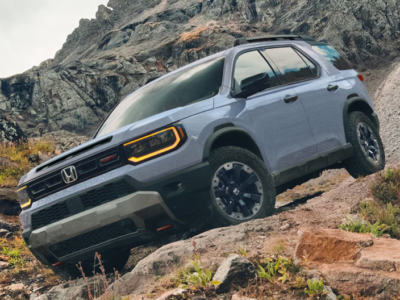
Honda Passport vs CR-V: Which SUV Is Better?

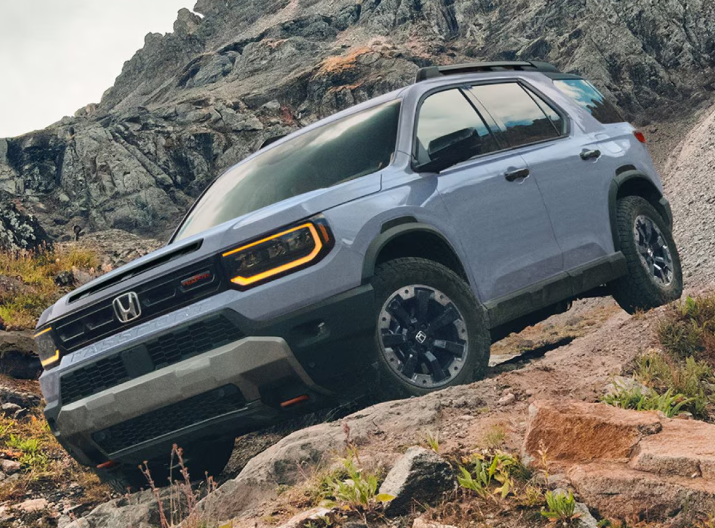
Choosing between the Honda Passport and Honda CR-V can be surprisingly difficult. Both SUVs offer comfortable interiors, modern technology, practical cargo space, and Honda's reputation for dependable engineering. However, they are designed for different driving needs.
The Honda CR-V is a compact SUV focused on fuel efficiency, affordability, and everyday convenience. The Honda Passport, meanwhile, is a larger midsize SUV designed for drivers who want more power, towing capability, cargo space, and off-road performance.
But is the Honda Passport worth the extra money? Or does the Honda CR-V offer better overall value?
In this comprehensive Honda Passport versus Honda CR-V comparison, we'll explore their engines, dimensions, fuel economy, interior comfort, reliability, towing capabilities, maintenance costs, and driving characteristics.
We'll also explain which Honda SUV makes more sense for families, commuters, outdoor enthusiasts, and long-distance travelers.
Content in this publication
- Honda Passport vs CR-V: Quick Comparison
- Honda Passport vs CR-V Exterior Design
- Honda Passport vs CR-V Size Comparison
- Honda Passport vs CR-V Engine Performance
- Honda Passport vs CR-V Fuel Economy
- Honda Passport vs CR-V Interior Comfort
- Honda Passport vs CR-V Cargo Space
- Honda Passport vs CR-V Towing Capacity
- Honda Passport vs CR-V Off-Road Capability
- Honda Passport vs CR-V AWD Performance
- Honda Passport vs CR-V Ride Quality
- Honda Passport vs CR-V Technology
- Honda Passport vs CR-V Safety
- Honda Passport vs CR-V Reliability
- Honda Passport vs CR-V Maintenance Costs
- Honda Passport vs CR-V Price Comparison
- Honda Passport vs CR-V Insurance Costs
- Honda Passport vs CR-V Resale Value
- Honda Passport vs CR-V for Families
- Honda Passport vs CR-V for City Driving
- Honda Passport vs CR-V for Highway Driving
- Honda Passport vs CR-V for Road Trips
- Honda Passport vs CR-V Pros and Cons
- Honda Passport vs CR-V: Which Is Better for You?
- Frequently Asked Questions
- Conclusion: Honda Passport or Honda CR-V?
Honda Passport vs CR-V: Quick Comparison
Before examining their differences in detail, let's review their main characteristics.
| Feature | Honda Passport | Honda CR-V |
|---|---|---|
| Vehicle category | Midsize SUV | Compact SUV |
| Seating capacity | 5 passengers | 5 passengers |
| Gasoline engine | 3.5L V6 | 1.5L turbocharged |
| Hybrid option | No | Yes |
| Horsepower | Approximately 285 hp | 190 hp / 204 hp hybrid |
| Transmission | 10-speed automatic | CVT / hybrid direct drive |
| Drivetrain | Standard AWD | FWD or AWD |
| Maximum towing capacity | 5,000 lbs | 1,500 lbs gasoline |
| Combined fuel economy | Approximately 20–21 mpg | Approximately 29–40 mpg |
| Cargo space behind rear seats | Approximately 44 cu ft | Approximately 35–39 cu ft |
| Off-road capability | Higher | Moderate |
| Purchase price | Higher | Lower |
Specifications represent recent U.S.-market models. Exact figures vary by model year, trim, and configuration.
The main difference is immediately apparent.
The Passport offers substantially more horsepower and towing capability, while the CR-V delivers significantly better fuel efficiency and a lower purchase price.
For everyday commuting, the CR-V is usually the more practical option. However, the Passport becomes more attractive when we need additional strength and versatility.
Honda Passport vs CR-V Exterior Design
Although both SUVs share Honda's design philosophy, they look noticeably different.
Honda Passport Exterior
The Honda Passport features a rugged, muscular design.
Its broad front grille, upright body, squared-off proportions, and prominent wheel arches emphasize strength and capability.
Recent Passport models feature a more adventurous appearance, particularly in TrailSport configurations.
Exterior characteristics include:
- Aggressive front-end styling.
- Substantial body cladding.
- Wide and muscular proportions.
- Standard all-wheel drive.
- Available all-terrain tires.
- Roof rails for outdoor equipment.
- Additional underbody protection on selected versions.
The Passport looks particularly appealing for drivers who enjoy camping, hiking, mountain travel, and outdoor recreation.
Its styling communicates capability rather than focusing exclusively on urban sophistication.
Honda CR-V Exterior
The CR-V takes a more refined approach.
Its exterior emphasizes modern styling, aerodynamic efficiency, and everyday practicality.
The front fascia features slim headlights and a prominent grille, while the body maintains relatively clean lines.
Compared with the Passport, the CR-V is narrower and less imposing.
These proportions help make it easier to maneuver through busy streets and smaller parking areas.
Some CR-V configurations feature sporty styling elements, while the TrailSport Hybrid introduces additional rugged details.
Nevertheless, the CR-V remains primarily a road-oriented crossover.
Design winner: Honda Passport for rugged styling and Honda CR-V for modern urban practicality.
Honda Passport vs CR-V Size Comparison
One of the most frequently asked questions is whether the Honda Passport is significantly larger than the CR-V.
The answer is yes.
The Passport belongs to the midsize SUV category, while the CR-V is classified as a compact SUV.
Exterior Dimensions
| Dimension | Honda Passport | Honda CR-V |
|---|---|---|
| Length | Approximately 191.5 inches | Approximately 184.8 inches |
| Width | Approximately 79.4 inches | Approximately 73.5 inches |
| Wheelbase | Approximately 113.6 inches | Approximately 106.3 inches |
| Seating capacity | 5 | 5 |
The Passport is approximately 6.7 inches longer and almost 6 inches wider than the CR-V.
These differences become noticeable when parking, driving through narrow streets, or maneuvering in crowded areas.
However, larger exterior dimensions do not automatically mean that every interior measurement is superior.
The CR-V makes excellent use of its available space, particularly in the second row.
Which SUV Is Easier to Park?
The Honda CR-V wins this comparison.
Its more compact dimensions make navigating parking garages, city streets, and residential driveways easier.
The Passport's additional width requires more attention in tight parking spaces.
Drivers who spend most of their time in large cities will likely appreciate the CR-V's maneuverability.
Honda Passport vs CR-V Engine Performance
Engine performance represents one of the biggest differences between these SUVs.
The Passport relies on a powerful naturally aspirated V6, while the CR-V offers smaller and more efficient gasoline and hybrid powertrains.
Honda Passport V6 Engine
Recent Honda Passport models feature a 3.5-liter V6 engine producing approximately 285 horsepower and 262 lb-ft of torque.
This engine is paired with a 10-speed automatic transmission.
Its advantages include:
- Strong acceleration.
- Confident highway passing.
- Smooth power delivery.
- Excellent performance on steep roads.
- Substantial towing capability.
- Comfortable operation when carrying passengers and luggage.
The V6 provides a traditional driving experience, delivering power progressively without relying on a turbocharger.
We particularly appreciate this setup for long-distance travel and driving through mountainous terrain.
However, its additional displacement and higher vehicle weight result in greater gasoline consumption.
Honda CR-V Turbocharged Engine
Gasoline versions of the Honda CR-V use a 1.5-liter turbocharged four-cylinder engine.
This engine produces approximately 190 horsepower and 179 lb-ft of torque.
It is paired with a continuously variable transmission.
Although considerably less powerful than the Passport's V6, the CR-V's engine is sufficient for most everyday driving situations.
The compact SUV's lighter body helps compensate for its lower horsepower.
It performs comfortably during commuting, shopping trips, and normal highway travel.
However, when climbing steep hills with several passengers or accelerating aggressively, the Passport provides noticeably stronger performance.
Honda CR-V Hybrid Engine
The CR-V Hybrid combines a 2.0-liter gasoline engine with electric motors.
Its total system output is approximately 204 horsepower.
Unlike the conventional gasoline CR-V, the hybrid uses an electric-motor-based drive system instead of a traditional belt-driven CVT.
This arrangement offers smooth acceleration and responsive low-speed performance.
The electric motor provides immediate torque, making the CR-V Hybrid particularly enjoyable during city driving.
It also offers excellent fuel efficiency.
For drivers who prioritize smooth everyday performance and reduced fuel expenses, the CR-V Hybrid is an attractive choice.
Performance winner: Honda Passport for power and Honda CR-V Hybrid for efficiency and everyday responsiveness.
Honda Passport vs CR-V Fuel Economy
Fuel consumption is an essential consideration because it directly affects long-term ownership costs.
This is where the CR-V establishes a substantial advantage.
The Passport's larger V6 engine consumes more gasoline, while the CR-V offers efficient gasoline and hybrid options.
Fuel Economy Comparison
| Model | City MPG | Highway MPG | Combined MPG |
|---|---|---|---|
| Passport AWD | 19 | 25 | 21 |
| Passport TrailSport AWD | 18 | 22 | 20 |
| CR-V Gas FWD | 28 | 33 | 30 |
| CR-V Gas AWD | 27 | 31 | 29 |
| CR-V Hybrid FWD | 43 | 36 | 40 |
| CR-V Hybrid AWD | 40 | 34 | 37 |
These are representative EPA estimates for recent U.S. models. Ratings depend on model year and configuration.
How Much Gas Can the CR-V Save?
Let's imagine driving approximately 12,000 miles per year.
A Passport averaging 21 mpg would consume about 571 gallons annually.
Meanwhile, a CR-V Hybrid averaging 40 mpg would consume approximately 300 gallons.
That represents a difference of about 271 gallons each year.
If gasoline costs $3.50 per gallon, the hybrid could save approximately $950 annually in fuel expenses.
Over five years, those savings could approach $4,750, assuming the same mileage, gasoline price, and average fuel economy.
Actual savings will vary, but the difference illustrates why fuel efficiency matters.
Which SUV Is Better for High-Mileage Drivers?
The Honda CR-V Hybrid is the obvious choice for people who drive substantial annual mileage.
Its efficiency is particularly beneficial during urban commuting.
However, buyers who drive relatively few miles or need the Passport's capabilities may consider the higher fuel consumption acceptable.
Fuel economy winner: Honda CR-V Hybrid.
Honda Passport vs CR-V Interior Comfort
Both SUVs provide comfortable cabins, but they approach passenger accommodation differently.
Honda Passport Interior
The Passport offers a spacious interior with a commanding driving position.
Its wider body contributes to generous shoulder room, particularly for passengers sharing the rear seat.
The cabin emphasizes practicality, with substantial storage compartments and comfortable seating.
Depending on the trim, features may include:
- Heated front seats.
- Leather upholstery.
- Power-adjustable front seats.
- Wireless smartphone connectivity.
- Premium audio.
- Dual-zone climate control.
- Multiple charging ports.
The overall experience feels appropriate for a larger family-oriented SUV.
Honda CR-V Interior
The Honda CR-V also provides a well-designed cabin.
Despite its smaller exterior dimensions, it offers impressive passenger space.
The rear seats are especially comfortable for a compact SUV, with generous legroom for adults.
The interior features practical storage areas, intuitive controls, and good outward visibility.
Higher trims add premium materials, heated seats, advanced infotainment features, and additional convenience equipment.
Which Honda Has More Rear Legroom?
Surprisingly, the CR-V offers slightly more published rear legroom than the Passport in recent generations.
Both provide approximately 41 inches of second-row legroom.
However, the Passport's wider cabin offers additional shoulder space.
For families who frequently travel with three rear-seat passengers, that additional width can be useful.
For two rear passengers, both SUVs provide excellent accommodation.
Honda Passport vs CR-V Cargo Space
Cargo capacity is another important factor when choosing a family SUV.
The Passport provides more overall storage space, while the CR-V remains remarkably practical for its size.
Cargo Space Comparison
| Cargo configuration | Honda Passport | Honda CR-V |
|---|---|---|
| Behind rear seats | Approximately 44 cu ft | Approximately 35–39 cu ft |
| Rear seats folded | Approximately 83–104 cu ft, depending on measurement | Up to approximately 76.5 cu ft |
Cargo measurements vary by equipment and measurement method. The Passport's highest published figures use a different maximum-volume measurement, so comparisons should consider the manufacturer's measurement notes.
Honda Passport Cargo Advantages
The Passport offers additional space for transporting:
- Large suitcases.
- Camping tents.
- Hiking equipment.
- Sports gear.
- Strollers.
- Portable coolers.
- Bulky household items.
Its wider cargo area can also make loading large objects easier.
For outdoor enthusiasts, the additional capacity is a meaningful advantage.
Honda CR-V Cargo Advantages
Although smaller, the CR-V offers excellent cargo flexibility.
Its rear seats fold to create a substantially larger loading area.
For everyday shopping, family vacations, and transporting normal luggage, the available space is more than adequate for many households.
We should also consider how frequently we actually need the Passport's additional capacity.
You may be interested in reading Honda Passport vs Toyota RAV4: Which SUV Is Better?
A larger cargo area is useful, but it may not justify a higher purchase price if it remains mostly empty.
Cargo space winner: Honda Passport.
Honda Passport vs CR-V Towing Capacity
Towing capability is one of the clearest reasons to choose the Passport over the CR-V.
Towing Capacity Comparison
| Model | Maximum towing capacity |
|---|---|
| Honda Passport | 5,000 lbs |
| Honda CR-V gasoline | 1,500 lbs |
| Honda CR-V Hybrid | 1,000 lbs |
These capacities apply to appropriately equipped recent U.S. models.
The Passport offers more than three times the towing capacity of the gasoline CR-V.
This advantage matters when transporting recreational equipment.
What Can the Honda Passport Tow?
Depending on the fully loaded trailer weight, vehicle equipment, and payload limitations, the Passport may be suitable for towing:
- Small travel trailers.
- Utility trailers.
- Certain recreational boats.
- ATV trailers.
- Camping equipment.
- Lightweight recreational vehicles.
However, trailer weight is not the only consideration.
Tongue weight, passengers, luggage, and equipment must remain within the vehicle's published limits.
What Can the Honda CR-V Tow?
The CR-V is designed for lighter towing duties.
It may be suitable for small utility trailers and certain lightweight recreational loads.
However, it is not intended to replace a dedicated towing vehicle.
If towing is a regular part of our lifestyle, the Passport is the more appropriate option.
Towing winner: Honda Passport.
Honda Passport vs CR-V Off-Road Capability
The Passport is significantly more capable when the pavement ends.
Its drivetrain, ground clearance, and specialized TrailSport equipment make it better suited to demanding terrain.
Honda Passport TrailSport
The Passport TrailSport is designed for drivers who frequently explore outdoor destinations.
Depending on configuration, equipment includes:
- Advanced all-wheel drive.
- Off-road-tuned suspension.
- All-terrain tires.
- Protective underbody components.
- Dedicated off-road driving modes.
- Trail-focused camera technology.
- Recovery equipment.
The TrailSport also provides increased ground clearance compared with less rugged Passport configurations.
These features help when navigating rocky roads, loose gravel, mud, and uneven trails.
However, the Passport remains a unibody SUV.
It does not provide the same type of low-range gearing or extreme off-road design found in some traditional body-on-frame vehicles.
Honda CR-V Off-Road Performance
The CR-V can handle certain unpaved surfaces, especially with AWD.
It is suitable for maintained gravel roads, light trails, and occasional trips to rural destinations.
The CR-V TrailSport Hybrid adds rugged styling and all-terrain tires, improving its suitability for light adventures.
Nevertheless, the Passport offers greater specialized off-road capability.
Which SUV Is Better for Camping?
The answer depends on the type of camping.
For established campsites accessed by maintained roads, the CR-V is usually sufficient.
For more remote destinations involving rough terrain, the Passport provides additional confidence.
Its greater towing and cargo capabilities also help when carrying substantial outdoor equipment.
Off-road winner: Honda Passport TrailSport.
Honda Passport vs CR-V AWD Performance
All-wheel drive improves traction when road conditions become challenging.
However, the two SUVs use different AWD systems.
Honda Passport AWD
The Passport comes with Honda's i-VTM4 all-wheel-drive system.
This system can distribute torque between the front and rear axles and between individual rear wheels.
The result is improved traction and handling in a variety of driving conditions.
It is particularly beneficial when traveling on slippery roads or navigating uneven surfaces.
Honda CR-V AWD
The CR-V uses Honda's Real Time AWD technology on compatible configurations.
The system automatically adjusts torque distribution when additional traction is required.
For normal driving in rain, snow, or occasional gravel conditions, this system provides useful assistance.
However, the Passport offers a more sophisticated AWD setup intended for more demanding applications.
Which Is Better in Snow?
Both vehicles can perform well in snow when equipped with appropriate tires.
The Passport's higher ground clearance may help when driving through deeper accumulations.
The CR-V's lighter weight and compact dimensions can be advantageous in certain everyday situations.
Importantly, AWD does not significantly improve braking traction on its own.
Quality winter tires remain essential for safe driving in severe winter conditions.
Honda Passport vs CR-V Ride Quality
Ride comfort matters whether we're commuting across town or traveling hundreds of miles.
Both SUVs perform well, but their driving personalities differ.
Honda Passport Ride Comfort
The Passport feels substantial and stable.
Its longer wheelbase helps deliver a composed experience during highway travel.
The powerful V6 provides relaxed acceleration, while the automatic transmission offers smooth gear changes.
However, TrailSport models equipped with all-terrain tires may produce more road noise on certain surfaces.
The Passport also feels heavier when navigating corners and tight urban streets.
Honda CR-V Ride Comfort
The CR-V feels lighter and more agile.
Its suspension provides a comfortable balance between absorbing road imperfections and maintaining handling stability.
The CR-V Hybrid is especially pleasant during stop-and-go traffic because of its smooth electric-motor operation.
Its smaller dimensions make it easier to maneuver.
For everyday city driving, we generally prefer the CR-V.
For highway trips involving heavy cargo or demanding terrain, the Passport may be more appealing.
Honda Passport vs CR-V Technology
Modern drivers expect convenient connectivity and advanced infotainment.
Fortunately, both SUVs provide competitive technology.
Honda Passport Technology
Recent Passport models offer features such as:
- A large central touchscreen.
- Digital driver instrumentation.
- Wireless Apple CarPlay.
- Wireless Android Auto.
- Google built-in.
- Wireless phone charging.
- Multiple USB-C charging ports.
- Available premium Bose audio.
- Available trail-oriented camera technology.
These features make the Passport feel modern despite its rugged focus.
Honda CR-V Technology
The CR-V also offers a comprehensive technology package.
Depending on the trim, features include:
- Touchscreen infotainment.
- Wireless smartphone connectivity.
- Digital instrument displays.
- Wireless charging.
- USB charging ports.
- Available premium audio.
- Google built-in on selected versions.
The CR-V provides nearly everything most drivers need for navigation, entertainment, and smartphone integration.
Which Honda Has Better Technology?
The Passport offers an attractive standard infotainment setup with a large display.
However, upper CR-V trims deliver many comparable features.
For everyday connectivity, both are excellent options.
Honda Passport vs CR-V Safety
Safety is particularly important for buyers transporting children and other passengers.
Both SUVs offer Honda Sensing driver-assistance technology.
Available systems include:
- Collision Mitigation Braking System.
- Adaptive Cruise Control.
- Lane Keeping Assist System.
- Road Departure Mitigation System.
- Traffic Sign Recognition.
- Blind-spot monitoring.
- Rear cross-traffic monitoring.
- Parking assistance features.
The exact equipment varies by model year and trim.
Is the Honda Passport Safer Than the CR-V?
The Passport's larger dimensions do not automatically make it safer.
Vehicle safety depends on structural engineering, restraint systems, crash compatibility, and numerous other factors.
Both SUVs incorporate modern safety technologies.
For an accurate comparison, we should examine crash-test ratings for the specific model years under consideration.
We should also remember that driver-assistance systems are designed to help drivers, not replace their attention.
Honda Passport vs CR-V Reliability
Reliability is one of the most important considerations when purchasing a vehicle intended for long-term ownership.
Honda has a strong reputation in this area, but the Passport and CR-V use different mechanical components.
Honda Passport Reliability
The Passport features a naturally aspirated V6 engine.
Some drivers prefer this arrangement because it does not rely on turbocharging.
Its traditional automatic transmission also provides a familiar driving experience.
However, the V6 requires specific maintenance, including timing-belt service at the prescribed interval.
The Passport's standard AWD system introduces additional components that require proper servicing.
Its larger tires and heavier construction may also increase certain ownership expenses.
Because the latest generation is relatively new, long-term reliability results remain limited.
Honda CR-V Reliability
The CR-V offers gasoline and hybrid powertrains.
The turbocharged gasoline engine requires proper oil maintenance, while the CVT should receive appropriate fluid servicing.
The hybrid uses a different transmission arrangement and incorporates electric motors.
Its regenerative braking system can reduce conventional brake usage in some driving conditions.
However, the hybrid battery and associated electrical components introduce different long-term service considerations.
Which Is More Reliable?
We cannot confidently declare one vehicle universally more reliable without sufficient evidence for the specific model years and powertrains.
Both can provide dependable transportation with appropriate maintenance.
Before buying, we recommend reviewing:
- Vehicle maintenance records.
- Manufacturer service schedules.
- Warranty coverage.
- Recalls.
- Common owner-reported issues.
- Inspection results for used examples.
Reliability verdict: Both are competitive choices, although maintenance requirements differ.
Honda Passport vs CR-V Maintenance Costs
The CR-V generally offers advantages when it comes to routine operating expenses.
Its smaller size and lighter weight may result in less expensive tires and certain replacement components.
The Passport's V6, larger tires, and standard AWD equipment can increase maintenance costs.
Honda Passport Maintenance
Important service items include:
You may be interested in readingHonda Passport vs Toyota RAV4: Which SUV Is Better?You may be interested in reading
Honda Passport vs Nissan Pathfinder: Which SUV Is Better?- Engine oil and filter changes.
- Transmission fluid maintenance.
- Timing-belt service.
- Brake maintenance.
- AWD system servicing.
- Tire rotations and replacement.
- Cooling system inspections.
The timing-belt requirement deserves particular attention because it represents a significant scheduled maintenance expense.
Honda CR-V Maintenance
Typical service items include:
- Engine oil and filter changes.
- Transmission or hybrid drivetrain fluid servicing.
- Brake inspections.
- Tire maintenance.
- Cooling system checks.
- Engine air-filter replacement.
- Hybrid-system inspections where applicable.
The CR-V Hybrid may benefit from reduced brake wear under certain driving conditions.
Nevertheless, its hybrid battery and electrical systems should be considered when evaluating long-term repair expenses.
For drivers prioritizing predictable everyday costs, the CR-V is generally more attractive.
Honda Passport vs CR-V Price Comparison
Purchase price represents another major difference.
The Honda CR-V is considerably less expensive than the Passport.
In the U.S. market, recent gasoline CR-V models start in the low-$30,000 range, while the Passport starts in the mid-$40,000 range.
Higher trims can narrow or widen the price difference depending on equipment.
Honda CR-V Price Positioning
The CR-V lineup typically includes affordable gasoline trims alongside higher-priced hybrid configurations.
Entry-level versions focus on practicality and essential features.
Midrange trims add comfort and convenience equipment.
Higher hybrid trims offer premium features and improved fuel efficiency.
This variety makes the CR-V accessible to a wider range of budgets.
Honda Passport Price Positioning
The Passport starts at a higher price because it includes a larger V6 engine, standard AWD, and a more substantial vehicle platform.
TrailSport and TrailSport Elite configurations increase the price further through specialized off-road equipment and premium features.
Is the Passport Worth the Price Difference?
The Passport is worth the additional expense if we regularly use its advantages.
For example, drivers who frequently tow trailers, visit difficult terrain, or transport bulky equipment may appreciate its capabilities.
However, buyers who mainly commute on paved roads might struggle to justify paying considerably more.
For them, the CR-V often provides better value.
Honda Passport vs CR-V Insurance Costs
Insurance expenses can influence the true cost of ownership.
The Passport's higher market value may contribute to higher premiums.
However, insurance prices depend on several factors:
- Driver age.
- Driving record.
- Geographic location.
- Annual mileage.
- Coverage limits.
- Deductible.
- Vehicle trim.
- Repair costs.
- Insurance provider.
We should never assume that the Passport will always cost more to insure.
Obtaining quotes for both vehicles using identical coverage is the best way to compare.
Honda Passport vs CR-V Resale Value
Both models benefit from Honda's established reputation and strong recognition in the SUV market.
However, depreciation depends on more than brand reputation.
Important factors include mileage, vehicle condition, maintenance history, accident records, regional demand, and market conditions.
The CR-V's popularity and efficient powertrains may support demand among cost-conscious buyers.
The Passport may appeal to shoppers specifically seeking a powerful V6 SUV with outdoor capabilities.
When comparing resale value, we should calculate depreciation as both a dollar amount and a percentage of the original transaction price.
A more expensive SUV can lose more money in absolute terms even if its percentage depreciation is competitive.
Honda Passport vs CR-V for Families
Both SUVs offer comfortable seating for five passengers.
However, different family lifestyles may favor one model.
Why Families Choose the CR-V
The CR-V is ideal for families seeking affordable transportation.
Its benefits include:
- Spacious rear seating.
- Practical cargo space.
- Excellent fuel economy.
- Comfortable suspension.
- Easy parking.
- Modern safety features.
- Lower starting price.
For families with one or two children, the CR-V can be an excellent all-around vehicle.
It offers enough room for school supplies, groceries, luggage, and everyday activities.
Why Families Choose the Passport
The Passport appeals to families needing greater cargo capacity and a wider cabin.
It is especially attractive for road trips, camping, and recreational activities.
The additional towing capability also makes it more versatile for families traveling with trailers.
However, neither SUV offers third-row seating.
If we need room for more than five passengers, the Honda Pilot is a more appropriate alternative.
Honda Passport vs CR-V for City Driving
City driving involves frequent stops, traffic congestion, parking, and maneuvering around obstacles.
The CR-V performs particularly well in these conditions.
Its compact dimensions make it easier to operate in crowded urban areas.
The hybrid powertrain also delivers excellent efficiency during stop-and-go traffic.
The Passport offers a comfortable driving position and strong acceleration, but its larger dimensions are less convenient in tight spaces.
Its higher fuel consumption becomes particularly noticeable during frequent urban commuting.
City driving winner: Honda CR-V Hybrid.
Honda Passport vs CR-V for Highway Driving
Both SUVs are comfortable highway vehicles.
The Passport offers effortless V6 acceleration, particularly when passing slower traffic.
Its substantial body and longer wheelbase contribute to a stable driving experience.
The CR-V delivers comfortable highway performance with significantly lower fuel consumption.
For long-distance commuters, this efficiency can translate into meaningful savings.
The better choice depends on priorities.
If we're traveling with heavy cargo or towing equipment, the Passport has clear advantages.
If we're covering substantial mileage without heavy loads, the CR-V offers excellent value.
Honda Passport vs CR-V for Road Trips
Road trips reveal the practical advantages of both SUVs.
Honda Passport Road Trip Advantages
The Passport offers generous cargo capacity, substantial engine power, and a comfortable cabin.
It is especially appealing for vacations involving outdoor activities and large amounts of equipment.
Honda CR-V Road Trip Advantages
The CR-V offers excellent fuel economy, generous passenger space, and comfortable seating.
Its smaller exterior dimensions also make navigating unfamiliar cities and parking areas easier.
Which Is Better?
For ordinary family vacations, the CR-V is often sufficient.
For adventure trips involving trailers, rough roads, and bulky equipment, the Passport is better equipped.
Honda Passport vs CR-V Pros and Cons
Honda Passport Pros
- Powerful V6 engine.
- Strong acceleration.
- Standard advanced AWD.
- Up to 5,000 pounds of towing capacity.
- More cargo space.
- Wider interior.
- Better off-road capability.
- Rugged styling.
- Comfortable highway performance.
Honda Passport Cons
- Higher purchase price.
- Greater fuel consumption.
- Larger exterior dimensions.
- Potentially higher maintenance costs.
- No hybrid option.
- No third-row seating.
Honda CR-V Pros
- Lower starting price.
- Excellent hybrid fuel efficiency.
- Spacious interior for its class.
- Comfortable second-row seating.
- Easy city maneuverability.
- Practical cargo capacity.
- Available AWD.
- Modern technology.
- Lower expected daily operating costs.
Honda CR-V Cons
- Less engine power.
- Limited towing capacity.
- Less capable on challenging trails.
- Narrower cabin.
- No V6 engine.
- No third-row seating.
Honda Passport vs CR-V: Which Is Better for You?
The decision becomes easier when we match each SUV to specific needs.
| Driving requirement | Recommended SUV |
|---|---|
| Daily commuting | Honda CR-V |
| Fuel efficiency | Honda CR-V Hybrid |
| Lower purchase price | Honda CR-V |
| Urban driving | Honda CR-V |
| Stronger acceleration | Honda Passport |
| Towing trailers | Honda Passport |
| Off-road adventures | Honda Passport TrailSport |
| Maximum cargo capacity | Honda Passport |
| Regular family transportation | Honda CR-V |
| Rugged exterior styling | Honda Passport |
| Lower expected running costs | Honda CR-V |
| Road trips with heavy equipment | Honda Passport |
Who Should Buy the Honda Passport?
We recommend the Passport for buyers who regularly need towing capability, strong engine performance, or additional off-road equipment.
It is an excellent candidate for outdoor enthusiasts who want a comfortable everyday SUV without sacrificing too much adventure capability.
Its V6 engine, spacious cargo area, and sophisticated AWD system are its most compelling advantages.
Who Should Buy the Honda CR-V?
We recommend the CR-V for buyers who prioritize affordability, comfort, efficiency, and everyday practicality.
The CR-V Hybrid is particularly attractive for drivers covering significant annual mileage.
It provides excellent fuel economy without sacrificing useful passenger or cargo space.
For most drivers, the CR-V offers everything necessary for comfortable daily transportation.
Frequently Asked Questions
1. Is the Honda Passport Bigger Than the Honda CR-V?
Yes. The Honda Passport is larger than the CR-V in overall length, width, and height.
The Passport measures approximately 191.5 inches long, while the CR-V measures approximately 184.8 inches.
The Passport also offers greater cargo capacity and a wider cabin.
However, both SUVs seat five passengers, and the CR-V provides excellent second-row legroom.
2. Is the Honda Passport More Reliable Than the CR-V?
There is no definitive evidence that the latest Passport is universally more reliable than the CR-V.
Both vehicles use Honda engineering, but their engines and drivetrain components differ.
The Passport features a naturally aspirated V6, while the CR-V offers turbocharged gasoline and hybrid options.
Proper maintenance and driving habits significantly influence long-term dependability.
3. Does the Honda Passport Get Better Gas Mileage Than the CR-V?
No. The CR-V is substantially more fuel-efficient.
Recent Passport models achieve approximately 20–21 mpg combined.
Gasoline CR-V versions can achieve around 29–30 mpg combined, while efficient hybrid configurations can reach approximately 40 mpg.
The CR-V Hybrid is the better choice for minimizing gasoline expenses.
4. Which Is Better for Snow, Honda Passport or CR-V?
Both vehicles can handle winter conditions when equipped with appropriate tires.
However, the Passport offers a sophisticated standard AWD system and greater available ground clearance.
These advantages can help in more demanding conditions.
The CR-V AWD remains an excellent option for everyday winter commuting on maintained roads.
5. Is the Honda Passport Worth Buying Over the CR-V?
The Honda Passport is worth the additional investment if we need its V6 power, towing capacity, cargo space, or off-road capabilities.
However, drivers who mainly travel on paved roads may find the CR-V more economical and practical.
For most commuters and families, the CR-V delivers a better balance between purchase price, fuel efficiency, and everyday comfort.
Conclusion: Honda Passport or Honda CR-V?
After examining the Honda Passport versus Honda CR-V, we can confidently say that both are excellent SUVs, but they serve different purposes.
The Honda Passport stands out for its powerful V6 engine, advanced AWD system, generous cargo space, and impressive towing capacity.
It is the better choice for drivers who enjoy outdoor adventures, travel with substantial equipment, or need greater mechanical capability.
The Honda CR-V excels in affordability, fuel economy, daily comfort, and urban maneuverability.
Its hybrid powertrain makes it especially attractive for buyers seeking lower fuel expenses without sacrificing practicality.
For most buyers, we recommend the Honda CR-V, particularly the hybrid version. It delivers an excellent combination of comfort, efficiency, space, and value.
However, if we genuinely need stronger towing performance, additional cargo capacity, and more serious off-road equipment, the Honda Passport is worth its higher price.
Ultimately, the best SUV isn't necessarily the biggest or most powerful. It's the one that fits our driving habits, financial priorities, and lifestyle.
You may be interested in readingHonda Passport vs Toyota RAV4: Which SUV Is Better?You may be interested in reading
Honda Passport vs Nissan Pathfinder: Which SUV Is Better?You may be interested in reading
Honda Passport vs Jeep Grand Cherokee: Which SUV Is Better?If you want to know other articles similar to Honda Passport vs CR-V: Which SUV Is Better? you can visit the category Models.
Honda Passport vs Toyota 4Runner: Which SUV Is Better?
Honda Passport vs Ford Bronco: Which SUV Is Better?
Honda Passport vs Ford Explorer: Which SUV Is Better?
Honda Passport or Pilot: Which SUV Is Better?
Honda Passport vs Jeep Grand Cherokee: Which SUV Is Better?
Honda Passport vs Nissan Pathfinder: Which SUV Is Better?
Leave a Reply
More content of your interest