

Toyota Yaris Cross 0–60: Complete Acceleration Breakdown

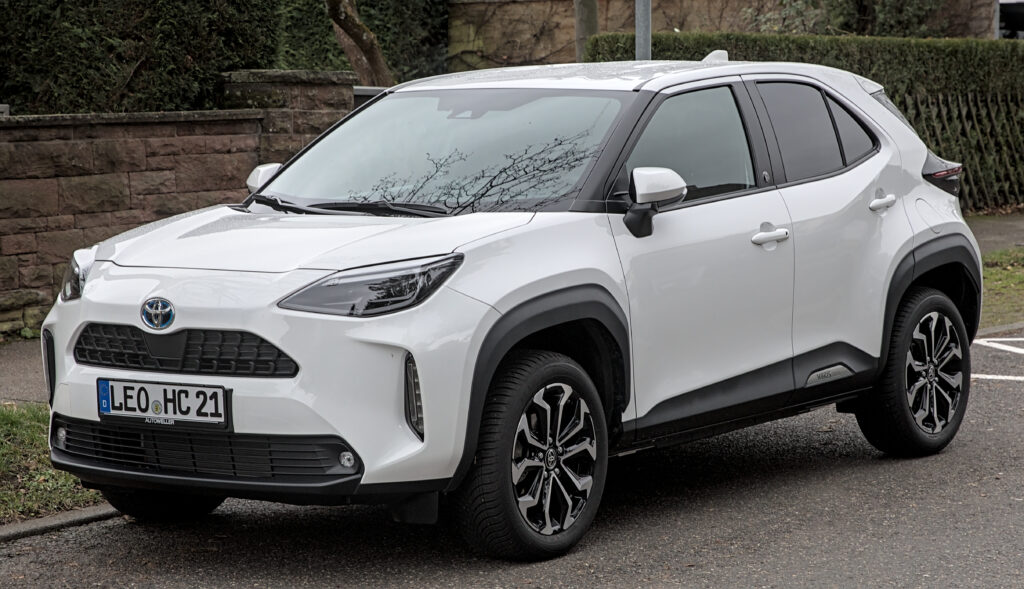
The Toyota Yaris Cross blends urban practicality with hybrid efficiency, but how does it perform when you hit the accelerator? The 0–60 mph time tells us a lot about this compact SUV’s power, responsiveness, and driving personality. Let’s explore everything you need to know — from engine specs and acceleration figures to how it compares against rivals.
Content in this publication
- Introduction to the Toyota Yaris Cross
- The Meaning Behind 0–60 mph
- Toyota Yaris Cross Engine Line-up
- Toyota Yaris Cross 0–60 mph Time
- Factors Influencing 0–60 Performance
- Yaris Cross vs Rivals (0–60 mph Comparison)
- Driving Feel and Throttle Response
- The Role of the e-CVT Transmission
- Hybrid Boost — The Secret Ingredient
- Fuel Efficiency vs Acceleration Trade-Off
- Handling Dynamics and Weight Distribution
- AWD-i Version: Does It Improve 0–60?
- 0–60 mph vs 0–100 km/h
- How the Yaris Cross Feels Compared to a Yaris Hatchback
- Performance in Different Conditions
- Acceleration vs Efficiency: A Balancing Act
- Improving Your 0–60 Performance
- Pros and Cons of Toyota Yaris Cross Performance
- Verdict — A City SUV With Just Enough Speed
- Final Thoughts
- Frequently Asked Questions (FAQs)
Introduction to the Toyota Yaris Cross
The Toyota Yaris Cross is a compact crossover SUV built on Toyota’s GA-B platform, shared with the standard Yaris hatchback. Designed for city driving but with SUV flair, it delivers a smart balance of economy and performance.
What makes it interesting isn’t just its sleek hybrid technology — it’s how it feels when accelerating, merging onto highways, or overtaking.
The Meaning Behind 0–60 mph
Why 0–60 mph Matters
The 0–60 mph measurement reveals how fast a vehicle can accelerate from a standstill to highway speed. It’s a key indicator of engine performance, torque delivery, and transmission responsiveness.
- Sub-10 seconds: Typically considered quick for compact crossovers.
- 10–12 seconds: Balanced for economy-focused vehicles.
- 12+ seconds: Geared more toward efficiency than speed.
Toyota Yaris Cross Engine Line-up
Hybrid Powertrain Explained
The Yaris Cross uses a 1.5-litre three-cylinder hybrid system, paired with an electric motor and e-CVT transmission. Combined power output is 114 bhp (85 kW), enough for a smooth yet economical drive.
Key Powertrain Specifications
| Specification | Detail |
|---|---|
| Engine Type | 1.5-litre 3-cylinder Hybrid (Petrol + Electric) |
| Power Output | 114 bhp |
| Transmission | e-CVT (Electronic Continuously Variable Transmission) |
| Drive Options | Front-Wheel Drive / AWD-i |
| Torque | 120 Nm (Petrol) + Electric boost |
Toyota Yaris Cross 0–60 mph Time
H3: Acceleration Figures
| Variant | 0–60 mph (seconds) | Drivetrain |
|---|---|---|
| 1.5 Hybrid FWD | 10.8 seconds | Front-Wheel Drive |
| 1.5 Hybrid AWD-i | 11.2 seconds | All-Wheel Drive |
| 1.5 Hybrid Excel | 10.7 seconds | Front-Wheel Drive |
Real-World Performance
On paper, the Yaris Cross isn’t built to be a rocket, but in real-world driving, it feels lively thanks to the electric motor’s instant torque. Around town, it accelerates smoothly from traffic lights and handles motorway ramps with composed confidence.
Factors Influencing 0–60 Performance
Weight and Aerodynamics
The Yaris Cross weighs around 1,190–1,290 kg, slightly heavier than the hatchback version due to SUV design and hybrid components. However, Toyota’s aerodynamic body lines minimize drag, keeping acceleration responsive.
Drive Mode Selection
The car’s Drive Mode Selector offers:
- EV Mode: Pure electric power for short bursts — quiet and efficient.
- Eco Mode: Limits throttle response to maximize fuel economy.
- Power Mode: Delivers sharper throttle input and better acceleration.
Yaris Cross vs Rivals (0–60 mph Comparison)
| Model | 0–60 mph | Power Output |
|---|---|---|
| Toyota Yaris Cross Hybrid | 10.8 sec | 114 bhp |
| Honda HR-V e:HEV | 10.6 sec | 129 bhp |
| Nissan Juke Hybrid | 10.1 sec | 141 bhp |
| Renault Captur E-Tech Hybrid | 9.8 sec | 145 bhp |
| Ford Puma 1.0 EcoBoost | 9.6 sec | 155 bhp |
The Yaris Cross is slightly slower than some competitors, but it compensates with superior fuel efficiency and reliability.
Driving Feel and Throttle Response
Everyday Acceleration
When you step on the pedal, the electric motor provides instant torque before the petrol engine joins in, creating a smooth power curve. It doesn’t deliver a sports-car punch — it delivers predictable ease.
You may be interested in reading Skoda Octavia Fuel Consumption & Efficiency Guide (2024–2025 Models)
Highway Merging and Overtaking
From 30–60 mph, performance remains steady. It’s adequate for overtaking or merging onto busy motorways, though kickdown responses are moderate due to the e-CVT’s nature.
The Role of the e-CVT Transmission
The electronic continuously variable transmission (e-CVT) balances engine efficiency and seamless power delivery. While it occasionally holds revs under heavy throttle, Toyota has tuned it for quietness and smoothness.
Pros:
- No gear-shifting jerks
- Improved fuel efficiency
- Smooth hybrid transition
Cons:
- Rubber-band feel under hard acceleration
- Slower responsiveness compared to dual-clutch systems
Hybrid Boost — The Secret Ingredient
The hybrid system’s electric motor significantly enhances low-end torque. This makes the Yaris Cross feel quicker than its figures suggest — especially at city speeds where the electric motor takes the lead.
Fuel Efficiency vs Acceleration Trade-Off
Toyota’s Priority
Toyota clearly prioritized fuel economy and CO₂ emissions over outright speed. The 0–60 mph performance is more than sufficient for most daily needs — and the trade-off pays dividends in real-world fuel consumption of 55–62 mpg combined.
Handling Dynamics and Weight Distribution
The Yaris Cross’s low centre of gravity and rigid TNGA platform contribute to stability during acceleration. Even though it’s an SUV, the car doesn’t lurch or tilt excessively when launching hard.
AWD-i Version: Does It Improve 0–60?
Interestingly, the AWD-i model adds traction rather than speed. The electric rear motor activates automatically on slippery surfaces but adds around 60 kg of extra weight — slightly slowing the 0–60 time.
0–60 mph vs 0–100 km/h
In European testing, the benchmark is 0–100 km/h, which equates to 0–62 mph. For the Yaris Cross:
- Front-Wheel Drive: 11.2 seconds
- AWD-i: 11.8 seconds
The difference between 0–60 mph and 0–100 km/h is marginal, around 0.3 seconds.
You may be interested in readingSkoda Octavia Fuel Consumption & Efficiency Guide (2024–2025 Models)You may be interested in reading
 Renault Clio Fuel Economy Guide: Real-World MPG, Hybrid Efficiency & Best Engines
How the Yaris Cross Feels Compared to a Yaris Hatchback
The Yaris Hatchback achieves 0–60 mph in 9.7 seconds, making it noticeably quicker due to its lighter weight. The Cross, while slightly slower, feels more composed and confident — a fair trade for SUV comfort and space.
Performance in Different Conditions
Cold Weather
In cold starts, the petrol engine runs more frequently to maintain battery charge, which can slightly affect 0–60 performance.
High Altitude
At high elevations, thinner air can reduce engine performance by up to 5%, though hybrid assistance helps mitigate this.
Acceleration vs Efficiency: A Balancing Act
Toyota engineers finely tuned the hybrid system to deliver enough acceleration without compromising economy. This is why the 0–60 figures are modest but consistent and reliable across different environments.
Improving Your 0–60 Performance
While you can’t remap the hybrid ECU easily, there are still ways to slightly enhance acceleration:
- Keep tyre pressure optimal.
- Use Power Mode when needed.
- Minimize load and unnecessary cargo.
- Maintain battery health with regular hybrid servicing.
Pros and Cons of Toyota Yaris Cross Performance
| Pros | Cons |
|---|---|
| Smooth, predictable acceleration | Slower than turbo rivals |
| Excellent fuel economy | e-CVT drone under load |
| Instant electric torque | Limited top-end speed |
| Balanced chassis | Not for performance enthusiasts |
Verdict — A City SUV With Just Enough Speed
The Toyota Yaris Cross 0–60 performance might not thrill adrenaline junkies, but it perfectly matches its design philosophy: smart, efficient, dependable. It’s the kind of car that rewards calm confidence over raw speed. For everyday commuting, it strikes a sweet spot between performance and practicality.
Final Thoughts
When we look at the Yaris Cross’s 0–60 mph performance in context, it’s clear Toyota aimed for real-world usability rather than headline-grabbing numbers. It’s an SUV for drivers who care more about seamless hybrid power, low emissions, and long-term reliability than racing from the lights.
Frequently Asked Questions (FAQs)
1. How fast is the Toyota Yaris Cross 0–60?
The front-wheel-drive hybrid version accelerates from 0–60 mph in around 10.8 seconds, offering smooth and consistent performance.
2. Is the Yaris Cross underpowered?
Not really — it’s tuned for efficiency, not speed. The hybrid setup provides good low-end response, especially in city driving.
3. Does the Yaris Cross feel slow on highways?
It’s capable enough for merging and overtaking, though the e-CVT can feel stretched at higher speeds.
You may be interested in readingSkoda Octavia Fuel Consumption & Efficiency Guide (2024–2025 Models)You may be interested in reading
Renault Clio Fuel Economy Guide: Real-World MPG, Hybrid Efficiency & Best EnginesYou may be interested in reading
 Toyota RAV4 “0 Miles to Empty” — How Far Can You Really Drive?
4. Which version is quicker: FWD or AWD?
The FWD model is slightly faster due to its lighter weight.
5. Can the Yaris Cross 0–60 time be improved?
Performance tweaks are limited, but using Power Mode and maintaining hybrid components well can keep acceleration consistent.
If you want to know other articles similar to Toyota Yaris Cross 0–60: Complete Acceleration Breakdown you can visit the category Driving.
Vauxhall Meriva MPG: Real-World Fuel Economy Guide

Hyundai i40 MPG: Real-World Fuel Economy Guide
Kia Rio Fuel Consumption: Real-World Efficiency, MPG Insights & Smart Driving Tips
Kia Rio Miles Per Gallon: Real MPG, Efficiency Tips & What to Expect

Citroen C1 Fuel Consumption: The Real-World Guide to MPG, Costs, and Smarter Driving
Vauxhall Insignia Top Speed: How Fast Can This Smart Executive Car Really Go?
Leave a Reply
More content of your interest