
Suzuki Swift Engine Size: Full Guide for Every Generation

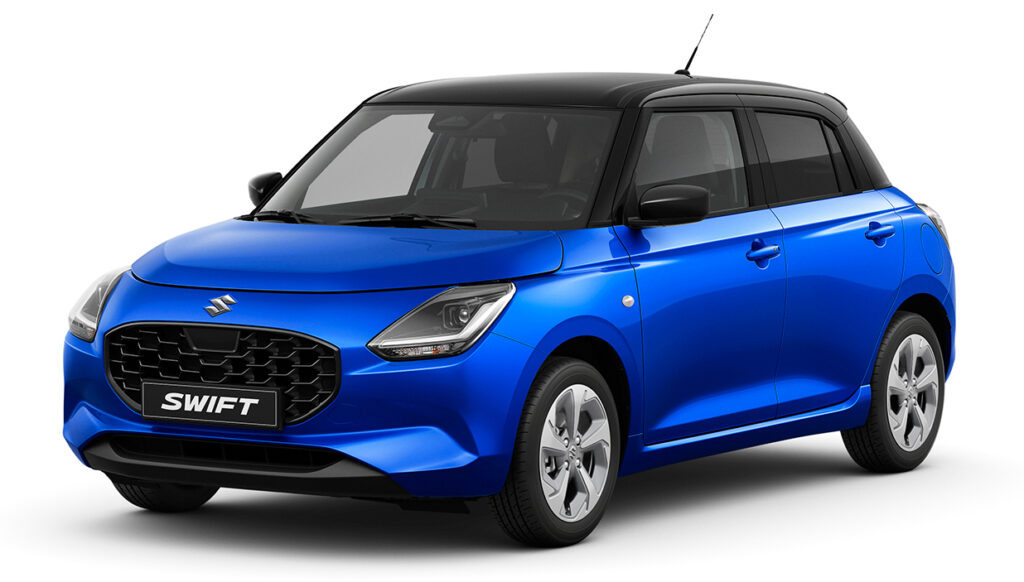
The Suzuki Swift has always been one of those small cars with a big personality — light, playful, surprisingly efficient, and packed with clever engineering. At the heart of that charm lies something simple but essential: its engine size. Whether we’re looking at early naturally aspirated units or today’s Boosterjet turbos with hybrid assistance, each engine transforms how the Swift feels, drives, and lives with us day to day.
In this definitive guide, we explore every engine size ever fitted to the Suzuki Swift — including specs, performance feel, running costs, reliability, and the type of driver each engine suits. Let’s dive in.
Content in this publication
- Understanding Suzuki Swift Engine Sizes
- A Quick History of Swift Engine Evolution
- Swift Engine Sizes by Generation
- In-Depth Engine Size Analysis
- 1.0-Litre Engines
- 1.2-Litre Engines
- 1.3-Litre Engines (Petrol & Diesel)
- 1.4-Litre Engines
- 1.5-Litre Engines
- 1.6-Litre Swift Sport Engine
- Comparing Swift Engine Sizes
- Real-World Fuel Economy by Engine
- Reliability: Which Engine Lasts Longest?
- Maintenance Costs by Engine Size
- Choosing the Right Swift Engine Size
- Final Thoughts
- FAQs
Understanding Suzuki Swift Engine Sizes
The Swift has used a surprisingly wide range of engines over the decades. Broadly, these fall into categories such as:
- Compact 1.0-litre petrol engines
- Popular 1.2-litre DualJet engines
- Punchy turbocharged Boosterjet units
- Larger 1.3, 1.4, 1.5, and 1.6 engines on earlier models
- Mild-hybrid systems paired with the 1.2 and 1.0 engines
What’s impressive is how much Suzuki squeezes from such small engines — a signature trait across every Swift generation.
A Quick History of Swift Engine Evolution
Early Models (Pre-2005)
These cars ran tiny, mechanically simple engines (1.0, 1.3, 1.5). They were rugged and cheap to maintain, but refinement wasn’t their strength.
Modern Swift Begins (2005–2010)
With this generation the Swift became global. Suzuki introduced the 1.3 and 1.5 petrol engines and a 1.3 diesel (Fiat-sourced), giving drivers more choice and better performance.
Efficiency Takes the Lead (2010–2017)
Enter the brilliant 1.2 DualJet and the rev-happy 1.6 Swift Sport engine. This generation is known for reliability and smooth driving.
Turbo and Hybrid Era (2017–Present)
Suzuki added the 1.0 Boosterjet and mild-hybrid tech, while the Swift Sport adopted a torque-rich 1.4 Boosterjet. Lightweight design remained a priority.
Swift Engine Sizes by Generation
Second Generation (2005–2010)
Engines offered included:
- 1.3L petrol (M13A)
- 1.5L petrol (M15A)
- 1.3L diesel (DDiS)
Each engine provided a different character — the 1.3 was eager, the 1.5 more relaxed, and the diesel torquey and efficient.
Third Generation (2010–2017)
Available engines:
- 1.2L petrol (K12B / DualJet)
- 1.4L petrol (K14B)
- 1.6L Swift Sport engine
- 1.3L diesel (DDiS)
This era introduced higher refinement and better fuel economy. The 1.2 DualJet became the go-to engine for daily drivers.
You may be interested in reading Suzuki Swift Engine Oil: The Complete Expert Guide Every Owner Needs
Fourth Generation (2017–Present)
Available engines:
- 1.0 Boosterjet (K10C)
- 1.2 DualJet mild-hybrid (K12C / K12D)
- 1.4 Boosterjet (Swift Sport)
These engines brought turbocharging and hybrid efficiency to the Swift lineup.
In-Depth Engine Size Analysis
Below is a detailed breakdown of each engine size and how it shapes the Swift’s personality.
1.0-Litre Engines
Where It's Found
- 2017+ 1.0 Boosterjet
- Some earlier 1.0 NA engines (market-dependent)
Driving Experience
The Boosterjet is tiny but mighty — imagine a pocket-sized rocket that responds quickly and pulls confidently thanks to turbocharging.
Pros
- Strong torque
- Smooth turbo power
- Great fuel economy
- Lightweight—helps handling
Cons
- Turbo maintenance
- More complex than a naturally aspirated engine
Perfect For
Drivers wanting fun and efficiency combined.
1.2-Litre Engines
Where It's Found
- 2010–present
Driving Feel
The 1.2 DualJet is the Swift’s bread and butter — incredibly smooth, quiet, and famously reliable. Thanks to its DualJet injection system, fuel efficiency is excellent.
Pros
- Outstanding longevity
- Low running costs
- Smooth, predictable power
- Best engine for new drivers
Cons
- Less punch on motorways
- Not sporty
Perfect For
Drivers focused on reliability, savings, and daily comfort.
1.3-Litre Engines (Petrol & Diesel)
Petrol 1.3 (M13A)
Simple, reliable, and mechanically straightforward. Not fast, but dependable.
Diesel 1.3 (DDiS)
A torquey little unit with great fuel economy. Somewhat noisy, but strong for long-distance driving.
Perfect For
High-mileage drivers and those who value simplicity.
1.4-Litre Engines
Naturally Aspirated 1.4 (K14B)
Smooth and responsive. A solid mid-range engine.
1.4 Boosterjet (Swift Sport)
The Swift Sport’s turbocharged heart — torquey, eager, and impressively refined.
You may be interested in readingSuzuki Swift Engine Oil: The Complete Expert Guide Every Owner NeedsYou may be interested in reading
 How to Reset the Service Interval on a Suzuki Swift (Full Manual Reset Guide)
Pros
- Great torque
- Strong motorway performance
- Sporty but efficient
Cons
- Higher servicing expectations
- More expensive to maintain than the 1.2
Perfect For
Drivers who want a hot hatch vibe without sacrificing everyday usability.
1.5-Litre Engines
Where It's Found
- Pre-2010 Swifts
Driving Personality
A step above the 1.3 in power and mid-range torque, making early Swifts feel more confident on the motorway.
Pros
- Strong mid-range pull
- Durable and reliable
- Simple to maintain
Cons
- More fuel usage
- Limited availability today
1.6-Litre Swift Sport Engine
Where It's Found
- 2010–2017 Swift Sport (ZC32S)
Driving Experience
This engine is wonderfully old-school — naturally aspirated, rev-happy, and full of character. A perfect match for enthusiasts who love engaging driving.
Pros
- High-rev thrills
- Great reliability
- Superb sound
Cons
- Needs revs to shine
- Not as efficient as smaller engines
Comparing Swift Engine Sizes
Best for Fuel Economy
- 1.2 DualJet (Hybrid or Non-Hybrid)
Best for Motorways
- 1.0 Boosterjet
- 1.4 Boosterjet
Best for Reliability
- 1.2 DualJet
- 1.3 Petrol
Best for Enthusiasts
- 1.6 Sport
- 1.4 Boosterjet Sport
Real-World Fuel Economy by Engine
- 1.0 Boosterjet: 45–55 mpg
- 1.2 DualJet: 50–60+ mpg
- 1.4 Boosterjet: 40–45 mpg
- 1.3 Petrol: 40–45 mpg
- 1.5 Petrol: 38–45 mpg
The 1.2 DualJet remains the most economical option.
Reliability: Which Engine Lasts Longest?
Top Reliability Picks
- 1.2 DualJet
- 1.3 Petrol
- 1.6 Sport
Engines Requiring Extra Care
- Turbocharged engines (1.0 / 1.4) — mainly due to oil and turbo maintenance.
Maintenance Costs by Engine Size
Cheapest to Maintain
- 1.2 DualJet
- 1.3 Petrol
Moderate
- 1.0 Boosterjet
Higher Cost
- 1.4 Boosterjet
- 1.6 Sport
More performance = more maintenance.
Choosing the Right Swift Engine Size
Choose the 1.2 DualJet if you want:
- Maximum reliability
- Low running costs
- Smoothness and refinement
Choose the 1.0 Boosterjet if you want:
- Punchy performance
- Strong motorway manners
- Modern turbo feel
Choose the 1.4 Boosterjet if you want:
- Sporty performance
- Excellent torque
- A refined hot hatch
Choose early 1.3/1.5 engines if you want:
- Low purchase price
- DIY-friendly maintenance
- Mechanical simplicity
Final Thoughts
Engine size is more than a number — it’s a window into how a car behaves, how much it costs to run, and how enjoyable it is to live with. The Suzuki Swift proves that small engines, when engineered well, can deliver charm, personality, and performance far beyond expectations.
Whether you prefer the unbreakable 1.2, the energetic 1.0 turbo, or the growling 1.6 Sport, there’s a Swift engine size for every kind of driver.
FAQs
1. What is the best Suzuki Swift engine for everyday commuting?
The 1.2 DualJet offers the best balance of reliability, comfort, and economy.
2. Which Swift engine is the most powerful?
The 1.4 Boosterjet in the Swift Sport is the strongest modern engine.
3. Are the turbo engines reliable?
Yes, but they require good oil and consistent servicing to stay healthy.
4. Which engine gives the best fuel economy?
The 1.2 DualJet mild-hybrid is the economy champion.
5. Is the 1.0 Boosterjet powerful enough for motorway driving?
Absolutely. Its torque makes it feel larger than its 1.0L size suggests.
You may be interested in readingSuzuki Swift Engine Oil: The Complete Expert Guide Every Owner NeedsYou may be interested in reading
How to Reset the Service Interval on a Suzuki Swift (Full Manual Reset Guide)You may be interested in reading
 How to Reset the Oil Change Light on a Suzuki Swift (All Models & Years)
If you want to know other articles similar to Suzuki Swift Engine Size: Full Guide for Every Generation you can visit the category Service and Parts.
Vauxhall Meriva Head Gasket Replacement Cost UK: Complete Price Guide
Vauxhall Meriva Tyre Pressure PSI: Complete Guide
Vauxhall Meriva Fault Codes: Meanings, Causes, and Fixes
Vauxhall Meriva Door With Key Symbol: Meaning, Causes, and Fixes
Vauxhall Meriva Code 59 and 60: Causes, Reset Steps, and Solutions
Vauxhall Meriva Immobiliser Reset: Complete Troubleshooting Guide
Leave a Reply
More content of your interest