
Volkswagen Taigo Fuel Tank Capacity: The Complete Owner’s Guide We All Needed

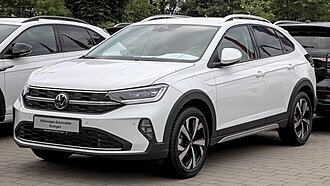
If you’ve ever driven a Volkswagen Taigo, you already know it’s one of those cars that quietly grows on you — like a playlist you didn’t expect to like but suddenly can’t stop looping. And at the centre of every road trip, fuel stop calculation, or “can we make it home?” moment is a humble yet crucial figure: the Volkswagen Taigo fuel tank capacity.
We’re diving deep — not just listing a number and calling it a day. We’re unpacking what the fuel tank size means for daily life, long journeys, MPG expectations, driving behaviour, and even running costs. Think of this guide as your friendly co-pilot, helping you understand just how far the Taigo can really take us.
Let’s step into the driver’s seat, buckle up, and roll.
Content in this publication
- The Volkswagen Taigo Fuel Tank Capacity at a Glance
- Why Volkswagen Chose a 40-Litre Tank
- How Far Can the Volkswagen Taigo Go on a Full Tank?
- Fuel Tank Capacity vs. Competitors
- Understanding the Taigo’s Fuel Economy Dynamics
- The Safety Buffer: How Much Fuel Is Left After the Light Comes On?
- How to Maximise Range With a 40-Litre Tank
- How Fuel Tank Size Affects Running Costs
- Fuel Tank Location and Safety
- Does Engine Size Change the Fuel Tank Capacity?
- Fuel Tank Capacity and the Taigo’s Weight
- How the Taigo’s Tank Compares to Larger Volkswagen Models
- How Often Should Taigo Owners Refuel?
- Does E10 or Premium Fuel Affect Range?
- Common Myths About the Taigo’s Fuel Tank
- Fuel Tank Maintenance: Yes, It Exists
- Should Volkswagen Have Given the Taigo a Bigger Tank?
- Final Thoughts: The Taigo’s 40-Litre Tank Is Smarter Than It Looks
- FAQs
The Volkswagen Taigo Fuel Tank Capacity at a Glance
To kick things off:
The Volkswagen Taigo fuel tank capacity is 40 litres (approximately 8.8 gallons).
That’s the straightforward spec — but as we’ll see, the story around it becomes more interesting once we explore how the Taigo uses that volume.
Why Volkswagen Chose a 40-Litre Tank
At first glance, some may ask: “Why not 45? Why not 50?”
But when we look at where the Taigo sits — the compact SUV-coupé segment — suddenly the choice makes perfect sense.
Balancing Efficiency With Urban Practicality
Volkswagen built the Taigo to be:
- Light
- Agile
- Aerodynamic
- Highly fuel-efficient
A smaller tank helps:
- Reduce total vehicle weight
- Improve CO₂ figures
- Keep running costs down
- Maximise cabin and under-body packaging space
It’s a smart balance: you get enough capacity for long drives while avoiding unnecessary mass.
How Far Can the Volkswagen Taigo Go on a Full Tank?
This is the question every driver quietly asks when the low-fuel light isn’t yet on — but we’re still wondering if we should “play it safe.”
Realistic Range Estimates
Assuming a 40-litre tank, here’s what the Taigo typically manages based on engine choice and real-world driving:
| Engine | Real-World MPG (UK) | Approx. Range per Full Tank |
|---|---|---|
| 1.0 TSI 95PS | 45–52 MPG | 395–460 miles |
| 1.0 TSI 110PS | 44–50 MPG | 388–450 miles |
| 1.5 TSI 150PS | 43–48 MPG | 380–435 miles |
These ranges assume mixed driving: 50% city, 50% motorway.
Urban-Only Range
Expect: 320–380 miles
Motorway-Heavy Range
Expect: 420–470 miles if driven steadily around 65 mph.
Fuel Tank Capacity vs. Competitors
Is the Taigo’s 40-litre tank “small”? Not at all — it’s right on par for compact crossovers built on similar MQB platforms.
Here’s how rivals compare:
| Model | Tank Size |
|---|---|
| Volkswagen Taigo | 40 L |
| Volkswagen T-Cross | 40 L |
| Skoda Kamiq | 50 L |
| Seat Arona | 40 L |
| Hyundai Bayon | 40 L |
| Renault Captur | 48 L |
The Skoda Kamiq is the odd one out with a larger 50-litre tank, but it’s marginally heavier and targets slightly longer-distance drivers.
Understanding the Taigo’s Fuel Economy Dynamics
A fuel tank is only half the equation — fuel efficiency is the other half that creates the real-life driving range.
Things That Boost the Taigo’s Range
- Its lightweight MQB A0 platform
- Efficient TSI engines
- Slippery aerodynamics
- Long gearing for calm motorway revs
Things That Reduce Range
- Aggressive acceleration
- Short trips where the engine stays cold
- High-speed driving
- Roof boxes (these destroy aerodynamics)
- Overloading the vehicle
- Low tyre pressure
We’ve all been guilty of at least one of these.
No judgement — just saying the Taigo notices.
The Safety Buffer: How Much Fuel Is Left After the Light Comes On?
The Taigo is surprisingly forgiving here.
Fuel Light Activation
The low-fuel warning typically triggers with 6–7 litres remaining.
How Far Can You Drive With the Warning Light On?
Expect around 40–55 miles, depending on:
You may be interested in reading MG4 Boot Space: The Complete Practicality Guide We All Wanted
- Engine size
- Driving style
- Speed
- Road gradient
It’s enough to calm the nerves — but we wouldn’t push it.
How to Maximise Range With a 40-Litre Tank
A small tank punishes inefficiency — but rewards smart driving.
Practical Tips for Better Range
- Maintain steady speeds
- Use eco mode wherever possible
- Keep tyres at the correct PSI
- Remove roof bars when not needed
- Avoid unnecessary weight in the boot
- Drive with anticipation, not reaction
- Regularly service the engine
Not-So-Obvious Tips
- Use cruise control on motorways
- Keep windows closed at speeds above 50 mph
- Fuel up early in hot weather (denser fuel = slightly better value)
Small tweaks, big gains.
How Fuel Tank Size Affects Running Costs
A larger tank costs more to fill.
A smaller tank requires more frequent visits.
Which one actually costs more?
Surprisingly, neither — cost depends on distance driven, not number of stops.
But psychology plays a massive role.
Pros of a 40-Litre Tank
- Cheaper to fill from empty
- Encourages consistent fresh fuel rotations
- Keeps overall weight lower
- Works perfectly for urban lifestyles
Cons
- More frequent fill-ups on long road trips
- Range anxiety for some drivers
- Less convenient if you regularly drive remote areas
For most Taigo owners, the trade-off is worth it.
Fuel Tank Location and Safety
The Taigo stores its fuel tank in the standard MQB under-floor position.
Safety Features
- Multi-layered composite tank
- Anti-leak protection
- Optimised crumple zone clearance
- Automatic fuel pump shut-off in collisions
Volkswagen engineered the Taigo with safety at its core — as expected from the brand.
Does Engine Size Change the Fuel Tank Capacity?
Here’s an easy answer we love delivering:
No. All Taigo models have the same 40-litre tank.
Whether you pick:
- 1.0 TSI 95
- 1.0 TSI 110
- 1.5 TSI EVO 150
The tank remains identical.
It simplifies decisions and helps standardise running-cost expectations.
Fuel Tank Capacity and the Taigo’s Weight
A full 40-litre tank adds roughly 32 kilograms (since petrol weighs ~0.8 kg/L).
This means:
- Better agility when tank is half full
- Slightly improved acceleration
- Lower CO₂ output
But we always recommend keeping sufficient fuel — safety first.
How the Taigo’s Tank Compares to Larger Volkswagen Models
Sometimes it helps to zoom out and see how the Taigo fits into the broader Volkswagen family.
| VW Model | Fuel Tank Size |
|---|---|
| VW Taigo | 40 L |
| VW T-Cross | 40 L |
| VW Golf | 50 L |
| VW T-Roc | 50 L |
| VW Tiguan | 58 L |
| VW Passat | 66 L |
It’s clear the Taigo isn’t built as a long-distance cruiser — but as a modern, light-on-its-feet, urban-to-suburban commuter.
How Often Should Taigo Owners Refuel?
This depends on your driving habits.
If You Drive Daily in Town
Expect to refuel every 6–8 days.
If You Do Mostly Motorway Driving
Every 8–12 days is common.
If You Are a Low-Mileage Driver
Possibly every 2–3 weeks.
You may be interested in readingMG4 Boot Space: The Complete Practicality Guide We All WantedYou may be interested in reading
 MG4 Tyre Pressure: The Complete Guide for Better Safety, Range & Ride Comfort
The Taigo is efficient enough that fuel stops feel more like a choice than a chore.
E10 burns slightly faster due to lower energy density.
E10 Fuel
- Cheaper
- Widely available
- Slightly worse MPG (by 2–5%)
- Better combustion
- Cleaner burn
- Smoother power delivery
- Minor MPG improvement
If you want better range per 40-litre tank, premium fuels help — but at a higher price per litre.
Common Myths About the Taigo’s Fuel Tank
Let’s bust a few misconceptions we’ve seen online.
Myth 1: “You can overfill the tank for extra capacity.”
No — modern tanks auto-shut and use expansion chambers. Overfilling risks fuel-system damage.
Myth 2: “Bigger engines always have bigger tanks.”
Not in the Taigo. All models get 40 litres.
Myth 3: “Driving with low fuel damages the engine.”
It doesn’t damage the engine — but it stresses the fuel pump, which relies on petrol for cooling.
Myth 4: “The range display is inaccurate.”
It's not inaccurate — it’s adaptive, calculating based on your last 18–25 miles of driving.
Fuel Tank Maintenance: Yes, It Exists
We often overlook the fuel system, but the Taigo benefits from periodic checks.
What to Do
- Replace fuel filters according to service intervals
- Keep tank above ¼ to protect pump
- Use reputable petrol stations
- Occasionally use premium fuel for cleaning
- Avoid long-term storage with low fuel
Signs of Fuel System Issues
- Delayed starts
- Rough idle
- Loss of power
- Poor MPG
- Hesitation under acceleration
If any of these appear, a quick diagnostic helps avoid bigger fuel-system headaches.
Should Volkswagen Have Given the Taigo a Bigger Tank?
It’s a fair question.
But the answer depends entirely on the philosophy of the vehicle.
What Volkswagen Prioritised
- Efficiency
- Lightweight design
- Urban practicality
- Strong MPG
- Low entry price
- Agile handling
A 45–50 litre tank would add:
- More weight
- Higher fill-up cost
- Slightly worse CO₂ figures
- No real performance benefits
Volkswagen made the right call for the Taigo’s identity.
Final Thoughts: The Taigo’s 40-Litre Tank Is Smarter Than It Looks
It’s compact, efficient, and perfectly aligned with the Taigo’s character.
If we were driving a big SUV, we'd want 55–65 litres.
If we were in a sports car, maybe even more.
But in the real world — commuting, weekend outings, mixed-mileage journeys — the Taigo’s 40-litre tank offers a sweet spot between range, cost, and weight.
It’s the kind of quiet engineering decision that contributes to the easy-going, confident nature of the Taigo.
And honestly?
We wouldn’t change it.
FAQs
1. What is the Volkswagen Taigo fuel tank capacity?
The Taigo has a 40-litre fuel tank across all trims and engines.
2. How many miles can the Taigo go on a full tank?
Between 380 and 470 miles, depending on engine choice and driving conditions.
3. Does the fuel tank size change for the 1.5 TSI engine?
No — every Taigo version uses the same 40-litre tank.
You may be interested in readingMG4 Boot Space: The Complete Practicality Guide We All WantedYou may be interested in reading
MG4 Tyre Pressure: The Complete Guide for Better Safety, Range & Ride ComfortYou may be interested in reading
 MG4 Charging Speed: The Complete Real-World Guide
4. How far can I drive after the low-fuel light turns on?
Typically 40–55 miles, depending on your driving style.
Marginally yes, but it costs more per litre. MPG increases by around 2–4%.
If you want to know other articles similar to Volkswagen Taigo Fuel Tank Capacity: The Complete Owner’s Guide We All Needed you can visit the category Service and Parts.
Vauxhall Meriva Engine Management Light: Causes, Checks, and Fixes
Vauxhall Meriva Key Fob Replacement: Complete Guide
Vauxhall Meriva Tyre Size: Complete Fitment Guide
Vauxhall Meriva Engine Light: Causes, Diagnosis, and Fixes
Vauxhall Meriva Engine Oil: Complete Selection and Maintenance Guide
Vauxhall Meriva Code 82 Reset: Meaning, Steps, and Fixes
Leave a Reply
More content of your interest