

Which Ford F-150 Has the Coyote Engine?

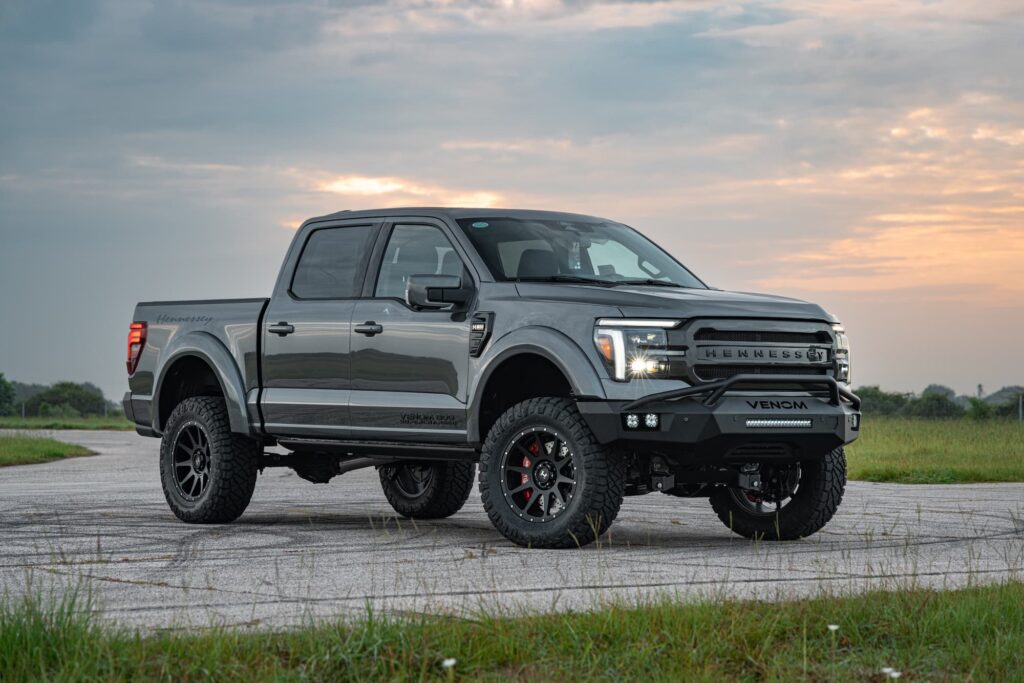
If you’ve spent any time around truck forums, drag strips, or late-night YouTube rabbit holes, chances are you’ve heard the phrase “Coyote engine” spoken with a certain reverence. It’s Ford’s legendary 5.0-liter V8—an engine that blends old-school muscle with modern engineering.
But here’s the question we hear all the time: which Ford F-150 actually has the Coyote engine?
Let’s break it all down, year by year, trim by trim, without the fluff. We’ll talk history, specs, driving feel, reliability, and even which versions enthusiasts love the most. By the end, you’ll know exactly which F-150s carry the Coyote—and whether it’s the right engine for you.
Content in this publication
- Understanding the Coyote Engine Before We Dive In
- Which Ford F-150 Has the Coyote Engine? The Short Answer
- First Appearance: The Coyote Arrives in the F-150 (2011)
- Coyote-Equipped Ford F-150 Model Years (Complete Breakdown)
- Ford F-150 Trims That Offer the Coyote Engine
- Two-Wheel Drive vs Four-Wheel Drive: Does It Matter?
- How the Coyote Compares to Other F-150 Engines
- Reliability of the Coyote in the F-150
- Is the Coyote Engine Good for Towing?
- Is the Coyote Still Worth Buying Today?
- Who Should Choose a Coyote-Powered F-150?
- Final Thoughts: The Coyote’s Place in the F-150 Lineup
- FAQs
Understanding the Coyote Engine Before We Dive In
Before we start naming model years, it helps to understand what the Coyote engine actually is—and why it matters.
What Is the Ford Coyote Engine?
The Ford Coyote is a naturally aspirated 5.0-liter V8 gasoline engine, part of Ford’s Modular engine family. It debuted in the Mustang GT before making its way into the F-150.
Key highlights include:
- 5.0L displacement
- Dual overhead cams (DOHC)
- Four valves per cylinder
- High-revving nature for a truck engine
- Naturally aspirated (no turbochargers)
It’s the spiritual successor to Ford’s classic pushrod V8s, but with modern tech baked in.
Why Truck Owners Love the Coyote
We’ll be honest—this engine has a cult following. And for good reason.
- Classic V8 sound and feel
- Strong low-end torque for towing
- Linear power delivery
- Proven long-term reliability
- Massive aftermarket support
In a world increasingly dominated by turbocharged V6s, the Coyote feels refreshingly old school.
Which Ford F-150 Has the Coyote Engine? The Short Answer
Let’s get straight to it.
Ford F-150 models equipped with the Coyote 5.0L V8 span from 2011 to the present (with availability depending on year, market, and trim).
But the details matter, so let’s unpack that properly.
First Appearance: The Coyote Arrives in the F-150 (2011)
2011 Ford F-150: The Beginning of a Legend
The 2011 model year marked the first time the 5.0 Coyote V8 was offered in the F-150.
Why 2011 was a big deal:
- Replaced the older 5.4L Triton V8
- Offered more power and better efficiency
- Modernized Ford’s V8 truck lineup
2011 Coyote specs in the F-150:
- Horsepower: ~360 hp
- Torque: ~380 lb-ft
- Transmission: 6-speed automatic
From day one, it proved that a naturally aspirated V8 could still compete in a turbo era.
Coyote-Equipped Ford F-150 Model Years (Complete Breakdown)
2011–2014 Ford F-150 (12th Generation)
These early Coyotes are often praised for their raw feel.
Key traits:
- Strong V8 soundtrack
- Simpler electronics compared to newer models
- Excellent towing capability
Who these are best for:
- Traditional truck buyers
- DIY mechanics
- Owners planning light mods
2015–2017 Ford F-150 (13th Generation)
This generation introduced the aluminum body, reducing weight significantly.
You may be interested in reading Ford F-150 or Chevy Silverado: The Ultimate Pickup Truck Showdown
Why the Aluminum Body Matters
- Improved acceleration
- Better fuel economy
- Increased payload capacity
Coyote updates:
- Revised intake manifold
- Improved efficiency
- More refined power delivery
Horsepower climbed slightly, and the engine felt smoother without losing character.
2018–2020 Ford F-150 (Facelifted 13th Generation)
Here’s where things get interesting.
Introduction of the 10-Speed Automatic
Ford paired the Coyote with the 10R80 10-speed automatic, co-developed with GM.
Benefits:
- Better acceleration
- Lower highway RPM
- Improved towing performance
2018+ Coyote specs (approx.):
- Horsepower: ~395 hp
- Torque: ~400 lb-ft
These years strike a sweet balance between modern tech and old-school V8 charm.
2021–2023 Ford F-150 (14th Generation)
Yes—the Coyote didn’t go anywhere.
Despite the rise of the PowerBoost hybrid, Ford kept the 5.0 alive.
What changed:
- Cylinder deactivation (in select markets)
- Further tuning refinements
- Improved emissions compliance
These models feel more polished and daily-driver friendly.
2024–2025 Ford F-150 (Current Models)
As of the latest models, the 5.0 Coyote remains available, though its future is often debated.
Expect:
- Continued availability in select trims
- Strong competition from hybrid and EcoBoost engines
- Loyal buyer demand keeping it alive
Ford F-150 Trims That Offer the Coyote Engine
The Coyote isn’t locked to one luxury level. It’s surprisingly flexible.
Common Trims Where the 5.0 Is Available
Depending on year and market, you’ll find it in:
- XL
- XLT
- Lariat
- King Ranch
- Platinum
- Limited (select years)
Availability can vary by region and configuration, so always check the original window sticker or VIN data.
Two-Wheel Drive vs Four-Wheel Drive: Does It Matter?
Good news—the Coyote engine is available in both 2WD and 4WD F-150s.
What changes is:
- Weight
- Drivetrain complexity
- Towing dynamics
But the engine itself remains the same.
How the Coyote Compares to Other F-150 Engines
Coyote vs EcoBoost V6
We hear this comparison constantly.
You may be interested in readingFord F-150 or Chevy Silverado: The Ultimate Pickup Truck ShowdownYou may be interested in reading
 Ford F-150 Versus Ram 1500: The Ultimate Full-Size Truck Face-Off
Coyote strengths:
- V8 sound and feel
- Simpler long-term ownership
- Linear throttle response
EcoBoost strengths:
- Better low-RPM torque
- Improved fuel economy
- Strong performance at altitude
There’s no wrong choice—just different priorities.
Coyote vs PowerBoost Hybrid
The hybrid is impressive, but the Coyote appeals to purists.
- PowerBoost: tech-forward, efficient, quick
- Coyote: emotional, mechanical, classic
Some of us still want to hear our truck work.
Reliability of the Coyote in the F-150
Overall? Very strong.
Known Strengths
- Proven long-term durability
- Handles towing well
- Excellent cooling design
Known Issues (Minor but Worth Knowing)
- Oil consumption in some 2018+ models
- Cold start noise complaints
- Carbon buildup (direct injection variants)
Regular maintenance keeps most of these at bay.
Is the Coyote Engine Good for Towing?
Absolutely.
Typical towing capacity:
- Up to ~13,000 lbs when properly equipped
It shines when pulling:
- Boats
- Travel trailers
- Utility trailers
The torque curve feels predictable and confidence-inspiring.
Is the Coyote Still Worth Buying Today?
If you value:
- Long-term ownership
- Mechanical simplicity
- Classic V8 driving feel
Then yes—it’s still very much worth it.
Who Should Choose a Coyote-Powered F-150?
This engine is perfect if:
- You plan to keep the truck long-term
- You enjoy engine sound and character
- You want strong resale appeal
- You prefer fewer turbo components
Sometimes, heart matters as much as logic.
Final Thoughts: The Coyote’s Place in the F-150 Lineup
The Ford F-150 with the Coyote engine represents a bridge between eras. It blends modern engineering with the soul of traditional American trucks. While the industry shifts toward electrification, the Coyote remains a reminder of why V8s captured our imagination in the first place.
If you want a truck that feels alive every time you press the throttle, the answer is clear—the Coyote still delivers.
FAQs
Which years of Ford F-150 have the Coyote engine?
Ford F-150 models from 2011 onward offer the 5.0L Coyote V8, depending on trim and market.
Is the Coyote engine better than EcoBoost?
It depends on priorities. The Coyote offers sound and simplicity, while EcoBoost excels in efficiency and torque.
Can you still buy a new F-150 with a Coyote engine?
Yes, the 5.0L Coyote is still available in current F-150 models.
You may be interested in readingFord F-150 or Chevy Silverado: The Ultimate Pickup Truck ShowdownYou may be interested in reading
Ford F-150 Versus Ram 1500: The Ultimate Full-Size Truck Face-OffYou may be interested in reading
 Ford F-150 vs Toyota Tundra: The Ultimate Full-Size Truck Showdown
Is the Coyote engine reliable for high mileage?
With proper maintenance, many owners report 200,000+ miles without major issues.
Does the Coyote engine increase resale value?
Generally yes—V8 F-150s with the Coyote tend to hold value well due to demand.
If you want to know other articles similar to Which Ford F-150 Has the Coyote Engine? you can visit the category Models.
Hyundai i40 vs i30: Which Hyundai Is Right for You?
Hyundai i40 vs Peugeot 508: Which Used Car Is Better?
Kia Rio vs Toyota Yaris: Which Small Car Makes More Sense?
Kia Rio vs Hyundai i20: Which Small Hatchback Makes More Sense?
Kia Rio or Similar UK: The Smart Buyer’s Guide to Small Cars That Still Make Sense
Kia Rio vs Hyundai i10: Which Small Car Makes More Sense?
Leave a Reply
More content of your interest