
Volkswagen ID.3 Reliability – Can VW’s Electric Pioneer Be Trusted Long-Term?

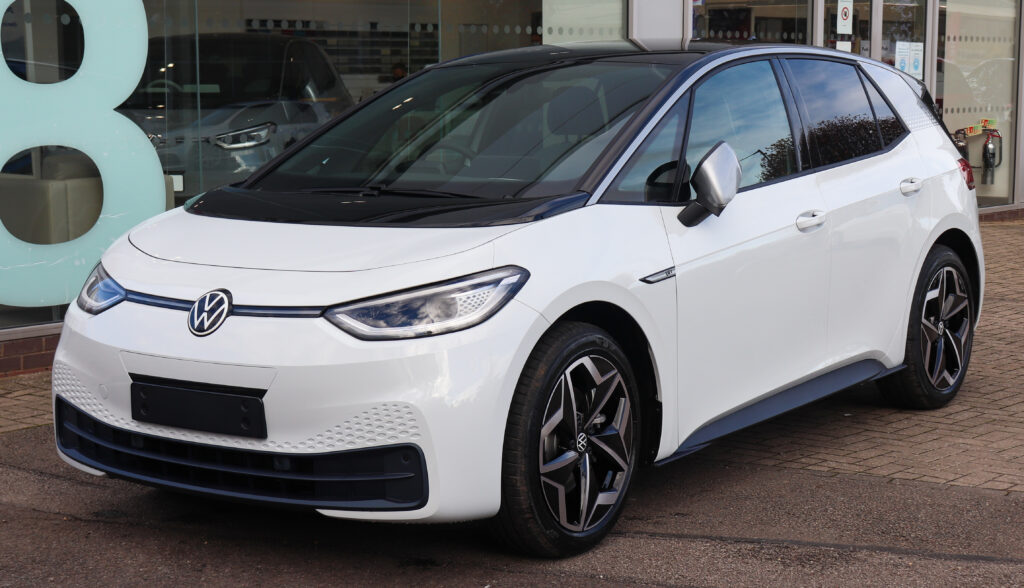
Electric cars are no longer a futuristic promise—they’re parked on our streets, charging in our driveways, and quietly reshaping the way we drive. At the center of Volkswagen’s EV revolution sits the ID.3. It’s bold, minimalist, and built on VW’s all-new MEB electric platform.
But the real question we all ask before committing to an EV isn’t about screens or styling—it’s this: Is the Volkswagen ID.3 reliable?
Let’s dig deep into ownership data, real-world experiences, known issues, battery longevity, and long-term running expectations. We’re not here to sugarcoat. We’re here to tell the truth, the whole truth, and nothing but the kilowatt-powered truth.
Content in this publication
- What “Reliability” Means in an Electric Car Era
- Volkswagen ID.3 Build Philosophy
- Battery Reliability and Longevity
- Common Volkswagen ID.3 Problems
- Is the ID.3 Mechanically Reliable?
- Real Owner Experience Snapshot
- Maintenance Costs and Service Reliability
- How the ID.3 Compares to Rivals
- Should You Avoid Early Models?
- Long-Term Ownership Outlook
- Is the Volkswagen ID.3 Reliable?
- Closing Thoughts
- FAQs
What “Reliability” Means in an Electric Car Era
Reliability in EVs isn’t measured the same way it is in petrol or diesel cars. There’s no timing belt, no turbo, no oil pump waiting to fail.
Instead, we focus on:
- Battery health and degradation
- Software stability
- Charging system reliability
- Electrical components
- Build quality and interior durability
- Dealer and service network performance
The ID.3’s mechanical simplicity should give it an advantage. But technology-heavy cars introduce a new kind of fragility—one rooted in software, sensors, and systems talking to each other.
Volkswagen ID.3 Build Philosophy
The ID.3 was Volkswagen’s first car on the MEB platform. That makes it a pioneer—and pioneers sometimes stumble.
Early production models (2020–2021) faced teething issues:
- Buggy infotainment systems
- Random warning lights
- Touch-sensitive controls misbehaving
- Slow or frozen displays
Volkswagen acknowledged these problems and rolled out multiple OTA (over-the-air) updates. Later models, especially 2023 onward, show significant improvement in stability and responsiveness.
Think of early ID.3s like the first smartphones—groundbreaking, but occasionally frustrating.
Battery Reliability and Longevity
How Long Will the ID.3 Battery Last?
Volkswagen offers:
- 8-year / 100,000-mile warranty
- Guaranteed minimum 70% capacity during that period
Real-world data suggests degradation of:
- ~2–3% per year under normal use
- Slower loss when charged between 20–80% regularly
In practical terms, most owners can expect 10–15 years of usable battery life before noticeable range reduction becomes an issue.
Battery Reliability Strengths
- Liquid-cooled lithium-ion pack
- Thermal management reduces stress
- Modular design allows partial repairs
The battery is one of the ID.3’s strongest reliability pillars.
Common Volkswagen ID.3 Problems
No car is perfect. Here are the most frequently reported issues:
You may be interested in reading BMW 1 Series Insurance Group – What It Really Means for Your Wallet
Software Glitches
- Infotainment freezing
- Navigation lag
- Random rebooting
- Loss of settings after updates
Electrical Quirks
- Parking sensors misfiring
- Driver assistance systems temporarily unavailable
- Charging port errors
Interior Wear
- Touch-sensitive buttons lack tactile feedback
- Piano-black surfaces scratch easily
- Steering wheel controls occasionally fail
Most of these issues are annoyances, not breakdowns. They rarely leave drivers stranded—but they can chip away at confidence.
Is the ID.3 Mechanically Reliable?
From a hardware perspective, the ID.3 is remarkably robust:
- Single-speed transmission
- No clutch
- No exhaust
- No oil system
- Fewer moving parts than any ICE vehicle
This dramatically reduces failure points.
The electric motor itself is nearly maintenance-free and has proven extremely durable in high-mileage EVs.
In short:
Mechanically, the ID.3 is rock-solid. Digitally, it’s evolving.
Real Owner Experience Snapshot
Owners commonly report:
- Smooth, silent driving
- Minimal servicing costs
- Excellent urban reliability
- Occasional software frustration
High-mileage users—delivery drivers, commuters, ride-hail operators—often praise:
- Consistent performance
- Low running costs
- Predictable range
The ID.3 rarely breaks. It occasionally misbehaves.
Maintenance Costs and Service Reliability
Electric cars shine here.
Typical Service Needs
- Cabin filter
- Brake fluid
- Software updates
- Tire rotation
Annual costs are typically 30–50% lower than comparable petrol hatchbacks.
However, reliability also depends on:
- Dealer EV expertise
- Software update quality
- Parts availability
Volkswagen’s global service network is a major strength, especially compared to newer EV-only brands.
How the ID.3 Compares to Rivals
| Model | Reliability Reputation | Key Weakness |
|---|---|---|
| VW ID.3 | Improving, mid-pack | Software |
| Nissan Leaf | Very strong | Battery cooling |
| Renault Zoe | Solid | Interior quality |
| MG4 EV | Good value | Long-term unknown |
| Tesla Model 3 | Mixed | Build consistency |
The ID.3 sits in the “evolving but promising” category. Not flawless, but steadily maturing.
Should You Avoid Early Models?
If reliability is your top priority:
- Prefer 2022+ models
- Ensure latest software version installed
- Check recall history
- Verify charging system behavior
Early ID.3s aren’t bad—but they’re more likely to feel unfinished.
You may be interested in readingBMW 1 Series Insurance Group – What It Really Means for Your WalletYou may be interested in reading
 BMW 1 Series Years to Avoid: A Buyer’s Survival Guide
Long-Term Ownership Outlook
The ID.3 is aging well. Volkswagen has:
- Stabilized its software
- Improved build consistency
- Enhanced charging logic
- Refined user interfaces
As EV platforms mature, the ID.3 becomes less “experimental” and more “established.”
It’s like watching a teenager grow into adulthood—awkward at first, confident later.
Is the Volkswagen ID.3 Reliable?
Yes—with context.
It’s:
- Mechanically excellent
- Battery-secure
- Cheap to maintain
- Software-dependent
If you value:
- Low operating costs
- Quiet commuting
- Simplicity
- Long-term electric ownership
Then the ID.3 is a trustworthy companion.
Just remember—this isn’t a car defined by gears and gaskets. It’s defined by code. And code, like people, improves with experience.
Closing Thoughts
Reliability is about trust. Trust that your car will start. Trust that it won’t drain your wallet. Trust that it won’t betray you in a parking lot at midnight.
The Volkswagen ID.3 earns that trust in most of the ways that matter. It won’t win perfection awards, but it doesn’t pretend to. It evolves. It learns. It gets better.
And in a world racing toward electrification, that might be the most reliable trait of all.
FAQs
Is the Volkswagen ID.3 reliable for long-term ownership?
Yes. With fewer mechanical components and a strong battery warranty, it’s well-suited for 10+ years of use.
Do ID.3 batteries fail often?
No. Battery failures are rare, and degradation is slow under normal use.
Are software issues still common?
They’re far less frequent in newer models and after major updates.
Is the ID.3 expensive to maintain?
No. Maintenance costs are significantly lower than petrol cars.
BMW 1 Series Insurance Group – What It Really Means for Your WalletYou may be interested in reading
BMW 1 Series Years to Avoid: A Buyer’s Survival GuideYou may be interested in reading
 BMW 1 Series Reliability – What It’s Really Like to Live With One
Which model year is the most reliable?
2022 and newer versions offer the best balance of stability and refinement.
If you want to know other articles similar to Volkswagen ID.3 Reliability – Can VW’s Electric Pioneer Be Trusted Long-Term? you can visit the category Blog.
BMW M5 Qualities: What Makes the M5 So Special?
BMW M5 Insurance Cost: What Owners Should Expect
BMW M5 Depreciation: How Fast Does an M5 Lose Value?
Ford Edge Reliability: How Dependable Is This SUV?
Audi A4 Reliability: How Dependable Is It Really?
Hyundai Palisade Reliability: Is This Three-Row SUV Built to Last?
Leave a Reply
More content of your interest