
Volkswagen ID.3 Charger Type: Everything We Need to Know Before Plugging In

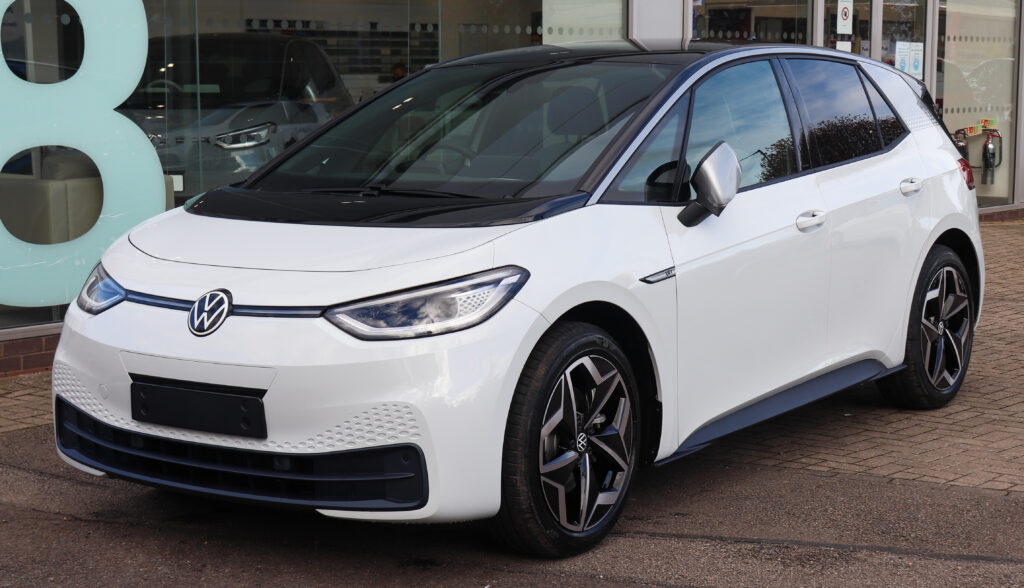
Charging an electric car is a bit like learning a new language. At first, terms like “Type 2,” “CCS,” “kW,” and “three-phase” feel abstract. Then one day, you plug in effortlessly and wonder why it ever felt complicated. The Volkswagen ID.3 sits right at the center of this learning curve for many new EV drivers. It’s approachable, mainstream, and refreshingly simple—once we understand its charger type.
In this guide, we’ll walk through everything about the Volkswagen ID.3 charger type: what it uses, how fast it charges, what cables you actually need, and how to make the most of every plug you meet on the road. Think of this as your charging compass—something you can keep in your back pocket as you navigate the electric world.
Content in this publication
- Understanding the Basics of EV Charging
- What Charger Type Does the Volkswagen ID.3 Use?
- Type 2 Charging on the ID.3
- CCS Fast Charging on the ID.3
- Home Charging Setup for the ID.3
- Public Charging Compatibility
- Charging the ID.3 on Long Trips
- Is the ID.3 Future-Proof?
- Comparing ID.3 Charger Type to Rivals
- Charging Costs and Efficiency
- Common Charging Mistakes We Should Avoid
- How Weather Affects Charging
- Smart Charging Features in the ID.3
- Why Charger Type Matters More Than Range
- The Emotional Shift of Plugging In
- Closing Thoughts: Plugging Into the Future
- FAQs
Understanding the Basics of EV Charging
Before zooming in on the ID.3, let’s ground ourselves in the charging landscape.
Electric cars typically rely on two categories of charging:
- AC Charging (Alternating Current) – Used at home and on slower public chargers.
- DC Fast Charging (Direct Current) – Used on rapid chargers for quick top-ups.
Each category comes with its own connector style, power levels, and use cases. The Volkswagen ID.3 embraces the European standard beautifully, making it one of the easiest EVs to live with across the UK and Europe.
What Charger Type Does the Volkswagen ID.3 Use?
The Volkswagen ID.3 uses a Type 2 connector for AC charging and a CCS (Combined Charging System) port for DC fast charging.
This means:
- At home or on standard public chargers, you’ll use Type 2.
- On motorway rapid chargers, you’ll plug into CCS.
It’s a dual-personality setup—like wearing sneakers for daily walks and switching to running shoes for a sprint. Same car, different energy moods.
Type 2 Charging on the ID.3
What Is a Type 2 Connector?
The Type 2 connector (also called Mennekes) is the European standard for AC charging. It’s used across almost every modern EV sold in Europe.
For the ID.3, this port handles:
- Home wallbox charging
- Workplace chargers
- Public AC stations
It’s the everyday plug—the one you’ll see most often.
AC Charging Speeds Explained
The ID.3 supports AC charging up to:
- 7.2 kW on single-phase power
- 11 kW on three-phase power (most European wallboxes)
What does that mean in real life?
- Overnight home charging: full battery by morning
- Workplace top-ups: 30–60 miles of range in a couple of hours
- Public city chargers: perfect for shopping stops
AC charging is like a slow, steady drip of energy—gentle on the battery and perfect for routine use.
CCS Fast Charging on the ID.3
What Is CCS?
CCS stands for Combined Charging System. It combines:
- The top Type 2 AC port
- Two extra DC pins underneath
Together, they allow ultra-fast DC charging.
The ID.3 supports DC charging up to:
- 100 kW on early trims
- 120–170 kW on newer versions, depending on battery size and year
This is your road-trip weapon.
Real-World Fast Charging Times
On a high-power CCS charger, the ID.3 can typically:
- Go from 10% to 80% in about 30–35 minutes
- Add 100+ miles in roughly 15 minutes
It’s the EV equivalent of grabbing a coffee while your car refuels itself.
Home Charging Setup for the ID.3
Charging at home is where the ID.3 truly shines.
Wallbox vs 3-Pin Plug
You technically can charge from a standard household socket, but we wouldn’t recommend it long-term.
| Method | Power | Time (Approx) |
|---|---|---|
| 3-pin plug | 2.3 kW | 24–30 hours |
| Wallbox (Type 2) | 7–11 kW | 6–9 hours |
A dedicated wallbox turns charging from a chore into a habit—plug in, sleep, wake up full.
Cable Types You’ll Need
For AC charging, you’ll use:
- Type 2 to Type 2 cable (often supplied with the car)
For DC fast charging:
- The cable is attached to the charger—just plug and go.
Keep your Type 2 cable in the boot and you’re always ready.
Public Charging Compatibility
One of the ID.3’s greatest strengths is how universally compatible it is.
You can use:
- City AC chargers
- Supermarket chargers
- Workplace posts
- Motorway rapid chargers
- Destination chargers at hotels
If it has Type 2 or CCS, you’re welcome.
This universality removes anxiety. You’re not hunting for “special” stations—you’re simply charging like everyone else.
Charging the ID.3 on Long Trips
Planning Around CCS
For long journeys, CCS chargers are your lifeline. Most navigation systems—including the ID.3’s built-in software—automatically route you via compatible fast chargers.
We recommend:
- Charging little and often
- Stopping at 10–15%
- Leaving around 80%
Fast charging slows above 80%, so short bursts are more efficient than waiting for full.
Real-World Road Trip Rhythm
A typical rhythm looks like this:
- Drive 2–2.5 hours
- Stop for 20–30 minutes
- Stretch, snack, charge
- Repeat
It feels less like refueling and more like a natural travel cadence.
Is the ID.3 Future-Proof?
With Type 2 and CCS, the ID.3 is aligned with Europe’s charging future. These standards are:
- Mandated across the EU
- Used by nearly all new EVs
- Supported by every major charging network
You’re not buying into a dying format. You’re stepping onto the main track.
Comparing ID.3 Charger Type to Rivals
Let’s stack it up against common competitors:
| Car | AC Type | DC Type | Max DC Speed |
|---|---|---|---|
| Volkswagen ID.3 | Type 2 | CCS | 120–170 kW |
| Nissan Leaf | Type 2 | CHAdeMO | 50 kW |
| Renault Zoe | Type 2 | CCS* | 50–80 kW |
| Tesla Model 3 | Type 2 | CCS | 170–250 kW |
(*Older Zoes lack CCS)
The ID.3 sits comfortably in the modern middle—faster than many, compatible with everything.
Charging Costs and Efficiency
Charging cost depends on:
- Location
- Tariff
- Speed
Rough averages:
- Home charging: 3–6p per mile
- Public AC: 6–10p per mile
- Rapid DC: 10–15p per mile
Even at its priciest, it’s still cheaper than petrol. And at home? It feels like stealing electricity from the future.
Common Charging Mistakes We Should Avoid
- Using a 3-pin plug long-term
- Charging to 100% daily
- Letting the battery hit 0% often
- Ignoring software updates
- Forgetting your Type 2 cable
EVs reward routine. Treat charging like brushing your teeth—small habits, big longevity.
How Weather Affects Charging
Cold weather can:
- Slow charging speeds
- Reduce range
- Increase charging time
The ID.3 manages this well, but in winter:
- Precondition the battery
- Plug in after driving
- Expect slightly longer stops
It’s like warming up before a run—everything flows better when the system is ready.
Smart Charging Features in the ID.3
The ID.3 offers:
- Scheduled charging
- Off-peak optimization
- App-based monitoring
- Charge limit settings
We can tell the car:
“Charge at 1 a.m., stop at 80%.”
And it listens.
That’s not a vehicle—it’s a quiet assistant in your driveway.
Why Charger Type Matters More Than Range
Range tells you how far you can go. Charger type determines how easily you live.
With Type 2 + CCS:
- You’re never stranded
- You’re never excluded
- You’re always compatible
It’s the difference between owning a universal key and carrying a single-use tool.
The Emotional Shift of Plugging In
There’s a strange satisfaction in charging an EV. It feels deliberate. Calm. Intentional.
No fumes. No pumps. Just a quiet click and a glowing ring.
The ID.3 doesn’t just move us—it rewires how we think about energy.
Closing Thoughts: Plugging Into the Future
The Volkswagen ID.3 charger type is more than a technical detail. It’s a gateway.
With Type 2 for everyday life and CCS for fast adventures, the ID.3 gives us flexibility without friction. We don’t adapt to the car—the car adapts to us. Home, city, motorway—it’s always ready.
Charging becomes less about infrastructure and more about rhythm. We plug in like we charge a phone. We plan trips like we plan coffee breaks. We stop thinking about fuel altogether.
That’s not just progress. That’s freedom.
FAQs
1. What charger type does the Volkswagen ID.3 use?
The ID.3 uses a Type 2 connector for AC charging and a CCS port for DC fast charging.
2. Can I charge the ID.3 at home?
Yes. A Type 2 wallbox is ideal, providing full overnight charging.
3. How fast can the ID.3 charge?
Up to 11 kW on AC and up to 170 kW on DC, depending on model.
4. Does the ID.3 work on all public chargers?
Yes, as long as they offer Type 2 or CCS, which most European chargers do.
5. Is the ID.3 charger type future-proof?
Absolutely. Type 2 and CCS are the European standard for years to come.
If you want to know other articles similar to Volkswagen ID.3 Charger Type: Everything We Need to Know Before Plugging In you can visit the category Service and Parts.
Renault Megane Boot Space: Size, Litres & Dimensions
Vauxhall Mokka Tyre Pressure Reset: Complete Guide
How to Reset the Tire Pressure System on Your Hyundai Tucson
Hyundai Kona Tire Pressure: Complete PSI Guide
Vauxhall Corsa Timing Belt Replacement Cost UK 2026
Mazda CX-5 Tire Size Chart: 2013–2026 Guide
Leave a Reply
More content of your interest