

Volkswagen ID.3 Top Speed – How Fast Is VW’s Electric Hatchback Really?

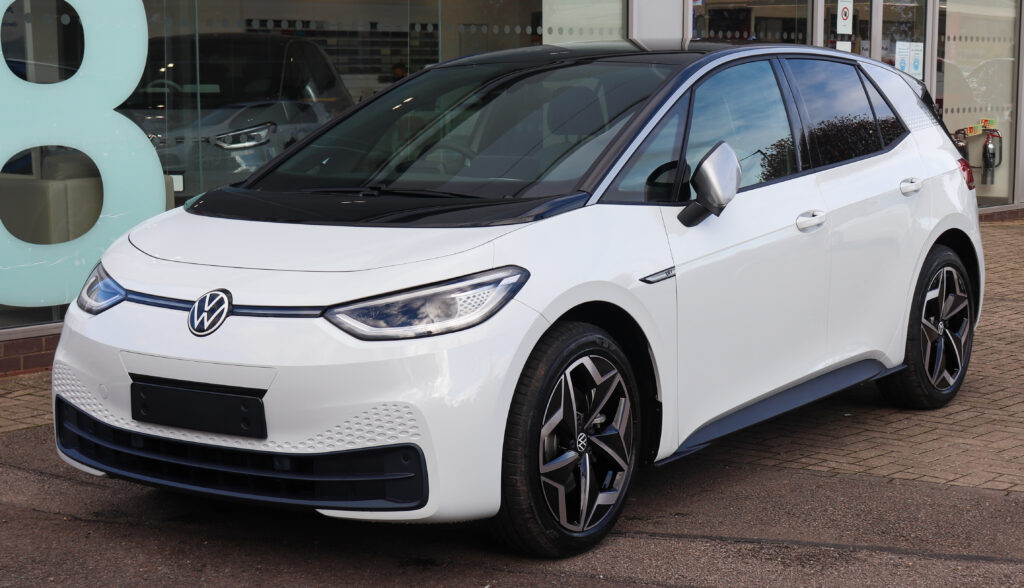
Speed has always been part of the emotional DNA of cars. Even in an age where range, efficiency, and sustainability dominate the conversation, we still want to know one thing: How fast does it go? The Volkswagen ID.3 is no exception. It may be an electric hatchback built for urban life and long commutes, but deep down, we all wonder what happens when the road opens up and we push the pedal to the floor.
So, what is the Volkswagen ID.3 top speed, really? And more importantly—what does that number mean in the real world?
Let’s unpack the figures, the engineering behind them, the myths, the limitations, and the surprising truths about how fast the ID.3 can travel when the world goes quiet and the horizon stretches out.
Content in this publication
- Understanding “Top Speed” in an Electric Car
- Official Volkswagen ID.3 Top Speed Figures
- Why Volkswagen Limits the ID.3’s Top Speed
- How Fast Does the ID.3 Feel?
- Acceleration vs Top Speed – The Real Performance Story
- Real-World Testing – Can the ID.3 Reach Its Limit?
- Does Driving Mode Affect Top Speed?
- Downhill Myths – Can Gravity Break the Limit?
- How the ID.3 Compares to Rivals
- Is 99 mph Enough in Real Life?
- Aerodynamics and the Invisible Wall of Air
- Thermal Management at Speed
- Motorway Reality: Cruising vs Sprinting
- The Psychology of Silent Speed
- Owner Anecdotes: Life at the Limit
- Can the ID.3 Be Unlocked?
- Speed in the EV Era
- Closing Thoughts: How Fast Is Fast Enough?
- FAQs
Understanding “Top Speed” in an Electric Car
Top speed in an electric vehicle isn’t the same beast we knew from petrol or diesel cars. In traditional engines, top speed is often dictated by mechanical limits—gear ratios, redlines, airflow, and brute horsepower.
In an EV like the ID.3, top speed is:
- Electronically limited
- Controlled by software
- Balanced against battery protection
- Designed around efficiency and safety
This means the ID.3 could go faster in theory. But Volkswagen deliberately caps it. Not because the motor can’t spin quicker—but because heat, energy drain, and battery longevity would suffer.
Top speed in an EV is less about ego, more about engineering harmony.
Official Volkswagen ID.3 Top Speed Figures
Across the ID.3 lineup, Volkswagen keeps things consistent. Regardless of battery size or trim, most variants share the same electronically limited top speed:
Volkswagen ID.3 Top Speed by Variant
- ID.3 Pure (45 kWh / 150 PS): 99 mph (160 km/h)
- ID.3 Pro (58 kWh / 204 PS): 99 mph (160 km/h)
- ID.3 Pro S (77 kWh / 204 PS): 99 mph (160 km/h)
- ID.3 GTX (Performance variant): ~112 mph (180 km/h)
For the majority of drivers, the magic number is 99 mph. That’s the ceiling. The car simply won’t go beyond it, no matter how empty the road feels.
And yes—it reaches that speed effortlessly. No engine scream. No gear changes. Just a smooth, relentless surge until the digital speedometer politely refuses to climb further.
Why Volkswagen Limits the ID.3’s Top Speed
At first glance, limiting an electric car’s speed might feel conservative. But there’s method behind the restraint.
Volkswagen caps the ID.3’s speed for four key reasons:
- Battery Protection – Sustained high speeds generate heat and accelerate degradation.
- Energy Consumption – At 90–100 mph, range drops dramatically.
- Motor Efficiency Curve – Electric motors lose efficiency at extreme RPM.
- Safety & Tyre Ratings – Not all trims ship with high-speed-rated tyres.
Think of it like a marathon runner. Sprinting flat-out is thrilling—but unsustainable. Volkswagen tunes the ID.3 to live long, not burn bright and fade fast.
How Fast Does the ID.3 Feel?
Here’s the interesting part: even though 99 mph sounds modest in a world of 155-mph hot hatches, the ID.3 feels quick.
Why?
Because torque arrives instantly.
From 30 to 70 mph, the ID.3 surges like a subway train leaving the platform. There’s no waiting. No downshifting. Just a clean wave of acceleration.
On motorways, overtakes feel:
- Effortless
- Silent
- Deceptively rapid
You glance down and realize you’re already past legal speeds. The absence of noise tricks your senses. Speed becomes invisible.
In that way, the ID.3 isn’t slow—it’s quietly fast.
Acceleration vs Top Speed – The Real Performance Story
Top speed is a headline number. But acceleration is where the ID.3 truly shines.
Most ID.3 models deliver:
- 0–62 mph (0–100 km/h): ~7.3 seconds
- Mid-range punch: Instant torque from 0 rpm
- Urban agility: Faster than most ICE hatchbacks
In everyday driving, you rarely approach 99 mph. But you constantly enjoy the car’s low-speed response.
This makes the ID.3 feel alive in traffic. It leaps into gaps. It flows through roundabouts. It moves like water.
Speed becomes usable, not theoretical.
Real-World Testing – Can the ID.3 Reach Its Limit?
Yes. On unrestricted roads like Germany’s Autobahn, the ID.3 reaches its electronically capped top speed with ease.
Test drivers report:
- Smooth climb to 160 km/h
- No vibration or drama
- Stable steering at speed
- Minimal wind noise
But they also notice something else: the battery drain becomes dramatic.
At sustained high speed:
- Range can drop by 40–50%
- Consumption exceeds 25–30 kWh/100 km
- Charging stops come quickly
The ID.3 can cruise at its top speed. It just won’t do it for very long.
Does Driving Mode Affect Top Speed?
Yes—and no.
The ID.3 offers several drive modes:
- Eco
- Comfort
- Sport
- Individual
In Eco, throttle response softens and power output is restrained. The car still can reach its top speed, but it takes longer.
In Sport, the ID.3 feels sharper:
- Quicker throttle mapping
- More aggressive regenerative braking
- Livelier steering response
But the electronic speed limiter remains unchanged. No mode unlocks more mph. The ceiling stays firm.
The difference is in how you get there—not how far you can go.
Downhill Myths – Can Gravity Break the Limit?
Some drivers wonder: What if I go downhill? Can I exceed the limit?
Short answer: no.
The ID.3’s software monitors wheel speed and motor RPM in real time. Even on steep descents, regenerative braking engages to prevent overspeeding.
You might see:
- Brief spikes of 1–2 mph
- Rapid deceleration afterward
- Increased regen force
But the system always pulls you back under the ceiling.
The limiter isn’t polite. It’s absolute.
How the ID.3 Compares to Rivals
Let’s put the ID.3 in context:
- Nissan Leaf: ~98 mph
- Renault Megane E-Tech: ~99 mph
- Hyundai Kona Electric: ~104 mph
- Tesla Model 3 (RWD): ~140 mph
Volkswagen positions the ID.3 in the mainstream EV hatchback class. It isn’t trying to outrun Teslas. It’s competing on balance—comfort, efficiency, space, and everyday usability.
The ID.3’s top speed fits that philosophy perfectly.
It’s fast enough.
Is 99 mph Enough in Real Life?
Ask yourself honestly: how often do you drive above 80 mph?
For most of us:
- Urban roads cap at 30–50 mph
- Motorways hover around 70 mph
- Traffic rarely allows sustained speed
The ID.3’s 99 mph ceiling exists mostly in theory. In practice, it delivers:
- Confident motorway cruising
- Relaxed overtaking
- No sense of limitation
It never feels breathless. It never begs for more. It simply moves—calm, composed, and capable.
Speed becomes background music, not the main act.
Aerodynamics and the Invisible Wall of Air
At high speed, the real enemy isn’t horsepower—it’s air. Drag rises exponentially. Double your speed, and aerodynamic resistance quadruples. That invisible wall is why EVs, even powerful ones, often share similar top-speed caps.
The ID.3’s shape is optimized for low drag, but physics always wins. Beyond 160 km/h, the motor must work disproportionately harder to push the car forward. Volkswagen’s limiter simply acknowledges reality: past that point, efficiency collapses, heat spikes, and range evaporates.
It’s not about can’t. It’s about shouldn’t.
Thermal Management at Speed
Electric performance isn’t just about volts—it’s about temperature. Sustained high speeds generate:
- Motor heat
- Inverter heat
- Battery cell heat
The ID.3 uses liquid cooling to manage this, but even advanced systems have limits. By capping top speed, VW ensures:
- Stable thermal equilibrium
- Consistent performance
- Long-term battery health
Think of it as a governor on a turbine. The machine could spin faster—but you want it to spin forever.
Motorway Reality: Cruising vs Sprinting
The ID.3 shines between 60–80 mph. That’s its sweet spot:
- Low noise
- Strong efficiency
- Relaxed steering
- Minimal fatigue
At 90–99 mph, it’s still composed—but consumption jumps sharply. You’re trading serenity for spectacle.
Most owners quickly learn a rhythm:
- Cruise at 70–75 mph
- Enjoy the silence
- Let traffic flow around you
- Arrive calmer, not faster
Speed stops being a destination. It becomes a tool.
The Psychology of Silent Speed
In combustion cars, sound is feedback. The engine shouts, warning you you’re moving fast. The ID.3 whispers.
This changes behavior:
- You reach speed sooner
- You hold it longer
- You feel less stressed
- You check the speedometer more often
Many drivers say the ID.3 makes them more disciplined. Without noise, speed feels abstract. You become conscious, intentional.
It’s like walking on fresh snow—every step is quiet, but meaningful.
Owner Anecdotes: Life at the Limit
Owners who’ve tested the ceiling often describe it the same way:
“It just… stops climbing. No drama. No jerk. It’s like hitting an invisible ceiling.”
Others note:
- Rock-solid stability
- No nervous steering
- Calm cabin even at 99 mph
- A sense of completeness
The ID.3 doesn’t feel restrained. It feels resolved.
Can the ID.3 Be Unlocked?
Technically? Yes. Some tuners claim software tweaks can raise the limiter.
Practically? It’s a bad idea.
Risks include:
- Voiding warranty
- Overheating components
- Accelerated battery degradation
- Tyre and brake mismatches
- Safety system conflicts
The ID.3 isn’t designed as a track toy. It’s engineered as a daily companion. Unlocking it is like turning a violin into a drum—possible, but missing the point.
Speed in the EV Era
We’re entering a new relationship with velocity. EVs redefine what “fast” feels like:
- Immediate
- Effortless
- Silent
- Smooth
The ID.3 embodies this shift. Its top speed isn’t about bragging rights. It’s about balance.
It’s fast enough to thrill. Calm enough to trust. Limited enough to last.
Closing Thoughts: How Fast Is Fast Enough?
The Volkswagen ID.3’s top speed—99 mph for most variants—isn’t a compromise. It’s a statement.
It says:
- We value longevity over spectacle
- We design for real roads, not posters
- We believe speed should serve life, not dominate it
The ID.3 doesn’t chase numbers. It chases harmony—between driver, machine, and motion.
And in a world obsessed with extremes, that might be the fastest move of all.
FAQs
1. What is the Volkswagen ID.3 top speed?
Most ID.3 variants are electronically limited to 99 mph (160 km/h). The performance GTX reaches around 112 mph (180 km/h).
2. Can the ID.3 exceed its top speed downhill?
No. Software and regenerative braking prevent overspeeding, even on steep descents.
3. Does Sport mode increase top speed?
No. Sport mode sharpens response but does not raise the electronic limiter.
4. Is 99 mph enough for motorway driving?
Absolutely. It provides effortless overtaking and relaxed high-speed cruising.
5. Can the top speed be unlocked?
Aftermarket tuning may exist, but it risks warranty, safety, and battery health.
If you want to know other articles similar to Volkswagen ID.3 Top Speed – How Fast Is VW’s Electric Hatchback Really? you can visit the category Driving.
Kia Sorento Fuel Economy: MPG, Hybrid, and Plug-In Hybrid Explained
BYD Shark 6 Fuel Consumption: Real-World Economy, Range and What to Expect
Vauxhall Agila MPG: Real-World Fuel Economy and Engine Guide

Honda Passport MPG: Real-World Fuel Economy, Ratings, and What to Expect

Nissan Rogue Fuel Economy: MPG, Range, Costs, and Real-World Efficiency
BYD Shark 6 Long Range Fuel Tank: Is the 120L Upgrade Worth It?
Leave a Reply
More content of your interest