

Mercedes-Benz A-Class Engine Oil Guide: Grades, Capacities, Intervals & Expert Tips

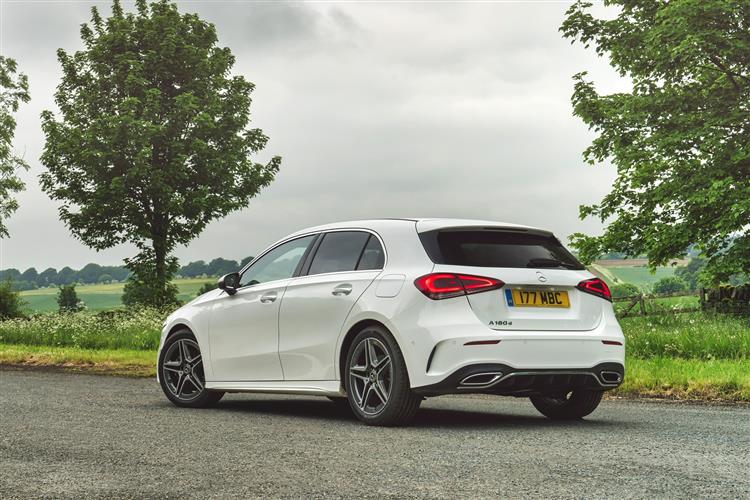
Engine oil is the silent guardian of every Mercedes-Benz A-Class. It cushions metal against metal, cools high-stress components, traps combustion residue, and keeps precision-engineered internals gliding like clockwork. Without the right oil, even the most advanced Mercedes engine becomes vulnerable to friction, heat, and premature wear.
We approach this guide with one goal: clarity. Whether you drive an early W176, a modern W177, a diesel commuter, or an AMG hot hatch, this is your definitive reference for Mercedes A-Class engine oil—from viscosity grades and capacities to change intervals and model-specific recommendations.
Content in this publication
- Understanding Mercedes A-Class Oil Grades
- Mercedes-Benz A-Class Oil by Generation
- Mercedes A-Class Oil Capacity
- Oil Change Intervals
- Choosing the Right Oil for Your A-Class
- How Engine Oil Protects Your A-Class
- Topping Up vs Full Oil Change
- Common Mistakes to Avoid
- Model Coverage at a Glance
- Why Correct Oil Matters More in the A-Class
- Final Thoughts
- Frequently Asked Questions
Understanding Mercedes A-Class Oil Grades
Every engine oil carries a viscosity code such as 0W-20, 5W-30, or 5W-40. These numbers describe how the oil behaves in cold starts and at operating temperature.
- The first number (before the “W”) reflects cold-weather flow.
- The second number indicates thickness at operating temperature.
Lower numbers flow faster when cold. Higher second numbers maintain a thicker protective film when hot.
Across A-Class generations, Mercedes commonly specifies:
- 0W-20 – ultra-efficient, modern low-emission engines
- 0W-30 – balanced efficiency and protection
- 5W-30 – widely compatible and versatile
- 5W-40 – higher protection for older or performance engines
- 0W-40 / 5W-40 – frequent in AMG and pre-2015 models
All oils must meet Mercedes-Benz approval standards (e.g., MB 229.5, 229.51, 229.52). Viscosity alone is not enough—the oil must be certified for Mercedes engines.
Mercedes-Benz A-Class Oil by Generation
W168 & W169 (1997–2011)
Earlier A-Class models rely on robust oils with higher operating viscosity.
Typical grades:
- 0W-40
- 5W-40
- 5W-30
These engines benefit from thicker hot-temperature protection, especially at higher mileage.
W176 (2012–2018)
A transition generation combining efficiency with performance.
Common grades:
- Petrol: 0W-40, 5W-40, 5W-30, 0W-30
- Diesel: 5W-40, 5W-30, 0W-30
AMG A45 models demand higher-spec oils, often 0W-40 or 5W-40.
W177 (2018–Present)
Modern engines emphasize low emissions and reduced friction.
You may be interested in reading Mercedes A-Class Tyre Pressure PSI Guide
Typical grades:
- 0W-20
- 0W-30
- 5W-30
- 5W-40 (performance variants)
Later models increasingly favor 0W-20 and 0W-30, especially in mild-hybrid petrol engines.
Mercedes A-Class Oil Capacity
Oil capacity varies by engine and generation. Approximate ranges:
| Engine Type | Oil Capacity (with filter) |
|---|---|
| 1.3 Petrol (A160/A180/A200) | 4.0 – 4.5 liters |
| 2.0 Petrol (A220/A250) | 5.0 – 5.5 liters |
| AMG A35 / A45 | 5.5 – 6.0 liters |
| 1.5 Diesel (A160d/A180d) | 4.5 – 5.0 liters |
| 2.0 Diesel (A200d/A220d) | 5.0 – 5.5 liters |
Always verify using your VIN or owner’s manual. Even half a liter matters in a tightly-toleranced Mercedes engine.
Oil Change Intervals
Mercedes uses flexible service intervals based on driving style and conditions, but typical guidance:
- Every 10,000–12,000 miles (16,000–20,000 km)
- Or once per year, whichever comes first
Short trips, city driving, and cold starts accelerate oil degradation. In real-world conditions, many owners achieve optimal longevity by changing oil every 8,000–9,000 miles.
AMG models and high-load driving benefit from even shorter intervals.
Choosing the Right Oil for Your A-Class
When selecting oil, align three factors:
- Viscosity grade approved for your engine
- Mercedes-Benz specification (MB 229.x)
- Driving profile (urban, motorway, performance)
Practical Guidance
- Daily commuter in a modern W177:
0W-20 or 0W-30 MB-approved synthetic - High-mileage W176 petrol:
5W-30 or 5W-40 MB-approved - Diesel with DPF:
Low-SAPs oil meeting MB 229.51 / 229.52 - AMG performance models:
0W-40 or 5W-40 high-performance synthetic
Using oil outside Mercedes specification risks increased wear, sludge formation, and compatibility issues with emissions systems.
How Engine Oil Protects Your A-Class
Oil circulates continuously—pressurized through bearings, valve gear, and turbo components—then drains back to the sump. Each cycle removes heat and debris. The filter captures microscopic particles before they can scar precision surfaces.
Degraded oil thickens, oxidizes, and loses detergent capacity. Flow slows. Heat rises. Wear accelerates.
Fresh oil restores flow, cooling, and protection.
Topping Up vs Full Oil Change
Topping up is acceptable between services, but it is not a substitute for a full change.
You may be interested in readingMercedes A-Class Tyre Pressure PSI GuideYou may be interested in reading
 Mercedes A-Class Battery Replacement – The Complete Owner’s Guide
- Top up when the level falls below midpoint
- Change oil when service interval arrives
Mixing compatible grades (e.g., 0W-30 with 5W-30) in small quantities is acceptable in emergencies, provided both meet Mercedes approval.
Common Mistakes to Avoid
- Using oil without Mercedes approval
- Overfilling beyond the maximum mark
- Ignoring annual changes on low-mileage cars
- Mixing non-compatible diesel and petrol formulations
- Delaying changes in short-trip urban driving
A modern A-Class engine operates under high thermal load. Oil neglect shortens timing chain life, turbo bearings, and camshaft surfaces.
Model Coverage at a Glance
Across A-Class trims—from A160, A180, A200, A220, A250 to A35 and A45 AMG, petrol and diesel variants share a common philosophy:
- Pre-2015 models favor 0W-40 / 5W-40
- 2015–2018 blend toward 5W-30 / 0W-30
- 2018+ increasingly adopt 0W-20 / 0W-30
Diesel engines emphasize low-ash formulations for DPF longevity. Performance models prioritize thermal stability.
Every configuration benefits from fully synthetic oil with Mercedes approval.
Why Correct Oil Matters More in the A-Class
The A-Class packs high output into compact engine bays. Turbochargers spin at extreme speed. Tolerances are tight. Emissions hardware depends on clean combustion.
Correct oil:
- Stabilizes turbo bearings
- Preserves timing chain tension
- Protects variable valve timing systems
- Prevents carbon accumulation
- Maintains cold-start efficiency
This is not generic lubrication—it is precision engineering support.
Final Thoughts
The Mercedes-Benz A-Class thrives on correct engine oil. It defines reliability, smoothness, and long-term performance. Whether navigating urban streets or stretching on open motorways, the right oil transforms routine maintenance into mechanical longevity.
Choose the grade your engine was engineered for. Respect the interval. Verify Mercedes approval. Treat oil not as a consumable—but as structural protection flowing through your engine’s veins.
Frequently Asked Questions
What oil does a Mercedes A-Class use?
Most modern A-Class models use 0W-20, 0W-30, or 5W-30 fully synthetic oil with Mercedes approval. Older models often use 0W-40 or 5W-40.
How often should I change oil in an A-Class?
Every 10,000–12,000 miles or once per year. Short-trip driving benefits from shorter intervals.
Can I mix oil grades in my A-Class?
Small top-ups with compatible, Mercedes-approved oils are acceptable. A full change should always use one correct grade.
Mercedes A-Class Tyre Pressure PSI GuideYou may be interested in reading
Mercedes A-Class Battery Replacement – The Complete Owner’s GuideYou may be interested in reading
 Mercedes A-Class Boot Dimensions in CM – The Complete Guide We Wish Existed
What happens if I use the wrong oil?
Incorrect oil can increase wear, reduce efficiency, clog emissions systems, and shorten engine life.
How much oil does a Mercedes A-Class take?
Most engines require between 4 and 6 liters with filter, depending on engine size and generation. Always verify by model.
If you want to know other articles similar to Mercedes-Benz A-Class Engine Oil Guide: Grades, Capacities, Intervals & Expert Tips you can visit the category Service and Parts.
Vauxhall Meriva Engine Management Light: Causes, Checks, and Fixes
Vauxhall Meriva Key Fob Replacement: Complete Guide
Vauxhall Meriva Tyre Size: Complete Fitment Guide
Vauxhall Meriva Engine Light: Causes, Diagnosis, and Fixes
Vauxhall Meriva Engine Oil: Complete Selection and Maintenance Guide
Vauxhall Meriva Code 82 Reset: Meaning, Steps, and Fixes
Leave a Reply
More content of your interest