
Mercedes-Benz A-Class CO₂ Emissions: What Your Hatchback Really Leaves Behind

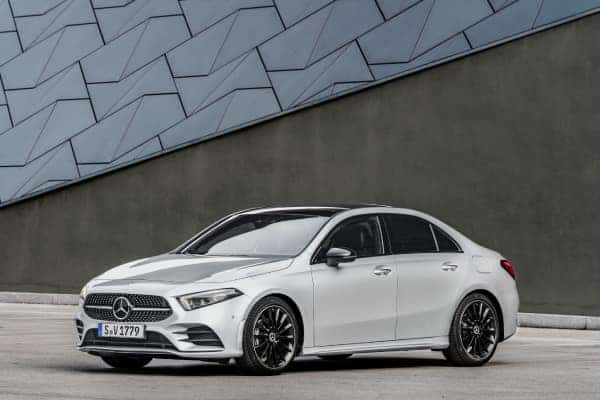
The Mercedes-Benz A-Class has always worn two hats. On one side, it’s the entry point into the world of Mercedes luxury. On the other, it’s a compact hatchback navigating a world obsessed with emissions, taxes, and carbon footprints.
So, what does the A-Class really emit into the atmosphere? How green is “premium” in 2026? And more importantly—what do those CO₂ numbers actually mean for drivers?
Let’s unpack it together.
Content in this publication
- Understanding CO₂ Emissions in Real Terms
- Why CO₂ Matters More Than Ever
- Mercedes-Benz A-Class Generations & Emissions Evolution
- CO₂ Emissions by Engine Type
- WLTP vs Real-World Emissions
- How CO₂ Impacts Ownership Costs
- Comparing the A-Class to Rivals
- What Actually Reduces CO₂ in the A-Class?
- Driving Habits That Cut Your Carbon Footprint
- The Future: A-Class and Electrification
- Is the A-Class Environmentally Responsible?
- Who Should Choose Each Emissions Profile?
- CO₂ and Resale Value
- Myths About A-Class Emissions
- The Emotional Side of Emissions
- Closing Thoughts
- FAQs
Understanding CO₂ Emissions in Real Terms
CO₂ emissions aren’t just a line on a spec sheet. They’re the automotive world’s version of a carbon shadow—how much climate impact follows you wherever you drive.
Measured in grams per kilometer (g/km), CO₂ emissions reflect:
- Fuel burned
- Engine efficiency
- Weight and aerodynamics
- Driving cycle methodology (WLTP in Europe)
Lower numbers mean lower taxes, cheaper ownership in many countries, and a gentler environmental footprint.
Why CO₂ Matters More Than Ever
Across Europe and beyond, emissions shape:
- Road tax bands
- Company car benefit-in-kind rates
- Urban access rules
- Resale value
- Long-term compliance with climate laws
The A-Class isn’t just competing with other hatchbacks anymore—it’s competing with legislation.
Mercedes-Benz A-Class Generations & Emissions Evolution
Early A-Class (W168 & W169)
These models focused on safety innovation, not carbon efficiency.
- Petrol: ~140–170 g/km
- Diesel: ~120–140 g/km
At the time, this was acceptable. Today, it’s fossil-heavy.
Modern A-Class (W176 & W177)
With turbocharged engines and lightweight platforms:
- Petrol: ~120–150 g/km
- Diesel: ~95–115 g/km
- Plug-in Hybrid: as low as 22 g/km
That’s not evolution—it’s reinvention.
CO₂ Emissions by Engine Type
Petrol A-Class Models
Petrol variants remain the emotional heart of the range—quiet, smooth, and responsive.
Typical WLTP CO₂ figures:
- A180: ~125–135 g/km
- A200: ~130–145 g/km
- AMG A35/A45: ~180–205 g/km
Performance costs carbon. Every extra kilowatt leaves a trace.
Diesel A-Class Models
Diesel remains the efficiency king for long-distance drivers.
- A180d: ~100–110 g/km
- A200d: ~105–115 g/km
These numbers often translate into:
You may be interested in reading Does Mercedes A-Class Have a Renault Engine? The Truth, Without the Myths
- Lower annual tax
- Better motorway economy
- Longer driving range per tank
Plug-In Hybrid (A250e)
This is where Mercedes flips the script.
- CO₂: ~22–33 g/km (WLTP)
- Electric range: up to 50–55 miles
In urban use, it can behave like an EV with leather seats.
But remember: those ultra-low numbers assume regular charging.
WLTP vs Real-World Emissions
WLTP tests are cleaner than reality.
In the real world:
- Cold starts raise emissions
- Short trips punish hybrids
- Aggressive driving spikes output
- Weight in the boot matters
A petrol A200 rated at 135 g/km might produce:
- 150+ g/km in city congestion
- 120 g/km on steady motorway runs
Your right foot writes the carbon story.
How CO₂ Impacts Ownership Costs
CO₂ isn’t abstract—it’s expensive.
In many markets, emissions determine:
- Annual vehicle tax
- First registration fees
- Company car taxation
- Urban congestion charges
Lower CO₂ often means:
- Hundreds saved annually
- Better resale value
- Easier access to low-emission zones
The A250e can pay for itself in tax savings alone.
Comparing the A-Class to Rivals
| Model | Average CO₂ (Petrol) |
|---|---|
| Mercedes A-Class | 125–145 g/km |
| BMW 1 Series | 130–150 g/km |
| Audi A3 | 120–145 g/km |
| VW Golf | 115–140 g/km |
The A-Class sits squarely in the middle—never the cleanest, never the dirtiest.
What Actually Reduces CO₂ in the A-Class?
Mercedes engineers attack emissions from every angle:
- Turbo downsizing
- Cylinder deactivation
- Mild-hybrid systems
- Aerodynamic shaping
- Lightweight materials
- Intelligent gear ratios
Even the grille shutters play a role, closing at speed to reduce drag.
Driving Habits That Cut Your Carbon Footprint
We can all drive cleaner without changing cars:
- Accelerate gently
- Maintain steady cruising speeds
- Avoid unnecessary idling
- Keep tyres properly inflated
- Remove excess boot weight
- Use eco drive modes
Small habits shave grams. Over years, they save tonnes.
The Future: A-Class and Electrification
The A-Class is already halfway into the electric era:
You may be interested in readingDoes Mercedes A-Class Have a Renault Engine? The Truth, Without the MythsYou may be interested in reading
 Does Mercedes A-Class Have a Heated Windscreen? The Real-World Answer
- Mild hybrids across petrol range
- Plug-in hybrid option
- Digital eco coaching in the cabin
- Energy flow visualizations
The next generation may push further—or disappear entirely in favor of pure EV successors.
Is the A-Class Environmentally Responsible?
“Responsible” is relative.
Compared to SUVs? Yes.
Compared to EVs? Not even close.
The A-Class is a bridge—a premium hatch learning to breathe lighter air.
Who Should Choose Each Emissions Profile?
Petrol
- Urban drivers
- Low annual mileage
- Simplicity seekers
Diesel
- Long-distance commuters
- High-mileage users
- Efficiency-first drivers
Plug-in Hybrid
- Home charging access
- City driving patterns
- Tax-sensitive buyers
Choose the engine that fits your lifestyle, not just your driveway.
CO₂ and Resale Value
Lower emissions future-proof your car:
- Cleaner cars age slower in regulation
- Higher demand in restricted cities
- Better fleet appeal
- Wider buyer pool
Carbon is becoming currency.
Myths About A-Class Emissions
- “Small car = low emissions” → Not always
- “Hybrid means zero pollution” → Only when charged
- “Diesel is dirty” → Often cleaner than petrol
- “AMG is irresponsible” → It’s honest about its thirst
Numbers tell the truth.
The Emotional Side of Emissions
Every car tells a story.
The A-Class says:
“I want comfort, style, and tech—without pretending the planet doesn’t exist.”
It’s not a saint.
It’s not a villain.
It’s a compromise with leather seats.
Closing Thoughts
CO₂ emissions are no longer background noise. They’re the headline. The Mercedes-Benz A-Class sits at the crossroads of luxury and responsibility, balancing refinement with regulation.
Whether you choose petrol, diesel, or plug-in hybrid, the A-Class gives you a spectrum—from traditional combustion to near-electric urban driving.
The question isn’t “How much does it emit?”
It’s “How much of that story do you want to write?”
FAQs
1. What is the lowest CO₂ A-Class model?
The A250e plug-in hybrid, with WLTP figures as low as ~22 g/km.
2. Are diesel A-Class models cleaner than petrol?
In CO₂ terms, often yes—especially on long motorway journeys.
3. Do AMG A-Class models have high emissions?
Yes. Performance models exceed 180 g/km due to power output.
Does Mercedes A-Class Have a Renault Engine? The Truth, Without the MythsYou may be interested in reading
Does Mercedes A-Class Have a Heated Windscreen? The Real-World AnswerYou may be interested in reading
 Do Mercedes A-Class Hold Their Value? A Real-World Look at Depreciation
4. Does driving style affect CO₂ significantly?
Absolutely. Aggressive driving can increase emissions by 20–30%.
5. Will future A-Class models be electric?
Mercedes is shifting toward EVs, so a fully electric successor is likely.
If you want to know other articles similar to Mercedes-Benz A-Class CO₂ Emissions: What Your Hatchback Really Leaves Behind you can visit the category Blog.
Is Vauxhall Agila a Good Car? Reliability, Problems and Buying Guide
Honda Passport Life Expectancy: How Many Miles Can It Last?
Honda Passport Depreciation: How Well Does It Hold Its Value?

Nissan Rogue Reliability Rating: How Reliable Is the Rogue?
Nissan Rogue Life Expectancy: How Long Does It Last?
Vauxhall Agila Reliability: Common Problems, Best Engines and What to Check
Leave a Reply
More content of your interest