

Toyota Corolla Cross Engine Capacity — What’s Really Under the Hood?

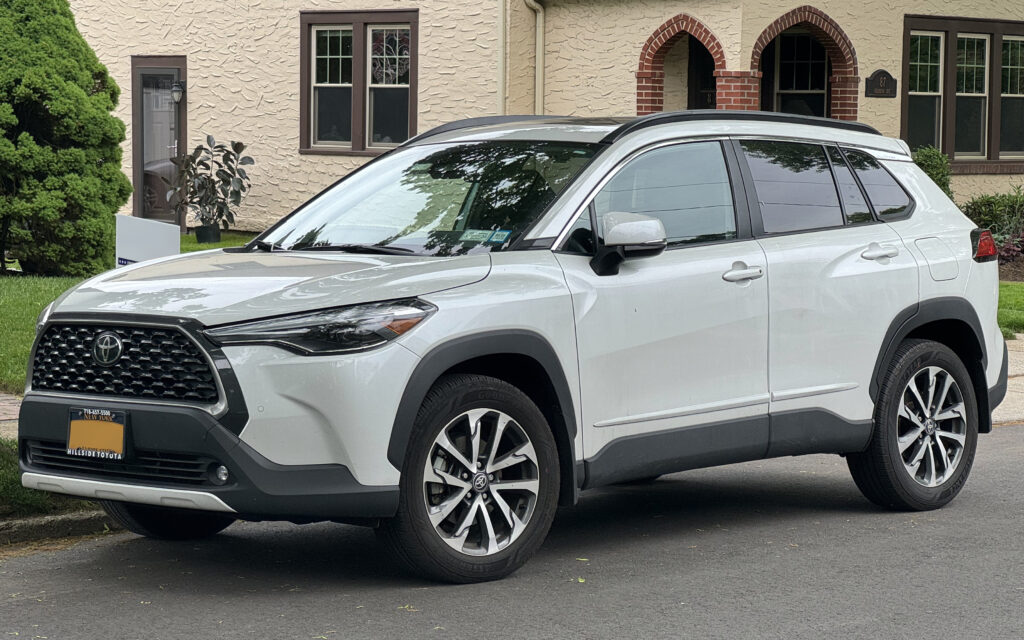
Let’s be honest: most people shopping for a compact SUV don’t wake up thinking about cubic centimeters. They think about fuel bills, overtaking trucks, weekend road trips, and whether the car feels effortless or exhausted climbing a hill.
And that’s exactly why engine capacity matters in the Toyota Corolla Cross.
Because displacement isn’t just a number — it’s personality.
It tells you if the car whispers or growls.
Sips or gulps.
Cruises or struggles.
So today, we’re diving deep — not brochure-deep, but real-driver deep — into the engine capacity of the Toyota Corolla Cross, how it changes across markets, what it actually means in daily driving, and which version feels right for different people.
Content in this publication
- What Does Engine Capacity Actually Mean?
- Toyota Corolla Cross Engine Options (Global Overview)
- The 1.8-Liter Engine — The Efficiency Specialist
- The 2.0-Liter Engine — The Effortless Performer
- Hybrid Engines — Where Capacity Becomes Only Half the Story
- 1.8 Hybrid vs 2.0 Petrol — The Surprising Comparison
- Why Toyota Didn’t Use a Turbo Engine
- Dynamic Force 2.0 — The Engineering Trick
- Fuel Consumption vs Engine Capacity
- Altitude and Engine Capacity
- Transmission Pairing Matters Too
- Maintenance Implications
- Towing and Load Carrying
- Longevity Expectations
- Which Engine Feels the Most “Premium”?
- Choosing the Right Capacity — Our Honest Advice
- Closing Thoughts — Numbers Don’t Drive, Feelings Do
- FAQs
What Does Engine Capacity Actually Mean?
Before we talk Corolla Cross specifically, let’s decode the jargon.
Engine Capacity = Displacement
Engine capacity is the total volume inside the cylinders where fuel burns.
Measured in:
- cc (cubic centimeters)
- Liters (L)
1000 cc = 1.0 liter
So when you hear 2.0-liter engine, you’re basically hearing:
“This engine can inhale and burn about 2 liters of air-fuel mixture every cycle.”
Think of it like lung size:
- Small lungs → efficient breathing but limited sprinting
- Big lungs → stronger bursts but more energy needed
Cars behave the same way.
Toyota Corolla Cross Engine Options (Global Overview)
The Corolla Cross isn’t one engine worldwide. Toyota cleverly adapts it depending on fuel prices, taxes, and driving habits.
Available Engine Capacities
| Engine | Capacity | Type | Markets |
|---|---|---|---|
| 1.8L Petrol | 1798 cc | Naturally Aspirated | Asia, Africa |
| 1.8L Hybrid | 1798 cc | Hybrid System | Europe, Asia |
| 2.0L Petrol | 1987 cc | Dynamic Force | Americas |
| 2.0L Hybrid | 1987 cc | Hybrid AWD / FWD | US, Europe |
| 1.8L Flex (some markets) | 1798 cc | Ethanol capable | Latin America |
Already interesting, right?
Same car. Completely different personalities.
The 1.8-Liter Engine — The Efficiency Specialist
Capacity: 1798 cc
This is the calm, rational version of the Corolla Cross.
Not fast. Not dramatic. But incredibly cooperative.
Power Characteristics
- Smooth acceleration
- Quiet operation
- Predictable throttle
- Built for traffic, not racing
Where It Shines
Urban commuting. School runs. Ride-sharing. Daily reliability.
We like to call it the never-argues engine.
You press the pedal — it complies politely.
Driving Feel: Gentle Momentum
Imagine pushing a shopping cart that never resists but never sprints.
That’s the 1.8.
You won’t win drag races, but you also won’t stress fuel stations.
The 2.0-Liter Engine — The Effortless Performer
Capacity: 1987 cc
Now we step into a different personality.
Same car… suddenly more confident.
Why 200cc Matters More Than You Think
It sounds tiny: 1.8 vs 2.0
But in real driving:
- Faster merging
- Easier overtakes
- Less engine noise at highway speeds
- Lower RPM at same speed
In short:
The engine works less → feels stronger.
Real-World Effect
The 2.0 doesn’t feel faster only when flooring it.
It feels faster when you:
- climb hills
- carry passengers
- turn on AC
- drive at altitude
- cruise at 120 km/h
It’s the difference between asking permission… and giving instructions.
Hybrid Engines — Where Capacity Becomes Only Half the Story
Here’s where people get confused.
Hybrid Corolla Cross models still have:
- 1.8L engine OR
- 2.0L engine
But electric motors assist constantly.
So displacement no longer equals performance alone.
How Hybrid Changes Engine Behavior
Instead of one worker lifting a sofa, now you have three.
Petrol engine: handles steady work
Electric motor: instant torque
Battery: energy reserve
Result:
Smaller engine feels bigger than its numbers.
1.8 Hybrid vs 2.0 Petrol — The Surprising Comparison
| Feature | 1.8 Hybrid | 2.0 Petrol |
|---|---|---|
| City Acceleration | Faster | Moderate |
| Highway Overtake | Moderate | Faster |
| Fuel Economy | Excellent | Average |
| Noise | Very Quiet | Noticeable |
| Driving Stress | Low | Medium |
Funny enough, in traffic the hybrid often feels stronger despite smaller displacement.
Electric torque cheats physics.
Why Toyota Didn’t Use a Turbo Engine
Almost every competitor uses turbocharging.
Toyota didn’t — and that’s intentional.
Naturally Aspirated Philosophy
Toyota prioritizes:
- durability
- predictable maintenance
- linear power delivery
- long-term reliability
Turbo engines feel exciting early… but age faster under heat and pressure.
Toyota designs for 15 years, not 5.
Dynamic Force 2.0 — The Engineering Trick
The 2.0-liter engine isn’t just bigger.
It uses:
- 40%+ thermal efficiency
- high compression ratio
- dual injection
- lightweight internals
Meaning:
It burns fuel extremely cleanly and efficiently.
So the bigger engine isn’t automatically thirstier.
Fuel Consumption vs Engine Capacity
People assume:
Bigger engine = worse fuel economy
Not always true.
Why Larger Can Be More Efficient
At highway speeds:
- small engine works hard
- large engine relaxes
Working hard = burning more fuel
Working relaxed = sipping fuel
Typical Consumption Patterns
| Driving Type | Best Engine |
|---|---|
| Heavy city | 1.8 Hybrid |
| Mixed commute | 2.0 Hybrid |
| Highway daily | 2.0 Petrol |
| Mountain roads | 2.0 Petrol |
Altitude and Engine Capacity
At higher elevations, engines lose oxygen.
Small engines suffer more.
So:
- 1.8L → noticeable power drop
- 2.0L → manageable drop
- Hybrid → barely noticeable
Electric torque ignores altitude.
Transmission Pairing Matters Too
All Corolla Cross engines use CVT-style gearboxes.
But behavior changes dramatically with capacity.
With 1.8
- More revving
- Engine noise climbs faster
With 2.0
- Lower RPM
- More relaxed cruising
Same transmission — different personality.
Maintenance Implications
Bigger engine ≠ more expensive maintenance necessarily.
Actually:
Why the 2.0 Can Age Better
- Less strain
- Lower operating RPM
- Cooler operation
The 1.8 works harder in heavy loads, especially highways.
Towing and Load Carrying
If you regularly carry:
- family + luggage
- cargo
- roof boxes
- camping gear
Engine capacity becomes noticeable quickly.
Rule of Thumb
- 1.8: light lifestyle
- 2.0: active lifestyle
- Hybrid: urban lifestyle
Longevity Expectations
Toyota engines are famously durable, but usage matters.
| Usage | Ideal Engine |
|---|---|
| Ride-share | Hybrid |
| Highway commuting | 2.0 Petrol |
| Short daily trips | 1.8 Petrol |
| Mixed family car | 2.0 Hybrid |
Matching engine to life = longest lifespan.
Interestingly, refinement ≠ horsepower.
The quietest and smoothest experience is usually:
2.0 Hybrid → near-electric feeling
Then:
- 1.8 Hybrid
- 2.0 Petrol
- 1.8 Petrol
Choosing the Right Capacity — Our Honest Advice
Let’s simplify:
Choose 1.8 if:
- Mostly city
- Budget sensitive
- Calm driver
- Short distances
Choose 2.0 if:
- Highways often
- Carry passengers
- Want effortless power
Choose Hybrid if:
- Stop-and-go traffic
- Fuel savings priority
- Comfort lover
Closing Thoughts — Numbers Don’t Drive, Feelings Do
The Toyota Corolla Cross proves something important:
Engine capacity isn’t about bragging rights anymore.
It’s about matching personality.
A smaller engine can feel powerful with electric help.
A larger engine can feel efficient when relaxed.
So instead of asking:
“Which engine is bigger?”
We should ask:
“Which engine works least hard in my life?”
Because the happiest car… is the one not struggling.
FAQs
1. Is the 2.0 Corolla Cross much faster than 1.8?
Not dramatically in acceleration tests, but noticeably easier in real driving, especially overtaking and hills.
2. Does hybrid mean weaker engine?
No — often stronger in city driving due to instant electric torque.
3. Is 1.8 engine underpowered?
Only on highways or heavy loads. Perfectly fine for urban use.
4. Which engine lasts longer?
All are durable, but the one best matched to your driving style will age slowest.
5. Does bigger engine consume much more fuel?
In city yes, in highway often similar — sometimes even better.
If you want to know other articles similar to Toyota Corolla Cross Engine Capacity — What’s Really Under the Hood? you can visit the category Service and Parts.
Suzuki Swift Fuel Tank Capacity: Complete Guide
Mazda CX-5 Weight (2013–2026): Complete Guide in Pounds and KG
Kia Sportage Dashboard Symbols and Warning Lights

MINI Cooper Weight (2002–2027): Complete Weight Chart & Guide
Toyota RAV4 Engine Sizes: Complete Guide (1994–2026)

Toyota RAV4 Weight (2002–2026): Complete Guide by Year and Model
Leave a Reply
More content of your interest