
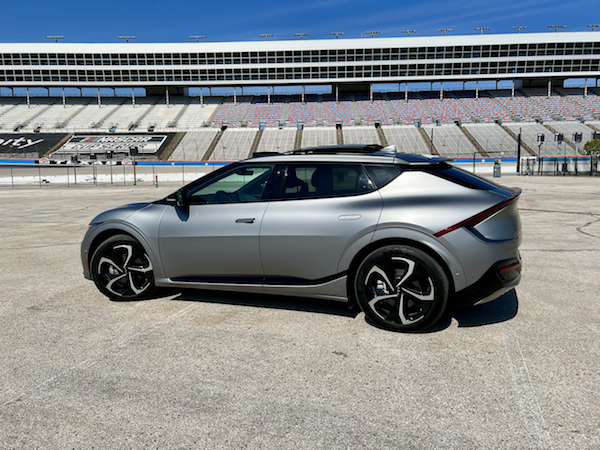
Kia EV6 Insurance Group: Real Costs, Trims, and How to Pay Less

Electric cars promise cheaper running — fewer moving parts, no oil changes, regenerative braking magic.
But then reality taps us on the shoulder when the insurance quote appears.
And with the Kia EV6, that moment can feel… dramatic.
We’ve all had that experience: you configure the perfect EV6 online, pick the color, the wheels, maybe even the GT version — then you run an insurance check and suddenly the monthly cost looks like a small phone contract.
So today we’re going deep. Not shallow blog-style “it’s expensive because it’s fast.”
We’re breaking down why the Kia EV6 insurance group varies, which models cost the most, how insurers think, and — most importantly — how we can actually reduce the premium.
Let’s demystify it.
Content in this publication
- Understanding Insurance Groups in the UK (Why They Matter More Than Price)
- Why Electric Cars Like the EV6 Often Sit High in Insurance Groups
- Kia EV6 Insurance Group by Trim Level
- Why the GT Costs So Much to Insure
- Real Insurance Cost Expectations
- How Insurers Evaluate EV6 Battery Risk
- Safety Tech — The Hidden Discount Factor
- Charging Habits Affect Premiums (Yes, Really)
- Why EV6 Theft Rates Matter
- Ways We Can Lower Kia EV6 Insurance Costs
- Driver Profile Changes the Group Impact
- Does Battery Size Directly Affect Insurance?
- Comparison: EV6 vs Similar Electric Cars
- Future Insurance Trends for EV6 Owners
- Should Insurance Group Stop You Buying One?
- Final Thoughts
- FAQs
Understanding Insurance Groups in the UK (Why They Matter More Than Price)
Before touching the EV6 itself, we need context.
In the UK (and markets using similar actuarial structures), cars sit in insurance groups 1 to 50:
- Group 1 = cheapest to insure
- Group 50 = most expensive
The group isn’t based on price alone.
Insurance companies calculate risk using multiple technical metrics.
- Repair cost
- Parts price
- Performance & acceleration
- Safety tech effectiveness
- Theft probability
Here’s the surprising part:
An expensive car can sometimes insure cheaper than a cheaper car — if it’s easy to repair and rarely stolen.
EVs complicate this logic.
Why Electric Cars Like the EV6 Often Sit High in Insurance Groups
Electric vehicles introduce new cost risks insurers still don’t love.
Battery Packs Change Everything
The EV6 battery is structural.
Meaning: damage to the floor pan can equal battery replacement.
And battery replacement = massive claim.
Even minor accidents can become expensive repairs.
Advanced Sensors Everywhere
Modern EV6 models include:
- Radar arrays
- Autonomous braking cameras
- Lane tracking modules
- Ultrasonic parking sensors
These sit in bumpers — the most frequently damaged part of a car.
A small bump → full sensor recalibration → high labour cost.
Kia EV6 Insurance Group by Trim Level
Below is the real heart of the topic.
The EV6 doesn’t belong to one insurance group — it spans a range depending on powertrain and performance.
Standard Range RWD
Insurance Group: Approx. 29–32
This is the most affordable version to insure.
Why?
- Lower power output
- Smaller battery value exposure
- Lower claim severity
This is the “sensible enthusiast” choice.
Long Range RWD
Insurance Group: Approx. 33–36
Slight jump in cost.
Not because it’s faster — but because the battery value is higher.
Bigger battery = higher claim payout potential.
Long Range AWD
Insurance Group: Approx. 38–42
Now we enter premium territory.
Insurers react to:
- Faster acceleration
- More complex drivetrain
- Higher repair complexity
This version triggers a psychological threshold — insurers consider it performance-class.
Kia EV6 GT
Insurance Group: 47–50
Yes — near the maximum.
The GT isn’t just an EV.
It’s essentially an electric hot hatch wearing crossover clothing.
0–60 mph under 3.5 seconds dramatically affects underwriting risk.
Why the GT Costs So Much to Insure
It isn’t just speed.
Performance Changes Driver Behavior
Statistics show faster cars:
- Brake harder
- Corner faster
- Crash more expensively
Insurers don’t insure the car — they insure what humans do with it.
Specialized Parts Increase Claim Costs
The GT uses:
- Larger brakes
- Sport suspension
- Unique tires
- Performance electronics
Parts scarcity increases repair time.
Time = rental car coverage cost = premium rise.
Real Insurance Cost Expectations
Let’s translate groups into human numbers.
Typical annual ranges (driver dependent):
| Model | Typical Premium Range |
|---|---|
| Standard Range | Low-Medium |
| Long Range RWD | Medium |
| AWD | Medium-High |
| GT | High |
Age, location, and driving history matter more than trim — but the group sets the baseline.
How Insurers Evaluate EV6 Battery Risk
Electric vehicles introduced a new insurance concept:
Total loss probability from minor collision
Battery Damage Risk
- Underbody impact
- Flooding
- Thermal events
Even when safe, insurers often write off EVs earlier than ICE cars because inspection costs are high.
This pushes the EV6 into higher groups despite strong safety scores.
Ironically, the EV6 also reduces insurance cost in some scenarios.
Advanced Driver Assistance Systems Help
The car includes:
- Forward collision avoidance
- Junction assist
- Highway driving assist
- Blind spot collision prevention
These reduce claim frequency.
So insurers raise base cost but offer policy discounts.
This surprises many owners.
Where you charge affects risk.
Home Charging vs Public Charging
Home garage:
- Lower theft risk
- Lower vandalism exposure
Public overnight charging:
- Higher damage risk
Some insurers actually ask this now.
Why EV6 Theft Rates Matter
The EV6 isn’t among the most stolen cars — good news.
But EV theft trends differ.
Keyless Relay Attacks
Modern EVs are vulnerable to:
- Signal amplification attacks
- Smartphone key cloning
Insurers react to digital theft risk, not just physical theft.
Ways We Can Lower Kia EV6 Insurance Costs
Now the part everyone cares about.
- Choose RWD instead of AWD
- Avoid GT trim unless necessary
- Install steering wheel lock
- Park off-street if possible
- Increase voluntary excess
- Limit annual mileage estimate
Small decisions can drop a policy tier.
Driver Profile Changes the Group Impact
Insurance group sets baseline — profile sets reality.
High Impact Factors
- Age under 25
- Urban location
- New license
- Business mileage
A low-risk driver in a Group 40 car may pay less than a high-risk driver in Group 25.
Does Battery Size Directly Affect Insurance?
Yes — indirectly.
Larger battery:
- Higher replacement value
- Higher write-off probability
- Higher transport cost after accident
So long-range EV6 models trend upward in group rating.
Comparison: EV6 vs Similar Electric Cars
Interestingly, the EV6 sits competitively in its segment.
Generally:
- Cheaper than high-performance German EVs
- Higher than compact EV hatchbacks
- Similar to premium crossovers
It lands in the “performance-family EV” bracket.
Future Insurance Trends for EV6 Owners
Costs are expected to drop.
Why?
Repair Infrastructure Is Expanding
More technicians trained in EV repair = cheaper claims.
As battery repair improves, insurers reduce group pressure.
Early adopters pay the research cost — later owners benefit.
Should Insurance Group Stop You Buying One?
Honestly — no.
We shouldn’t view insurance group as a barrier.
We should view it as a budgeting parameter.
Running cost savings often offset premium increases.
Fuel savings + maintenance savings frequently balance the difference within ownership years.
Final Thoughts
The Kia EV6 insurance group story isn’t simple.
It isn’t high because it’s dangerous.
It isn’t low because it’s electric.
It’s high because it’s advanced.
Batteries cost money. Sensors cost money. Performance costs money.
But here’s the encouraging part:
Insurance is one of the most negotiable ownership costs. Driver profile, storage, mileage and trim choice dramatically change the outcome.
The EV6 rewards informed buyers.
Pick the right spec and you get futuristic driving without painful premiums.
And honestly — that’s the sweet spot of modern EV ownership.
FAQs
1. What insurance group is the Kia EV6 GT?
Typically near Group 50 due to extreme performance and expensive repair components.
2. Is the Kia EV6 expensive to insure compared to petrol cars?
Usually slightly higher than equivalent family cars but similar to performance hybrids.
3. Does battery size affect insurance?
Yes — larger battery versions cost more because replacement values are higher.
4. Which EV6 model is cheapest to insure?
The Standard Range RWD version sits in the lowest insurance group.
5. Will EV insurance get cheaper in the future?
Very likely as repair networks and battery repair methods improve.
If you want to know other articles similar to Kia EV6 Insurance Group: Real Costs, Trims, and How to Pay Less you can visit the category Service and Parts.
Vauxhall Mokka Tyre Pressure Reset: Complete Guide
How to Reset the Tire Pressure System on Your Hyundai Tucson
Hyundai Kona Tire Pressure: Complete PSI Guide
Vauxhall Corsa Timing Belt Replacement Cost UK 2026
Mazda CX-5 Tire Size Chart: 2013–2026 Guide
How to Reset a Honda Civic: Complete Step-by-Step Guide
Leave a Reply
More content of your interest