
BMW 1 Series Boot Space: How Practical Is BMW’s Smallest Hatch?

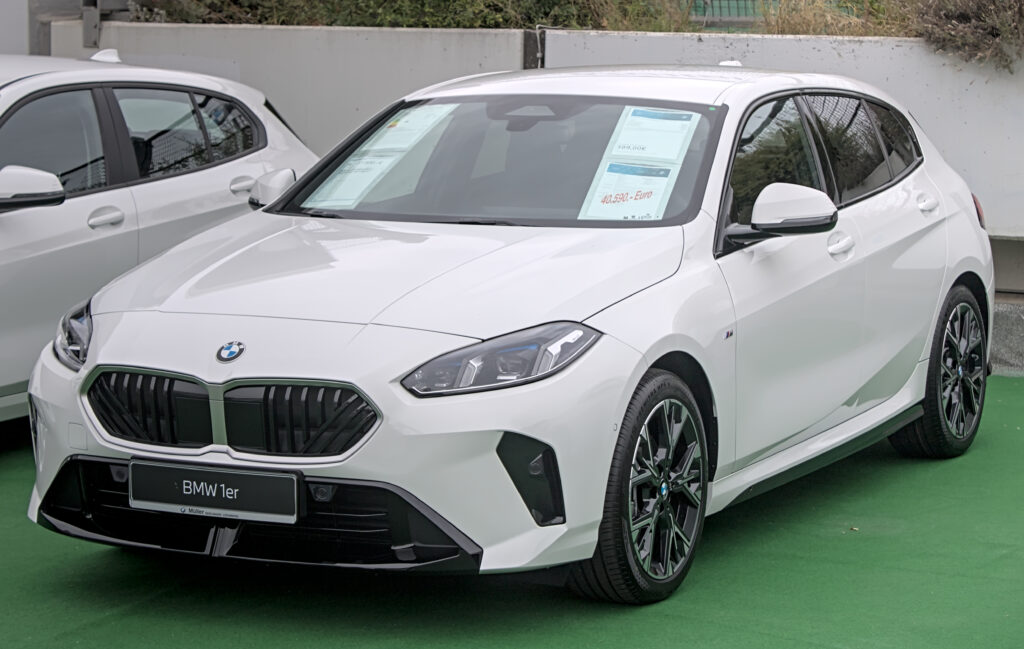
We often buy with our eyes. A sleek silhouette, that kidney grille, a badge that whispers “premium.” But then real life kicks in. Groceries. Gym bags. Prams. Weekend luggage. Suddenly, the most glamorous part of your car isn’t the dashboard—it’s the boot.
That’s where the BMW 1 Series enters an interesting conversation. It’s compact, sporty, and unmistakably BMW. But how does it cope when life asks for space? Is the BMW 1 Series boot big enough for modern living, or does style steal from practicality?
Let’s open the tailgate and explore.
Content in this publication
- Why Boot Space Matters More Than You Think
- BMW 1 Series Boot Space by Generation
- What Does 380 Liters Actually Mean?
- Shape Matters: The Geometry of Usefulness
- Split Folding Seats: Expanding the Possibilities
- Real-Life Scenarios
- BMW 1 Series vs Rivals: Boot Space Battle
- Hidden Practical Touches
- Boot Space Across Body Styles
- Sport vs Space: Does M Sport Lose Room?
- Loading Height and Accessibility
- Urban Life Compatibility
- Can It Replace an SUV?
- Long-Term Ownership Perspective
- How to Maximize BMW 1 Series Boot Space
- Is It Enough for You?
- Closing Thoughts: Space Without Sacrifice
- FAQs
Why Boot Space Matters More Than You Think
Boot capacity isn’t just about liters. It’s about freedom.
- Can we pack for a weekend without playing Tetris?
- Can we fit a buggy and still carry groceries?
- Can we load sports gear without scratching everything?
The boot defines how a car fits into daily life. In the compact hatchback segment, every centimeter matters. Here, the BMW 1 Series competes with cars like the Audi A3, Mercedes A-Class, and VW Golf—models known for balancing style with usability.
So where does BMW stand?
BMW 1 Series Boot Space by Generation
BMW has reinvented the 1 Series multiple times. Each generation tells a different story about space.
First Generation (E81/E87, 2004–2011)
- Boot capacity: 330 liters
- With seats folded: 1,150 liters
Rear-wheel drive defined this era. The long bonnet and transmission tunnel ate into cabin space, but BMW still managed a respectable boot. It wasn’t class-leading, yet it felt usable and well-shaped.
Second Generation (F20/F21, 2011–2019)
- Boot capacity: 360 liters
- With seats folded: 1,200 liters
This was a leap forward. BMW refined the layout, improved the floor shape, and gave us a wider opening. Suddenly, the 1 Series felt less “sporty compromise” and more “daily driver.”
Third Generation (F40, 2019–Present)
- Boot capacity: 380 liters
- With seats folded: 1,200 liters
Switching to front-wheel drive changed everything. With the engine and drivetrain compacted, space flowed back into the cabin and boot. This is the most practical 1 Series ever built.
We now sit right in the heart of the segment.
What Does 380 Liters Actually Mean?
Numbers are abstract. Let’s make them human.
A 380-liter boot can typically hold:
- Two medium suitcases
- One large suitcase + backpack
- Weekly groceries for a family
- Folded stroller (compact models)
- Sports kit bags for two people
It’s not cavernous, but it’s genuinely useful. The boot floor is flat, the opening is wide, and the load lip is low. You don’t fight the car—you work with it.
In everyday terms, it feels like:
“Enough space that we stop thinking about space.”
That’s the magic.
Shape Matters: The Geometry of Usefulness
Boot space isn’t just volume. It’s geometry.
The BMW 1 Series boot stands out for:
- Squared edges
- Minimal intrusion from wheel arches
- Flat floor in most trims
- Deep vertical walls
This means you can stack items efficiently. Boxes don’t wobble. Suitcases sit upright. Grocery bags don’t slide into oblivion.
BMW quietly engineered this boot to be cooperative. It doesn’t fight you.
Split Folding Seats: Expanding the Possibilities
Most trims offer 40:20:40 split rear seats. This tiny detail transforms usability.
We can:
- Carry long items like skis while keeping two rear seats usable
- Fold just one side for bikes or flat-pack furniture
- Create a nearly flat load bay for weekend moves
With seats down, the 1 Series becomes a compact cargo van in disguise.
And because the floor remains low, lifting heavy items doesn’t feel like weight training.
You may be interested in reading BMW 1 Series Engine Oil Guide – Correct Oil Type, Grade & Capacity for Every Model
Real-Life Scenarios
Let’s step out of spec sheets and into life.
Weekend Escape
Two people. Two suitcases. A backpack. Camera gear.
The boot swallows it all. No seat folding. No compromise.
Family Run
- Buggy
- Grocery bags
- School backpacks
It fits. You might rotate the buggy diagonally, but it works.
IKEA Adventure
Seats folded. Flat-pack boxes slide in. Even a compact bookcase fits.
This isn’t a sports car pretending to be practical. It’s a premium hatch that understands reality.
BMW 1 Series vs Rivals: Boot Space Battle
| Model | Boot Capacity |
|---|---|
| BMW 1 Series (F40) | 380 L |
| Audi A3 Sportback | 380 L |
| Mercedes A-Class | 370 L |
| VW Golf | 381 L |
| Ford Focus | 375 L |
We’re right at the top of the segment. BMW no longer sacrifices space for sportiness. It competes head-on.
What differentiates it is how “usable” those liters feel.
BMW added small details that quietly elevate the experience:
- Tie-down hooks for bags
- Optional adjustable floor
- 12V socket for coolers
- Side compartments for tools
- LED boot lighting
These features don’t scream luxury. They whisper convenience.
And over time, those whispers become reasons we love our car.
Boot Space Across Body Styles
The 1 Series remains a hatchback-only model in recent years. No estate, no saloon. That makes every liter count.
Earlier generations offered a three-door variant, but boot volume remained largely identical. The difference lay in access, not capacity.
Modern buyers mostly choose the five-door, and for good reason—it maximizes daily ease.
Sport vs Space: Does M Sport Lose Room?
M Sport trims don’t reduce boot volume. However:
- Larger wheels may raise the floor slightly in some markets
- Subwoofer placement can intrude into side space
- Run-flat tires can remove the underfloor spare well
The numbers remain the same, but the feel may change.
It’s a reminder: trim level affects usability, not just aesthetics.
Loading Height and Accessibility
One of the underrated strengths of the BMW 1 Series boot is its low load lip.
This means:
- Easier lifting of heavy bags
- Less strain on your back
- Faster loading in rain
You don’t hoist—you slide.
Over years of ownership, that matters.
Urban Life Compatibility
In cities, cars become extensions of our apartments. Storage becomes survival.
The 1 Series excels in:
- Tight parking spaces
- Multi-story garages
- Street-side loading
You can open the boot in narrow spaces. You can reach items without climbing inside.
It feels designed for urban rhythm.
You may be interested in readingBMW 1 Series Engine Oil Guide – Correct Oil Type, Grade & Capacity for Every ModelYou may be interested in reading
BMW 1 Series Dashboard Warning Lights & Symbols (2004–2024) — The Definitive GuideCan It Replace an SUV?
Not entirely. But it surprises.
For couples, solo drivers, and small families, the BMW 1 Series boot often feels “enough.” It won’t replace a X1, but it also won’t feel cramped.
It’s a car that says:
“You don’t need bigger. You need smarter.”
Long-Term Ownership Perspective
Over years, boot space becomes emotional.
It carries:
- Holiday memories
- Sports seasons
- Moves between homes
- Unexpected moments
The BMW 1 Series boot grows with life. It adapts. It doesn’t complain.
And that’s perhaps the most premium feature of all.
How to Maximize BMW 1 Series Boot Space
Small habits unlock big gains:
- Use soft bags instead of hard cases
- Stack vertically using squared corners
- Keep an organizer for loose items
- Remove unnecessary underfloor clutter
- Fold seats asymmetrically
The car gives you the tools. We just need to use them.
Is It Enough for You?
That depends on how you live.
If your life is:
- Urban
- Active
- Balanced between work and leisure
The BMW 1 Series boot fits beautifully.
If your life is:
- Three kids
- Double stroller
- Weekly hardware runs
You may crave more.
But for most of us, this boot hits the sweet spot between compact agility and real-world capacity.
Closing Thoughts: Space Without Sacrifice
The BMW 1 Series boot space tells a quiet story of evolution.
Once a sporty compromise, now a balanced companion. It proves that premium doesn’t have to mean impractical. That driving joy and daily usability can coexist.
We don’t buy cars just to drive them. We live in them.
And the BMW 1 Series gives us a boot that doesn’t just hold things—it holds life.
FAQs
1. How big is the BMW 1 Series boot?
The latest BMW 1 Series offers 380 liters, expanding to 1,200 liters with the seats folded.
2. Can a stroller fit in the BMW 1 Series?
Yes, most compact and mid-size strollers fit, especially in the F40 generation.
3. Does M Sport reduce boot space?
No, capacity remains the same, though some trims may slightly alter underfloor storage.
4. Is the BMW 1 Series boot bigger than an Audi A3?
They are equal at 380 liters, but BMW’s shape feels slightly more usable.
5. Can the rear seats fold flat?
Yes, with a 40:20:40 split in most trims, creating a near-flat load area.
You may be interested in readingBMW 1 Series Engine Oil Guide – Correct Oil Type, Grade & Capacity for Every ModelYou may be interested in reading
BMW 1 Series Dashboard Warning Lights & Symbols (2004–2024) — The Definitive GuideYou may be interested in reading
 BMW 1 Series Timing Chain Replacement Cost: What We Really Pay
If you want to know other articles similar to BMW 1 Series Boot Space: How Practical Is BMW’s Smallest Hatch? you can visit the category Service and Parts.
How to Reset Volvo XC60 Infotainment System: The Complete Practical Guide
Volvo XC60 Gearbox Oil Change: The Complete Expert Guide
Volvo XC60 Engine Management Light: Causes, Fixes, and What It Really Means
Skoda Kamiq Size Comparison: Dimensions, Space & Real-World Practicality
Volvo XC60 Headlight Adjustment for Europe: The Complete Practical Guide
Volvo XC60 City Safety Service Required: What It Means, Causes, and Fixes
Leave a Reply
More content of your interest