

BMW 1 Series Tyre Size: The Complete Guide for Every Generation

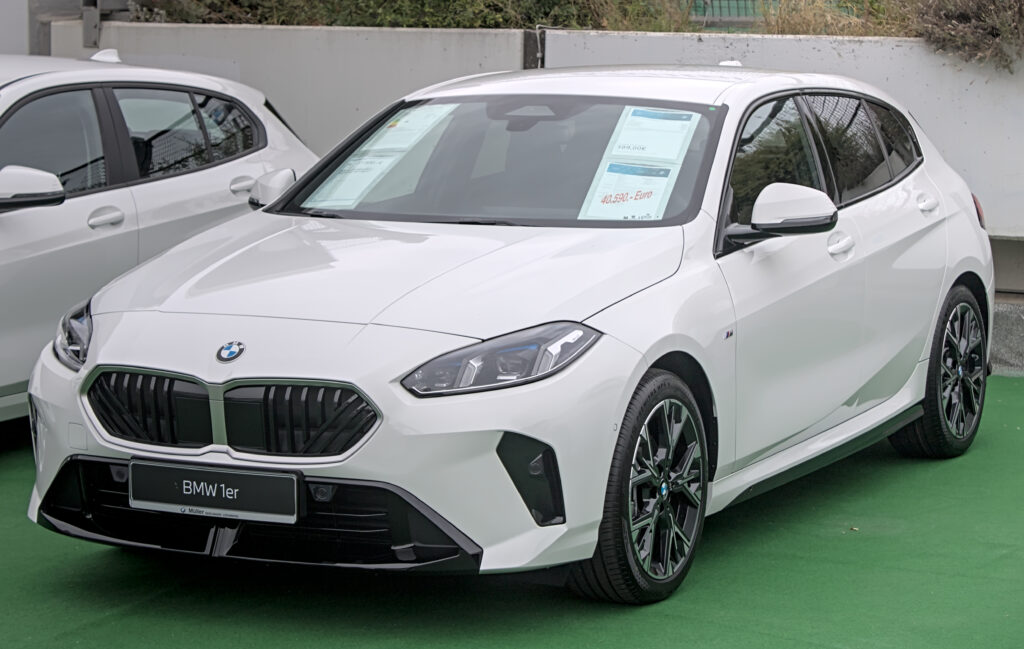
Tyres are the only part of your BMW 1 Series that actually touches the road. They’re the handshake between your car and the asphalt. Get them right, and the car feels planted, precise, alive. Get them wrong, and even a well-engineered BMW can feel awkward, noisy, or unsafe.
In this guide, we walk through everything you need to know about BMW 1 Series tyre sizes—by generation, trim, wheel option, and driving style. We’ll decode those mysterious numbers on the sidewall, explain how upsizing or downsizing changes the car’s personality, and help you choose tyres that fit both your wheels and your lifestyle.
Whether you’re running a humble 116d or a fire-breathing M135i, this is your definitive reference.
Content in this publication
- Why Tyre Size Matters More Than You Think
- Understanding BMW Tyre Size Codes
- BMW 1 Series Generations and Their Tyre Sizes
- Tyre Sizes by Trim Level
- Staggered vs Square Setups
- Can You Change Tyre Size?
- How Tyre Size Changes Driving Feel
- Seasonal Tyre Sizes
- Run-Flat vs Standard Tyres
- Choosing the Right Tyre Width
- Load and Speed Ratings Matter
- Common BMW 1 Series Tyre Size Chart
- How to Check Your Exact Tyre Size
- When to Replace Tyres
- Closing Thoughts
- FAQs
Why Tyre Size Matters More Than You Think
A tyre isn’t just rubber. It’s a complex structure engineered to balance:
- Grip
- Comfort
- Noise
- Fuel economy
- Steering feel
- Safety in wet conditions
Change the size, and you change how your BMW behaves. Wider tyres can improve cornering but may increase road noise and rolling resistance. Taller sidewalls add comfort but soften steering response.
Think of tyres like shoes. Running shoes, hiking boots, dress shoes—same feet, totally different experience.
Understanding BMW Tyre Size Codes
A typical BMW 1 Series tyre marking looks like this:
225/45 R17 91W
Let’s break it down:
- 225 – Width in millimetres
- 45 – Aspect ratio (sidewall height as % of width)
- R – Radial construction
- 17 – Wheel diameter in inches
- 91 – Load index
- W – Speed rating
This code isn’t random. It’s a carefully calculated balance designed by BMW’s engineers.
BMW 1 Series Generations and Their Tyre Sizes
E81 / E82 / E87 / E88 (2004–2011)
Early rear-wheel-drive charm. Light, playful, and tyre-sensitive.
Common factory sizes:
- 15-inch: 195/55 R15
- 16-inch: 205/55 R16
- 17-inch: 205/50 R17 or 225/45 R17
- 18-inch (sport): 215/40 R18 (front) / 245/35 R18 (rear)
Performance models like the 130i often ran staggered setups for added rear grip.
F20 / F21 (2011–2019)
Still rear-wheel drive for most trims, sharper chassis, wider stance.
Typical sizes:
- 16-inch: 195/55 R16
- 17-inch: 205/50 R17 or 225/45 R17
- 18-inch: 225/40 R18
- 19-inch (M Sport): 225/35 R19
M135i and M140i models frequently used:
You may be interested in reading BMW 1 Series Battery Replacement: The Complete Guide We Actually Use
- Front: 225/40 R18
- Rear: 245/35 R18
F40 (2019–Present)
Front-wheel drive for most models, more refined, more practical.
Factory sizes include:
- 16-inch: 195/60 R16
- 17-inch: 205/55 R17 or 225/45 R17
- 18-inch: 225/40 R18
- 19-inch: 225/35 R19
Despite the drivetrain shift, tyre choice still dramatically affects handling character.
Tyre Sizes by Trim Level
BMW doesn’t just pick sizes by generation—it fine-tunes them by trim:
- SE / Base Models:
- Narrower tyres
- Taller sidewalls
- Focus on comfort and efficiency
- Sport / M Sport:
- Wider rubber
- Lower profiles
- Sharper steering feel
- M Performance (M135i/M140i):
- Staggered setups
- Maximum grip
- More aggressive stance
Staggered vs Square Setups
BMW loves staggered tyres on sporty models.
Square Setup
Same size front and rear.
- Easier rotation
- Lower cost
- Balanced wear
- Ideal for daily drivers
Staggered Setup
Wider at the rear.
- Better traction
- Sportier look
- Reduced oversteer
- No tyre rotation front-to-rear
For most drivers, square setups are practical and economical. Staggered setups suit those who push the car harder.
Can You Change Tyre Size?
Yes—but within reason.
You can safely change tyre size if:
- Overall rolling diameter stays close to factory
- Load and speed ratings meet or exceed OEM
- Wheels match the tyre width
A common upgrade path:
- From 205/55 R16 → 225/45 R17
- From 225/45 R17 → 225/40 R18
This keeps the circumference similar while changing profile and width.
How Tyre Size Changes Driving Feel
| Change | Result |
|---|---|
| Wider tyres | More grip, heavier steering |
| Lower profile | Sharper response, firmer ride |
| Taller sidewall | More comfort, softer handling |
| Larger wheels | Visual impact, less compliance |
It’s a trade-off. There’s no “best” size—only the best for you.
Seasonal Tyre Sizes
Many BMW 1 Series owners run two sets:
- Summer tyres:
- Lower profile
- Maximum dry grip
- Winter tyres:
- Narrower width
- Higher sidewall
- Better snow traction
A common winter setup:
- Summer: 225/40 R18
- Winter: 205/55 R16
Narrow tyres cut through snow better—like a knife instead of a shovel.
You may be interested in readingBMW 1 Series Battery Replacement: The Complete Guide We Actually UseYou may be interested in reading
 BMW 1 Series Key Battery Replacement: The Complete Owner’s Guide
Run-Flat vs Standard Tyres
BMW often equips the 1 Series with run-flats.
Run-Flat Pros
- Drive after puncture
- No spare needed
Run-Flat Cons
- Harsher ride
- More noise
- Higher cost
Many owners switch to standard tyres and carry a repair kit. Ride comfort improves dramatically.
Choosing the Right Tyre Width
Use this as a quick reference:
- 195–205 mm:
- Economy-focused
- Light steering
- Great for city driving
- 215–225 mm:
- Balanced performance
- Ideal daily setup
- 235–245 mm:
- Sporty
- Better cornering
- Slight MPG penalty
Load and Speed Ratings Matter
Never downgrade.
Typical BMW 1 Series ratings:
- Load: 88–95
- Speed: V, W, Y
Underrated tyres can:
- Overheat
- Wear faster
- Compromise safety
Common BMW 1 Series Tyre Size Chart
- 195/55 R16 – Entry trims
- 205/55 R16 – Comfort-focused
- 205/50 R17 – Balanced
- 225/45 R17 – Sport standard
- 225/40 R18 – M Sport
- 225/35 R19 – Visual impact
- 245/35 R18 – Rear performance
How to Check Your Exact Tyre Size
Look in three places:
- Tyre sidewall
- Driver door jamb sticker
- Owner’s manual
BMW lists approved alternatives there.
When to Replace Tyres
- Tread below 3 mm
- Cracks or bulges
- Uneven wear
- Steering vibration
Tyres age too. Even with tread, replace after 5–6 years.
Closing Thoughts
Tyre size is more than a number. It’s a personality switch for your BMW 1 Series. Go narrower, and the car feels light and playful. Go wider, and it digs into corners like claws on tarmac.
We don’t just choose tyres—we tune the way our BMW speaks to the road.
Choose wisely. Your car will thank you every mile.
FAQs
1. What is the most common BMW 1 Series tyre size?
225/45 R17 is the most widely used across multiple generations and trims.
2. Can I fit 18-inch wheels on a base model?
Yes, as long as the rolling diameter matches OEM specs and clearance is respected.
3. Are wider tyres always better?
Not necessarily. They improve grip but can reduce comfort and fuel economy.
4. Can I mix tyre brands on a BMW 1 Series?
It’s best to keep the same brand and model across an axle for consistent handling.
You may be interested in readingBMW 1 Series Battery Replacement: The Complete Guide We Actually UseYou may be interested in reading
BMW 1 Series Key Battery Replacement: The Complete Owner’s GuideYou may be interested in reading
 BMW 1 Series Service Intervals – The Complete Owner’s Guide
5. Do I need run-flat tyres?
No. Many owners switch to standard tyres with a repair kit for better ride quality.
If you want to know other articles similar to BMW 1 Series Tyre Size: The Complete Guide for Every Generation you can visit the category Service and Parts.
How to Reset Volvo XC60 Infotainment System: The Complete Practical Guide
Volvo XC60 Gearbox Oil Change: The Complete Expert Guide
Volvo XC60 Engine Management Light: Causes, Fixes, and What It Really Means
Skoda Kamiq Size Comparison: Dimensions, Space & Real-World Practicality
Volvo XC60 Headlight Adjustment for Europe: The Complete Practical Guide
Volvo XC60 City Safety Service Required: What It Means, Causes, and Fixes
Leave a Reply
More content of your interest