
BMW X1 vs VW Tiguan: Which Compact SUV Truly Wins?

Choosing a compact SUV today feels a bit like standing in front of a buffet with endless options. Two dishes often competing for attention are the BMW X1 and the Volkswagen Tiguan. Both are German-engineered, both promise practicality and style, and both have loyal fans across Europe and beyond.
But here’s the real question: which one actually fits your life better?
We’re going to break this down piece by piece—design, performance, technology, practicality, reliability, and ownership costs. By the end, we’ll know whether the BMW X1’s sporty luxury beats the VW Tiguan’s family-friendly practicality.
Let’s dive in.
Content in this publication
- BMW X1 vs VW Tiguan: Quick Overview
- The Design Philosophy: Sport vs Practicality
- Interior Design: Premium vs Practical
- Infotainment and Technology
- Performance and Driving Experience
- Engine Performance Comparison
- Fuel Economy and Efficiency
- Interior Space and Practicality
- Comfort and Ride Quality
- Safety and Driver Assistance
- Reliability and Ownership Experience
- Running Costs and Insurance
- Driving Personality: Which Feels Better?
- Who Should Buy the BMW X1?
- Who Should Buy the VW Tiguan?
- BMW X1 vs VW Tiguan: The Verdict
- Conclusion
- FAQs
BMW X1 vs VW Tiguan: Quick Overview
Before we get into the details, here’s a snapshot comparison.
| Feature | BMW X1 | VW Tiguan |
|---|---|---|
| Segment | Premium compact SUV | Mainstream compact SUV |
| Seating | 5 seats | 5 or 7 seats (depending on market) |
| Driving Style | Sporty and dynamic | Comfortable and stable |
| Boot Space | ~540L | ~615L |
| Engine Range | Petrol, diesel, plug-in hybrid | Petrol, diesel |
| Price Range | Higher | More affordable |
At a glance, we can already see the difference in philosophy.
- BMW X1: Premium, driver-focused
- VW Tiguan: Practical, family-oriented
But that’s only the surface.
The Design Philosophy: Sport vs Practicality
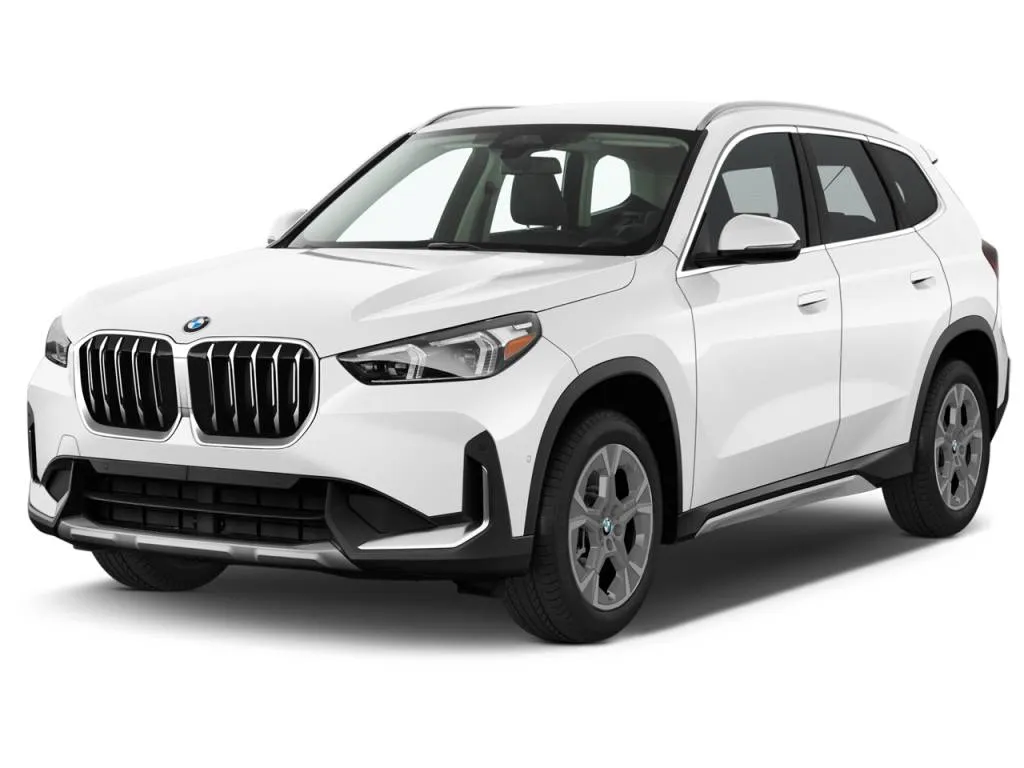
BMW X1 Exterior Styling
The BMW X1 carries the brand’s unmistakable DNA.
Large kidney grilles. Aggressive LED headlights. Sculpted body lines.
It looks confident—almost like a compact athlete ready to sprint.
Key design elements include:
- Bold kidney grille
- Slim adaptive LED headlights
- Squared wheel arches
- Athletic stance
BMW clearly wanted the X1 to look like a mini X5, and they succeeded.
VW Tiguan Exterior Styling
The Tiguan, on the other hand, goes for a clean and understated design.
Instead of aggression, it focuses on balance.
Think of it as the well-dressed professional rather than the gym enthusiast.
Highlights include:
- Wide grille integrated with headlights
- Clean body lines
- Practical proportions
- Conservative but elegant styling
While the X1 turns heads, the Tiguan quietly fits in everywhere—from office parking lots to family road trips.
BMW X1 Cabin Experience
Step inside the X1 and you immediately notice BMW’s push toward digital luxury.
The centerpiece is the curved display, combining:
- 10.25-inch digital instrument cluster
- 10.7-inch infotainment screen
The interior feels modern and premium.
Materials include:
- Soft-touch surfaces
- Aluminum trim
- Ambient lighting
- Sporty seats
It feels like a driver’s cockpit, not just a cabin.
VW Tiguan Interior Experience
The Tiguan takes a different approach.
It emphasizes space and usability rather than sportiness.
The layout is clean and easy to understand.
Features include:
- Digital cockpit display
- Large infotainment screen
- Physical storage compartments
- Wide seating positions
The Tiguan cabin feels like a comfortable living room on wheels.
Infotainment and Technology
Technology is where both SUVs really shine.
BMW X1 Technology Highlights
BMW equips the X1 with the latest iDrive 8 system.
Features include:
- Voice control
- Wireless Apple CarPlay and Android Auto
- Navigation with augmented reality
- Over-the-air updates
- Gesture control (optional)
The system feels fast and futuristic.
VW Tiguan Technology Highlights
Volkswagen counters with its Digital Cockpit Pro system.
Technology includes:
- Digital instrument cluster
- Wireless smartphone integration
- Voice assistant
- Navigation system
- Multiple driving modes
While it may not feel as futuristic as BMW’s system, it’s extremely user-friendly.
You may be interested in reading BMW X1 Similar Cars: The Best Alternatives to BMW’s Compact Luxury SUV
Performance and Driving Experience
Here’s where the personalities of these SUVs truly diverge.
BMW X1 Driving Dynamics
BMW has always been obsessed with driving dynamics.
The X1 proves it.
The steering feels sharp. The chassis feels tight. The acceleration is lively.
Typical engine options include:
- 1.5L turbo petrol
- 2.0L turbo petrol
- 2.0L diesel
- Plug-in hybrid (xDrive25e)
Even the base models feel energetic.
Driving the X1 feels like wearing a perfectly tailored suit—it just fits.
VW Tiguan Driving Dynamics
The Tiguan focuses on comfort.
The suspension absorbs bumps beautifully, making it ideal for long trips.
Engine choices often include:
- 1.5L TSI petrol
- 2.0L TSI petrol
- 2.0L TDI diesel
While it isn’t as sporty as the BMW, it delivers a smooth and relaxed ride.
Think of it as a calm highway cruiser.
Engine Performance Comparison
| Engine | BMW X1 | VW Tiguan |
|---|---|---|
| Base Petrol | ~136 hp | ~150 hp |
| Mid Range | ~204 hp | ~190 hp |
| Top Performance | ~300 hp (M35i) | ~245 hp (R-Line) |
| Hybrid | Plug-in hybrid available | Mild hybrid |
BMW offers more performance-focused options.
Volkswagen focuses on efficiency and practicality.
Fuel Economy and Efficiency
Fuel efficiency often matters more than horsepower for daily drivers.
BMW X1 Efficiency
Typical consumption:
- Petrol: ~40–45 mpg
- Diesel: ~50–55 mpg
- Plug-in hybrid: up to 50 miles electric range
The hybrid option gives BMW an edge.
VW Tiguan Efficiency
Typical consumption:
- Petrol: ~35–40 mpg
- Diesel: ~45–50 mpg
The Tiguan is efficient, but it lacks a true plug-in hybrid in many markets.
Interior Space and Practicality
Passenger Space
The Tiguan is slightly larger overall.
That translates into:
- More rear legroom
- Wider rear bench
- Optional third row
Families will appreciate this extra space.
Boot Space Comparison
| Model | Boot Space |
|---|---|
| BMW X1 | ~540 litres |
| VW Tiguan | ~615 litres |
That’s a noticeable difference.
If you regularly carry luggage, strollers, or sports gear, the Tiguan clearly wins.
Comfort and Ride Quality
BMW X1 Comfort
Despite its sporty nature, the X1 remains comfortable.
However, the suspension can feel slightly firm—especially with large wheels.
That’s the trade-off for better handling.
VW Tiguan Comfort
Comfort is where the Tiguan excels.
The suspension tuning focuses on smoothness.
You’ll notice:
- Softer ride
- Less road noise
- Relaxed driving feel
For long road trips, it’s arguably the better companion.
Safety and Driver Assistance
Both SUVs are loaded with safety technology.
BMW X1 Safety Features
- Adaptive cruise control
- Lane keeping assist
- Parking assistant
- Blind spot monitoring
- Automatic emergency braking
VW Tiguan Safety Features
- Travel Assist semi-autonomous driving
- Front Assist emergency braking
- Lane Assist
- Adaptive cruise control
- Park Assist
Both models consistently earn top safety ratings.
Reliability and Ownership Experience
BMW X1 Reliability
BMW reliability has improved significantly.
You may be interested in readingBMW X1 Similar Cars: The Best Alternatives to BMW’s Compact Luxury SUVYou may be interested in reading
 Volkswagen Tiguan Years to Avoid: The Honest Buyer’s Guide
Still, premium vehicles often have higher repair costs.
Common ownership considerations:
- Higher servicing costs
- Premium parts pricing
- Strong resale value
VW Tiguan Reliability
Volkswagen tends to deliver solid reliability.
Benefits include:
- Lower maintenance costs
- Widely available parts
- Good long-term durability
For budget-conscious buyers, the Tiguan may be the safer bet.
Running Costs and Insurance
BMW X1 Costs
Ownership typically includes:
- Higher insurance groups
- Premium servicing
- Higher purchase price
But resale values remain strong.
VW Tiguan Costs
The Tiguan is easier on the wallet.
Typical benefits:
- Lower insurance groups
- Cheaper servicing
- Competitive fuel economy
It’s simply the more economical choice.
Driving Personality: Which Feels Better?
If we had to summarize the driving personalities:
BMW X1
- Sporty
- Agile
- Engaging
- Premium feel
VW Tiguan
- Comfortable
- Stable
- Relaxed
- Practical
Choosing between them depends on what you value most.
Who Should Buy the BMW X1?
The X1 is perfect for drivers who want:
- Premium brand appeal
- Sporty driving dynamics
- Modern tech
- Luxury interior
It’s the SUV for someone who enjoys the journey, not just the destination.
Who Should Buy the VW Tiguan?
The Tiguan suits buyers who prioritize:
- Interior space
- Family practicality
- Comfortable rides
- Lower ownership costs
It’s the SUV for people who want versatility without the premium price tag.
BMW X1 vs VW Tiguan: The Verdict
So which one wins?
The answer depends on your priorities.
If you want driving excitement and premium style, the BMW X1 is the clear choice.
If you want space, comfort, and affordability, the VW Tiguan is hard to beat.
Think of it this way:
- The BMW X1 is the stylish athlete.
- The VW Tiguan is the dependable family SUV.
Neither is wrong—it just depends on your lifestyle.
Conclusion
Comparing the BMW X1 vs VW Tiguan reveals two excellent SUVs with very different personalities.
The BMW X1 shines with:
- Sporty performance
- Premium technology
- Modern interior design
Meanwhile, the Volkswagen Tiguan wins with:
- Practical space
- Family-friendly features
- Lower ownership costs
Ultimately, the decision comes down to one simple question:
Do you want excitement or practicality?
Either way, both SUVs represent the best of German engineering.
FAQs
1. Is the BMW X1 bigger than the VW Tiguan?
No. The VW Tiguan is slightly larger overall and offers more interior space and cargo capacity.
2. Which SUV is more reliable: BMW X1 or VW Tiguan?
Both are reliable, but the Tiguan generally has lower maintenance costs and simpler ownership.
3. Does the BMW X1 have better performance than the Tiguan?
Yes. The BMW X1 offers sportier handling and stronger performance-oriented engines.
4. Which SUV is better for families?
The VW Tiguan is typically better for families due to its larger boot space and optional third row.
You may be interested in readingBMW X1 Similar Cars: The Best Alternatives to BMW’s Compact Luxury SUVYou may be interested in reading
Volkswagen Tiguan Years to Avoid: The Honest Buyer’s GuideYou may be interested in reading
Volkswagen Tiguan: Is It a Good Car? A Complete Ownership Guide5. Is the BMW X1 more luxurious than the Tiguan?
Yes. The X1 offers a more premium interior, advanced technology, and higher-end materials.
If you want to know other articles similar to BMW X1 vs VW Tiguan: Which Compact SUV Truly Wins? you can visit the category Blog.
Ford Mondeo Insurance Group: The Ultimate Cost & Risk Guide
Ford Mondeo Reliability: The Real Truth Behind This Iconic Sedan
Volvo XC60 Quality: A Deep Dive Into Premium Craftsmanship and Everyday Excellence
Volvo XC60 Reliability by Year: The Complete Owner’s Guide
Which Ford Kuga Engine Is Best? The Ultimate Buyer’s Guide
Pros and Cons Mazda CX-30: The Real-World Ownership Breakdown
Leave a Reply
More content of your interest