
Dacia Duster Weight — The Real Story Behind the Numbers

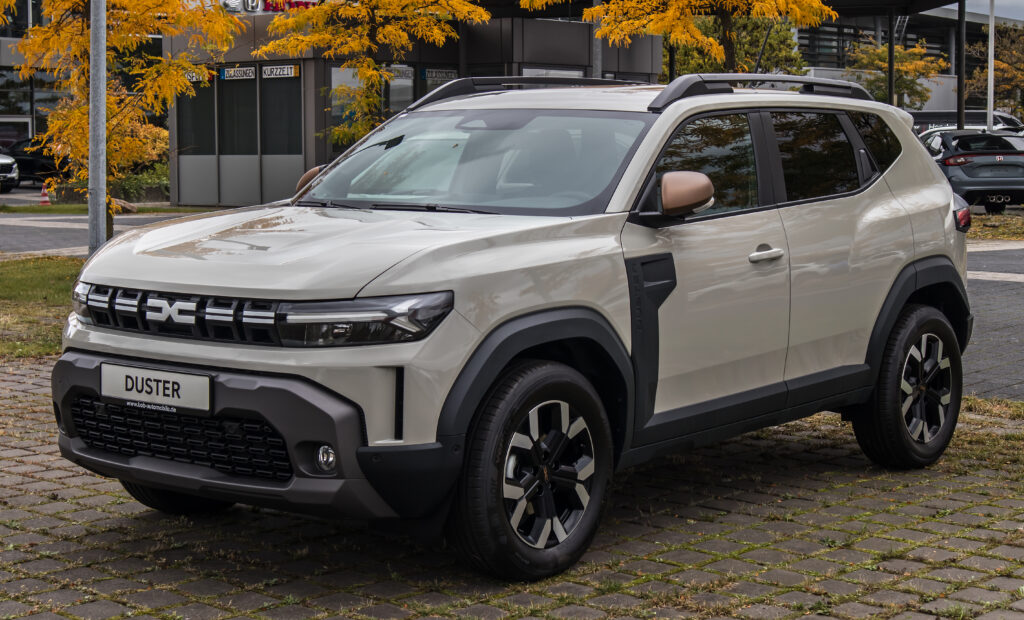
We all obsess over horsepower, torque, and fuel economy. But let’s be honest — weight is the hidden puppeteer controlling them all.
If performance is the personality of a car, weight is its body language.
And when it comes to the Dacia Duster, understanding its weight explains almost everything: why it feels nimble off-road, why it sips fuel instead of guzzling it, and why it punches above its price bracket.
So today, we’re not just listing kilograms — we’re decoding what they actually mean in real life.
Content in this publication
- Why Car Weight Matters More Than You Think
- Average Dacia Duster Weight (All Generations)
- The Philosophy: Rugged But Lightweight
- Kerb Weight vs Gross Weight (Important Difference)
- Weight by Engine Type
- 4x2 vs 4x4 Weight Difference
- How Weight Affects Fuel Economy
- Weight Distribution and Handling
- Why the Duster Feels Bigger Than It Weighs
- Towing Capacity vs Weight
- Off-Road Performance and Weight Advantage
- Braking Distance Explained
- Suspension Tuning and Ride Comfort
- Roof Load and Weight Limits
- Comparing Duster Weight to Rivals
- Why Lightweight Means Lower Maintenance
- Does Added Equipment Increase Weight?
- The Engineering Trade-Off
- Real-World Driving Feel
- Future Trends: Electrification and Weight
- Closing Thoughts — Why the Weight Defines the Car
- FAQs
Why Car Weight Matters More Than You Think
Think of a car like a backpack.
A light backpack? You can run, climb, and react fast.
A heavy one? Even walking uphill feels like a negotiation with gravity.
That’s exactly how cars behave.
Weight influences:
- Acceleration
- Braking distance
- Fuel consumption
- Tire wear
- Suspension comfort
- Off-road capability
- Towing stability
The Duster’s reputation — cheap, capable, surprisingly good — exists largely because engineers kept it lean.
Average Dacia Duster Weight (All Generations)
Let’s start with the quick answer people search for.
| Generation | Approx Weight |
|---|---|
| 1st Gen (2010-2017) | 1,160 – 1,295 kg |
| 2nd Gen (2018-2023) | 1,245 – 1,365 kg |
| New Hybrid Gen (2024+) | 1,300 – 1,420 kg |
Now here’s the interesting part…
Even the newest model is lighter than many small hatchbacks with hybrid systems.
That’s not accidental. That’s philosophy.
The Philosophy: Rugged But Lightweight
Most SUVs gain weight trying to look tough.
The Duster becomes tough by staying light.
How engineers achieved this
- Simple suspension geometry
- Minimal sound insulation layers
- Smart use of high-strength steel
- Smaller engines with turbocharging
- No unnecessary luxury electronics
Instead of fighting physics, the Duster cooperates with it.
Kerb Weight vs Gross Weight (Important Difference)
Kerb Weight
Car ready to drive:
- Fluids
- Full tank
- Driver (approx 75 kg)
Gross Vehicle Weight (GVW)
Maximum allowed:
- Passengers
- Cargo
- Roof load
- Tow weight transfer
Typical Duster Example
- Kerb: ~1,300 kg
- GVW: ~1,900 kg
That means the suspension is designed to handle ~600 kg extra load.
That’s why it handles rough roads so well — it’s engineered for weight variation.
Weight by Engine Type
Petrol Models
Lightest configuration.
| Engine | Weight |
|---|---|
| 1.0 TCe | ~1,245 kg |
| 1.3 TCe | ~1,260 kg |
Diesel Models
Heavier block + stronger gearbox.
| Engine | Weight |
|---|---|
| 1.5 dCi 4x2 | ~1,280 kg |
| 1.5 dCi 4x4 | ~1,345 kg |
Hybrid Models
Battery adds mass.
| Engine | Weight |
|---|---|
| Hybrid 140 | ~1,400 kg |
4x2 vs 4x4 Weight Difference
Here’s where things get interesting.
Added components in AWD:
- Rear differential
- Driveshaft
- Transfer case
- Reinforced suspension
- Extra cooling systems
Weight increase: ~70–90 kg
Yet off-road performance improves massively — because traction beats weight penalty.
How Weight Affects Fuel Economy
A simple rule:
You may be interested in reading Dacia Duster Headlight Bulb Replacement: The Complete DIY Guide
Every 100 kg adds roughly 0.3–0.5 L/100km fuel consumption
That explains why Duster often beats heavier crossovers in real world driving.
Real-life results
- Light petrol → ~6.0 L/100km
- Diesel AWD → ~5.2 L/100km
- Hybrid → ~5.0 L/100km
Weight efficiency matters more than engine size.
Weight Distribution and Handling
The Duster has an unusual advantage:
Slight front bias (about 58/42)
That creates:
- Stable highway behavior
- Predictable understeer
- Excellent loose-surface grip
Off-road, heavier rear SUVs dig themselves into sand.
The Duster floats over it.
Why the Duster Feels Bigger Than It Weighs
Ever noticed?
It feels like a “real SUV” — but weighs like a compact car.
Psychological trick: Tall + Light
- High seating position
- Soft suspension travel
- Long wheel articulation
Your brain interprets capability as mass.
But the Duster achieves capability through geometry instead.
Towing Capacity vs Weight
Here’s where lightweight engineering shines.
| Version | Tow Capacity |
|---|---|
| Petrol | 1,200 kg |
| Diesel | 1,500 kg |
| AWD Diesel | 1,500 kg braked |
It can tow more than its own weight ratio — impressive for a budget SUV.
Off-Road Performance and Weight Advantage
Light SUVs outperform heavy ones off road.
Why?
Because traction = pressure ÷ contact area
Lower weight means:
- Less sinking in mud
- Easier climbing
- Reduced clutch overheating
- Less strain on drivetrain
The Duster behaves like a mountain goat, not a buffalo.
Braking Distance Explained
Heavier cars store more kinetic energy.
Energy = ½ × mass × velocity²
Meaning:
Small weight differences → huge braking changes.
Typical results
- Duster 60-0 mph: ~37 meters
- Heavy SUV: ~41–45 meters
That’s the difference between:
Near miss vs collision.
Suspension Tuning and Ride Comfort
Light vehicles require softer springs.
Soft springs = comfort.
The Duster rides like it has long-travel suspension because it doesn’t fight mass inertia.
What you feel inside:
- Floaty bumps
- Gentle pothole absorption
- Minimal shock harshness
Cheap car feel? No.
Lightweight suspension behavior.
Roof Load and Weight Limits
Duster allows surprisingly high roof weight.
You may be interested in readingDacia Duster Headlight Bulb Replacement: The Complete DIY GuideYou may be interested in reading
 Dacia Duster Handbrake Adjustment — The Complete Practical Guide
| Condition | Max Roof Load |
|---|---|
| Driving | 80 kg |
| Parked (tent) | ~250 kg static |
Because structure is strong even if body is light.
Perfect for camping setups.
Comparing Duster Weight to Rivals
| Car | Weight |
|---|---|
| Duster | ~1,300 kg |
| Nissan Qashqai | ~1,520 kg |
| Hyundai Tucson | ~1,650 kg |
| VW Tiguan | ~1,700 kg |
The Duster is practically a class lighter.
Why Lightweight Means Lower Maintenance
Less weight equals:
- Lower brake wear
- Longer tire life
- Reduced clutch stress
- Lower suspension fatigue
It’s a silent cost saver.
Does Added Equipment Increase Weight?
Yes — trims matter.
Weight increases with:
- Panoramic cameras
- Leather seats
- Heated elements
- AWD system
- Hybrid battery
But even fully loaded, it rarely exceeds 1.4 tons.
The Engineering Trade-Off
Lightweight has compromises.
You may notice:
- More road noise
- Less luxury insulation
- Lighter doors
- Simpler interior materials
But you gain durability and efficiency.
This is intentional honesty, not cost-cutting.
Real-World Driving Feel
The best way to describe it?
The Duster feels like hiking boots instead of sneakers.
Not refined — but dependable everywhere.
Weight plays the starring role in that personality.
Future Trends: Electrification and Weight
Batteries are heavy.
Yet manufacturers are trying to keep Duster light because its identity depends on it.
Expect:
- Smaller batteries
- Hybrid optimization
- Lightweight platforms
The Duster must remain agile to remain a Duster.
Closing Thoughts — Why the Weight Defines the Car
The Duster’s secret isn’t power.
It isn’t luxury.
It isn’t even price.
It’s balance.
By staying light, it:
- Drives efficiently
- Climbs easily
- Lasts longer
- Costs less to own
In a world where SUVs grow heavier every year, the Duster survives by refusing to bulk up.
And that — quietly — is why people trust it.
FAQs
1. What is the exact weight of a Dacia Duster?
Most models weigh between 1,245 kg and 1,420 kg depending on engine and drivetrain.
2. Is the 4x4 Duster much heavier?
Yes, about 70–90 kg heavier due to drivetrain components.
3. Does weight affect fuel consumption?
Absolutely. A lighter Duster uses roughly 0.5 L/100km less fuel than heavier competitors.
You may be interested in readingDacia Duster Headlight Bulb Replacement: The Complete DIY GuideYou may be interested in reading
Dacia Duster Handbrake Adjustment — The Complete Practical GuideYou may be interested in reading
Dacia Duster Oil: The Complete Practical Guide for Owners4. Can the Duster tow more than its weight?
Nearly — towing capacity reaches 1,500 kg on diesel AWD versions.
5. Why does the Duster feel comfortable on bad roads?
Its low weight allows softer suspension and better wheel articulation.
If you want to know other articles similar to Dacia Duster Weight — The Real Story Behind the Numbers you can visit the category Service and Parts.
Jaguar F-Pace Low Battery Please Start Engine: Causes, Fixes, and Prevention Guide
Jaguar F-Pace Gas Tank Size: Capacity, Range, and Real-World Driving Insights
Jaguar F-Pace Wading Depth: How Deep Water Can This Luxury SUV Handle?
Jaguar F-Pace Tyre Pressure Reset: Complete Guide for Drivers
Jaguar F-Pace Engine Options: A Complete Guide to Performance, Power, and Practicality
Jaguar F-Pace Low Battery Warning: Causes, Fixes, and What Drivers Should Know
Leave a Reply
More content of your interest