
Does Mercedes A-Class Have a Renault Engine? The Truth, Without the Myths

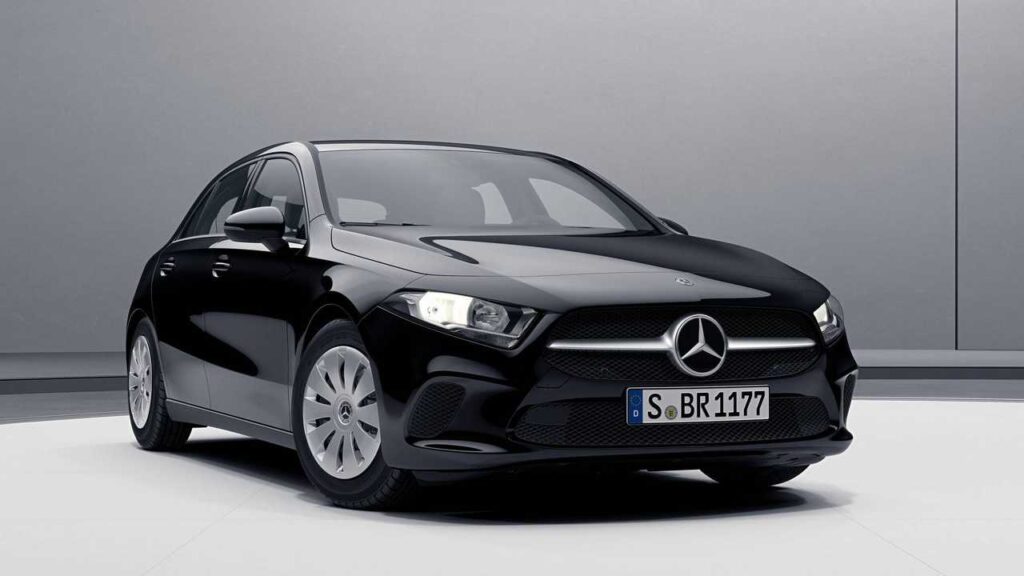
If you’ve ever lifted the bonnet of a Mercedes-Benz A‑Class or scrolled through forums late at night, you’ve probably stumbled upon the same question we all have: does the Mercedes A-Class actually use a Renault engine?
Some say yes, some say absolutely not, and others insist it’s “basically a Renault in a suit.” Let’s slow things down, grab a coffee, and unpack this properly—no hype, no brand snobbery, just the mechanical truth.
Content in this publication
- Why This Question Even Exists
- A Quick Look at the Mercedes–Renault Relationship
- So… Does the Mercedes A-Class Use Renault Engines?
- Which Mercedes A-Class Engines Are Renault-Based?
- Mercedes Engines That Are 100% In-House
- Is a Renault Engine a Bad Thing? Let’s Be Honest
- How Mercedes “Mercedes-Fies” a Renault Engine
- Driving Feel: Can You Tell the Difference?
- Fuel Economy: One of the Biggest Wins
- Maintenance and Servicing: What Changes?
- Resale Value: Does It Hurt?
- AMG Models: No Renault DNA Here
- Why Mercedes Didn’t Build Everything Alone
- Common Myths (Let’s Kill Them Quickly)
- Who Should Care About the Engine Origin?
- Is This Collaboration Ending Anytime Soon?
- Our Take: Does It Really Matter?
- Final Thoughts: The Answer, Simplified
- FAQs
Why This Question Even Exists
Mercedes and Renault are both household names, but they sit in very different mental boxes. One screams German precision and leather-wrapped dashboards; the other champions smart engineering and value. So when whispers of shared engines surfaced, it felt… scandalous.
But here’s the thing: modern carmaking is a team sport. Even premium brands collaborate behind the scenes more than most drivers realise.
A Quick Look at the Mercedes–Renault Relationship
Before we dive into specific engines, we need context.
The Strategic Partnership Explained
Back in 2010, Mercedes‑Benz (via its parent group Daimler) entered a technical partnership with Renault, which is also part of the Renault‑Nissan‑Mitsubishi Alliance.
This wasn’t a badge-swapping exercise. It was about:
- Reducing development costs
- Meeting tightening emissions regulations
- Sharing proven, efficient powertrains
Think of it like sharing a kitchen, not serving the same meal.
So… Does the Mercedes A-Class Use Renault Engines?
Short Answer
Yes—some Mercedes A-Class models do use Renault-derived engines, mainly in specific diesel and smaller petrol variants.
Long Answer
Not all A-Class engines are Renault. Not even close. Mercedes still builds many of its own powerplants. The overlap happens in carefully selected engines where collaboration simply makes sense.
Which Mercedes A-Class Engines Are Renault-Based?
Let’s break this down clearly.
Renault-Derived Engines in the A-Class
These engines are developed by Renault but tuned, calibrated, and integrated by Mercedes:
- 1.5-litre diesel (OM608)
- Common in A160d / A180d
- Based on Renault’s well-known 1.5 dCi
- 1.3-litre petrol (M282)
- Found in A180 and A200 petrol models
- Co-developed, not purely Renault
Key Characteristics
- Excellent fuel economy
- Lower CO₂ emissions
- Proven long-term reliability
- Designed for everyday driving, not lap records
Mercedes Engines That Are 100% In-House
To keep things balanced, plenty of A-Class engines are pure Mercedes engineering:
- 2.0-litre petrol (M260)
- 2.0-litre AMG engines (M139)
- Older high-capacity diesel units
If performance is your priority, Mercedes keeps those cards close to its chest.
You may be interested in reading Does Mercedes A-Class Have a Heated Windscreen? The Real-World Answer
Is a Renault Engine a Bad Thing? Let’s Be Honest
This is where brand bias creeps in.
Reliability: Myth vs Reality
Renault’s modern engines—especially the 1.5 dCi—have:
- Powered millions of vehicles worldwide
- Logged billions of real-world miles
- Proven themselves in taxis, fleets, and private ownership
Mercedes didn’t choose these engines randomly. They chose them because they work.
How Mercedes “Mercedes-Fies” a Renault Engine
Even when the base design comes from Renault, Mercedes doesn’t just bolt it in and walk away.
What Mercedes Changes
- ECU mapping and throttle response
- Noise and vibration insulation
- Emissions control systems
- Integration with Mercedes gearboxes and electronics
The result? It still drives like a Mercedes.
Driving Feel: Can You Tell the Difference?
Honestly? Most drivers can’t.
On the Road
- Smooth power delivery
- Quiet cruising
- Predictable torque for city driving
If nobody told you, you’d never guess the engine’s origin during a normal commute.
Fuel Economy: One of the Biggest Wins
This collaboration shines brightest at the pump.
Real-World Benefits
- Outstanding MPG figures
- Lower road tax in many regions
- Reduced emissions for urban driving
For daily drivers, this is a huge plus.
Maintenance and Servicing: What Changes?
Here’s some good news.
Servicing Reality
- Serviced like any other Mercedes
- Mercedes parts numbers and diagnostics
- Renault origin doesn’t complicate ownership
Independent specialists often find these engines easier—and cheaper—to maintain.
Resale Value: Does It Hurt?
Surprisingly, no.
Used Market Perception
- Most buyers care about condition and service history
- Engine origin rarely affects resale price
- Mercedes badge still carries weight
The market values the car as a whole, not the genealogy of its pistons.
AMG Models: No Renault DNA Here
If you’re eyeing an AMG A-Class, relax.
You may be interested in readingDoes Mercedes A-Class Have a Heated Windscreen? The Real-World AnswerYou may be interested in reading
 Do Mercedes A-Class Hold Their Value? A Real-World Look at Depreciation
- Hand-built Mercedes engines
- No shared blocks
- Performance remains 100% Stuttgart
Different mission, different engineering philosophy.
Why Mercedes Didn’t Build Everything Alone
Let’s zoom out.
The Bigger Industry Picture
- Emissions rules are brutal
- Development costs are massive
- Collaboration keeps cars affordable
Even brands we consider “pure” share components. Mercedes is just more open about it.
Common Myths (Let’s Kill Them Quickly)
- ❌ “It’s just a rebadged Renault”
- ❌ “It won’t last as long”
- ❌ “It’s lower quality”
None of these hold up under scrutiny.
Who Should Care About the Engine Origin?
Honestly? Only a few people.
You Might Care If You:
- Track your car regularly
- Want AMG-level performance
- Are deeply brand-purist
You Probably Won’t If You:
- Commute daily
- Value fuel efficiency
- Want premium comfort at lower running costs
Is This Collaboration Ending Anytime Soon?
The industry keeps evolving, but shared platforms and engines are here to stay—especially as electrification grows.
Internal combustion engines are expensive to develop. Partnerships are the future.
Our Take: Does It Really Matter?
If the engine is:
- Reliable
- Efficient
- Smooth
- Affordable to maintain
Then the badge on the block matters far less than how the car fits into your life.
Final Thoughts: The Answer, Simplified
Yes, some Mercedes A-Class models do have Renault-derived engines.
No, that doesn’t make them worse.
In many ways, it makes them smarter.
It’s less about who designed the engine and more about how well it’s executed—and Mercedes executes it well.
FAQs
1. Which Mercedes A-Class models use Renault engines?
Mainly smaller diesel (1.5 dCi-based) and some 1.3-litre petrol models.
2. Are Renault engines reliable in Mercedes cars?
Yes. They’re proven, efficient, and extensively tested by Mercedes.
3. Can Mercedes dealers service Renault-based engines?
Absolutely. They’re fully supported within the Mercedes service network.
You may be interested in readingDoes Mercedes A-Class Have a Heated Windscreen? The Real-World AnswerYou may be interested in reading
Do Mercedes A-Class Hold Their Value? A Real-World Look at DepreciationYou may be interested in reading
 How Reliable Are Mercedes A-Class? An Honest, Real-World Deep Dive
4. Do AMG A-Class models use Renault engines?
No. AMG models use high-performance Mercedes-built engines only.
5. Does engine sharing reduce Mercedes quality?
Not in practice. Quality control, tuning, and integration remain Mercedes-level.
If you want to know other articles similar to Does Mercedes A-Class Have a Renault Engine? The Truth, Without the Myths you can visit the category Blog.
Volkswagen Passat Years to Buy
Volkswagen Passat Quality: A Deep Drive Into What Makes This Sedan Stand Tall
Volkswagen Passat Insurance Group: What Every Driver Needs to Know
Volkswagen Passat Reliability – A Real-World Owner’s Guide
Is Audi A3 a Good First Car? An Honest, Real-World Breakdown
Are Audi A3 Expensive to Insure? A Real-World Cost Breakdown
Leave a Reply
More content of your interest