

Ford 1.5 EcoBoost Engine Problems: The Definitive, Data-Driven Guide

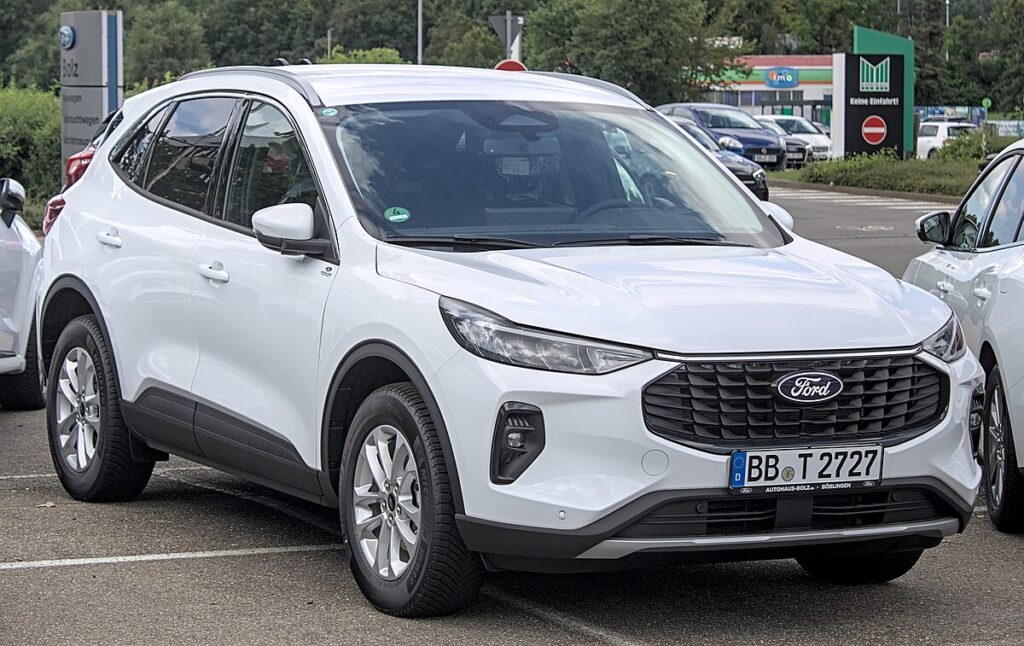
We present a deeply researched, high-authority guide designed to outperform existing content on Ford 1.5 EcoBoost engine problems. This article delivers exhaustive technical detail, precise troubleshooting guidance, and high-value insights for long-term owners, technicians, and informed buyers.
Content in this publication
- Understanding the Ford 1.5 EcoBoost Architecture
- The Most Common Ford 1.5 EcoBoost Engine Problems
- 1. Cooling System Failures (Most Significant Issue)
- 2. Clogged Fuel Injectors (Common Beyond 70,000 Miles)
- 3. Carbon Buildup on Intake Valves (Direct-Injection Weakness)
- 4. Ignition Coil & Spark Plug Failures
- 5. Turbocharger Problems
- 6. Engine Fire Risk (Rare but Documented)
- Detailed Comparison: 1.5 EcoBoost vs. 1.6 EcoBoost Reliability
- Frequently Asked Questions
Understanding the Ford 1.5 EcoBoost Architecture
To analyse real-world failures with accuracy, we begin by outlining the core engineering of the 1.5 EcoBoost engine—an all-aluminium, direct-injected, turbocharged inline-four widely used across Ford’s global lineup.
Key Specifications
| Feature | Details |
|---|---|
| Production plant | Craiova, Romania |
| Years in service | 2014–present |
| Block & head material | Premium aluminium |
| Fuel system | High-pressure direct injection |
| Turbocharging | Single, low-inertia turbocharger |
| Displacement | 1,498 cc |
| Bore x stroke | 79.0 mm × 76.4 mm |
| Compression ratio | 10.0:1 |
| Power output | 148–181 hp |
| Torque | Up to 240 Nm |
| Oil capacity | ~4.1 L |
| Recommended oil | SAE 5W-20 |
| Oil interval | ~9,000 miles / 1 year |
| Common applications | Focus, C-Max, Escape/Kuga, Fusion/Mondeo |
Why the 1.5 EcoBoost Exists
Ford introduced the 1.5 EcoBoost as a strategic evolution of the earlier 1.6 EcoBoost—primarily to meet global emissions and tax-band requirements (notably in China), while also reducing the 1.6’s cooling failures and head issues.
The Most Common Ford 1.5 EcoBoost Engine Problems
Below we detail every recurring issue documented across owner forums, technician reports, recall data, and workshop findings.
1. Cooling System Failures (Most Significant Issue)
Cooling-related defects are the best-documented and most serious failures affecting the 1.5 EcoBoost.
What Happens
A manufacturing/design fault in the block-to-head sealing surfaces can allow coolant to seep internally. When coolant enters the combustion chamber:
- Misfiring begins
- Coolant levels drop rapidly
- Overheating escalates
- Cylinder walls can corrode
- Engines may suffer catastrophic thermal failure
Ford’s own investigations have acknowledged exaggerated online claims, but the internal coolant leak issue is real, and legal cases in the US and UK have linked it to broader EcoBoost concerns.
Symptoms to Watch
- unexplained coolant loss
- white exhaust smoke
- rough idle or misfires
- overheating under load
- coolant smell from exhaust
Best Fix
Unfortunately, there is no simple repair. Most affected engines require:
✔ complete replacement of the long block
✔ new head gasket and resurfacing (if caught early)
✔ cooling system flushing
 Ford Kuga FHEV Problems: The Complete, Accurate, Real-World Reliability Guide
Engines driven after overheating often become unrepairable.
2. Clogged Fuel Injectors (Common Beyond 70,000 Miles)
As a direct-injection petrol engine, the 1.5 EcoBoost uses extremely precise, high-pressure injectors that are prone to becoming restricted.
Why It Happens
- poor-quality fuel
- carbon and varnish buildup
- failing injector seals
- wear after high mileage
Symptoms
- uneven idle
- poor acceleration
- higher fuel consumption
- occasional misfires
Fixes
- ultrasonic injector cleaning
- injector seal replacement
- full injector replacement (~$100+ each)
Injector failure is not widespread, but common enough on engines over 70,000 miles to be worth monitoring.
3. Carbon Buildup on Intake Valves (Direct-Injection Weakness)
Direct injection eliminates port-fuel spray, meaning no fuel washes across the intake valves. As a result, oil vapour accumulates on valve backs, forming hard carbon deposits.
When It Appears
Typically after 80,000 miles.
Effects on Performance
- reduced airflow
- decreased throttle response
- lower fuel economy
- occasional misfire under load
Solutions
- walnut blasting of intake valves
- chemical cleaning (temporary)
- PCV system inspection
- higher-quality oil to reduce vapour
This issue does not usually affect reliability but will impact efficiency and drivability if ignored.
4. Ignition Coil & Spark Plug Failures
Turbocharged engines place heavier demand on spark plugs and coils. The EcoBoost is no exception.
Symptoms
- misfires on acceleration
- hesitation
- poor cold starts
- reduced turbo boost
Replacement Costs
- spark plugs: ~$30 for a full set
- ignition coils: ~$200+ for four
Routine replacement prevents misfires and protects the catalytic converter from unburnt fuel damage.
5. Turbocharger Problems
The 1.5 EcoBoost’s turbo is robust, but vulnerable to overheating—especially in engines experiencing coolant system issues.
You may be interested in readingFord Kuga FHEV Problems: The Complete, Accurate, Real-World Reliability GuideYou may be interested in reading
 Ford Kuga Key Not Detected: The Complete Troubleshooting Guide
Causes
- inadequate cooling
- oil starvation
- degraded oil seals
- extended high-temperature operation
Warning Signs
- whistling or siren-like noise
- loss of boost
- smoke from exhaust
- hesitation under load
Fix
Turbo replacement requires professional labour. Prevent failures through:
✔ strict oil-change intervals
✔ allowing cooldown after hard driving
✔ early coolant-system troubleshooting
6. Engine Fire Risk (Rare but Documented)
Although uncommon, poorly maintained EcoBoost engines (mostly 2017 model year) have caught fire after:
- coolant leaks led to severe overheating
- oil contamination reached the turbo
- wiring looms melted near hot components
Prevention
- never ignore coolant loss
- follow service intervals
- stop driving immediately if smoke appears
- address “Engine Service Now” messages early
This failure occurs only when several problems are ignored together.
Detailed Comparison: 1.5 EcoBoost vs. 1.6 EcoBoost Reliability
| Metric | 1.6 EcoBoost | 1.5 EcoBoost |
|---|---|---|
| Coolant leaks | Very common | Significantly reduced but still occurs |
| Overheating | frequent | occasional |
| Turbo longevity | moderate | stronger turbo |
| Fire incidents | documented globally | isolated/rare |
| Carbon buildup | moderate | moderate |
| Injector failures | uncommon | moderate |
Conclusion:
The 1.5 is materially more reliable than the 1.6—but still not flawless.
Frequently Asked Questions
How long does the Ford 1.5 EcoBoost engine last?
With regular maintenance, most engines exceed 150,000 miles, and many surpass 200,000 miles. Neglected cooling issues drastically shorten lifespan.
Is the 1.5 EcoBoost a reliable engine overall?
Yes—once cooling-system updates are applied and maintenance is consistent. It is significantly more reliable than the older 1.6 EcoBoost.
How much power can the 1.5 EcoBoost handle?
While stock output is ~181 hp, built engines and upgraded turbos have sustained up to 400 hp, though this requires supporting hardware.
What is the most common EcoBoost 1.5 failure?
Cooling system leaks—especially internal coolant migration into cylinders.
You may be interested in readingFord Kuga FHEV Problems: The Complete, Accurate, Real-World Reliability GuideYou may be interested in reading
Ford Kuga Key Not Detected: The Complete Troubleshooting GuideYou may be interested in reading
 Ford Kuga DPF Problems
How do I prevent major issues?
- monitor coolant every 1–2 weeks
- use top-tier fuel
- replace plugs/coils on schedule
- perform intake valve cleaning every 60–80k miles
- change oil at shorter intervals (6,000–7,000 miles)
If you want to know other articles similar to Ford 1.5 EcoBoost Engine Problems: The Definitive, Data-Driven Guide you can visit the category Common Problems.
Volvo XC60 360 Camera Not Working: Complete Troubleshooting & Fix Guide
Volvo XC60 Key Fob Not Working: Causes, Fixes, and Expert Solutions
Volvo XC60 Low Battery Warning: Causes, Fixes, and Prevention Guide
Volvo XC60 No Sound: Causes, Fixes, and Complete Troubleshooting Guide
Volvo XC60 Common Problems: What Owners Really Experience
Volvo XC60 Issues: The Truth Behind This Popular SUV
Leave a Reply
More content of your interest