

Ford Kuga Dashboard Warning Lights: The Complete Guide (2008–2023)

Content in this publication
- Overview of Ford Kuga Dashboard Warning Lights
- Engine & Powertrain Warning Lights
- Electrical & Charging System Warnings
- Braking & Stability Warning Indicators
- Steering & Suspension Indicators
- Driving Assistance & Safety Warning Lights
- Lighting & Visibility Warning Indicators
- Doors, Storage & Body Monitoring Indicators
- Fuel Economy & Driving Modes
- General Alerts & Attention Symbols
- Understanding Warning Light Colors
Overview of Ford Kuga Dashboard Warning Lights
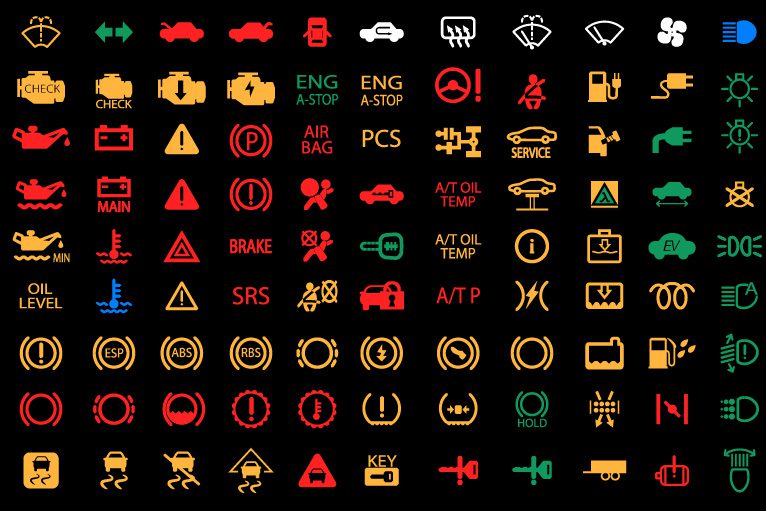
The Ford Kuga features a vast range of dashboard symbols that communicate the status, health, and behaviour of its mechanical and electronic systems. Across the 2008–2023 model years, these icons cover everything from routine driving notifications to severe system failures requiring immediate mechanical intervention. Understanding them ensures safer driving, faster diagnosis, and prevention of expensive repairs.
Engine & Powertrain Warning Lights
Check Engine / Malfunction Indicator
This symbol indicates a malfunction in the engine or powertrain system. Common causes include misfires, air–fuel imbalance, faulty sensors, clogged injectors, turbo issues, EGR faults, and even transmission-related errors. A diagnostic scan is required for precise identification.
Recommended Actions
- Avoid high RPM or heavy load.
- Check for loose fuel caps.
- Schedule diagnostics immediately if flashing.
Engine Oil Pressure / Low Oil Level
Low oil pressure or insufficient oil volume can cause catastrophic engine failure. The light may signal leaks, worn seals, failed oil pump, or critically low oil levels.
Immediate Steps
- Stop the vehicle immediately.
- Check dipstick levels.
- Inspect for visible leaks.
- Do not continue driving without topping up.
Engine Coolant Temperature High
This indicates overheating. Causes include low coolant, thermostat failure, radiator leaks, water pump failure, or blocked coolant passages.
Actions
- Pull over safely.
- Allow engine to cool.
- Check coolant reservoir levels.
- Inspect for white steam or sweet-smelling coolant vapour.
Glow Plug Indicator (Diesel Models Only)
This symbol appears during pre-heating of the diesel cylinders. If the light remains yellow or flashes, glow plug failure or intake air temperature issues may be present.
Electrical & Charging System Warnings
Battery / Charging System Fault
Triggered by low voltage, alternator failure, corroded terminals, or deteriorated battery health. A failing battery in the Kuga can cause multiple cascading electrical faults.
What To Do
- Avoid using high-draw electronics.
- Test alternator output.
- Replace battery if voltage drops below 12.2V.
Automatic Lights Malfunction
If the Kuga’s automatic lighting system fails, it often stems from a malfunctioning ambient light sensor. Manual lighting operation remains available.
Braking & Stability Warning Indicators
ABS System Fault
A failure in the Anti-Lock Braking System prevents wheel-lock prevention during hard braking. Causes include encoder ring damage, sensor corrosion, or module failure.
ESP / ESC Engaged
Illuminates when traction control or stability control intervenes to maintain grip. Flashing during normal driving is expected in rain, mud, or gravel.
Brake Fluid Low
Low brake fluid levels usually signal pad wear or a system leak. The Kuga’s system is sensitive to even minor drops.
Brake Pads Wear Warning
When this symbol appears, remaining pad thickness is critically low. Do not postpone pad replacement to avoid rotor damage.
You may be interested in reading Ford Kuga Service Light Reset: The Complete Step-by-Step Guide (2009–2020 Models)
Steering & Suspension Indicators
Steering Wheel Locked
Displayed when the steering column is locked for anti-theft purposes. Should disappear upon ignition sequence. Persistent illumination indicates a lock module fault.
Air Suspension Fault
High-end Ford Kuga models equipped with air suspension may show this warning due to bag leaks, faulty compressors, or ride height sensor errors.
Driving Assistance & Safety Warning Lights
Lane Keeping Assist Active
Indicates active lane-centering support. If flashing or disabled, sensors may be obstructed by dirt, snow, or direct sunlight.
Front Radar / Adaptive Cruise Control
Shows engagement of the radar system responsible for ACC and collision avoidance.
Airbag System Fault
May result from faulty seat occupancy sensors, wiring resistance issues, or airbag module failures. Immediate professional inspection is required.
Lighting & Visibility Warning Indicators
Low Beam Lights On
Standard driving lights in use, automatically or manually activated.
High Beam Lights On
Indicates high beams are engaged. These should not be used within 400m of oncoming vehicles.
Automatic High Beam Active
Shows that the auto high-beam system is active. Not all driving scenarios trigger automatic dimming.
Fog Lights Active
Front or rear fog lamps are illuminated. Using fog lamps in clear weather can result in fines in many regions.
Heated Windscreen Active
Indicates the heating element is defrosting the windshield. Automatically disengages after a programmed cycle.
Windscreen Wipers (Automatic / Intermediate)
Signals that rain-sensing wipers are activated and adjusting speed automatically.
You may be interested in readingFord Kuga Service Light Reset: The Complete Step-by-Step Guide (2009–2020 Models)You may be interested in reading
 Ford Kuga Key Battery Replacement: The Complete Step-by-Step Guide
Doors, Storage & Body Monitoring Indicators
Bonnet / Hood Open
Triggered when the sensor detects the bonnet is not fully latched.
Boot / Trunk Open
Appears even when partially closed. A faulty latch sensor may also trigger false alerts.
Check Wheel
Refers not to the tyre but the wheel assembly: alignment, balancing, or steering geometry.
Tire Pressure Monitoring System (TPMS)
Alerts when tyre pressure drops below recommended PSI or when a sensor malfunction occurs.
Fuel Economy & Driving Modes
ECO Mode On
Indicates fuel-saving programming is enabled. Throttle sensitivity is reduced for maximum economy.
Cruise Control Activated
Shows that cruise control is primed for activation but not yet engaged.
General Alerts & Attention Symbols
General Warning Symbol
A multipurpose alert indicating multiple potential issues. Often accompanies more specific alerts.
Service Required
Appears close to preset mileage or time intervals.
Press Foot Brake
Required before shifting out of Park.
Understanding Warning Light Colors
Green / Blue
System is functioning normally; informational only.
Yellow / Amber
Mild faults, safety system engagement, or early-warning alerts. Action recommended.
You may be interested in readingFord Kuga Service Light Reset: The Complete Step-by-Step Guide (2009–2020 Models)You may be interested in reading
Ford Kuga Key Battery Replacement: The Complete Step-by-Step GuideYou may be interested in reading
 Ford Kuga Tyre Size: The Complete Guide to Choosing the Right Fit
Orange / Red
Critical issues requiring immediate mechanical intervention. Continued driving may cause damage.
If you want to know other articles similar to Ford Kuga Dashboard Warning Lights: The Complete Guide (2008–2023) you can visit the category Service and Parts.
How to Reset Volvo XC60 Infotainment System: The Complete Practical Guide
Volvo XC60 Gearbox Oil Change: The Complete Expert Guide
Volvo XC60 Engine Management Light: Causes, Fixes, and What It Really Means

Skoda Kamiq Size Comparison: Dimensions, Space & Real-World Practicality
Volvo XC60 Headlight Adjustment for Europe: The Complete Practical Guide
Volvo XC60 City Safety Service Required: What It Means, Causes, and Fixes
Leave a Reply
More content of your interest