
How Does the Ford F-150 Hybrid Work? A Real-World Breakdown

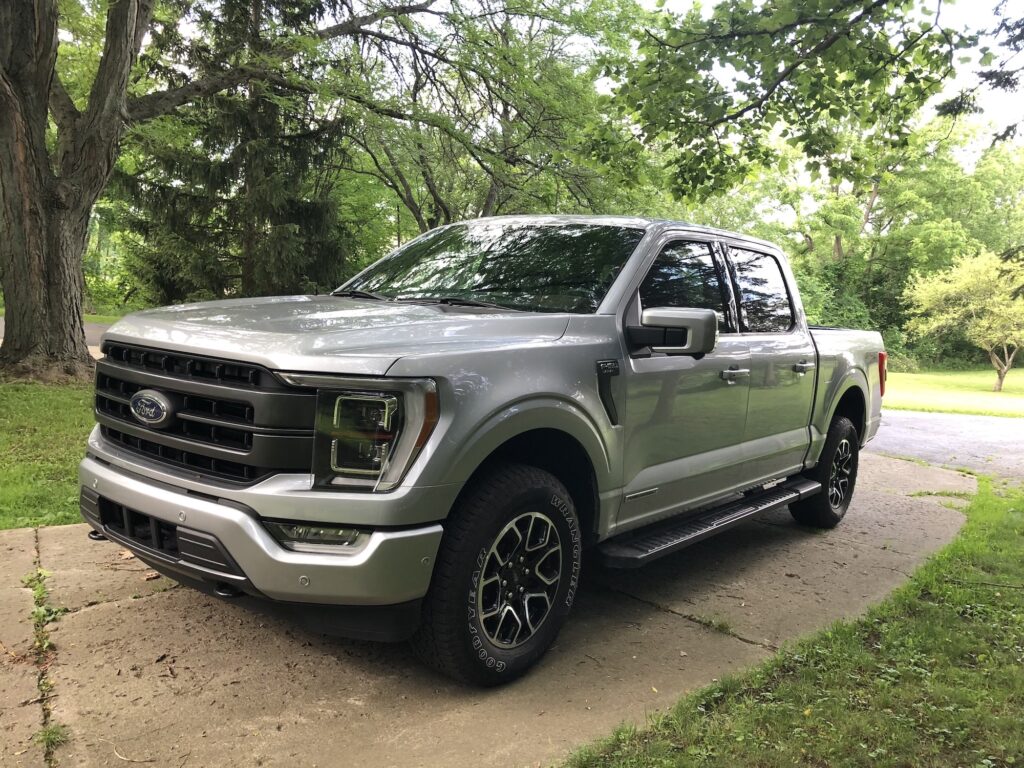
The Ford F-150 Hybrid—officially branded as PowerBoost—isn’t just a pickup with a battery slapped on. It’s a carefully engineered system designed to give us more power, better fuel efficiency, and real-world usefulness without changing how a truck feels to drive.
So how does it actually work? Where does the power come from? And why does it matter more than most hybrids on the road? Let’s break it all down, piece by piece, in plain English—no engineering degree required.
Content in this publication
- Understanding the Ford F-150 PowerBoost Hybrid at a Glance
- What Makes the F-150 Hybrid Different From Other Hybrids
- The Heart of the System: The Gasoline Engine
- The Electric Motor: Where the Magic Happens
- How the Battery Powers the System
- Regenerative Braking: Power From Slowing Down
- How Power Flows While Driving
- Total System Output: Why It Feels So Strong
- Why Electric Torque Matters in a Pickup Truck
- The Role of the 10-Speed Automatic Transmission
- How the Hybrid System Improves Fuel Economy
- Pro Power Onboard: Hybrid Power Beyond Driving
- Is the F-150 Hybrid Always Driving Electrically?
- How the Hybrid System Decides What to Do
- Does the Hybrid System Affect Towing Capacity?
- Durability and Long-Term Reliability
- Maintenance: Is a Hybrid More Complicated?
- Driving Feel: Does It Still Feel Like a Truck?
- Who Is the F-150 Hybrid Best For?
- Final Thoughts: How the Ford F-150 Hybrid Really Works
- FAQs
Understanding the Ford F-150 PowerBoost Hybrid at a Glance
At its core, the F-150 Hybrid combines:
- A 3.5L EcoBoost twin-turbo V6 engine
- An electric motor integrated into the transmission
- A lithium-ion battery pack
- Smart software that decides who does what—and when
Think of it like a perfectly coordinated relay team rather than two separate power sources fighting for control.
What Makes the F-150 Hybrid Different From Other Hybrids
Most hybrids are built for efficiency first. The F-150 Hybrid flips that idea on its head.
Designed for Work, Not Just MPG
- Still tows heavy loads
- Still hauls payloads
- Still feels like a “real truck”
The hybrid system works quietly in the background, stepping in when it makes sense—and stepping out when brute force is needed.
The Heart of the System: The Gasoline Engine
3.5L EcoBoost V6 Explained
The gasoline engine is the backbone of the system. It:
- Produces strong low-end torque
- Uses twin turbochargers for fast response
- Handles highway cruising and heavy towing
Even without the electric motor, this engine is already one of Ford’s strongest workhorse powerplants.
The Electric Motor: Where the Magic Happens
Integrated, Not Bolted On
Instead of a separate motor driving the wheels, Ford places the electric motor inside the 10-speed automatic transmission.
This allows:
- Seamless blending of gas and electric power
- No clunky handoffs between systems
- Instant torque when accelerating
It’s like adding an invisible boost button that presses itself exactly when needed.
How the Battery Powers the System
Lithium-Ion Battery Pack Basics
The F-150 Hybrid uses a compact lithium-ion battery mounted under the truck to protect cargo space.
Key facts:
- Self-charging (no plug-in required)
- Charged through regenerative braking
- Designed for durability and temperature extremes
You never have to think about charging—it simply takes care of itself.
Regenerative Braking: Power From Slowing Down
Every time we slow the truck:
- Kinetic energy is captured
- The electric motor acts as a generator
- That energy recharges the battery
It’s recycling motion that would otherwise disappear as heat. Simple idea. Big payoff.
How Power Flows While Driving
City Driving
- Electric motor assists at low speeds
- Engine shuts off more often at stops
- Smooth, quiet takeoffs from traffic lights
Highway Cruising
- Gas engine handles most of the work
- Electric motor steps in during passing
- Lower RPMs mean better fuel economy
Heavy Loads or Towing
- Gas engine leads
- Electric motor adds torque instantly
- No hesitation or strain
The transition is so smooth most drivers never notice it happening.
Total System Output: Why It Feels So Strong
Combined, the PowerBoost system delivers:
You may be interested in reading Which Ford F-150 Engine Is Best for Towing? A Real-World, No-Nonsense Guide
- 430 horsepower
- 570 lb-ft of torque
That torque figure is the real story—it’s higher than any other gasoline F-150.
Why Electric Torque Matters in a Pickup Truck
Electric motors deliver torque instantly. No waiting for turbos. No downshifting drama.
That means:
- Faster launches
- Easier towing from a stop
- Better control at low speeds
It’s like having a strong push the moment your foot moves.
The Role of the 10-Speed Automatic Transmission
Why So Many Gears Matter
The 10-speed gearbox:
- Keeps the engine in its optimal range
- Maximizes efficiency and power delivery
- Works seamlessly with the electric motor
Because the motor is integrated into the transmission, shifts feel natural—never robotic.
How the Hybrid System Improves Fuel Economy
The F-150 Hybrid doesn’t magically turn into a compact car—but it does outperform non-hybrid V6 trucks.
Benefits include:
- Reduced fuel use in stop-and-go traffic
- Less engine idling
- Smarter power distribution
For a full-size pickup, the gains are genuinely impressive.
Pro Power Onboard: Hybrid Power Beyond Driving
Turning Your Truck Into a Generator
One of the most practical features enabled by the hybrid system is Pro Power Onboard.
It allows the truck to:
- Power tools at a job site
- Run appliances while camping
- Act as a backup generator during outages
All powered by the hybrid battery and engine working together.
Is the F-150 Hybrid Always Driving Electrically?
Short answer: no.
Unlike plug-in hybrids:
- Electric-only driving is brief
- The system prioritizes blending power sources
- Efficiency comes from teamwork, not isolation
It’s not about electric range—it’s about smarter energy use.
How the Hybrid System Decides What to Do
Advanced software constantly monitors:
- Throttle input
- Speed
- Load weight
- Battery charge level
- Terrain
Then it decides—hundreds of times per second—how to deliver power most efficiently.
Does the Hybrid System Affect Towing Capacity?
Surprisingly, it often improves towing performance.
You may be interested in readingWhich Ford F-150 Engine Is Best for Towing? A Real-World, No-Nonsense GuideYou may be interested in reading
 Does a Ford F-150 Weigh Over 6,000 Pounds? The Real Answer Explained
Reasons include:
- Instant torque from the electric motor
- Reduced strain on the engine
- Smoother power delivery uphill
The hybrid F-150 remains a serious tow machine.
Durability and Long-Term Reliability
Ford designed the hybrid components to:
- Match truck-grade durability
- Withstand heavy use
- Operate in extreme temperatures
The battery is covered by an extended warranty, adding peace of mind.
Maintenance: Is a Hybrid More Complicated?
Not as much as you’d think.
What stays the same:
- Oil changes
- Brakes
- Suspension components
What often improves:
- Brake life (thanks to regenerative braking)
- Engine wear (less idling)
For most owners, maintenance feels very familiar.
Driving Feel: Does It Still Feel Like a Truck?
Absolutely.
The steering, ride height, and pulling power remain unmistakably F-150. The hybrid system simply:
- Makes acceleration smoother
- Reduces fuel stops
- Adds versatility
It’s evolution, not reinvention.
Who Is the F-150 Hybrid Best For?
The PowerBoost hybrid makes the most sense for:
- Drivers who tow or haul regularly
- Anyone who values fuel savings without downsizing
- People who want a mobile power source
- Truck owners who hate compromise
Final Thoughts: How the Ford F-150 Hybrid Really Works
The Ford F-150 Hybrid works by blending brute force with intelligence. Instead of choosing between power or efficiency, it gives us both—quietly, smoothly, and without changing how we use a truck.
It’s not a science experiment. It’s a smarter version of something we already trust.
And once you drive it, the system fades into the background—exactly where good engineering belongs.
FAQs
Does the Ford F-150 Hybrid need to be plugged in?
No. It’s a self-charging hybrid that uses regenerative braking and the engine.
Can the F-150 Hybrid drive on electric power alone?
Only briefly at low speeds. It’s designed for blended operation.
Is the hybrid battery reliable in cold weather?
Yes. The system is engineered for extreme temperatures.
You may be interested in readingWhich Ford F-150 Engine Is Best for Towing? A Real-World, No-Nonsense GuideYou may be interested in reading
Does a Ford F-150 Weigh Over 6,000 Pounds? The Real Answer ExplainedYou may be interested in reading
 Can a Ford F-150 Tow a Fifth Wheel? The Honest, Real-World Answer
Does the hybrid system increase towing capability?
It enhances towing performance through instant torque delivery.
Is the Ford F-150 Hybrid worth the extra cost?
For many drivers, fuel savings, power output, and Pro Power Onboard make it well worth it.
If you want to know other articles similar to How Does the Ford F-150 Hybrid Work? A Real-World Breakdown you can visit the category Blog.
Volvo XC60 Quality: A Deep Dive Into Premium Craftsmanship and Everyday Excellence
Volvo XC60 Reliability by Year: The Complete Owner’s Guide
Which Ford Kuga Engine Is Best? The Ultimate Buyer’s Guide
Pros and Cons Mazda CX-30: The Real-World Ownership Breakdown
Peugeot 308 Years to Avoid: The Ultimate Buyer’s Guide
Dacia Duster Reliability: The Real Story Behind This Budget SUV
Leave a Reply
More content of your interest