
How Long Does Kia EV6 Take to Charge? A Real-World Charging Guide We Can Actually Use

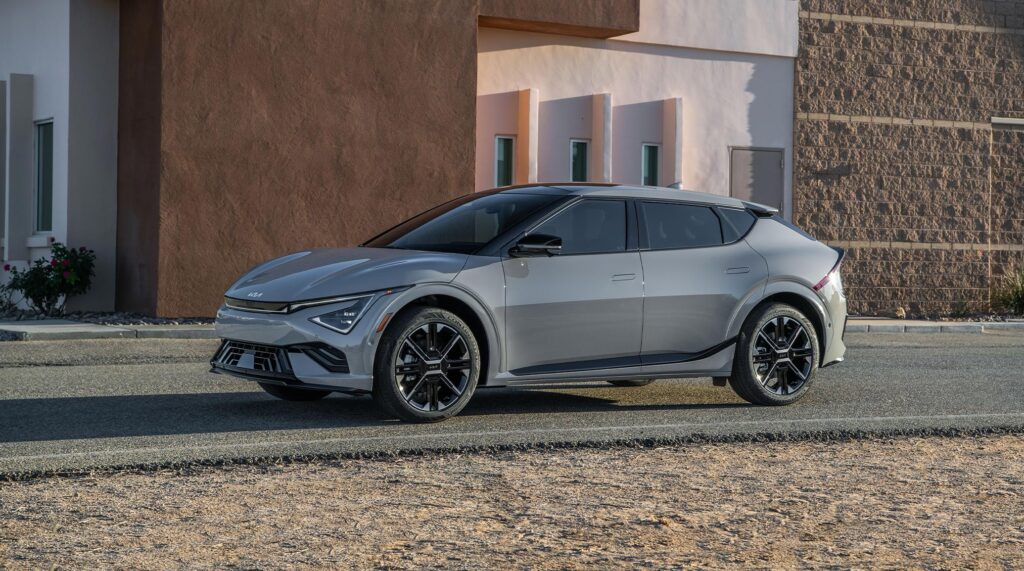
Electric cars changed the refueling ritual. Instead of five minutes at a pump, we now live with coffee-length pauses, grocery-store pit stops, and the occasional “just ten more percent” moment.
And if there’s one EV that made people rethink charging speed entirely, it’s the Kia EV6.
Because unlike most electric cars, this one doesn’t just charge — it sprints.
But here’s the catch: the charging time depends heavily on where, how, and how empty the battery is.
So let’s break it down the way owners actually experience it — not brochure fantasy, but daily life.
Content in this publication
- Understanding the EV6 Battery First (Why Charging Speed Isn’t One Number)
- The Secret Weapon: 800-Volt Architecture
- Charging Types Explained (From Slowest to Fastest)
- Level 1 Charging – Home Plug Socket
- Level 2 Charging – Home Wallbox (Most Owners Use This)
- Public AC Charging (Shopping Centers & Parking Garages)
- DC Fast Charging – The Real EV6 Party Trick
- 50 kW Charger (Older Rapid Chargers)
- 150 kW Fast Charger
- 350 kW Ultra-Fast Charger (The Famous 18 Minutes)
- Why 80% Is the Magic Number
- Real-World Charging While Road-Tripping
- Winter Charging vs Summer Charging
- Does Driving Style Change Charging Time?
- Charging Costs vs Time (Efficiency Strategy)
- How Much Range Do You Add Per Minute?
- Common Charging Mistakes We Should Avoid
- Battery Longevity vs Charging Speed
- Charging Time Summary Table
- So… How Long Does the Kia EV6 Really Take to Charge?
- Closing Thoughts
- FAQs
Understanding the EV6 Battery First (Why Charging Speed Isn’t One Number)
Before talking minutes and percentages, we need to understand why EV charging never has a single answer.
Battery Sizes Available
Depending on model year and trim, the EV6 comes with:
- 58 kWh Standard Range
- 77.4 kWh Long Range
- 84 kWh (newer facelift versions)
More battery = longer charging and longer range.
Think of it like filling:
- a mug
- a bottle
- a bucket
Same tap. Different time.
The Secret Weapon: 800-Volt Architecture
Most EVs run on 400V systems.
The EV6 runs on 800V ultra-fast charging architecture.
Why That Matters
Higher voltage allows:
- Much higher power intake
- Less heat generation
- Faster sustained charging speed
In real terms?
A charger that takes 40 minutes on many EVs might take 18 minutes on the EV6.
Charging Types Explained (From Slowest to Fastest)
Let’s go through charging the way you’ll actually encounter it.
Level 1 Charging – Home Plug Socket
What It Is
A regular household outlet (120V US / 230V EU-style low amp).
Charging Speed
~1.5 – 2.3 kW
Time Required
| Battery | 0% → 100% |
|---|---|
| 58 kWh | 30–40 hours |
| 77.4 kWh | 45–55 hours |
| 84 kWh | 50–60 hours |
Reality Check
We don’t really use this to charge fully.
We use it to:
- Maintain battery
- Emergency charging
- Add 10–15% overnight
It’s the EV equivalent of dripping water into a bucket.
Level 2 Charging – Home Wallbox (Most Owners Use This)
This is where EV ownership actually becomes convenient.
Typical Home Charger Power
- 7.2 kW single-phase
- 11 kW three-phase (EU/UK common)
Charging Time at 7 kW
| Battery | 10% → 80% |
|---|---|
| 58 kWh | ~5 hours |
| 77.4 kWh | ~7 hours |
| 84 kWh | ~7.5–8 hours |
Charging Time at 11 kW
| Battery | 10% → 80% |
|---|---|
| 58 kWh | ~3.5 hours |
| 77.4 kWh | ~5 hours |
| 84 kWh | ~5.5 hours |
What This Means in Daily Life
We plug in at night.
We wake up full.
No waiting.
No planning.
Charging becomes invisible — like charging your phone.
Public AC Charging (Shopping Centers & Parking Garages)
Usually 11 kW or 22 kW AC.
You may be interested in reading Is Kia EV6 Fully Electric? The Complete, No-Nonsense Guide
But here’s the important detail:
The EV6 onboard charger limits AC intake to ~11 kW.
So a 22 kW charger won’t double speed.
Typical Top-Up Time
- 20% → 80%: 4–5 hours
Perfect for:
- Workday parking
- Mall visits
- Airport parking
DC Fast Charging – The Real EV6 Party Trick
Now we reach the famous part.
This is where the EV6 stops behaving like an EV and starts behaving like a pit-stop racer.
50 kW Charger (Older Rapid Chargers)
Charging Time (10% → 80%)
| Battery | Time |
|---|---|
| 58 kWh | ~50 minutes |
| 77.4 kWh | ~70 minutes |
| 84 kWh | ~75 minutes |
Not impressive — but still usable.
150 kW Fast Charger
Now we’re getting serious.
Charging Time (10% → 80%)
| Battery | Time |
|---|---|
| 58 kWh | ~28 minutes |
| 77.4 kWh | ~32 minutes |
| 84 kWh | ~35 minutes |
Coffee + restroom + stretch = ready.
350 kW Ultra-Fast Charger (The Famous 18 Minutes)
This is where the EV6 beats most EVs on the planet.
Charging Time (10% → 80%)
| Battery | Time |
|---|---|
| 58 kWh | ~16–17 minutes |
| 77.4 kWh | ~18 minutes |
| 84 kWh | ~19–20 minutes |
Yes — shorter than ordering food at a busy drive-through.
Why 80% Is the Magic Number
You’ll notice all manufacturers quote 10–80%.
That’s not marketing fluff — it’s physics.
Charging Curve Explained
- 0–20% → slow (battery protection)
- 20–70% → extremely fast
- 70–80% → moderate
- 80–100% → very slow
After 80%, the battery tapers like pouring water into a nearly full glass.
So we normally:
- Fast charge to 80%
- Drive
- Repeat
It’s faster overall.
Real-World Charging While Road-Tripping
Let’s simulate a highway trip.
Scenario: 500 km Journey
We typically:
- Start at 100%
- Drive ~320 km
- Charge 18 minutes
- Drive another 250 km
Total stop time: ~18 minutes
That’s basically a restroom break.
Winter Charging vs Summer Charging
Temperature matters more than charger power.
Cold Weather Effects
- Slower initial charging
- Battery preconditioning required
- 5–10 extra minutes sometimes
Warm Weather
Full advertised speed achievable.
The EV6 pre-heats battery before arriving at fast charger — a massive advantage.
Does Driving Style Change Charging Time?
Surprisingly, yes.
Aggressive driving:
You may be interested in readingIs Kia EV6 Fully Electric? The Complete, No-Nonsense GuideYou may be interested in reading
 Skoda Superb Reliability — The Honest Long-Term Ownership Guide
- heats battery
- improves fast charging speed
Slow eco driving:
- colder battery
- slower initial ramp-up
So sometimes highway driving actually makes charging faster.
Charging Costs vs Time (Efficiency Strategy)
We don’t always want fastest — we want smartest.
Best Strategy
- Home charge overnight (cheap)
- Fast charge only for travel
Because:
- Fast = time efficient
- Home = money efficient
How Much Range Do You Add Per Minute?
At 350 kW charger:
~15 km per minute
Meaning:
| Minutes Plugged | Range Added |
|---|---|
| 5 min | ~75 km |
| 10 min | ~150 km |
| 15 min | ~220 km |
| 18 min | ~300 km |
That’s the EV6 superpower.
Common Charging Mistakes We Should Avoid
1. Charging to 100% Every Time
Degrades battery faster.
2. Using DC Daily
Unnecessary cost and heat.
3. Arriving at Charger at 70%
Kills charging speed advantage.
Ideal Habit
Arrive low, leave at 80%.
Battery Longevity vs Charging Speed
Fast charging doesn’t automatically damage the battery — constant heat does.
The EV6 cooling system:
- liquid cooled
- temperature managed
So occasional ultra-fast charging is perfectly fine.
Charging Time Summary Table
| Charger Type | 10–80% Time |
|---|---|
| Home Plug | 24–40 hours |
| Home Wallbox | 5–8 hours |
| Public AC | 4–5 hours |
| 50 kW | 50–75 min |
| 150 kW | 28–35 min |
| 350 kW | 16–20 min |
So… How Long Does the Kia EV6 Really Take to Charge?
In real life:
- Overnight at home → full every morning
- Road trip stop → 18 minutes
- Emergency top-up → 5 minutes
Charging stops feeling like waiting.
It starts feeling like pausing.
And that’s the moment EV ownership finally makes sense.
Closing Thoughts
The EV6 isn’t just fast for an EV — it rewrites expectations.
We go from planning our day around charging…
to charging fitting into our day.
That’s the difference between tolerating an electric car and enjoying one.
And the EV6 firmly lives in the second category.
FAQs
1. Can the Kia EV6 really charge in 18 minutes?
Yes — on a 350 kW charger from 10% to 80% in ideal temperature conditions.
2. Is it bad to fast charge the EV6 often?
Occasionally is fine. Daily use is unnecessary but not catastrophic thanks to thermal management.
3. How long does it take to charge at home?
Usually overnight — around 5–8 hours on a wallbox.
You may be interested in readingIs Kia EV6 Fully Electric? The Complete, No-Nonsense GuideYou may be interested in reading
Skoda Superb Reliability — The Honest Long-Term Ownership GuideYou may be interested in reading
 Skoda Superb Years to Avoid — The Honest Ownership Guide
4. Does charging slow down after 80%?
Yes. Very significantly — sometimes doubling total time.
5. What’s the best percentage to charge daily?
Keep between 20% and 80% for optimal battery health.
If you want to know other articles similar to How Long Does Kia EV6 Take to Charge? A Real-World Charging Guide We Can Actually Use you can visit the category Blog.
Volvo XC60 Quality: A Deep Dive Into Premium Craftsmanship and Everyday Excellence
Volvo XC60 Reliability by Year: The Complete Owner’s Guide
Which Ford Kuga Engine Is Best? The Ultimate Buyer’s Guide
Pros and Cons Mazda CX-30: The Real-World Ownership Breakdown
Peugeot 308 Years to Avoid: The Ultimate Buyer’s Guide
Dacia Duster Reliability: The Real Story Behind This Budget SUV
Leave a Reply
More content of your interest