

Hyundai i20 Heater Not Working: Complete Causes, Diagnosis & Expert Fixes

When the Hyundai i20 heater stops working, we instantly feel it—cold mornings, foggy windscreens, and a cabin that refuses to warm up no matter how high we turn the dial. So we built this exhaustive, expert-level guide to walk through every known cause, every diagnostic step, and every reliable repair method. By the end, you’ll know exactly what to check, how to test it, and why each component matters.
Content in this publication
- Understanding the Hyundai i20 Heater System
- Low Coolant Level & Air Pockets: The Most Common Cause of No Heat
- Clogged Heater Core: A Top Culprit Behind Weak Cabin Heat
- Failing Thermostat: Engine Never Reaches Operating Temperature
- Weak or Failing Water Pump: Reduced Coolant Flow
- Faulty Blend Door Actuator: Air Not Routed Through Heater Core
- Dirty Cabin Air Filter: Restricting Airflow & Weak Heat Output
- Sluggish Blower Motor: Airflow Too Weak to Heat Cabin
- Blower Motor Not Working At All: No Airflow from Vents
- Dirty Evaporator Core: Another Hidden Restriction to Heater Airflow
- Faulty HVAC Control Module: Brain of the Climate System
- Blown Head Gasket: Rare but Serious Cause of Heating Failure
- Using Air Recirculation Mode to Boost Heating Efficiency
- Conclusion
- FAQs
Understanding the Hyundai i20 Heater System
Before diving into faults, we explore the heating system as an interconnected ecosystem—coolant temperature regulation, air routing, electrical control and airflow management work together. A fault in any single component derails the entire system.
Low Coolant Level & Air Pockets: The Most Common Cause of No Heat
Low coolant prevents hot antifreeze from circulating into the heater core. The result?
Cold air blowing no matter what temperature we select.
How Low Coolant Leads to Heat Loss
- Insufficient coolant reduces circulation.
- Air pockets form in the heater core, blocking flow.
- Water pump cavitation reduces system pressure.
Signs of Low Coolant or Air Trapped in the System
- Heat disappears on inclines.
- Temperature gauge fluctuates.
- Audible sloshing noise behind the dashboard.
- Coolant reservoir level visibly low.
How We Diagnose This in an i20
- Check coolant expansion tank level (cold engine only).
- Inspect radiator cap and hoses for leaks.
- Run engine at idle and observe reservoir bubbling—possible air ingress.
- Perform a complete cooling system bleed.
Clogged Heater Core: A Top Culprit Behind Weak Cabin Heat
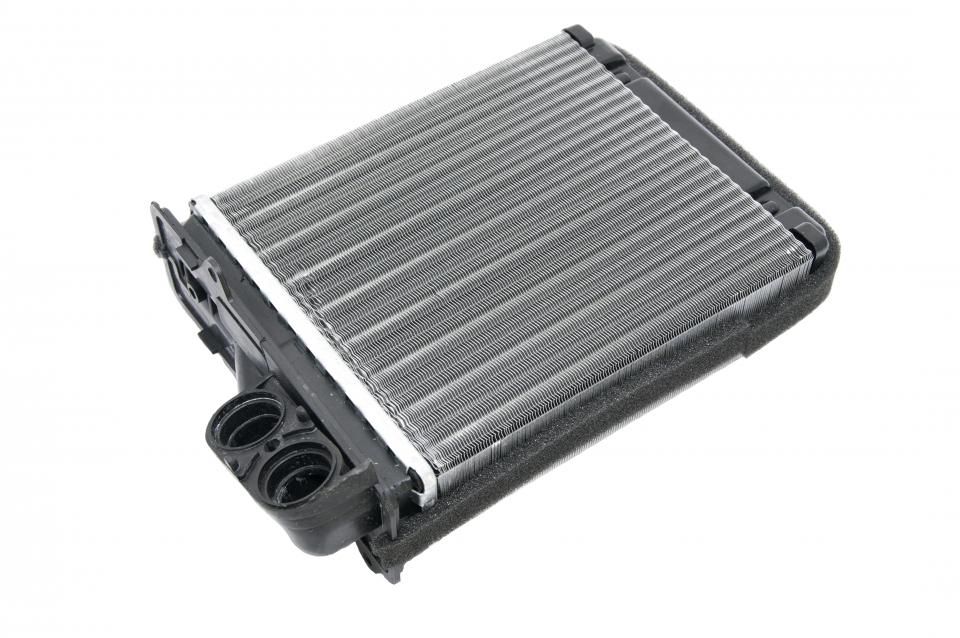
The heater core is a tiny radiator beneath the dashboard. When debris, rust, or scale narrow the internal passages, coolant stops circulating efficiently.
Symptoms of a Blocked Heater Core
- One heater hose is too hot; the other is lukewarm or cold.
- Defrost mode barely warms the windscreen.
- Interior heat fades at idle and returns only at high RPM.
- Sweet smell of coolant (in advanced cases).
How We Verify Heater Core Restriction
We perform the hose-touch test:
- Both hoses hot → heater core functioning.
- One hot, one cold → blockage confirmed.
How to Flush the Heater Core in a Hyundai i20
- Disconnect both hoses at the firewall.
- Back-flush using a garden hose or dedicated flush kit.
- Continue until clear water flows.
- Refill and bleed the cooling system.
Failing Thermostat: Engine Never Reaches Operating Temperature
A thermostat stuck open prevents the engine from warming up properly.
The heater cannot produce heat until coolant temperature reaches at least 85–95°C, depending on engine variant.
Symptoms of a Defective Thermostat
- Heater takes 15+ minutes to warm up.
- Temperature gauge stays low even after long drives.
- Poor fuel economy in winter.
- Interior warms only during heavy acceleration.
Our Diagnostic Approach
We monitor:
- Engine warm-up time.
- Upper radiator hose temperature changes.
- OBD coolant temp readings.
If the radiator gets warm too early, the thermostat is stuck open—replacement required.
Weak or Failing Water Pump: Reduced Coolant Flow
A worn water pump impairs flow to the heater core, especially noticeable at low RPM.
What We Look For
- Coolant seepage from pump weep hole.
- Grinding or whining noises from the pump area.
- Engine overheating combined with weak heat output.
- Heater performance improves at high RPM.
Why the Water Pump Matters for Heating
Without adequate pressure, coolant cannot circulate—in particular through the heater core’s narrow channels.
Faulty Blend Door Actuator: Air Not Routed Through Heater Core
If the blend door actuator fails, the system may stay stuck in “cold air route,” even when we set maximum heat.
You may be interested in reading The Most Common Kia Ceed Problems: Complete Guide to Issues, Causes, Symptoms & Fixes
Key Indicators of Blend Door Failure
- Clicking, tapping, or knocking under the dashboard.
- Air temperature changes inconsistently.
- One side hot, the other cold (in dual-zone systems).
- No temperature response no matter the setting.
Repair Considerations
Blend door actuators are buried deep in the dashboard. Replacement typically requires:
- Trim removal
- Motor recalibration
- HVAC control initialization
This is rarely a DIY-friendly repair.
Dirty Cabin Air Filter: Restricting Airflow & Weak Heat Output
A clogged pollen filter prevents proper airflow over the heater core.
What We Observe in the i20
- Weak airflow even at max fan speed.
- Windows fog more easily.
- Musty smell from vents.
- AC struggles in summer, heat struggles in winter.
Best Practice
Replace the filter before every winter season for optimal airflow.
Sluggish Blower Motor: Airflow Too Weak to Heat Cabin
The blower motor distributes heated air into the cabin. When it slows down, heating efficiency collapses.
Symptoms of a Weak Blower Motor
- Fan speeds 1–3 feel identical.
- Occasional squealing or grinding noise.
- Heat output significantly worse at idle.
Diagnostic Steps
We check:
- Voltage supply at each fan speed.
- Motor current draw.
- Resistor pack or blower control module.
Blower Motor Not Working At All: No Airflow from Vents
If the fan is dead, the heater cannot function regardless of coolant temperature.
Common Electrical Causes
- Blown fuse
- Faulty blower relay
- Failed resistor / control transistor
- Broken wiring
- Defective climate control head unit
How We Pinpoint the Failure
- Verify fuse continuity
- Test relay activation
- Bypass speed resistor
- Check motor directly with 12V supply
- Scan HVAC module for stored fault codes
Even with AC off, all cabin air passes through the evaporator before reaching the heater core. A heavily clogged evaporator severely limits airflow.
Symptoms of a Dirty Evaporator
- Low airflow but strong blower sound
- Reduced cooling and heating
- Dusty or moldy smell
- Cabin takes long to defrost
Professional cleaning often requires foaming cleaners or removal of the blower housing.
Faulty HVAC Control Module: Brain of the Climate System
If the climate module fails, temperature commands may not reach actuators or valves.
Signs of HVAC Module Malfunction
- Random temperature changes
- Buttons unresponsive
- No actuator movement heard
- Heat works intermittently
We typically confirm faults using:
You may be interested in readingThe Most Common Kia Ceed Problems: Complete Guide to Issues, Causes, Symptoms & FixesYou may be interested in reading
 Kia Ceed Clutch Problems: The Complete Guide To Symptoms, Causes, Fixes, And Costs
- OBD scanning
- Actuator command testing
- Live data monitoring
Blown Head Gasket: Rare but Serious Cause of Heating Failure
A leaking head gasket introduces combustion gases into the coolant. This creates air pockets that block the heater core.
Symptoms of Head Gasket Failure Affecting the Heater
- Coolant loss with no visible leak
- Overheating under load
- White exhaust smoke
- Milky oil residue
- Constant air in cooling system
How We Confirm the Issue
- Chemical block tester (color-change test)
- Cooling system pressure test
- Compression test
If confirmed, the heater will not function until the head gasket is replaced.
Using Air Recirculation Mode to Boost Heating Efficiency
Using recirculation mode increases cabin temperature faster because the system reheats already-warm interior air.
When Recirculation Helps
- Extreme cold temperatures
- Slow engine warm-up
- Weak heater performance
Approximately 10% fresh air continues to enter the cabin—so safety is not a concern.
Conclusion
When the Hyundai i20 heater stops working, the solution lies in systematic diagnosis. We always start with coolant level, bleeding air, and heater core assessment—these alone solve the majority of heating failures. But deeper issues like actuators, blower motors, evaporator clogging, and head gasket leaks must not be overlooked.
A professional inspection is recommended when symptoms escalate or when dashboard components require removal.
FAQs
1. Why does my Hyundai i20 blow cold air even when the engine is warm?
Likely causes include low coolant, air pockets, a faulty blend door actuator, or a partially clogged heater core.
2. How do I know if the heater core is blocked?
If one heater hose is hot and the other is cold, the heater core is restricted and needs flushing.
3. Can a thermostat stuck open cause no heat in the i20?
Yes. The heater relies on hot coolant, and a stuck-open thermostat prevents the engine from reaching normal temperature.
4. Why is airflow weak even though the fan seems to run?
A dirty cabin filter or clogged evaporator often restricts airflow despite normal blower operation.
5. Can a blown head gasket affect heater performance?
Absolutely. Combustion gases can enter the coolant and block the heater core with air pockets.
You may be interested in readingThe Most Common Kia Ceed Problems: Complete Guide to Issues, Causes, Symptoms & FixesYou may be interested in reading
Kia Ceed Clutch Problems: The Complete Guide To Symptoms, Causes, Fixes, And CostsYou may be interested in reading
 Kia Ceed Not Starting: Complete Troubleshooting Guide to Fix a No-Start Issue
If you want to know other articles similar to Hyundai i20 Heater Not Working: Complete Causes, Diagnosis & Expert Fixes you can visit the category Common Problems.
Ford Mondeo Tyre Pressure Sensor Malfunction: Complete Guide to Diagnosis, Fixes, and Prevention
Ford Mondeo Engine Malfunction: Causes, Fixes, and Prevention Guide

Volvo XC60 360 Camera Not Working: Complete Troubleshooting & Fix Guide
Volvo XC60 Key Fob Not Working: Causes, Fixes, and Expert Solutions
Volvo XC60 Low Battery Warning: Causes, Fixes, and Prevention Guide
Volvo XC60 No Sound: Causes, Fixes, and Complete Troubleshooting Guide
Leave a Reply
More content of your interest