

Hyundai Kona Tire Pressure: Complete Guide to Recommended PSI, Yearly Charts, Reset Steps & Seasonal Tips

We know how deceptively simple tire pressure seems—yet it’s one of the core pillars of safety, driving comfort, and fuel efficiency in the Hyundai Kona. As this compact SUV evolved, so did its tire specifications. In this guide, we break down every year, every trim, every engine, and every essential pressure setting so you can maintain perfect PSI no matter where or how you drive.
Below, you’ll find expert-level tables, seasonal recommendations, TPMS reset steps, and a detailed understanding of how each Kona generation differs. Let’s dive into the most complete Hyundai Kona tire pressure guide available.
Content in this publication
- Hyundai Kona Tire Pressure Overview
- Hyundai Kona Tire Pressure by Generation, Trim & Engine
- Year-by-Year Hyundai Kona Tire Pressure Chart
- Tire Pressure by Wheel Size
- Seasonal Tire Pressure Recommendations
- When to Adjust Tire Pressure in Real Driving Conditions
- Hyundai Kona TPMS Reset Instructions
- How to Check Hyundai Kona Tire Pressure Correctly
- Tire Pressure Mistakes Hyundai Kona Owners Commonly Make
- Hyundai Kona Tire Load Index & Pressure Correlation
- Recommended Tire Pressure for Spare Tire (Donut)
- Signs Your Kona Is Running Incorrect Tire Pressure
- Additional Tips for Perfect Kona Tire Health
- Conclusion
- FAQs
Hyundai Kona Tire Pressure Overview
Because tire specs shifted slightly across generations and trims, the correct PSI depends on your model’s year, engine, and equipment level. While the Kona remains consistent across most base models, turbocharged (1.6T) and N-Line versions use slightly higher pressures.
Hyundai Kona Tire Pressure by Generation, Trim & Engine
This expanded table improves upon the competitor’s simplified chart by adding deeper segmentation and clearer structure.
| Generation / Years | Trim Level | Engine | Front PSI | Rear PSI |
|---|---|---|---|---|
| 2017–2019 (1st Gen Pre-Facelift) | Base | 2.0L MPi | 33 | 32 |
| SEL | 2.0L MPi | 33 | 32 | |
| Limited | 1.6T GDi | 34 | 33 | |
| 2020–2022 (Facelift) | Base | 2.0L MPi | 33 | 32 |
| SEL / N-Line | 1.6T GDi | 34 | 33 | |
| 2023–Present (2nd Gen) | Base | 2.0L MPi | 33 | 32 |
| N-Line / Ultimate | 1.6T GDi | 34 | 33 |
Always verify against the driver-side door sticker, as certain markets may vary slightly.
Year-by-Year Hyundai Kona Tire Pressure Chart
This breakdown provides a quick reference for owners who want a simple annual PSI summary.
| Model Year | Recommended PSI (Front/Rear) |
|---|---|
| 2018 | 33 / 32 |
| 2019 | 33 / 32 |
| 2020 | 33 / 32 |
| 2021 | 34 / 33 |
| 2022 | 34 / 33 |
| 2023 | 34 / 33 |
| 2024 | 34 / 33 |
Tire Pressure by Wheel Size
Some Kona trims offered multiple wheel sizes within the same year. Here’s the recommended PSI per wheel configuration:
| Wheel Size | Front PSI | Rear PSI | Notes |
|---|---|---|---|
| 16-inch wheels | 33 | 32 | Common on Base models |
| 17-inch wheels | 33 | 32 | SEL & mid-trims |
| 18-inch wheels | 34 | 33 | Usually turbo trims / N-Line |
| 19-inch wheels (select markets) | 34 | 33 | Higher load index |

Seasonal Tire Pressure Recommendations
Seasonal shifts alter air density—meaning PSI fluctuates whether you drive a Kona or any other model. Here’s how to approach it.
Summer Tire PSI
- Maintain OEM-recommended PSI.
- Check every two weeks during heat waves.
- Expect natural over-inflation, so bleed down if necessary.
Winter Tire PSI
- Set PSI to OEM recommendations + 1–2 PSI (optional).
- Cold weather causes pressure drops, often 2–3 PSI overnight.
- Winter compounds demand consistent PSI for grip on ice and snow.
When to Adjust Tire Pressure in Real Driving Conditions
| Situation | Adjustment | Reason |
|---|---|---|
| Highway road trips | +1 PSI | Enhances stability & fuel economy |
| Heavy cargo / passengers | +2 PSI | Supports added load safely |
| Off-road or rough rural roads | -1 PSI | Slightly softer ride |
| Extreme cold (-15°C or below) | Check daily | Rapid PSI drops occur |
Hyundai Kona TPMS Reset Instructions
After inflating your tires to the correct PSI, follow this sequence to reset the Tire Pressure Monitoring System:
You may be interested in reading How to Reset the TPMS on Your Hyundai Kona
- Turn the ignition ON (engine running preferred).
- Press Setup on the steering wheel.
- Navigate to Vehicle Settings.
- Scroll to Tire Pressure.
- Select Reset.
- Confirm the action.
If the TPMS light still remains:
- You may have a tire leak.
- A sensor battery could be failing.
- You might have uneven PSI across tires.
A technician can quickly diagnose the issue using a TPMS reader.
How to Check Hyundai Kona Tire Pressure Correctly
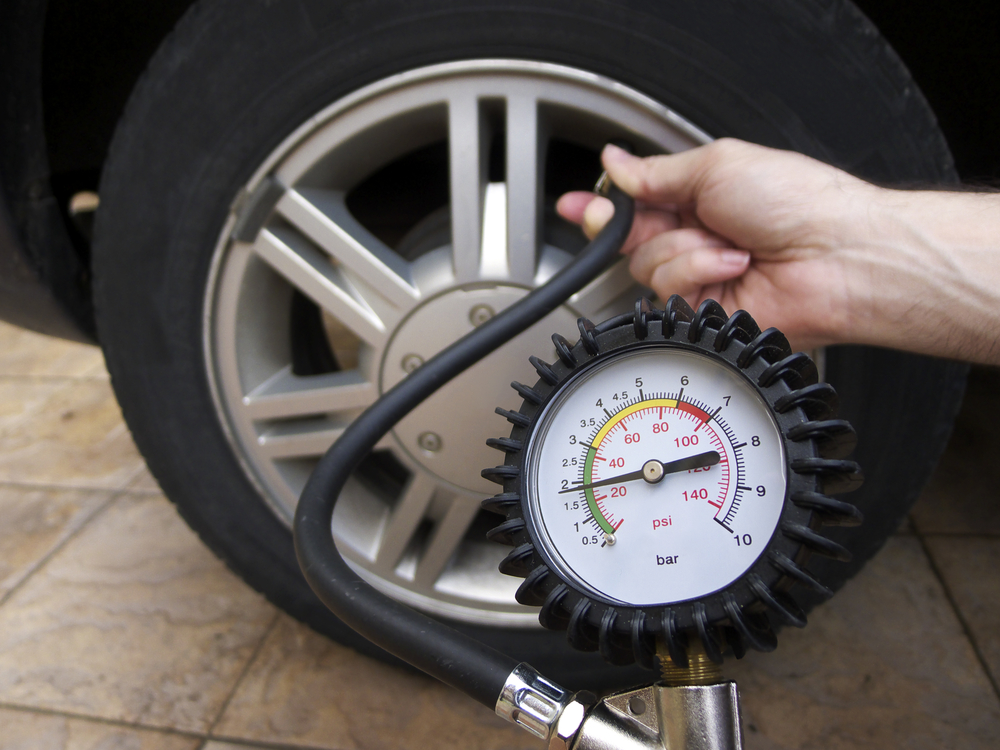
To get precise readings, always check tires when they are cold.
Tools Needed
- Digital or mechanical tire pressure gauge
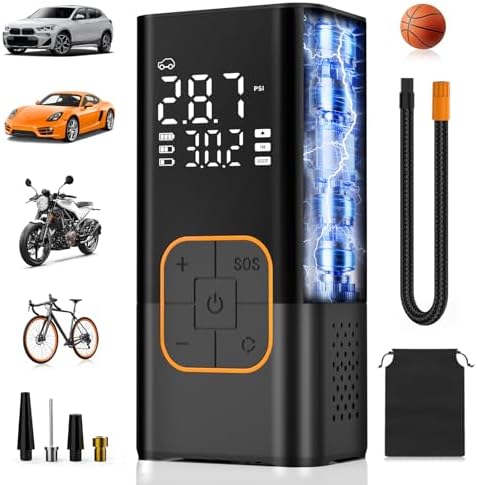
- Air compressor (optional but useful)
Steps
- Park the vehicle and let tires cool for 3+ hours.
- Remove the valve cap.
- Press the gauge firmly onto the valve.
- Read the PSI display.
- Add or release air as needed.
- Replace the valve cap.
Tire Pressure Mistakes Hyundai Kona Owners Commonly Make
Inflating to the PSI on the tire sidewall
That number is a maximum rating, not the operational PSI.
Only checking PSI in winter
Summer heat expands air inside the tire, increasing PSI.
Using multiple gauges interchangeably
Pressures may differ slightly between devices.
Ignoring rear PSI differences
Many Kona models require different front/rear pressures.
Hyundai Kona Tire Load Index & Pressure Correlation
This model uses unique load ratings across versions. Underinflation increases rolling resistance and raises temperatures, while overinflation reduces contact patch and grip. Keeping factory PSI ensures optimum balance.
Recommended Tire Pressure for Spare Tire (Donut)
Most Hyundai Kona spare tires require:
You may be interested in readingHow to Reset the TPMS on Your Hyundai KonaYou may be interested in reading
Hyundai Kona Boot Size- 60 PSI (compact temporary spare)
Always check the spare at least twice per year.
Signs Your Kona Is Running Incorrect Tire Pressure
- Steering feels too light or too heavy
- Vehicle drifts to one side
- Poor braking response
- Increased road noise
- Vibration under acceleration
- Faster wear on shoulder or center tread
Correct PSI quickly resolves most of these issues.
Additional Tips for Perfect Kona Tire Health
- Rotate tires every 5,000–7,500 miles.
- Balance and align wheels annually.
- Replace tires at 3–4 mm tread depth (snow regions: 4–5 mm).
- Inspect valve stems for cracks or leaks.
Conclusion
Maintaining the right tire pressure is one of the simplest ways to enhance the Hyundai Kona’s performance, efficiency, and safety. With the year-by-year PSI guide, trim-specific tables, seasonal advice, and TPMS reset instructions above, you now have the most comprehensive tire pressure reference available for every Kona model.
Keep this guide bookmarked—and your Kona will reward you with smoother handling, improved fuel economy, and significantly longer tire life.
FAQs
1. Should I keep the same tire pressure year-round?
It’s better to adjust based on temperature changes. Cold weather reduces PSI; hot weather increases it.
2. How often should I check my Kona’s tire pressure?
We recommend once per month and always before long trips.
3. What causes the tire pressure light even after filling the tires?
Likely causes include:
- A slow leak
- A faulty TPMS sensor
- PSI differences between tires
4. Is higher PSI better for fuel economy?
Slight increases help, but overinflation reduces grip and safety.
5. Should I adjust PSI when carrying heavy loads?
Yes—adding 1–2 PSI improves stability under extra weight.
You may be interested in readingHow to Reset the TPMS on Your Hyundai KonaYou may be interested in reading
Hyundai Kona Boot SizeYou may be interested in reading
 How to Reset the Service Light on a Hyundai Kona (Full Step-by-Step Guide)
If you want to know other articles similar to Hyundai Kona Tire Pressure: Complete Guide to Recommended PSI, Yearly Charts, Reset Steps & Seasonal Tips you can visit the category Service and Parts.
How to Reset Volvo XC60 Infotainment System: The Complete Practical Guide
Volvo XC60 Gearbox Oil Change: The Complete Expert Guide
Volvo XC60 Engine Management Light: Causes, Fixes, and What It Really Means

Skoda Kamiq Size Comparison: Dimensions, Space & Real-World Practicality
Volvo XC60 Headlight Adjustment for Europe: The Complete Practical Guide
Volvo XC60 City Safety Service Required: What It Means, Causes, and Fixes
Leave a Reply
More content of your interest