
Kia EV6 Max Charge Rate — Real-World Charging Speed Explained

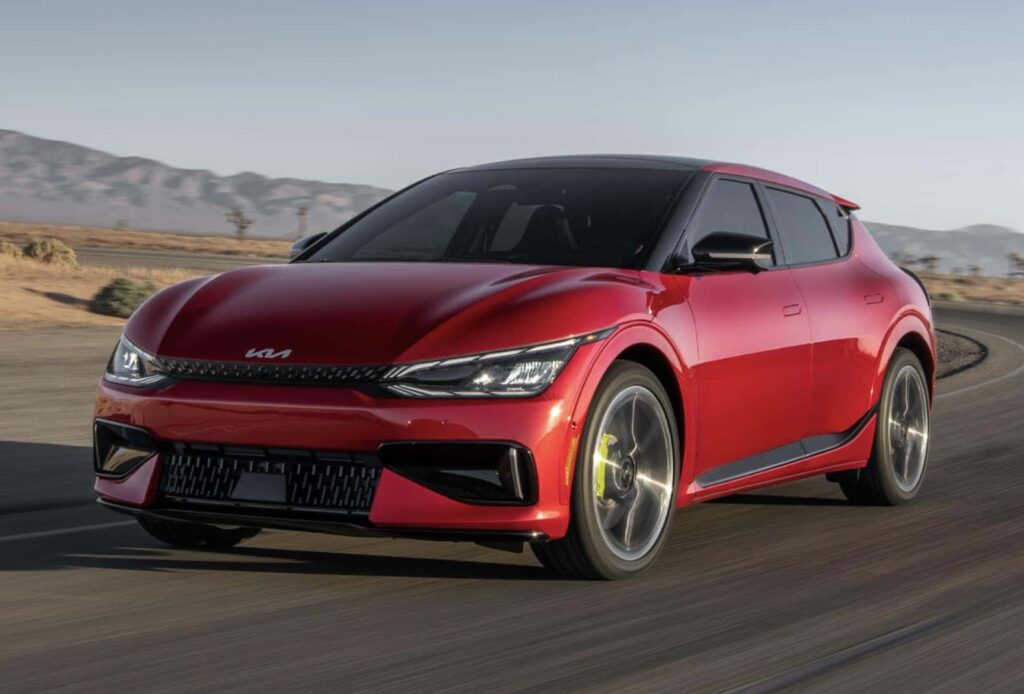
Electric cars changed the refuelling ritual. No fumes, no pumps, no impatient queue behind us. Instead, we now negotiate kilowatts, battery temperatures, and charging curves — a whole new language.
And few cars speak it as fluently as the Kia EV6.
But here’s the truth: the advertised max charge rate is only half the story. What matters is how long you actually wait.
Today, we’re going deep — not brochure deep — real-driver deep.
Content in this publication
- Why Charging Speed Matters More Than Range
- Understanding the Kia EV6 Charging Architecture
- Kia EV6 Max Charge Rate (Official Figures)
- Charging Curve: The Hidden Metric
- Real-World Charging Time (10% to 80%)
- What Happens At a 150 kW Charger
- Charging From 80% to 100% — The Slow Zone
- How Temperature Affects Max Charge Rate
- AC Charging (Home Charging Speed)
- Why the EV6 Feels Faster to Charge Than Its Specs
- Charging Strategy for Road Trips
- Energy Added Per Minute
- Comparison With Typical EV Charging
- Why 800V Changes Battery Stress
- Public Charging Power vs Advertised Power
- Best Chargers for Maximum Speed
- Daily Driving Charging Habits
- Charging Cost vs Charging Speed
- Long-Term Battery Health
- Does AWD Charge Slower Than RWD?
- Winter Charging Reality
- The Psychological Effect of Fast Charging
- Future-Proof Charging Technology
- Closing Thoughts
- FAQs
Why Charging Speed Matters More Than Range
We used to obsess over range.
Now we obsess over time.
A 300-mile EV that charges slowly is less practical than a 240-mile EV that charges quickly. The EV6 belongs to the second category — and that’s exactly why road-trip drivers love it.
Think about it:
- Range tells you how far you go
- Charge rate tells you how fast you continue
One measures distance.
The other measures freedom.
Understanding the Kia EV6 Charging Architecture
800-Volt System — The Real Secret
Most EVs run on a 400-volt electrical system.
The EV6 doesn’t.
It uses an 800-volt platform, the same philosophy used in high-end performance EVs. Higher voltage means:
- Less heat
- Higher power transfer
- Faster charging
- More efficiency at high power
In simple terms — it drinks electricity through a fire hose, not a straw.
Kia EV6 Max Charge Rate (Official Figures)
Peak Charging Power
Depending on version:
| Battery | Max DC Charge Rate |
|---|---|
| 58 kWh Standard | ~180 kW |
| 77.4 kWh Long Range | ~235–260 kW |
That means, under perfect conditions, the EV6 can add hundreds of kilometers faster than most EVs on the road.
But peak power lasts seconds — not minutes.
And that leads us to the real hero:
Peak charging speed is like sprint speed.
Charging curve is endurance.
The EV6 doesn’t just spike high — it stays high.
Typical EV Charging Curve
Most EVs:
- Hit peak briefly
- Immediately drop to ~100 kW
- Slowly crawl past 70%
EV6 Charging Curve
The EV6:
- Rapid ramp-up
- Holds over 200 kW
- Maintains high power until ~55–60%
- Smooth taper instead of a cliff
The result?
Less waiting. Dramatically less waiting.
Real-World Charging Time (10% to 80%)
Ideal Fast Charger (350 kW Ultra-Rapid)
| Battery | Time |
|---|---|
| 58 kWh | ~18 minutes |
| 77.4 kWh | ~18 minutes |
Yes — same time.
Because the larger battery simply accepts more power.
What Happens At a 150 kW Charger
Here’s where most owners actually charge.
| Battery | 10-80% Time |
|---|---|
| 58 kWh | ~25 minutes |
| 77.4 kWh | ~28 minutes |
Still faster than most EVs on the market.
Charging From 80% to 100% — The Slow Zone
Why It Slows Down
Lithium batteries behave like filling a glass:
- First half: wide open
- Last drops: careful precision
So after 80%, the EV6 protects the battery.
Approximate Time
- 80 → 90%: ~10 min
- 90 → 100%: ~25–35 min
That’s why road-trip charging stops end at 80%.
You may be interested in reading How Long Does Kia EV6 Take to Charge? A Real-World Charging Guide We Can Actually Use
How Temperature Affects Max Charge Rate
Cold Battery = Slow Charging
Below ~10°C, the EV6 reduces intake power.
But Kia added a smart solution.
Battery Preconditioning
When navigating to a fast charger, the EV6 heats the battery automatically.
Result:
- Faster arrival charging
- Higher peak power
- Reduced waiting time
It’s basically warming up the engine — except the engine is chemistry.
AC Charging (Home Charging Speed)
Not all charging is DC fast charging.
Level 2 Home Charger
- 11 kW onboard charger
- 0-100% overnight
| Battery | Time |
|---|---|
| 58 kWh | ~6 hours |
| 77.4 kWh | ~7.5 hours |
Wake up. Full battery. Done.
Why the EV6 Feels Faster to Charge Than Its Specs
On paper, many EVs claim 150–200 kW charging.
In practice, they don’t hold it.
The EV6 does.
That’s the difference between:
- 35 minute stops
- 18 minute stops
Same peak. Different experience.
Charging Strategy for Road Trips
The 20-Minute Rule
With the EV6, the optimal rhythm becomes:
- Drive 2–3 hours
- Charge 15–20 minutes
- Repeat
You end up stopping when you need a break — not the car.
Ideal Charging Window
Always charge between:
10% → 70%
This zone gives the highest kW intake.
Energy Added Per Minute
At peak conditions:
- ~18 miles per minute (29 km/min)
That’s roughly:
3 hours of driving added during a coffee order.
Comparison With Typical EV Charging
| Car Type | Real Stop Time |
|---|---|
| Average EV | 35–50 min |
| Good EV | 25–35 min |
| Kia EV6 | 15–20 min |
The difference becomes massive across a long trip.
Why 800V Changes Battery Stress
High voltage means lower current.
Lower current means:
- Less heat
- Less degradation
- More consistent performance
So faster charging doesn’t automatically equal faster wear.
Public Charging Power vs Advertised Power
You may plug into a “350 kW” charger and see 130 kW.
Not the car’s fault.
Possible reasons:
- Charger sharing power
- Cable cooling limits
- Station thermal throttling
- Grid limitation
The EV6 requests power — the station decides.
Best Chargers for Maximum Speed
To reach full rate, you need:
You may be interested in readingHow Long Does Kia EV6 Take to Charge? A Real-World Charging Guide We Can Actually UseYou may be interested in reading
 Is Kia EV6 Fully Electric? The Complete, No-Nonsense Guide
- 800V capable charger
- 350 kW unit
- Warm battery
- Below 60% state of charge
Remove one condition → slower charge.
Daily Driving Charging Habits
Recommended Routine
- Charge to 80% daily
- Use 100% only for trips
- Avoid storing at 0%
This keeps battery health strong for years.
Charging Cost vs Charging Speed
Fast charging is faster — but usually pricier.
Typical Pattern
- Home charging: cheapest
- Fast charging: convenience cost
- Ultra-fast: premium convenience
We trade money for time.
Long-Term Battery Health
The EV6 thermal management system actively controls temperature during fast charging.
This prevents:
- Lithium plating
- Rapid degradation
- Heat-related aging
So regular fast charging is acceptable — not destructive.
Does AWD Charge Slower Than RWD?
No noticeable difference.
Charging rate depends on:
- Battery pack
- Temperature
- Charger capability
Motor count doesn’t matter.
Winter Charging Reality
Expect:
- 30–50% slower without preconditioning
- Normal speed with navigation pre-warm
Winter charging speed depends more on preparation than outside temperature.
The Psychological Effect of Fast Charging
Here’s something interesting.
Owners report:
The EV6 feels like it never charges — because stops are short.
Fast charging reduces range anxiety not by increasing range — but by shrinking downtime.
Future-Proof Charging Technology
Because the EV6 uses 800V:
- It benefits from future ultra-rapid networks
- Won’t become obsolete quickly
- Scales with infrastructure improvements
It was designed for chargers that barely exist yet.
Closing Thoughts
The Kia EV6’s max charge rate isn’t just impressive — it reshapes how we plan trips.
The magic isn’t the number on paper.
It’s consistency.
Instead of long waiting sessions, charging becomes a short pause — like stretching your legs during a road trip.
Electric travel stops feeling like charging.
It starts feeling like travelling again.
FAQs
1. What is the real maximum charging speed of the Kia EV6?
Up to about 235–260 kW on ultra-rapid DC chargers under ideal conditions.
2. How long does it take to charge from 10% to 80%?
Approximately 18 minutes on a 350 kW fast charger.
3. Does cold weather affect charging speed?
Yes, but battery preconditioning largely restores full speed.
4. Can I fast charge daily without damaging the battery?
Yes, the thermal management system is designed to handle regular DC fast charging.
5. Is home charging enough for daily use?
Absolutely — overnight AC charging easily covers normal driving needs.
You may be interested in readingHow Long Does Kia EV6 Take to Charge? A Real-World Charging Guide We Can Actually UseYou may be interested in reading
Is Kia EV6 Fully Electric? The Complete, No-Nonsense GuideYou may be interested in reading
 Skoda Superb Reliability — The Honest Long-Term Ownership Guide
If you want to know other articles similar to Kia EV6 Max Charge Rate — Real-World Charging Speed Explained you can visit the category Blog.
Volvo XC60 Quality: A Deep Dive Into Premium Craftsmanship and Everyday Excellence
Volvo XC60 Reliability by Year: The Complete Owner’s Guide
Which Ford Kuga Engine Is Best? The Ultimate Buyer’s Guide
Pros and Cons Mazda CX-30: The Real-World Ownership Breakdown
Peugeot 308 Years to Avoid: The Ultimate Buyer’s Guide
Dacia Duster Reliability: The Real Story Behind This Budget SUV
Leave a Reply
More content of your interest