

Land Rover Discovery Sport Engine: Performance, Specs, Reliability, and Everything You Need to Know


When we talk about modern luxury SUVs that blend rugged capability with everyday usability, the Land Rover Discovery Sport almost always enters the conversation. But beneath its refined exterior and family-friendly interior lies something far more important: the engine.
The engine is the beating heart of any vehicle. In the Discovery Sport, it’s the difference between cruising smoothly on the motorway, towing a trailer through countryside roads, or tackling muddy trails without hesitation.
So let’s dive deep. In this guide, we’ll explore Land Rover Discovery Sport engines across generations, performance specs, reliability, fuel efficiency, common problems, and which engine might be the best choice for drivers.
Content in this publication
- Understanding the Land Rover Discovery Sport Engine Lineup
- Discovery Sport Engine Generations
- The Ingenium Engine Family Explained
- Petrol Engines in the Discovery Sport
- Diesel Engines in the Discovery Sport
- The Discovery Sport Plug-In Hybrid Engine
- Mild Hybrid Technology
- Discovery Sport Engine Performance
- Off-Road Performance and Engine Power
- Common Land Rover Discovery Sport Engine Problems
- Land Rover Discovery Sport Engine Reliability
- Maintenance Costs and Servicing
- How the Discovery Sport Engine Compares to Rivals
- Which Discovery Sport Engine Is Best?
- Future of Discovery Sport Engines
- Conclusion
- Frequently Asked Questions
Understanding the Land Rover Discovery Sport Engine Lineup
The Land Rover Discovery Sport was introduced in 2014 to replace the Freelander. Since then, the SUV has offered a variety of engines designed to balance power, efficiency, and off-road capability.
Depending on the year and market, Discovery Sport engines include:
- Turbocharged petrol engines
- Ingenium diesel engines
- Mild-hybrid powertrains
- Plug-in hybrid (PHEV) systems
Each one serves a slightly different purpose, whether that’s long-distance fuel efficiency or spirited acceleration.
Think of it like choosing the right pair of hiking boots. Some are built for speed, others for endurance.
Discovery Sport Engine Generations
Early Engines (2014–2018)
The first generation engines focused heavily on diesel efficiency.
Common options included:
- 2.2-liter SD4 diesel
- 2.2-liter TD4 diesel
These engines were strong, torquey, and perfect for towing or off-road driving.
Typical specs included:
- Power: 150–190 hp
- Torque: Up to 420 Nm
- Transmission: 6-speed manual or 9-speed automatic
Drivers appreciated their durability, though they weren’t the quietest engines.
Ingenium Engine Era (2018–Present)
In 2018, Land Rover introduced the Ingenium engine family.
These modern engines brought:
- Lower emissions
- Better fuel efficiency
- Improved refinement
They replaced older Ford-derived engines and marked a new chapter in Discovery Sport engineering.
The Ingenium Engine Family Explained
What Is the Ingenium Engine?
The Ingenium engine is Land Rover’s modular engine platform built in the UK.
Key characteristics include:
- Turbocharged 4-cylinder design
- Lightweight aluminum construction
- Advanced fuel injection
- Reduced friction components
These improvements allow the Discovery Sport to deliver better performance while consuming less fuel.
Why Ingenium Engines Matter
Ingenium engines represent a shift toward modern efficiency and sustainability.
Benefits include:
- Improved MPG
- Lower CO₂ emissions
- Smoother power delivery
- Reduced engine noise
It’s like upgrading from an old mechanical watch to a precision Swiss chronograph.
Same function — far better execution.
Petrol Engines in the Discovery Sport
Petrol engines appeal to drivers who want smoother acceleration and quieter driving.
2.0-Liter Turbocharged Petrol Engine
The most common petrol option is the 2.0-liter Ingenium turbo engine.
Power outputs typically include:
- 200 hp
- 249 hp
- 290 hp
Performance figures:
- 0–60 mph: around 6.6–8.5 seconds
- Top speed: up to 140 mph
This engine feels responsive and refined, especially when paired with the 9-speed automatic transmission.
Driving Characteristics
Petrol Discovery Sport engines provide:
- Smooth acceleration
- Quiet motorway cruising
- Less vibration than diesel
However, fuel economy is typically lower compared with diesel variants.
Diesel Engines in the Discovery Sport
Diesel engines remain extremely popular in Europe and the UK.
Why?
Because they combine excellent fuel efficiency with strong torque.
You may be interested in reading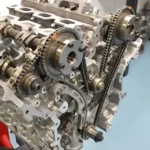 Land Rover Discovery Sport Timing Chain Replacement Cost
Common Diesel Options
Typical engines include:
- 2.0 TD4 – 150 hp
- 2.0 SD4 – 180 hp
- 2.0 D200 – 204 hp
These engines offer impressive pulling power.
Torque figures often exceed 430 Nm, making them ideal for:
- towing caravans
- hauling equipment
- long motorway trips
Fuel Economy Benefits
Diesel Discovery Sport engines typically achieve:
- 40–50 mpg (UK) in real-world driving.
For frequent travelers, that difference adds up quickly.
The Discovery Sport Plug-In Hybrid Engine
Modern Discovery Sport models introduced a plug-in hybrid (PHEV) powertrain.
How the Hybrid Engine Works
The system combines:
- 1.5-liter 3-cylinder petrol engine
- Electric motor
- Lithium-ion battery pack
Together they deliver:
- 309 hp combined output
This setup allows the vehicle to drive short distances purely on electric power.
Electric Range and Efficiency
Typical PHEV performance:
- Electric range: up to 38 miles (WLTP)
- CO₂ emissions: significantly reduced
- Instant electric torque
For city driving, it can feel surprisingly quick.
Mild Hybrid Technology
Many modern Discovery Sport engines now include MHEV (Mild Hybrid Electric Vehicle) technology.
What Does Mild Hybrid Mean?
A mild hybrid system uses:
- A small battery
- Regenerative braking
- An integrated starter generator
This helps:
- reduce fuel consumption
- improve acceleration
- smooth start-stop operation
It’s subtle — but effective.
Discovery Sport Engine Performance
Let’s look at how the engines translate into real-world performance.
Acceleration and Power
Depending on the engine:
| Engine | Power | 0–60 mph |
|---|---|---|
| TD4 Diesel | 150 hp | 10 sec |
| SD4 Diesel | 180 hp | 8.4 sec |
| P250 Petrol | 249 hp | 7.3 sec |
| P300e Hybrid | 309 hp | 6.6 sec |
Even the base engine delivers enough power for everyday driving.
Towing Capability
Discovery Sport engines provide strong towing capacity.
Maximum towing weight:
- up to 2,500 kg
This makes it capable of towing:
- caravans
- trailers
- boats
The diesel engines handle towing particularly well.
Off-Road Performance and Engine Power
Land Rover vehicles are famous for their off-road capabilities.
The Discovery Sport engine plays a major role here.
Torque for Off-Road Driving
Off-road driving requires low-end torque, not just horsepower.
Diesel engines excel here.
Benefits include:
- better hill climbing
- smoother rock crawling
- improved traction control response
The engine works alongside Terrain Response technology to adapt power delivery.
Common Land Rover Discovery Sport Engine Problems
No engine is perfect.
Some owners have reported a few common issues.
Known Engine Issues
Possible concerns include:
- timing chain noise (early Ingenium engines)
- turbocharger wear
- diesel particulate filter clogging
- EGR valve issues
However, many of these problems are preventable with proper maintenance.
You may be interested in readingLand Rover Discovery Sport Timing Chain Replacement CostYou may be interested in reading
 Land Rover Discovery Sport Turbo Replacement Cost: A Complete Owner’s Guide
Land Rover Discovery Sport Engine Reliability
Reliability depends heavily on maintenance.
Tips for Long Engine Life
To keep the engine healthy:
- Follow service intervals
- Use high-quality oil
- Allow the turbo to cool after long drives
- Avoid short trips with diesel engines
A well-maintained Discovery Sport engine can easily exceed 150,000 miles.
Maintenance Costs and Servicing
Luxury SUVs require proper servicing.
Typical annual maintenance costs may include:
- Oil service
- Filter replacement
- software updates
- emissions system checks
Owners should expect maintenance costs slightly higher than mainstream SUVs.
But in return, they get premium engineering and capability.
How the Discovery Sport Engine Compares to Rivals
Let’s briefly compare the Discovery Sport engine to competitors.
Key Rivals
Competitors include:
- BMW X3
- Audi Q5
- Volvo XC60
Compared to rivals:
- Discovery Sport engines emphasize torque and off-road strength
- German SUVs focus more on sporty driving
It’s a difference in philosophy.
One is a mountain explorer.
The others are city athletes.
Which Discovery Sport Engine Is Best?
Choosing the best engine depends on your needs.
Best for Fuel Economy
Diesel engines (D180 / D200)
Best for Performance
P250 or P300 petrol engines
Best for City Driving
P300e plug-in hybrid
Best for Towing
Diesel engines with high torque
Future of Discovery Sport Engines
The automotive world is changing quickly.
Land Rover plans to expand:
- hybrid technology
- electric vehicles
- cleaner combustion engines
Future Discovery Sport models may eventually become fully electric.
But for now, the engine lineup remains impressively versatile.
Conclusion
The Land Rover Discovery Sport engine lineup reflects the brand’s commitment to versatility.
From efficient diesel engines to advanced plug-in hybrid systems, the Discovery Sport offers something for almost every driver.
Whether you’re commuting through the city, towing a caravan across the countryside, or exploring muddy backroads, the engine under the hood is designed to handle it all.
It’s not just about horsepower.
It’s about balance — power, efficiency, capability, and refinement working together.
And that’s what makes the Discovery Sport engine truly special.
Frequently Asked Questions
1. What engine does the Land Rover Discovery Sport use?
The Discovery Sport uses several engines, including 2.0-liter Ingenium petrol and diesel engines, plus a plug-in hybrid powertrain.
2. Is the Discovery Sport engine reliable?
Yes, generally reliable when properly maintained. Regular servicing and high-quality oil are essential for longevity.
3. Which Discovery Sport engine is the most powerful?
The P300e plug-in hybrid produces around 309 horsepower, making it the most powerful engine available.
4. Are diesel Discovery Sport engines good for towing?
Yes. Diesel engines provide high torque, making them excellent for towing trailers or caravans.
You may be interested in readingLand Rover Discovery Sport Timing Chain Replacement CostYou may be interested in reading
Land Rover Discovery Sport Turbo Replacement Cost: A Complete Owner’s GuideYou may be interested in reading
 Land Rover Discovery Sport Battery Replacement: Cost, Symptoms, and Step-by-Step Guide
5. Does the Discovery Sport have a hybrid engine?
Yes. The P300e plug-in hybrid combines a petrol engine and electric motor for improved efficiency and lower emissions.
If you want to know other articles similar to Land Rover Discovery Sport Engine: Performance, Specs, Reliability, and Everything You Need to Know you can visit the category Service and Parts.
How to Reset Volvo XC60 Infotainment System: The Complete Practical Guide
Volvo XC60 Gearbox Oil Change: The Complete Expert Guide
Volvo XC60 Engine Management Light: Causes, Fixes, and What It Really Means

Skoda Kamiq Size Comparison: Dimensions, Space & Real-World Practicality
Volvo XC60 Headlight Adjustment for Europe: The Complete Practical Guide
Volvo XC60 City Safety Service Required: What It Means, Causes, and Fixes
Leave a Reply
More content of your interest