

Mazda CX-30 Battery Issues: Causes, Symptoms, Fixes & Long-Term Prevention

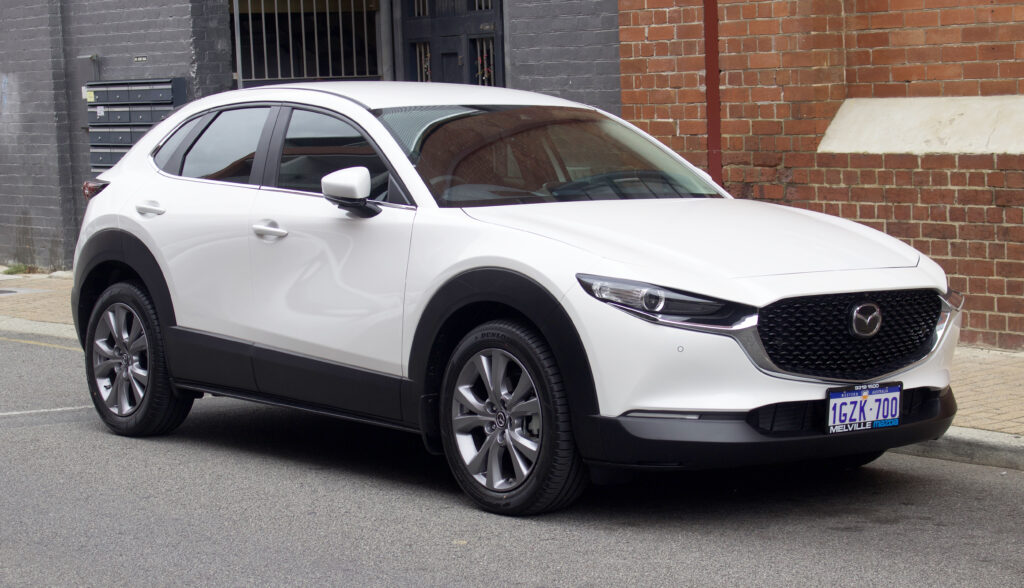
We’ve all been there — you walk toward your Mazda CX-30, coffee in one hand, keys in the other, press the start button… and silence. No crank. Maybe a faint click. Maybe a Christmas-tree dashboard.
Modern cars rarely “die dramatically.” They quietly refuse.
The Mazda CX-30 is generally reliable, yet battery complaints appear more often than many owners expect — especially within the first few years. The reason? Not a single defect, but a perfect storm: smart electronics, short trips, parasitic drains, and an intelligent charging system that behaves very differently from older cars.
Let’s unpack everything — symptoms, real causes, diagnostics, fixes, and how to prevent it from ever ruining your morning again.
Content in this publication
- Why the Mazda CX-30 Experiences Battery Problems More Than Older Cars
- Common Symptoms of a Weak or Failing CX-30 Battery
- The Infamous “Christmas Tree Dashboard” Explained
- Battery Size and Type Used in the CX-30
- Most Common Real Causes of Battery Failure
- How Long Should the Battery Last?
- Testing the Battery Properly
- DIY Quick Battery Health Check
- Replacing the Mazda CX-30 Battery
- Battery Replacement Procedure (Simplified)
- Do You Need to Register the Battery?
- Why the i-Stop System Stops Working First
- Preventing Future Battery Problems
- Best Solution for Low-Mileage Drivers
- Parasitic Drain While Parked: Real Numbers
- Jump Starting the CX-30 Safely
- When the Problem Isn’t the Battery
- Long-Term Ownership Insight
- Closing Thoughts
- FAQs
Why the Mazda CX-30 Experiences Battery Problems More Than Older Cars
The CX-30 isn’t faulty — it’s modern.
Unlike older vehicles that constantly charged the battery, this one manages charging. The alternator doesn’t simply pump power 24/7. It charges selectively to improve fuel economy and emissions.
Sounds clever — until you mainly drive short distances.
Smart Charging vs Traditional Charging
| Feature | Old Cars | Mazda CX-30 |
|---|---|---|
| Alternator behavior | Always charging | Charges only when needed |
| Battery stress | Low | Higher |
| Fuel economy | Lower | Higher |
| Sensitivity to short trips | Low | High |
The result: the battery often lives in a “half-charged” state. And batteries hate that.
Common Symptoms of a Weak or Failing CX-30 Battery
Before total failure, the car whispers warnings.
Early Warning Signs
- Slower engine crank
- Infotainment resets randomly
- Clock/time resets
- Auto start-stop stops working
- Keyless entry range reduced
- Parking sensors glitching
Advanced Symptoms
- Multiple warning lights at startup
- i-Stop unavailable message
- Electronic parking brake error
- Steering assist warning
- No start — only clicks
When electronics complain simultaneously, it’s almost always voltage — not multiple component failures.
The Infamous “Christmas Tree Dashboard” Explained
Modern Mazdas panic when voltage drops.
Low voltage confuses control modules. Each module thinks another system failed.
So you may see:
- ABS fault
- Airbag warning
- Traction control error
- Radar cruise disabled
But in reality?
The car just needs electricity.
Battery Size and Type Used in the CX-30
The CX-30 typically uses an EFB battery (Enhanced Flooded Battery), not a basic lead-acid one.
Why EFB Matters
Start-stop systems constantly restart the engine. A standard battery would die in months.
EFB batteries:
- Handle repeated starts
- Recover charge faster
- Resist sulfation better
But they still dislike:
- Short trips
- Long parking periods
- Accessories running while engine off
Most Common Real Causes of Battery Failure
1. Short Commutes (The #1 Killer)
Driving 5-10 minutes never replenishes the energy used to start the engine.
The battery slowly drains day after day — like spending more money than you earn.
2. Parasitic Drain From Electronics
The CX-30 never truly sleeps.
Systems remain active:
- Keyless entry receivers
- Security modules
- Telematics
- Radar sensors
Normally harmless — but dangerous if the car sits for days.
You may be interested in reading Mazda CX-30 Low Engine Oil Level — Complete Owner’s Guide
3. Weak Factory Battery
Many owners notice failure around 18–30 months. The OEM battery prioritizes weight and efficiency over longevity.
4. Start-Stop System Usage
Every restart equals a mini battery discharge.
Heavy city traffic accelerates wear dramatically.
5. Cold Weather Sensitivity
Low temperature = reduced chemical activity = weaker output.
Even a healthy battery may appear dead below freezing.
How Long Should the Battery Last?
Average real-world lifespan:
- Light usage: 4–5 years
- Normal usage: 3–4 years
- Short trips city use: 1.5–3 years
The car itself isn’t the problem — usage pattern is.
Testing the Battery Properly
Voltage alone lies.
A battery can show 12.6V and still fail under load.
Correct Testing Method
- Measure resting voltage
- Perform load test
- Check cranking amps
- Scan for undervoltage codes
Anything under 70% health = replacement recommended.
DIY Quick Battery Health Check
Without tools, observe behavior:
| Behavior | Meaning |
|---|---|
| Slow crank | Weak battery |
| Start-stop disabled | Low charge |
| Random warnings | Voltage drop |
| Click but no crank | Dead battery |
Your car talks — just not in sentences.
Replacing the Mazda CX-30 Battery
Good news: replacement is straightforward.
Recommended Battery Specs
- Type: EFB or AGM (upgrade option)
- Capacity: ~60–70Ah
- Cold Cranking Amps: 550–700 CCA
AGM batteries last longer but cost more. Worth it if you drive mostly short distances.
Battery Replacement Procedure (Simplified)
- Turn ignition off
- Wait 5 minutes (modules sleep)
- Disconnect negative terminal
- Disconnect positive terminal
- Remove hold-down bracket
- Install new battery
- Connect positive → negative
After replacement, the car may idle roughly briefly — ECU relearning.
Do You Need to Register the Battery?
No coding required on most CX-30 models.
The car self-adapts within a few drive cycles.
However, driving 15–20 minutes helps recalibrate charging behavior.
Why the i-Stop System Stops Working First
The start-stop system demands a nearly perfect battery.
It disables itself early to prevent stranding you.
Think of it as the canary in the coal mine.
If i-Stop disappears:
Your battery is aging — not broken yet.
Preventing Future Battery Problems
The fix is not just replacement — it’s lifestyle.
Weekly Battery Care Routine
- Take a 20-minute highway drive
- Avoid accessory use while parked
- Don’t unlock repeatedly without driving
- Use a maintainer if parked >4 days
Best Solution for Low-Mileage Drivers
A smart trick many owners discover late:
You may be interested in readingMazda CX-30 Low Engine Oil Level — Complete Owner’s GuideYou may be interested in reading
 Suzuki Vitara Problems: The Honest Owner’s Guide to What Goes Wrong (and What Doesn’t)
Battery maintainer charger
Connect overnight once a week — battery life doubles.
Parasitic Drain While Parked: Real Numbers
Typical draw:
- 20–40mA normal
- 80mA borderline
- 120mA problematic
After 7 days parked:
Even a healthy battery can fail.
Modern cars prefer movement, not storage.
Jump Starting the CX-30 Safely
Modern electronics hate voltage spikes.
Correct Method
- Positive → positive
- Negative → chassis ground (not battery)
- Start donor car first
- Wait 60 seconds
- Start CX-30
Never rev aggressively — alternators don’t recharge dead batteries quickly.
Drive afterward at least 25 minutes.
When the Problem Isn’t the Battery
Rare but possible:
- Faulty door module
- Glovebox light staying on
- Dashcam hardwire
- Software glitch preventing sleep mode
If new battery dies within days — investigate draw.
Long-Term Ownership Insight
Owners who drive daily rarely report problems.
Owners who work from home, commute short distances, or travel frequently? Much higher complaints.
The CX-30 rewards movement.
It punishes inactivity.
Closing Thoughts
The Mazda CX-30 doesn’t suffer from a defective battery system — it suffers from modern efficiency meeting real human habits.
We bought a smart car but kept old driving routines.
The solution isn’t frustration — it’s understanding:
- Batteries need full charges
- Electronics never sleep deeply
- Short trips slowly drain life
Treat the battery like a rechargeable device rather than an invisible component, and the car becomes incredibly reliable.
In short: the CX-30 isn’t fragile — it’s honest.
Feed it electricity, and it behaves perfectly.
FAQs
1. Why does my Mazda CX-30 battery die overnight?
Usually parasitic drain combined with a weak battery. The car’s electronics never fully shut off, so a degraded battery can’t hold charge.
2. Why is the i-Stop system disabled?
Because the battery state of charge is low. It’s a protective measure, not a malfunction.
3. Can I use a normal lead-acid battery?
You can, but lifespan will be shorter and start-stop performance poor. EFB or AGM is strongly recommended.
4. How often should I drive to keep the battery healthy?
At least one 20-minute drive every few days prevents chronic discharge.
You may be interested in readingMazda CX-30 Low Engine Oil Level — Complete Owner’s GuideYou may be interested in reading
Suzuki Vitara Problems: The Honest Owner’s Guide to What Goes Wrong (and What Doesn’t)You may be interested in reading
 Land Rover Discovery Sport Issues: Common Problems, Reliability, and What Owners Should Know
5. Does the alternator charge the battery fully?
Not always. The smart charging system prioritizes fuel efficiency, so occasional longer drives or a maintainer help.
If you want to know other articles similar to Mazda CX-30 Battery Issues: Causes, Symptoms, Fixes & Long-Term Prevention you can visit the category Common Problems.
Volvo XC60 360 Camera Not Working: Complete Troubleshooting & Fix Guide
Volvo XC60 Key Fob Not Working: Causes, Fixes, and Expert Solutions
Volvo XC60 Low Battery Warning: Causes, Fixes, and Prevention Guide
Volvo XC60 No Sound: Causes, Fixes, and Complete Troubleshooting Guide
Volvo XC60 Common Problems: What Owners Really Experience
Volvo XC60 Issues: The Truth Behind This Popular SUV
Leave a Reply
More content of your interest