

Mazda CX-30 Best Engine — The One That Actually Fits Your Life

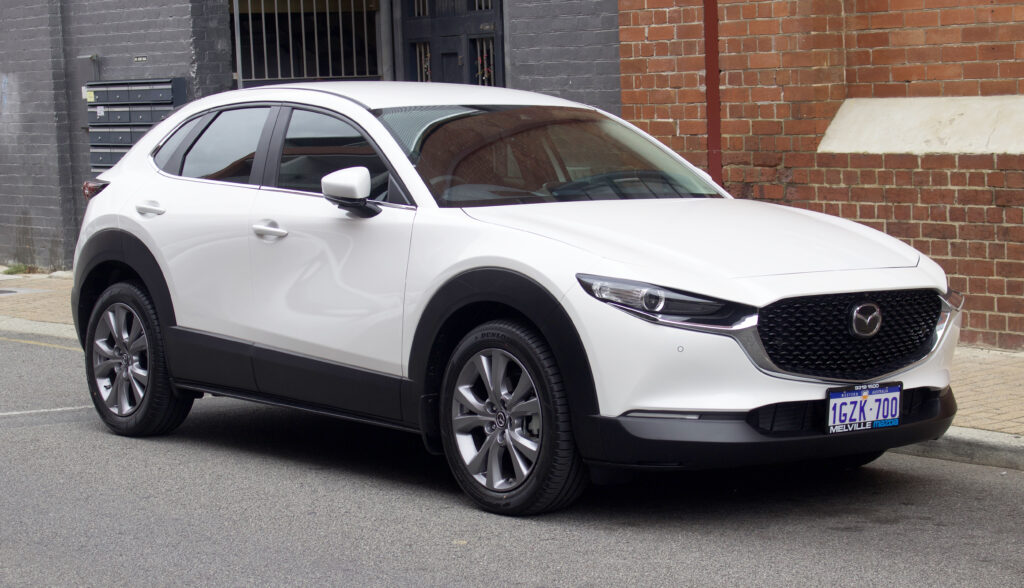
Choosing the best engine for the Mazda CX-30 is a bit like choosing coffee.
Some want espresso-level punch. Others want a long smooth latte. And a few want that weird but brilliant middle ground — energy without the jitters.
Mazda built the CX-30 exactly around that philosophy: no single engine wins universally. Instead, each one dominates a different kind of driver.
So instead of asking “which engine is the most powerful?”
We ask the smarter question:
Which Mazda CX-30 engine is best for YOU?
Let’s break it down properly — from real-world performance to ownership costs — the way actual drivers experience it.
Content in this publication
- All Mazda CX-30 Engines at a Glance
- Why Mazda Engines Feel Different From Competitors
- The 2.0 Skyactiv-G — The Calm Commuter Engine
- Fuel Economy Reality (2.0 Skyactiv-G)
- The 2.5 Skyactiv-G — The True Sweet Spot
- Fuel Economy (2.5 Skyactiv-G)
- Why Most Owners Prefer This Engine
- The 2.0 Skyactiv-X — Mazda’s Genius Experiment
- Where It Shines
- Fuel Economy (Skyactiv-X)
- The 2.5 Turbo — The Secret Sports Crossover
- Fuel Economy (2.5 Turbo)
- Acceleration Comparison
- Reliability Considerations
- Maintenance Cost Comparison
- Which Engine Fits Your Personality
- The Real Winner — Our Verdict
- Closing Thoughts
- FAQs
All Mazda CX-30 Engines at a Glance
| Engine | Power | Feel | Fuel Economy | Personality |
|---|---|---|---|---|
| 2.0 Skyactiv-G | ~122–150 hp | Smooth & calm | Excellent | The commuter |
| 2.5 Skyactiv-G | ~186 hp | Balanced & strong | Good | The all-rounder |
| 2.0 Skyactiv-X | ~180 hp | Efficient & refined | Very good | The clever one |
| 2.5 Turbo | up to 250 hp | Fast & punchy | Fair | The fun addict |
Now let’s go deeper — because specs don’t tell the whole story.
Why Mazda Engines Feel Different From Competitors
Most small SUVs rely on small turbo engines.
Mazda went the opposite direction: large displacement, low stress, high compression.
That changes everything:
- No turbo lag (in most models)
- Smoother acceleration
- Better long-term reliability
- More predictable throttle response
It’s less “kick you in the back” and more natural motion — like pushing a swing instead of launching a rocket.
The 2.0 Skyactiv-G — The Calm Commuter Engine
What it feels like
This engine doesn’t try to impress you in a 10-second test drive.
It wins after six months of ownership.
It’s quiet, linear, and incredibly easy to live with.
You press the pedal → the car moves → no drama → no surprises.
Real-world strengths
- Extremely smooth in city driving
- Minimal vibration
- Cheap to maintain
- Reliable long term
Weaknesses
- Not fast on highways
- Needs revs for overtakes
- Full load feels heavy
Who should choose it
You want this engine if:
- You mostly drive in urban traffic
- You value comfort over speed
- You keep cars for many years
- Fuel economy matters more than acceleration
This is the engine for calm drivers.
Fuel Economy Reality (2.0 Skyactiv-G)
Typical real usage:
- City: 32–36 mpg (6.5–7.5 L/100km)
- Highway: 42–47 mpg (5–6 L/100km)
It’s one of the cheapest CX-30 engines to run.
The 2.5 Skyactiv-G — The True Sweet Spot
If Mazda had to pick one engine to represent the brand — this would be it.
Why it works so well
It solves the biggest complaint about small crossovers:
“I wish it had just a little more power.”
The 2.5 doesn’t feel fast.
It feels effortless.
 Suzuki Vitara Boot Space: Capacity, Practicality & Real-World Use
And that’s actually better.
Driving character
- Smooth at low RPM
- Strong mid-range pull
- Relaxed highway cruising
- No need to push hard
It behaves like a bigger car engine inside a compact SUV.
Real-world performance feel
You don’t downshift to overtake — you just go.
You don’t plan merges — you flow into them.
It removes effort from driving.
Fuel Economy (2.5 Skyactiv-G)
Typical real usage:
- City: ~28–31 mpg
- Highway: ~36–40 mpg
Slightly worse than the 2.0 — but the comfort improvement is massive.
Why Most Owners Prefer This Engine
Because daily driving is about effortlessness, not numbers.
The 2.5 does everything well:
- Comfortable commuting
- Road trips
- Hills
- Full passengers
This is the “buy once, never regret” option.
The 2.0 Skyactiv-X — Mazda’s Genius Experiment
This engine is unusual.
It behaves like a diesel and petrol at the same time.
Mazda calls it compression ignition gasoline.
What that means in real life
- Strong torque at low revs
- Excellent economy
- Quiet highway cruising
- Feels bigger than 2.0L
It’s not sporty — it’s intelligent.
Driving sensation
The Skyactiv-X doesn’t push you.
It carries you.
You accelerate and suddenly notice you’re already at speed.
It’s subtle performance.
Where It Shines
- Long motorway trips
- Steady speed driving
- High fuel price regions
- Drivers who hate gear changes
Fuel Economy (Skyactiv-X)
Typical:
- City: ~35 mpg
- Highway: ~50+ mpg possible
This is the most efficient non-hybrid CX-30 engine.
The 2.5 Turbo — The Secret Sports Crossover
Now we reach the wild child.
The CX-30 Turbo completely changes personality.
You may be interested in readingSuzuki Vitara Boot Space: Capacity, Practicality & Real-World UseYou may be interested in reading
 Suzuki Vitara Dimensions: The Complete Size Guide for Real-World Drivers
What happens when you drive it
The car stops feeling compact.
It suddenly feels muscular.
You press the pedal → torque arrives instantly → overtakes vanish.
Real strengths
- Fast acceleration
- Easy highway passing
- Feels premium
- Effortless hills
Trade-offs
- Higher fuel consumption
- More expensive servicing
- Overkill for city driving
Fuel Economy (2.5 Turbo)
Typical:
- City: ~22–25 mpg
- Highway: ~30 mpg
You pay for power.
Acceleration Comparison
| Engine | 0–60 mph feel |
|---|---|
| 2.0 Skyactiv-G | Relaxed |
| 2.5 Skyactiv-G | Comfortable |
| Skyactiv-X | Smooth quick |
| 2.5 Turbo | Actually fast |
Reliability Considerations
Mazda engines are generally robust because they avoid extreme boost pressure.
Most reliable
- 2.0 Skyactiv-G
- 2.5 Skyactiv-G
Slightly complex
- Skyactiv-X
More components
- Turbo
But even the turbo is considered above average reliability.
Maintenance Cost Comparison
| Engine | Ownership Cost |
|---|---|
| 2.0 | Cheapest |
| 2.5 | Moderate |
| X | Moderate-High |
| Turbo | Highest |
Which Engine Fits Your Personality
You should buy the 2.0 if:
- Calm driver
- Mostly city
- Budget focused
You should buy the 2.5 if:
- Mixed driving
- Want comfort power
- Keep car long term
You should buy the Skyactiv-X if:
- Highway commuter
- Fuel conscious
- Tech lover
You should buy the Turbo if:
- Enjoy driving
- Want performance
- Prefer effortlessness at speed
The Real Winner — Our Verdict
The best engine overall is the 2.5 Skyactiv-G.
Not because it’s fastest.
Not because it’s cheapest.
Because it removes compromises.
It gives:
- Enough power
- Good economy
- Low stress reliability
- Comfortable driving feel
It matches the CX-30’s character perfectly.
Closing Thoughts
The Mazda CX-30 isn’t about extremes.
It’s about harmony.
Every engine represents a personality:
- 2.0 = Peace
- 2.5 = Balance
- X = Intelligence
- Turbo = Excitement
The trick isn’t picking the strongest engine —
it’s picking the one that matches your daily rhythm.
And when that alignment happens, the car disappears and driving becomes natural.
That’s when you chose correctly.
FAQs
1. Which Mazda CX-30 engine is most reliable?
The 2.0 and 2.5 naturally aspirated engines are the most durable long-term.
2. Is the turbo worth it?
Yes if you value effortless speed — no if you mainly drive in traffic.
3. Is Skyactiv-X better than 2.5?
Better for fuel economy, worse for simplicity and maintenance.
You may be interested in readingSuzuki Vitara Boot Space: Capacity, Practicality & Real-World UseYou may be interested in reading
Suzuki Vitara Dimensions: The Complete Size Guide for Real-World DriversYou may be interested in reading
 Suzuki Vitara Tire Pressure: The Complete Owner’s Guide to Perfect PSI
4. Is the 2.0 underpowered?
Only on highways or hills; perfectly fine for city use.
5. Which engine has best resale value?
The 2.5 typically holds value best due to balance of performance and economy.
If you want to know other articles similar to Mazda CX-30 Best Engine — The One That Actually Fits Your Life you can visit the category Service and Parts.
How to Reset Volvo XC60 Infotainment System: The Complete Practical Guide
Volvo XC60 Gearbox Oil Change: The Complete Expert Guide
Volvo XC60 Engine Management Light: Causes, Fixes, and What It Really Means

Skoda Kamiq Size Comparison: Dimensions, Space & Real-World Practicality
Volvo XC60 Headlight Adjustment for Europe: The Complete Practical Guide
Volvo XC60 City Safety Service Required: What It Means, Causes, and Fixes
Leave a Reply
More content of your interest