

Mazda CX-30 Tyre Size — The Complete Real-World Guide

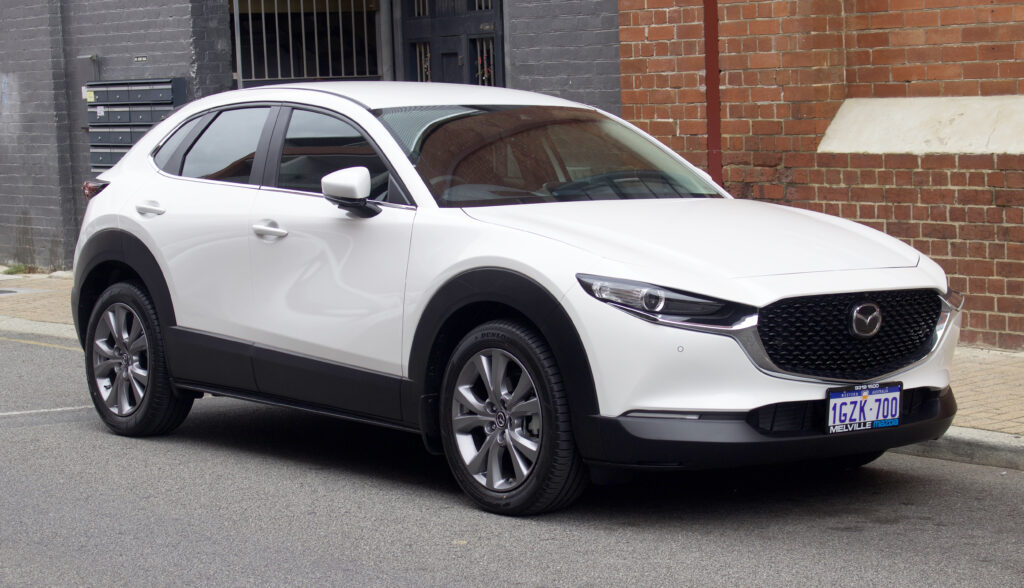
We’ve all done it: stared at a tyre sidewall like it’s written in ancient code. Numbers, letters, slashes… it looks more like a Wi-Fi password than something connected to driving comfort.
Yet tyre size is one of the most important details on the Mazda CX-30. It affects ride quality, fuel economy, grip in rain, steering feel, road noise, speedometer accuracy, and even how premium the car feels.
So instead of decoding it piece by piece across forums and manuals, let’s unpack everything in one smooth ride — clearly, casually, and in a way that actually helps you choose tyres confidently.
Content in this publication
- Why Tyre Size Matters More Than You Think
- Factory Tyre Sizes by Trim Level
- Breaking Down the Numbers (Simple Translation)
- Which Size Drives Best?
- Can You Change the Tyre Size?
- What Happens If You Go Too Big?
- Load Rating — The Overlooked Number
- Best Tyre Type for Each Driver
- Summer vs All-Season vs Winter
- Tyre Pressure for Each Size
- How Tyre Size Changes Fuel Economy
- Ride Comfort vs Handling Trade-Off
- TPMS Sensors and Tyre Size Changes
- Winter Wheel Downsizing — Smart Trick
- Tyre Wear Patterns Explained
- Best Longevity Setup
- Does AWD Require Matching Tyres?
- How Wheel Diameter Affects Road Noise
- Choosing Tyres Like a Pro
- Closing Thoughts
- FAQs
Why Tyre Size Matters More Than You Think
Tyres are the only thing touching the road. Not the suspension. Not the AWD system. Not the fancy driver assists.
Just four palm-sized patches of rubber.
Change their size — even slightly — and the car behaves differently:
- Bigger wheels = sharper steering but firmer ride
- Smaller wheels = softer ride but less sporty feel
- Wider tyres = more grip but more fuel consumption
- Taller sidewalls = quieter comfort but less corner precision
The CX-30 sits right between a hatchback and SUV. That means tyre size changes its personality dramatically — more than on most cars.
Factory Tyre Sizes by Trim Level
Mazda designed the CX-30 to run multiple tyre sizes depending on trim. Each one balances comfort vs sportiness differently.
Base Models (Comfort Focus)
215/65 R16
These are the softest-riding tyres available for the car.
What they feel like:
- Cushioned over potholes
- Quiet on highways
- Light steering
- Slight body roll in corners
Great for city driving and long commutes.
Mid-Trim Models (Balanced Setup)
215/55 R18
This is the most common CX-30 tyre size worldwide.
Driving personality:
- Sharper steering
- Still comfortable
- Better grip in rain
- More premium feel
Mazda tuned the suspension specifically around this size — think of it as the “intended” configuration.
Sport / Higher Trims
Also 215/55 R18, but paired with different tyre compounds.
The wheel size doesn’t change — but performance tyres transform handling noticeably.
Breaking Down the Numbers (Simple Translation)
Let’s decode: 215/55 R18
| Number | Meaning | What It Changes |
|---|---|---|
| 215 | Width (mm) | Grip & fuel economy |
| 55 | Sidewall height (%) | Comfort vs sport |
| R | Radial construction | Standard modern tyre |
| 18 | Wheel diameter (inches) | Handling & ride firmness |
Real-world translation
- Wider = stickier but thirstier
- Taller sidewall = smoother ride
- Bigger wheel = sportier feel
Think of it like sneakers: running shoes vs basketball shoes.
Which Size Drives Best?
This is where owners argue endlessly online. But once you drive them back-to-back, the differences are obvious.
16-inch Setup
Feels like a small SUV.
- Soft and relaxed
- Glides over bumps
- Perfect for rough roads
18-inch Setup
Feels like a sporty hatchback.
- Direct steering
- Planted in corners
- More road feedback
The CX-30 was engineered around the 18-inch wheels — that’s the sweet spot.
Can You Change the Tyre Size?
Yes — but within limits.
You must keep the overall rolling diameter similar. Otherwise:
- Speedometer becomes inaccurate
- Gear ratios feel off
- Safety systems misread wheel speed
- Fuel economy changes
Safe alternative sizes
| Alternative | Result |
|---|---|
| 225/55 R18 | More grip, slightly softer ride |
| 215/60 R17 | Comfort upgrade |
| 225/50 R18 | Sportier handling |
What Happens If You Go Too Big?
Oversizing looks great… until it doesn’t.
You may experience:
You may be interested in reading Mazda CX-30 Service Reset: Complete Owner’s Guide
- Wheel arch rubbing
- Heavier steering
- Slower acceleration
- Transmission strain
- Incorrect ABS readings
Modern cars depend on precise wheel rotation data. A wrong size confuses the car’s brain.
Load Rating — The Overlooked Number
After the tyre size you’ll see something like 94V.
This matters.
Example: 94V
- 94 = maximum weight capacity
- V = maximum speed rating
Never go lower than factory rating.
Why?
Because crossovers carry more weight than hatchbacks — passengers, luggage, and higher center of gravity increase tyre stress.
Best Tyre Type for Each Driver
Not all CX-30 drivers want the same thing.
City Comfort Drivers
Choose touring tyres:
- Quiet
- Long-lasting
- Efficient
Highway Travelers
Grand touring tyres:
- Stable at speed
- Better wet grip
- Balanced wear
Enthusiast Drivers
Performance tyres:
- Immediate steering
- Higher corner grip
- Shorter lifespan
Summer vs All-Season vs Winter
Tyre compound changes more than size.
Summer Tyres
- Best grip above 7°C
- Short braking distance
- Worst in cold weather
All-Season Tyres
- Good year-round balance
- Quiet
- Most common choice
Winter Tyres
- Essential below 5°C
- Flexible rubber
- Massive wet grip advantage
The CX-30’s traction control works dramatically better with correct seasonal tyres.
Tyre Pressure for Each Size
Pressure affects wear and fuel use more than brand choice.
Recommended pressures
| Size | Front | Rear |
|---|---|---|
| 215/65 R16 | 35 PSI | 33 PSI |
| 215/55 R18 | 36 PSI | 34 PSI |
Loaded vehicle? Add +3 PSI.
How Tyre Size Changes Fuel Economy
Bigger tyres look powerful but cost efficiency.
Why?
- Larger contact patch
- Increased rolling resistance
- Heavier rotational mass
Real-world difference:
- 16" vs 18" = ~5-7% fuel consumption change
Over a year, that’s significant.
Ride Comfort vs Handling Trade-Off
Imagine the CX-30 as a guitar string.
- Short tight string → sharp sound (18")
- Loose long string → soft sound (16")
Neither is wrong — just different moods.
Mazda aimed for a balanced melody: the 18-inch setup.
TPMS Sensors and Tyre Size Changes
The car monitors wheel rotation speed.
Change size drastically and the system thinks:
“One tyre is slipping.”
You’ll see:
- Warning lights
- Traction control activation
- Incorrect pressure alerts
Always recalibrate TPMS after tyre changes.
Winter Wheel Downsizing — Smart Trick
Many owners install smaller winter wheels.
Why it works:
- Narrow tyres cut through snow
- Taller sidewalls absorb frozen roads
- Cheaper winter tyre cost
Recommended winter size:
215/60 R17
Mazda CX-30 Service Reset: Complete Owner’s GuideYou may be interested in reading
 Mazda CX-30 Oil Type: The Complete Owner’s Guide to Choosing the Right Engine Oil
It improves snow stability noticeably.
Tyre Wear Patterns Explained
Incorrect size causes odd wear.
Inside wear
Too wide tyre on stock rim.
Edge wear
Underinflation.
Center wear
Overinflation.
The CX-30 suspension is precise — if tyres wear unevenly, size or pressure is usually wrong.
Best Longevity Setup
For maximum lifespan:
- Stock width tyres
- Touring compound
- Rotate every 10,000 km
- Maintain correct PSI
Average lifespan:
45,000–65,000 km
Performance tyres: closer to 30,000 km.
Does AWD Require Matching Tyres?
Absolutely.
Difference greater than 2% diameter can damage the AWD coupling over time.
Always replace tyres in full sets if wear difference is high.
How Wheel Diameter Affects Road Noise
More metal = more vibration transmission.
16" = quieter
18" = sharper but louder
On rough asphalt, the difference feels bigger than engine noise.
Choosing Tyres Like a Pro
Instead of asking “What’s the best tyre?”
Ask:
What do I want the car to feel like?
Comfort cruiser?
Sport hatch?
All-weather commuter?
Tyre size defines personality.
Closing Thoughts
The Mazda CX-30 is unusually sensitive to tyre size — more than most crossovers. One size turns it into a relaxed small SUV. Another transforms it into a sporty hatchback with raised suspension.
That’s not a flaw — it’s flexibility.
Choose 16-inch and you glide over broken roads.
Choose 18-inch and you carve corners with precision.
The magic is understanding what each number changes — not just copying what the factory installed.
Once you do, the car stops feeling generic and starts feeling tuned.
FAQs
1. Can I put wider tyres on the CX-30?
Yes, but stay within rolling diameter tolerance. 225 width is usually safe.
2. Will bigger tyres improve grip?
Yes in dry conditions — but fuel economy and ride comfort decrease.
3. Are 18-inch wheels uncomfortable?
Not harsh, just firmer. Most drivers consider them the ideal balance.
You may be interested in readingMazda CX-30 Service Reset: Complete Owner’s GuideYou may be interested in reading
Mazda CX-30 Oil Type: The Complete Owner’s Guide to Choosing the Right Engine OilYou may be interested in reading
 Mazda CX-30 Fuel Tank Capacity: The Real-World Range Guide
4. Do I need special tyres for AWD?
No special type — just identical size and wear across all wheels.
5. Does tyre size affect braking distance?
Yes. Wider tyres shorten dry braking but can worsen wet braking if compound isn’t good.
If you want to know other articles similar to Mazda CX-30 Tyre Size — The Complete Real-World Guide you can visit the category Service and Parts.
How to Reset Volvo XC60 Infotainment System: The Complete Practical Guide
Volvo XC60 Gearbox Oil Change: The Complete Expert Guide
Volvo XC60 Engine Management Light: Causes, Fixes, and What It Really Means
Skoda Kamiq Size Comparison: Dimensions, Space & Real-World Practicality
Volvo XC60 Headlight Adjustment for Europe: The Complete Practical Guide
Volvo XC60 City Safety Service Required: What It Means, Causes, and Fixes
Leave a Reply
More content of your interest