

Mazda CX-30 vs CX-3 Dimensions: A Complete Size Comparison Guide

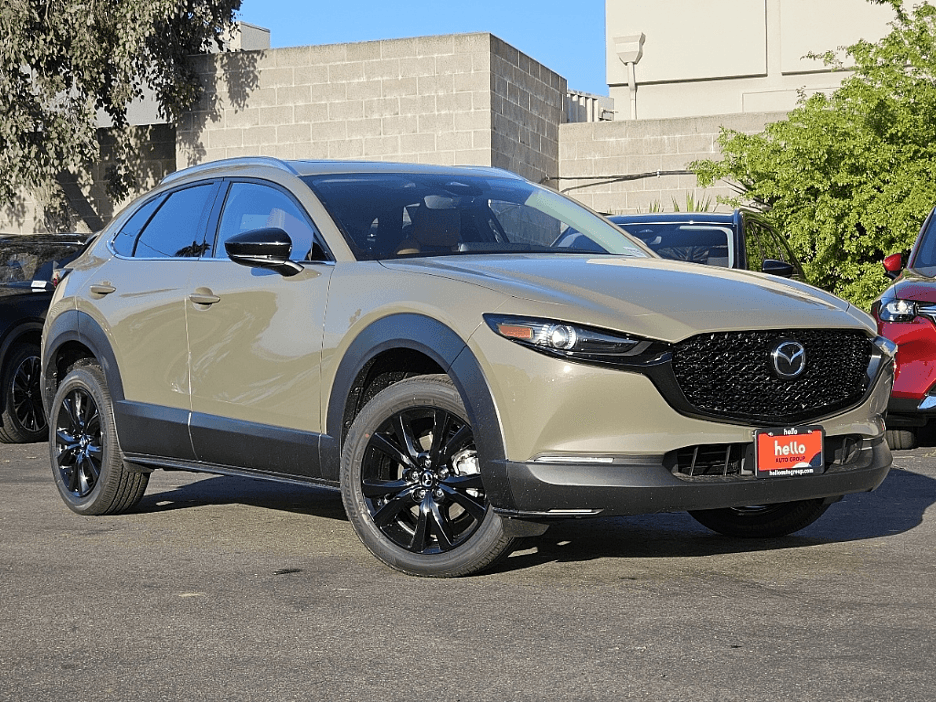
When we compare compact crossovers, size matters more than many people realize. It affects comfort, practicality, parking ease, and even driving feel. That’s exactly why the debate between the Mazda CX-30 and Mazda CX-3 keeps popping up among drivers looking for a stylish small SUV.
At first glance, these two vehicles look similar—sleek curves, sporty stance, and that unmistakable Mazda DNA. But beneath the surface, the dimensions tell a very different story.
Think of it like comparing two backpacks. They may look alike on the outside, but once you start packing them, the difference becomes obvious.
In this guide, we’ll break down Mazda CX-30 vs CX-3 dimensions in detail—covering length, width, height, wheelbase, interior space, cargo capacity, and real-world practicality. By the end, we’ll know which one truly offers more space and which one suits different lifestyles.
Let’s dive in.
Content in this publication
- Understanding the Mazda CX-30 and Mazda CX-3
- Quick Dimension Comparison Overview
- Exterior Dimensions Breakdown
- Wheelbase Comparison
- Ground Clearance Comparison
- Interior Dimensions: Passenger Space
- Cargo Space Comparison
- Parking and Maneuverability
- Driving Feel Influenced by Size
- Which One Feels Bigger Inside?
- Who Should Choose the Mazda CX-3?
- Who Should Choose the Mazda CX-30?
- Mazda CX-30 vs CX-3 Dimensions Summary
- Final Thoughts
- Frequently Asked Questions
Understanding the Mazda CX-30 and Mazda CX-3
Before analyzing measurements, it helps to understand where these two vehicles sit in Mazda’s lineup.
Mazda CX-3: The Subcompact Pioneer
The Mazda CX-3 arrived earlier as Mazda’s entry-level crossover. It’s based on the Mazda2 platform and focuses heavily on urban agility and compact size.
Key characteristics include:
- Small footprint for easy city driving
- Sporty handling
- Limited interior and cargo space
- Lower overall height and width
It’s essentially the smallest SUV in Mazda’s range.
Mazda CX-30: The New Middle Ground
The Mazda CX-30 came later and fills the gap between the Mazda CX-3 and the Mazda CX-5.
It’s built on the same platform as the Mazda3, which means:
- Larger dimensions
- More interior space
- Wider stance
- Better passenger comfort
In simple terms, the CX-30 is like the older sibling who grew a few inches taller and got a bigger backpack.
Quick Dimension Comparison Overview
Before diving deeper, let’s look at the basic dimension differences.
| Measurement | Mazda CX-3 | Mazda CX-30 |
|---|---|---|
| Length | ~4,275 mm | ~4,395 mm |
| Width | ~1,765 mm | ~1,795 mm |
| Height | ~1,535 mm | ~1,540 mm |
| Wheelbase | ~2,570 mm | ~2,655 mm |
| Boot Space | ~264 L | ~430 L |
Right away we can see the CX-30 is bigger in nearly every category.
But numbers alone don’t tell the full story. Let’s break each dimension down.
Exterior Dimensions Breakdown
Exterior size determines how the vehicle behaves in real life—from tight parking spaces to highway stability.
Vehicle Length
Mazda CX-3 Length
The CX-3 measures roughly 4,275 mm (168.3 inches) in length.
This compact length provides:
- Easier parallel parking
- Better maneuverability in tight streets
- A smaller turning circle
It’s a great match for city drivers.
Mazda CX-30 Length
The CX-30 stretches to about 4,395 mm (173 inches).
That’s about 120 mm longer than the CX-3.
This extra length improves:
- Cabin legroom
- Cargo capacity
- Road stability
In everyday terms, the CX-30 feels a bit more planted and spacious.
Vehicle Width
Width plays a big role in interior comfort.
Mazda CX-3 Width
The CX-3 measures about 1,765 mm (69.5 inches) wide.
While compact, this can make the rear seats feel slightly tight when three passengers sit side-by-side.
Mazda CX-30 Width
The CX-30 is roughly 1,795 mm (70.7 inches) wide.
That extra 30 mm might not sound huge, but it noticeably improves:
- Shoulder room
- Seating comfort
- Cabin openness
It’s like switching from economy class to premium economy on a flight—subtle but meaningful.
Vehicle Height
Height affects both headroom and driving position.
Mazda CX-3 Height
The CX-3 stands around 1,535 mm (60.4 inches) tall.
This slightly lower profile helps give it a sportier feel.
Mazda CX-30 Height
The CX-30 comes in at about 1,540 mm (60.6 inches).
The difference is minimal, but the CX-30 benefits from:
You may be interested in reading Peugeot 308 Trim Levels: The Complete Guide to Every Model and Specification
- Slightly better visibility
- Improved headroom
- More SUV-like seating posture
Wheelbase Comparison
The wheelbase—distance between the front and rear wheels—directly affects interior space.
Mazda CX-3 Wheelbase
The CX-3 uses a 2,570 mm wheelbase.
This shorter wheelbase contributes to:
- Quicker turning
- Agile driving
- Limited rear legroom
Mazda CX-30 Wheelbase
The CX-30 stretches to 2,655 mm.
That extra 85 mm gives the CX-30:
- More rear passenger space
- Better ride comfort
- Greater highway stability
In simple terms, the CX-30 rides like a longer, calmer cruiser.
Ground Clearance Comparison
Ground clearance matters if you drive over rough roads or speed bumps.
Mazda CX-3 Ground Clearance
Typical clearance: 155–160 mm
This works well for urban driving but isn’t ideal for rough terrain.
Mazda CX-30 Ground Clearance
Typical clearance: 175 mm
That extra height gives the CX-30:
- Better visibility
- Slight off-road capability
- Confidence over uneven roads
Interior Dimensions: Passenger Space
Exterior size doesn’t always translate directly to interior comfort. Let’s look inside.
Front Seat Space
Both vehicles provide comfortable space for driver and passenger.
However, the CX-30 offers:
- Wider seats
- Slightly more shoulder room
- Better elbow space
The difference isn’t dramatic, but it’s noticeable during long trips.
Rear Legroom
Rear legroom is where the CX-30 really pulls ahead.
Approximate figures:
- CX-3 rear legroom: ~35 inches
- CX-30 rear legroom: ~36.3 inches
That may sound small, but passengers quickly feel the difference.
The CX-3’s rear seats are best suited for:
- Children
- Short trips
The CX-30 can comfortably handle adult passengers.
Rear Headroom
Headroom differences are subtle but present.
The CX-30’s slightly taller cabin gives passengers:
- Better head clearance
- A less cramped feeling
Tall passengers will likely prefer the CX-30.
Cargo Space Comparison
Cargo capacity is often the deciding factor when choosing a compact SUV.
Mazda CX-3 Boot Space
With the seats up, the CX-3 offers roughly 264 liters (9.3 cubic feet) of cargo space.
This fits:
- Grocery bags
- Small luggage
- Daily errands
But packing for a long trip can be challenging.
Mazda CX-30 Boot Space
The CX-30 significantly improves cargo capacity.
Boot space: 430 liters (15.2 cubic feet).
That’s nearly double the usable cargo volume compared to the CX-3.
You can comfortably fit:
- Multiple suitcases
- Baby strollers
- Weekend travel gear
Cargo Space With Seats Folded
When the rear seats are folded:
CX-3
- Around 1,260 liters
CX-30
You may be interested in readingPeugeot 308 Trim Levels: The Complete Guide to Every Model and SpecificationYou may be interested in reading
 Toyota Corolla Cross Variants: Complete Guide to Every Trim and Model
- Around 1,406 liters
The CX-30 again wins, offering greater practicality.
Parking and Maneuverability
Smaller dimensions can still be an advantage.
Mazda CX-3 Parking Advantages
Because of its compact size:
- Easier to park
- Smaller turning radius
- Better suited for tight city spaces
It behaves almost like a raised hatchback.
Mazda CX-30 Parking Considerations
The CX-30 is still compact but slightly larger.
Drivers may notice:
- Slightly wider turning circle
- Larger parking footprint
Still, it remains manageable for urban driving.
Driving Feel Influenced by Size
Dimensions influence driving characteristics.
CX-3 Driving Personality
The CX-3 feels:
- Light
- Nimble
- Sporty
It behaves almost like a hot hatch with higher ground clearance.
CX-30 Driving Personality
The CX-30 feels:
- More stable
- More comfortable
- Slightly more mature
Think of it as a balanced crossover rather than a tiny SUV.
Which One Feels Bigger Inside?
Despite similar styling, the CX-30 clearly feels more spacious.
Reasons include:
- Longer wheelbase
- Wider cabin
- Larger cargo area
Passengers immediately notice the difference.
Who Should Choose the Mazda CX-3?
The CX-3 works best for drivers who:
- Mostly drive alone or with one passenger
- Live in dense urban areas
- Prioritize easy parking
- Prefer a smaller SUV feel
It’s essentially a city-friendly crossover.
Who Should Choose the Mazda CX-30?
The CX-30 suits drivers who need:
- More interior space
- Larger cargo capacity
- Better rear passenger comfort
- Improved ride stability
It’s the better choice for families and road trips.
Mazda CX-30 vs CX-3 Dimensions Summary
Here’s a quick recap.
Mazda CX-30 Advantages
- Longer body
- Wider cabin
- Longer wheelbase
- Much larger cargo space
- Better rear passenger comfort
Mazda CX-3 Advantages
- Smaller footprint
- Easier parking
- Slightly more agile feel
The CX-30 wins in practicality, while the CX-3 wins in compactness.
Final Thoughts
When comparing Mazda CX-30 vs CX-3 dimensions, the difference becomes clear the moment we step inside both vehicles.
The CX-3 is a nimble city crossover, perfect for drivers who want SUV styling in a small package.
The CX-30, on the other hand, offers more breathing room, better cargo capacity, and greater overall practicality. It bridges the gap between compact and midsize SUVs.
So the real question becomes:
Do we want a small urban crossover, or a slightly larger SUV with real versatility?
For most buyers, the CX-30’s extra space makes everyday life a little easier.
Frequently Asked Questions
Is the Mazda CX-30 bigger than the CX-3?
Yes. The CX-30 is longer, wider, and has a longer wheelbase than the CX-3, which translates to more interior and cargo space.
Which has more cargo space: CX-3 or CX-30?
The CX-30 offers significantly more cargo space—around 430 liters vs 264 liters in the CX-3.
Is the Mazda CX-3 easier to park?
Yes. The CX-3’s smaller dimensions make it easier to maneuver and park in tight urban environments.
Which SUV has better rear passenger space?
The CX-30 provides noticeably better rear legroom and shoulder space compared to the CX-3.
Is the CX-30 replacing the CX-3?
In many markets, the CX-30 has effectively replaced the CX-3 as Mazda’s primary compact crossover.
You may be interested in readingPeugeot 308 Trim Levels: The Complete Guide to Every Model and SpecificationYou may be interested in reading
Toyota Corolla Cross Variants: Complete Guide to Every Trim and ModelYou may be interested in reading
 BMW X1 Alternatives: Best Compact Luxury SUVs to Consider
If you want to know other articles similar to Mazda CX-30 vs CX-3 Dimensions: A Complete Size Comparison Guide you can visit the category Models.
Ford Mondeo Generations: The Complete Evolution Guide
Ford Mondeo Replacement: The Complete Guide to Choosing Your Next Car
Ford Mondeo Years to Avoid: The Honest Buyer’s Guide We Wish We Had Earlier

Volvo XC60 vs Mazda CX-60: The Ultimate SUV Showdown
Volvo XC60 vs BMW X5: The Ultimate SUV Showdown
Volvo XC60 vs Ford Kuga: The Ultimate SUV Showdown
Leave a Reply
More content of your interest